Titanium Anodes for Water Treatment: Industrial-Grade Electrochemical Scale Prevention to Optimize Circulating Water Systems
2026-06-06 10:41:50
Industrial circulating cooling water systems are critical auxiliary facilities in manufacturing, energy production, and commercial buildings. As cooling water continuously circulates and evaporates, hardness ions like calcium and magnesium become increasingly concentrated, forming scale deposits on heat exchanger surfaces and pipe walls that reduce heat exchange efficiency and increase energy consumption. Against this backdrop, chemical-free electrochemical scale prevention technology is gaining engineering attention, with the industrial-grade titanium anode for water treatment as its core functional component. This product is designed for industrial circulating cooling water treatment, not for drinking water or medical applications.
The In-Situ Control Logic of Electrochemical Scale Prevention
Traditional scale prevention relies on continuous chemical dosing, bringing long-term burdens in operational costs, chemical management, and discharge compliance. Electrochemical technology offers a different path.
In an electrochemical reaction unit with a titanium anode at its core, water molecules near the cathode undergo a reduction reaction, generating hydroxide ions and releasing hydrogen gas, creating a localized high-pH microenvironment. Within this micro-zone, bicarbonate converts to carbonate, prompting calcium and magnesium ions to preferentially precipitate as calcium carbonate and magnesium hydroxide on the cathode surface, rather than on downstream equipment. The titanium anode serves as a stable interface for the oxygen evolution reaction. Its mixed metal oxide coating, typically comprising RuO₂, IrO₂, or Ta₂O₅, operates under circulating cooling water conditions, providing the electrochemical driving force for cathode-side alkalinity modulation.

Material Combination of Substrate and Coating
The titanium anode's performance is rooted in its layered structure. We use high-purity Grade 1 or Grade 2 titanium compliant with ASTM B265 standards as the substrate. The continually concentrating minerals in circulating cooling water constitute a distinct chemical environment, and the passive oxide film spontaneously formed on titanium under anodic polarization helps the electrode maintain structural integrity under such conditions.
The noble metal oxide coating on this substrate is the core carrier of electrocatalytic function. Compositionally optimized to lower the oxygen evolution overpotential, the coating helps maintain lower cell voltage at a given current density, contributing to controlled long-term energy consumption. Its consistent performance across a broad current density range also allows the system to flexibly adjust treatment intensity based on makeup water hardness variations.
Low-Maintenance Operation and Water Savings
Electrochemical scale prevention must balance effectiveness with operational economics, and the titanium anode serves this balance through stable long-term performance.
The anode's dimensional stability helps ensure that the inter-electrode gap remains consistent during long-term operation, maintaining uniform current distribution conducive to steady scale prevention performance. Under appropriate water chemistry and operating parameters, the working life of a titanium anode can extend over an extended period, lengthening electrode replacement intervals and reducing associated labor costs and downtime, aligning with industrial users' preference for low-maintenance operation.
Regarding water savings, electrochemical technology allows circulating systems to operate at higher cycles of concentration, directly reducing blowdown and makeup water volumes. In regions facing water scarcity or high water costs, this translates into quantifiable operational savings. The precipitated calcium-magnesium solids can be collected and disposed of in solid form.
Engineering Adaptability for High-Hardness Water Regions
In certain hot and arid regions, industrial cooling systems face dual challenges of high makeup water hardness and high evaporation intensity. Traditional chemical dosing costs escalate with increasing hardness, while high-salinity blowdown places pressure on receiving waters. Electrochemical scale prevention shows strong engineering adaptability in these areas.
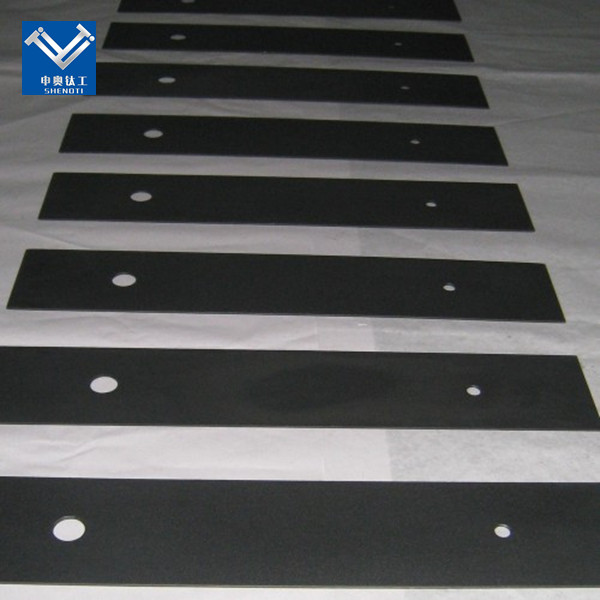
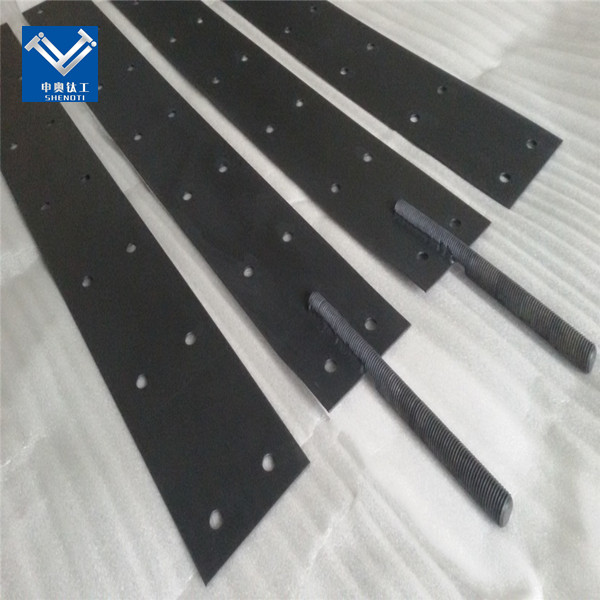
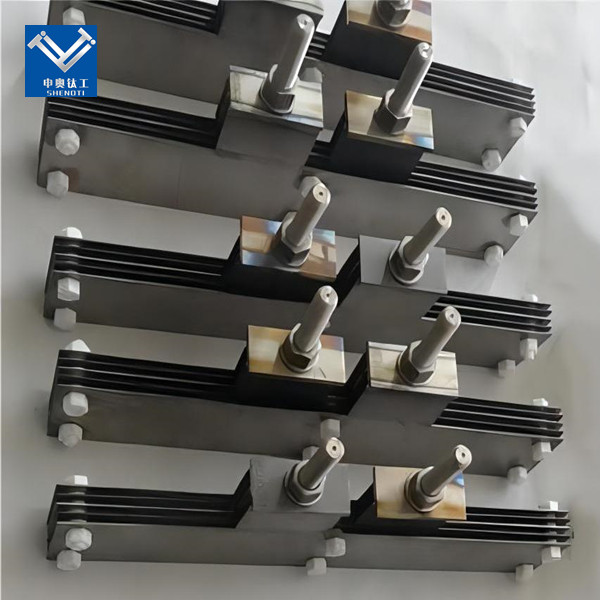
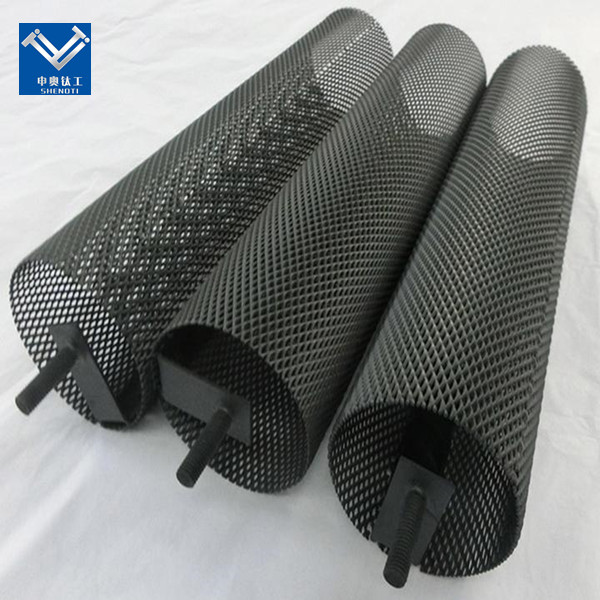
Our titanium anodes are compatible with different electrochemical reactor designs across a broad current density range. Whether for immersion-type reactors or side-stream circulating units, anodes can be configured as plates, meshes, or tubes tailored to flow-field and mass transfer requirements, integrating into new-build projects or as retrofit solutions.
We encourage system integrators and industrial users to conduct small-scale validation tests based on their cooling water quality analysis and operating conditions. By tracking cathode scaling rate, cycles of concentration improvement, and long-term power consumption, the technical compatibility and economic return of the electrochemical approach can be validated for specific applications.
Important Note: Descriptions regarding electrode working life and scale prevention effectiveness are based on engineering experience under typical conditions or internal test data. Actual performance depends on combined factors including cooling water composition, cycles of concentration, temperature, system design, and maintenance practices. Performance may vary across different application scenarios. This product is designed specifically for electrochemical scale prevention in industrial circulating cooling water systems, not for drinking water or medical applications. Prospective buyers are encouraged to conduct sufficient compatibility validation under actual conditions before bulk procurement.
Titanium Anode Manufacturer
Email: zh@baojiti.com.cn
Products: Titanium Anodes, MMO Titanium Anodes, DSA Coated Titanium Electrodes, Electrolysis Electrodes, Hydrogen Production Electrodes, Wastewater Treatment Titanium Anodes.