Titanium Anodes for Seawater Electrolysis: Effective Ballast Water Management
2026-06-06 09:12:59
As the global shipping industry navigates increasingly stringent environmental regulations, compliant ballast water management has become a priority for shipowners and operators. The IMO Ballast Water Management Convention's D-2 standard sets clear performance benchmarks for treatment systems. In this technological landscape, systems based on in-situ seawater electrolysis are gaining adoption, and at the heart of these systems lies a critical functional component: the titanium anode. As a Dimensionally Stable Anode (DSA), it provides a materials-science-grounded solution for reliable, continuous electrochemical treatment in demanding marine environments.
Membrane-Free Electrolysis: In-Situ Treatment Logic Using Seawater Resources
Seawater is a natural electrolyte resource, rich in chloride ions. Ballast water treatment systems leverage this property by employing membrane-free electrolysis technology. On the surface of a titanium anode, chloride ions present in the seawater are directly converted into active chlorine species—hypochlorous acid and hypochlorite—that possess oxidizing capability.
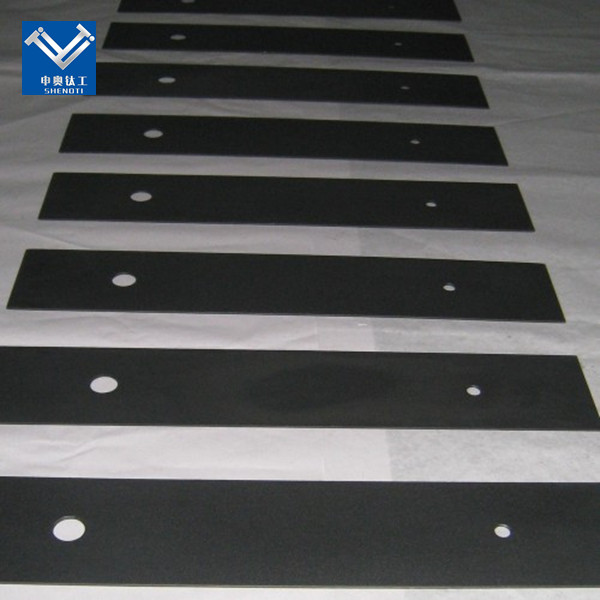
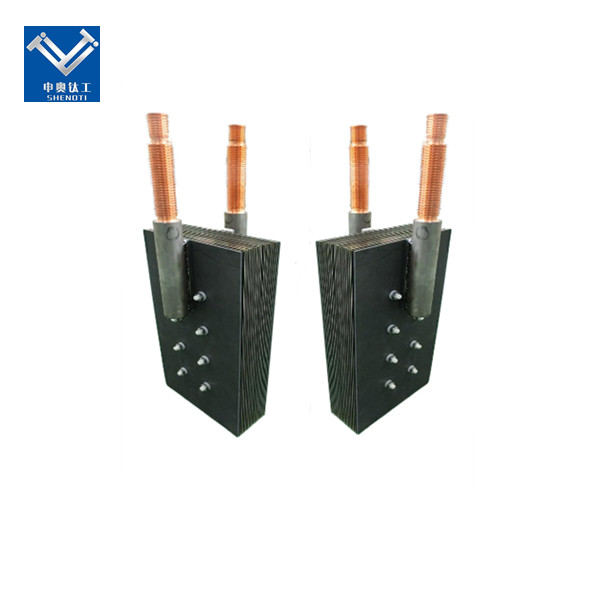
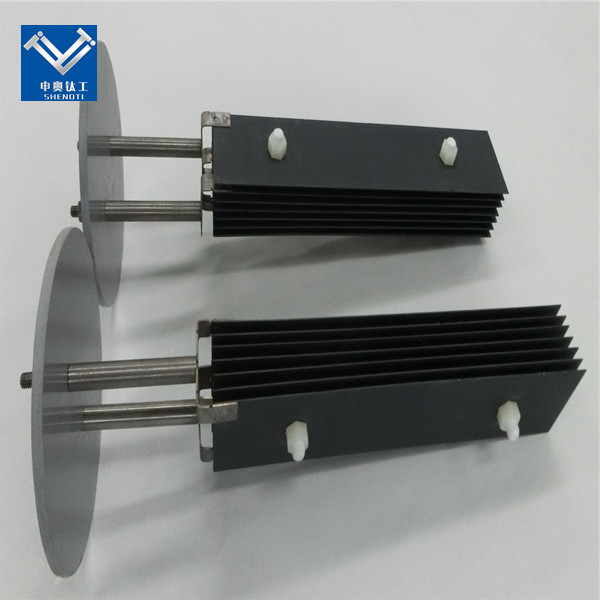
Unlike traditional electrolysis processes that require ion-exchange membranes to separate anolyte and catholyte compartments, the membrane-free design simplifies system architecture and reduces equipment complexity and maintenance requirements. The titanium anode serves as the electrocatalytic interface for the chlorine evolution reaction. Its mixed metal oxide coating, typically comprising RuO₂, IrO₂, or Ta₂O₅, provides active sites for chlorine generation in the high-chloride seawater matrix, enabling continuous in-situ production of active chlorine.

Substrate and Coating: Material Combination for High-Chloride Environments
The performance of a titanium anode is rooted in its precisely engineered layered structure. We employ high-purity Grade 1 or Grade 2 titanium compliant with ASTM B265 standards as the substrate. Under the anodic polarization conditions of seawater electrolysis, the titanium surface spontaneously forms a stable, dense, and passive oxide film. This characteristic endows the electrode with structural stability and long-term geometric integrity in corrosive marine environments.
On this substrate, the noble metal oxide coating functions as the core carrier of electrocatalytic activity. This layer is not a mere covering; it is a compositionally optimized electrocatalyst system. In operation, the coating guides the applied current preferentially toward the target electrochemical reaction—converting chloride ions into active chlorine—rather than dissipating energy through oxygen evolution side reactions. This guidance of reaction selectivity contributes to the optimization of current efficiency and rationalization of energy consumption observed at the macroscopic level.
Anti-Biofouling: The Engineering Value of Long-Term Operation
The goal of ballast water treatment extends beyond treating aquatic organisms taken on during ballasting to preventing ecological impact on receiving waters upon discharge. The active-chlorine-based oxidation mechanism covers a broad spectrum of targets, from planktonic organisms to microorganisms. The by-products of this process are relatively manageable, and residual oxidants can be further reduced through neutralization treatment before discharge.
From a long-term operational perspective, the value of titanium anodes also lies in their stable service profile. Under appropriate electrolyte conditions and operating parameters, their working life can extend over an extended period. Throughout this time, electrode dimensions remain stable, and the coating consumption rate is gradual. This means the ballast water treatment system can operate over a prolonged timeframe without unscheduled off-hire periods caused by electrode replacement—a compelling advantage for shipowners prioritizing operational efficiency and regulatory continuity. The continuous generation of active chlorine on the anode surface also contributes a supplementary biofouling inhibition effect for internal piping, helping to maintain unobstructed flow paths.
Engineering Adaptability for a Compliance-Driven Market
Against the backdrop of ongoing IMO D-2 standard enforcement, the technical selection of ballast water treatment systems is directly linked to a vessel's compliant operational status. As a core consumable within the electrochemical treatment unit, the choice of titanium anode is closely tied to system performance.
Our titanium anodes are designed for adaptability across different ballast water treatment system configurations, operating within a broad current density range. This operational adaptability allows integration into various treatment architectures—whether side-stream electrolytic injection systems or full-flow treatment solutions. Their thermal tolerance in typical engine room temperature conditions also ensures operational reliability in marine applications.
We encourage system integrators and shipowners to conduct small-scale validation tests for titanium anodes based on their specific system design and voyage-specific water quality conditions. By tracking and evaluating active chlorine output, current efficiency, and long-term operational stability, the anode's compatibility and economic benefits in a given application environment can be confirmed. This prudent, engineering-verification-based selection process is a necessary step to ensure that a technical component ultimately operates smoothly within the framework of regulatory compliance.
Important Note:
The descriptions above regarding electrode working life, coating thickness, temperature tolerance, and chlorine generation efficiency are based on test data under standardized laboratory conditions or engineering experience under typical operating conditions. Actual product performance depends on combined operating factors including electrolyte composition, temperature, current density, system design, and maintenance practices. Performance may vary across different application scenarios. This product is designed exclusively for industrial and marine ballast water treatment applications and has not been certified for drinking water treatment or medical use. Prospective buyers are encouraged to conduct sufficient compatibility validation under actual operating conditions before bulk procurement.
Titanium Anode Manufacturer
Email: zh@baojiti.com.cn
Products: Titanium Anodes, MMO Titanium Anodes, DSA Coated Titanium Electrodes, Electrolysis Electrodes, Hydrogen Production Electrodes, Wastewater Treatment Titanium Anodes.