Titanium Anode for Enhanced Advanced Oxidation: Degrading Pharmaceutical Residual Active Substances
2026-06-12 10:07:11
Pharmaceutical wastewater contains recalcitrant organic pollutants and biologically active substances. Conventional treatment processes have relatively limited mineralization capability for their aromatic ring structures and complex molecular skeletons, and some substances may exert potential impacts on receiving water ecosystems. Against this backdrop, electrochemical advanced oxidation processes are gaining engineering attention for their ability to oxidize complex organic molecular structures, with the titanium anode for industrial wastewater treatment serving as the core functional component.
The Hydroxyl Radical Pathway: Technical Logic for Degrading Aromatic Ring Structures
Recalcitrant organics in pharmaceutical wastewater typically feature aromatic rings, heterocyclic rings, or fused ring systems as core skeletons. These conjugated systems exhibit considerable chemical stability and relatively strong resistance to conventional oxidants and microbial degradation. The technical advantage of electrochemical advanced oxidation lies in its ability to generate hydroxyl radicals in situ at ambient temperature and pressure through electrocatalytic reactions on the anode surface.
Hydroxyl radicals possess a relatively high oxidation-reduction potential and can attack most organic molecular structures with relative non-selectivity. For recalcitrant organics containing phenolic hydroxyl groups, benzene rings, and heterocyclic structures, hydroxyl radicals can proceed through hydrogen abstraction, addition, or electron transfer pathways, first acting on the aromatic conjugated system and converting it into ring-opened organic acid intermediates, followed by further degradation to carbon dioxide and water. The titanium anode serves as the generation interface for hydroxyl radicals in this process, with its noble metal mixed oxide coating helping to steer the water molecule oxidation pathway toward hydroxyl radical formation within a specific potential window. Actual degradation effectiveness may vary depending on wastewater composition, pollutant concentration, pH, and current density.
Usage Guideline: Hydroxyl radical yield and degradation efficiency depend on wastewater quality, target pollutant type, and operating parameters. Validation under actual pharmaceutical wastewater conditions is recommended.

Electrode Material: Addressing the Composite Challenges of Pharmaceutical Wastewater
The water quality characteristics of pharmaceutical wastewater place multiple demands on electrode performance. Fermentation-based wastewater exhibits high and fluctuating COD concentrations, while chemical synthesis wastewater may contain organic solvents or halogenated by-products. The titanium anode for industrial wastewater treatment employs high-purity titanium as the substrate, which after sand blasting and acid washing pretreatment develops a uniform micro-rough surface structure that helps enhance coating adhesion strength.
The coating adopts a noble metal mixed oxide system, with coating thickness typically controlled within the 8 to 12 micrometer range and noble metal oxide loading in the 8 to 25 g/m² range. This coating design balances catalytic activity for hydroxyl radical generation with durability in complex water matrices. In pharmaceutical wastewater containing multiple organic pollutants and salts, the coating needs to maintain relatively stable current efficiency, avoiding active site coverage by organic polymerization products or inorganic salt deposition. The operating temperature tolerance reaches 60°C, with current density up to 2000 A/m².
Reducing Ecotoxicity: From Compliance Discharge to Safe Discharge
The challenge of pharmaceutical wastewater treatment lies not only in achieving COD discharge standards but also in ensuring effluent ecological safety. Certain recalcitrant organics, even at extremely low concentrations, may still exert potential effects on aquatic organisms. While conventional biological treatment can remove a substantial portion of readily degradable organics, its mineralization capability for aromatic ring structures and halogenated intermediates remains relatively limited.
Electrochemical advanced oxidation technology, through the strong oxidizing action of hydroxyl radicals, offers the potential to progressively degrade and ultimately mineralize aromatic ring structures, thereby potentially contributing to reduced effluent ecotoxicity. Furthermore, this process reduces dependence on exogenous chemical oxidants, helping to control additional substances introduced during treatment. For wastewater containing biologically active substances, electrochemical oxidation may also contribute to reducing the potential risk of microbial resistance dissemination by disrupting key molecular structures.
Engineering Adaptability for the Pharmaceutical Wastewater Market
In global markets, particularly in regions with concentrated pharmaceutical industries, wastewater discharge standards are expanding from conventional parameter control to ecological risk assessment. The electrochemical advanced oxidation solution using the titanium anode for industrial wastewater treatment, with water and electric current as fundamental inputs, can generate oxidative active species online, offering certain advantages in operational safety and supply chain simplification.
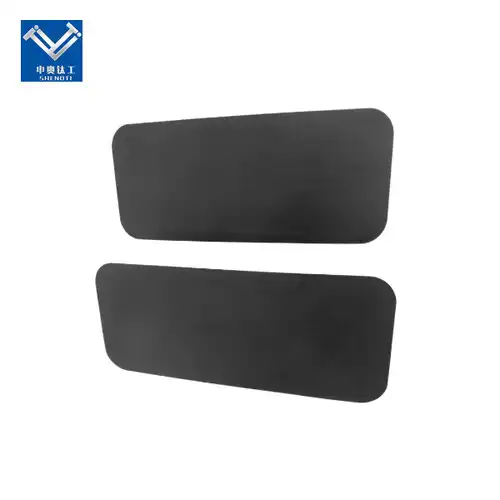
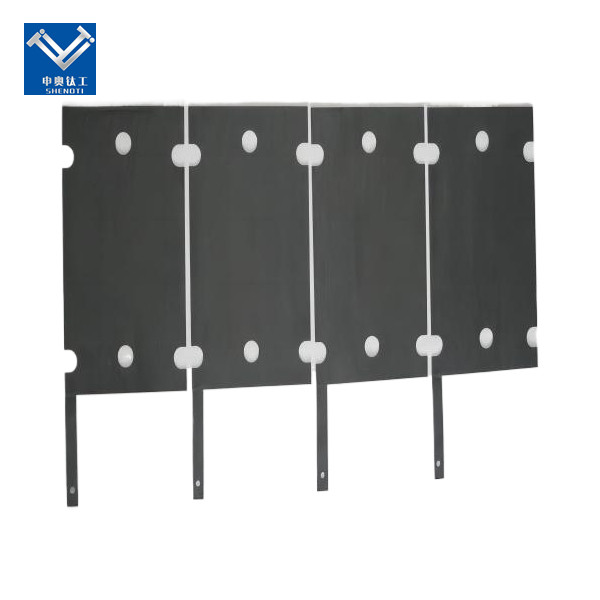
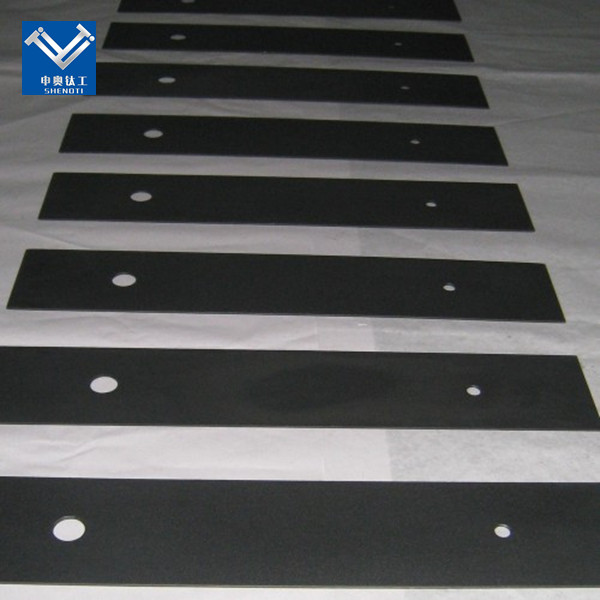
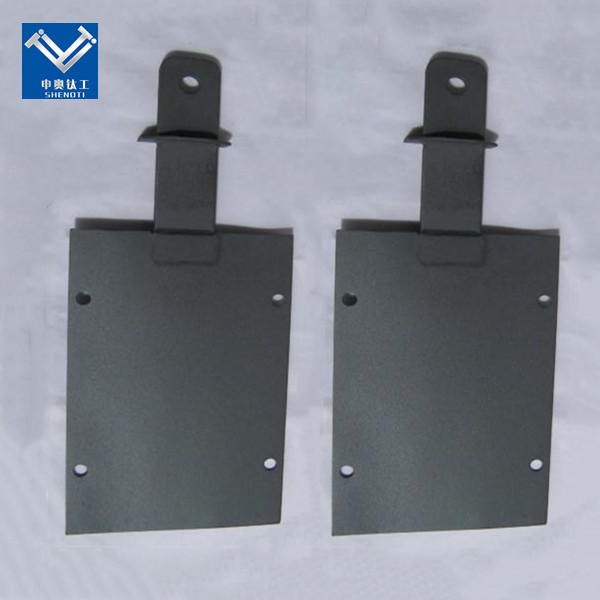
Our titanium anode products, built on high-purity titanium substrates with noble metal mixed oxide coatings, can be customized into round, square, and other geometric configurations to suit different electrochemical reactor designs. We encourage pharmaceutical enterprises and environmental engineering firms to conduct bench-scale or pilot validation of titanium anodes based on the actual pollutant composition, salinity, and flow characteristics of their wastewater. By tracking indicators such as COD removal trends, aromatic compound degradation extent, and effluent ecological safety, the technical compatibility of the electrochemical advanced oxidation solution in specific application scenarios can be evaluated.
Important Note: The performance descriptions above are based on engineering experience under typical conditions or internal test data. Actual degradation effectiveness, electrode working life, and toxicity reduction magnitude may vary depending on wastewater quality, pollutant type, operating parameters, and system design, and do not constitute a guarantee of specific treatment results. This product involves electrochemical oxidation processes; users are advised to consult relevant safety documentation prior to operation. This product is designed for industrial wastewater treatment applications. Sufficient compatibility validation prior to bulk procurement is recommended.
Titanium Anode Manufacturer
Email: zh@baojiti.com.cn
Products: Titanium Anodes, MMO Titanium Anodes, DSA Coated Titanium Electrodes, Electrolysis Electrodes, Hydrogen Production Electrodes, Wastewater Treatment Titanium Anodes.