Titanium Anode for In-Situ Chlorine Generation and Decolorization in Textile Wastewater Treatment
2026-06-12 10:11:05
Textile wastewater, characterized by high chromaticity, elevated salinity, and poor biodegradability, has long presented challenges in industrial wastewater treatment. Traditional chemical coagulation and flocculation decolorization methods require continuous reagent dosing, generating substantial volumes of dyed sludge while facing increasingly stringent restrictions on chemical usage. Against this backdrop, electrochemical technology utilizing inherent salinity in wastewater for in-situ chlorine generation and decolorization is gaining engineering attention, with the titanium anode for industrial wastewater treatment as its core functional component.
In-Situ Chlorine Generation: The Decolorization Logic Utilizing Wastewater Salinity
Textile dyeing processes employ substantial quantities of sodium chloride or sodium sulfate as dyeing promoters and leveling agents, resulting in naturally elevated chloride ion concentrations in the wastewater. This seemingly unfavorable water quality characteristic can be converted into a decolorization resource within an electrochemical oxidation system.
In an electrochemical reaction unit with a titanium anode at its core, the anode surface oxidizes chloride ions present in the wastewater into highly oxidative active chlorine species upon energization. These in-situ generated active chlorine species can attack the chromophoric groups in dye molecules—conjugated structures such as azo bonds and anthraquinone rings—causing bond cleavage and ring opening, transforming them into colorless small-molecule intermediates. Compared to traditional sodium hypochlorite dosing, in-situ generation can reduce dependence on commercial chemicals, with the active chlorine participating in reactions immediately upon generation, contributing to improved utilization efficiency and avoiding the potency decay issues associated with commercial sodium hypochlorite during prolonged storage. Actual decolorization performance may vary depending on wastewater chromaticity, chloride ion concentration, pH, and operating current density.
Usage Guideline: In-situ chlorine generation efficiency and decolorization performance depend on chloride ion content in the wastewater, dye type, and system operating parameters. Performance varies by water quality. Validation under actual wastewater quality conditions is recommended.

Electrode Design: Addressing the Composite Conditions of Textile Wastewater
Textile wastewater not only exhibits high chromaticity but also shows considerable fluctuations in temperature, pH, and salinity, placing demands on the overall tolerance of the electrode. The titanium anode for industrial wastewater treatment employs high-purity titanium (content ≥99.6%) as the substrate, which undergoes pretreatment processes such as sand blasting and acid washing to form a uniform micro-rough surface structure, helping to enhance the bonding strength between the coating and the substrate.
The coating adopts a noble metal mixed oxide system, with coating thickness typically controlled within the 8 to 12 micrometer range and noble metal oxide loading in the 8 to 25 g/m² range. This coating design balances chlorine evolution catalytic activity with durability, maintaining relatively stable current efficiency under typical operating conditions of saline textile wastewater. The operating temperature tolerance reaches 60°C, with current density up to 2000 A/m², covering the operating window of most textile wastewater electrochemical treatment scenarios. Under appropriate medium conditions, the electrode can provide a working life of up to 5 years or more, with actual service life varying depending on wastewater composition, temperature, and operating parameters.
Chemical Reagent Reduction: Dual Benefits in Operating Costs and Environmental Compliance
Textile enterprises face environmental pressure on two fronts: achieving compliance with discharge chromaticity standards and ensuring lawful disposal of sludge generated from the treatment process. Traditional chemical flocculation methods require continuous investment in both areas—coagulant procurement costs and dyed sludge disposal expenses constitute a long-term operational burden.
Electrochemical in-situ decolorization technology uses electric current as the primary driving force, generating active chlorine from existing salts in the wastewater, resulting in relatively lower dependence on chemical reagents. This means the volume of coagulant procured may be reduced, with a corresponding decrease in dyed sludge generation, thereby releasing cost space in both reagent expenses and sludge disposal fees. Furthermore, reagent reduction also implies fewer exogenous chemicals introduced during the treatment process, helping to simplify subsequent steps in wastewater reuse or advanced treatment.
Engineering Adaptability for the Textile Dyeing Market
In global markets, particularly in regions with concentrated textile industries, textile wastewater discharge standards continue to tighten, and restrictions on chemical usage are progressively expanding. The electrochemical decolorization solution using the titanium anode for industrial wastewater treatment employs inherent salts in the wastewater as reaction feedstock, helping to reduce safety risks associated with the transportation and storage of liquid chlorine-based chemicals, offering certain advantages in compliance and operational safety.
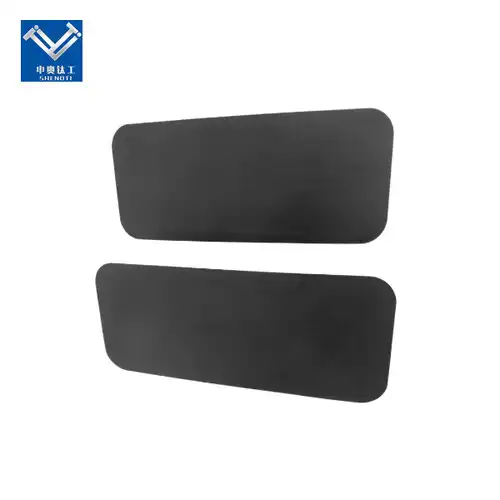
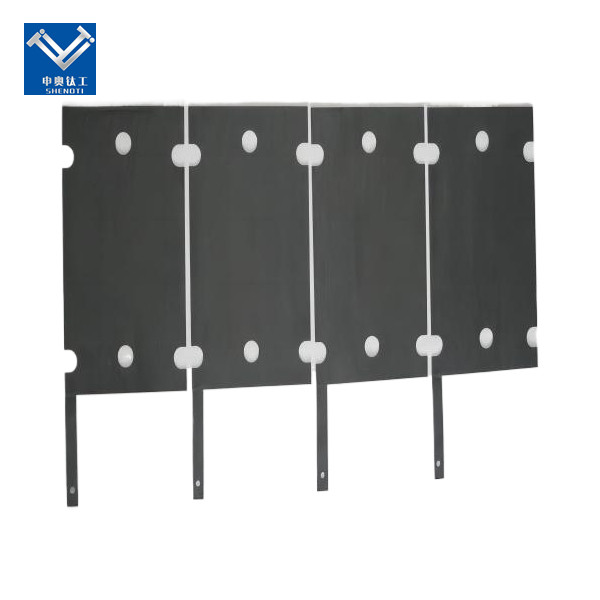
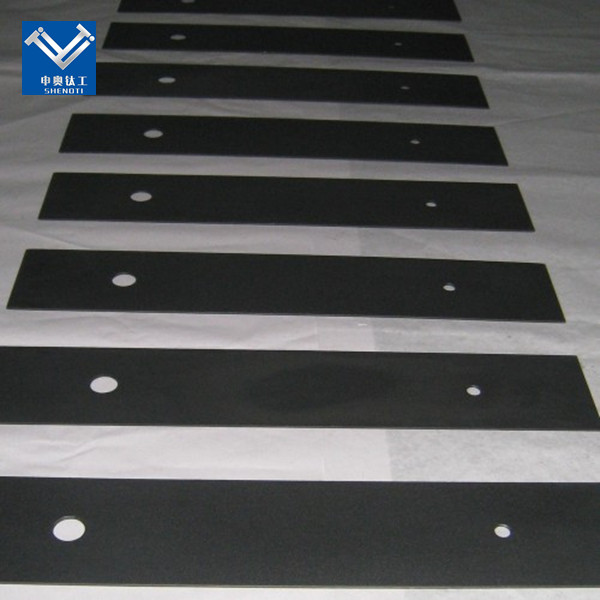
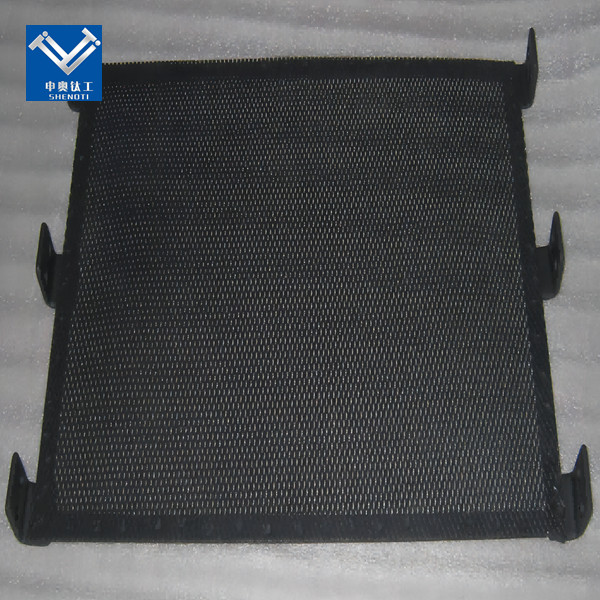
Our titanium anode products, built on high-purity titanium substrates with noble metal mixed oxide coatings, can be customized into round, square, and other geometric configurations to suit different electrochemical reactor designs. We encourage textile enterprises and environmental engineering firms to conduct bench-scale or pilot validation of titanium anodes based on the actual chromaticity, salinity, and flow characteristics of their dyeing wastewater. By tracking indicators such as decolorization rate, reagent reduction proportion, and long-term electrode operating performance, the technical compatibility and economic return of the electrochemical decolorization solution in specific application scenarios can be evaluated.
Important Note: The performance descriptions above are based on engineering experience under typical conditions or internal test data. Actual decolorization effectiveness, electrode working life, and reagent reduction magnitude may vary depending on wastewater quality, dye type, operating parameters, and system design. Performance varies by water quality. This product involves electrochemical oxidation processes; users are advised to consult relevant safety documentation prior to operation. This product is designed for industrial wastewater treatment applications. Sufficient compatibility validation prior to bulk procurement is recommended.
Titanium Anode Manufacturer
Email: zh@baojiti.com.cn
Products: Titanium Anodes, MMO Titanium Anodes, DSA Coated Titanium Electrodes, Electrolysis Electrodes, Hydrogen Production Electrodes, Wastewater Treatment Titanium Anodes.