Titanium Anode for Electrochemical Scale Removal and Microbial Control in Cooling Water Treatment
2026-06-15 09:28:22
Industrial circulating cooling water systems face the triple challenges of scaling, corrosion, and microbial growth during operation. While traditional chemical treatment methods are well-established, the continuous dosing of scale inhibitors, corrosion inhibitors, and biocides not only constitutes operating costs but also brings long-term burdens in chemical storage management and discharge environmental compliance. Against this backdrop, chemical-free electrochemical water treatment technology is gaining engineering attention, with the titanium anode for electrolytic water treatment serving as the core functional component.
Electrochemical Scale Removal: Crystallization Separation Through Interfacial Alkalinity Control
As cooling water continuously circulates and evaporates, hardness ions such as calcium and magnesium, along with bicarbonates, progressively concentrate. When their concentrations exceed the solubility product, precipitation and deposition occur on heat exchange surfaces, forming insulating scale layers. Electrochemical scale removal technology works by creating a localized high-pH microenvironment near the cathode, transferring the scaling process from heat exchange surfaces to a controllable interface within the reactor.
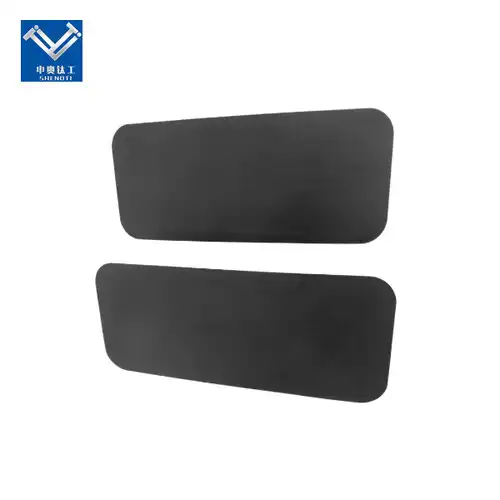
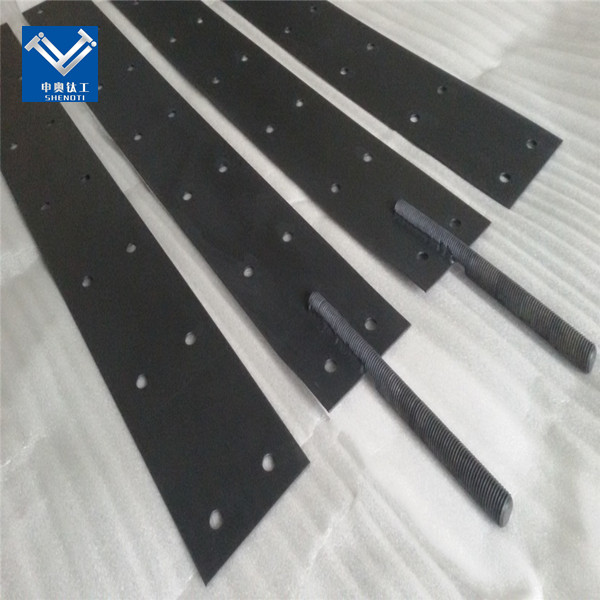
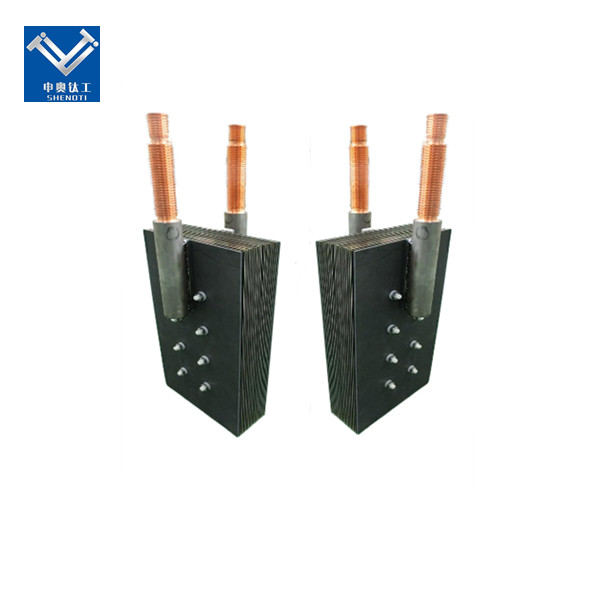
In an electrochemical reaction unit with the titanium anode for electrolytic water treatment at its core, water reduction occurs on the cathode surface, generating hydroxide ions and releasing hydrogen gas. This process converts bicarbonates near the cathode into carbonates, prompting calcium and magnesium ions to preferentially crystallize and deposit as calcium carbonate and magnesium hydroxide on the cathode surface, rather than on downstream heat exchanger tube walls or cooling tower fill. Periodic removal of cathode deposits through mechanical means or polarity reversal enables continuous scale-free operation of the system. The titanium anode carries out the oxygen evolution reaction in this process, with its noble metal mixed oxide coating maintaining stable oxygen evolution overpotential across a broad current density range, providing sustained and uniform electrochemical driving force for cathode-side alkalinity control. Under typical operating conditions, this technical pathway can help reduce the hard scale deposition rate on heat exchange surfaces. Actual scale removal efficiency may vary depending on water hardness, cycles of concentration, and operating parameters.
Usage Guideline: Scale removal effectiveness depends on circulating water quality, hardness composition, and system operating conditions. Validation under actual water quality is recommended.

In-Situ Microbial Control: Synergistic Effects of Electrochemical Chlorine Generation and Active Oxygen
The temperature and nutrient conditions in circulating cooling water systems are conducive to microbial proliferation, including bacteria and algae, which can form biofilms and adhere to pipe and fill surfaces. Electrochemical water treatment technology, while removing scale, can utilize electrocatalytic reactions on the anode surface to generate species with microbial inhibition activity in situ.
When chloride ions are present in the circulating water, the titanium anode can oxidize them into active chlorine species such as hypochlorous acid. Meanwhile, intermediate reactive oxygen species generated during the anodic oxygen evolution process also possess a certain degree of microbial inhibition capability. These in-situ generated active substances gradually decompose after contact with microorganisms within the reactor, leaving no persistent chemical residues. Compared with traditional intermittent shock dosing of chemical agents, electrochemical in-situ microbial control can achieve low-concentration continuous treatment, helping to maintain long-term stable suppression of microbial populations in circulating water. For target microorganisms that may be of concern in cooling tower operations, electrochemical treatment can help reduce their presence in the aqueous phase, thereby contributing to improved microbial conditions in the circulating water system. Actual microbial control effectiveness may vary depending on water quality, chloride ion concentration, microbial community type, and operating parameters.
Chemical-Free Operation: The Dual Value of Water Savings and Cost Reduction
Electrochemical water treatment technology uses electric current as the core driving force, eliminating the need for continuous procurement, storage, and dosing of chemical reagents. This characteristic translates into operational benefits across multiple dimensions. Chemical procurement and inventory management costs can be freed up, and maintenance workload for auxiliary equipment such as dosing pumps and storage tanks can be correspondingly reduced. Additionally, the absence of chemical dosing means reduced chemical residues in the discharge water, with the potential to simplify the treatment complexity of blowdown water before reuse or discharge.
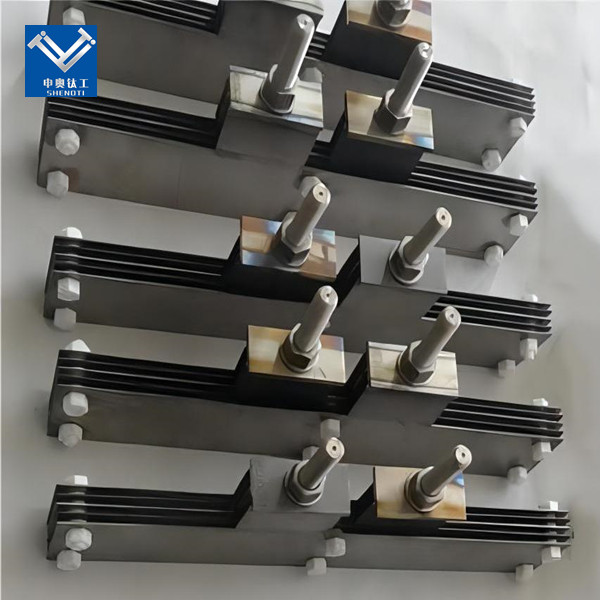
In terms of water savings, electrochemical scale removal allows the circulating water system to operate at higher cycles of concentration, with blowdown and makeup water volumes reduced simultaneously. For regions facing water scarcity or high water costs, this water-saving effect can translate into quantifiable operational cost savings. Our titanium anode for electrolytic water treatment products, built on high-purity titanium substrates with noble metal mixed oxide coatings, can be customized into various geometric configurations to suit reactor designs of different scales. We recommend that cooling tower system integrators and industrial users conduct bench-scale or pilot validation of titanium anodes based on their circulating water quality characteristics and operating conditions, evaluating the technical compatibility and comprehensive economic benefits of the electrochemical treatment solution in specific application scenarios.
Important Note: The performance descriptions above are based on engineering experience under typical conditions or internal test data. Actual scale removal efficiency, microbial control effectiveness, and water savings magnitude may vary depending on circulating water quality, cycles of concentration, operating parameters, and system design, and do not constitute a guarantee of specific treatment results. This product is designed for industrial circulating cooling water treatment applications and is classified as industrial equipment consumables. Sufficient compatibility validation prior to bulk procurement is recommended.
Titanium Anode Manufacturer
Email: zh@baojiti.com.cn
Products: Titanium Anodes, MMO Titanium Anodes, DSA Coated Titanium Electrodes, Electrolysis Electrodes, Hydrogen Production Electrodes, Wastewater Treatment Titanium Anodes.