Titanium Anode for Advanced Oxidation of Refractory Wastewater
2026-06-15 09:29:26
Industrial wastewater contains a category of recalcitrant organics whose molecular structures are stable and relatively resistant to conventional biological treatment. Effluents from pharmaceutical, textile, and chemical industries, containing aromatic rings, heterocyclic compounds, and halogenated organics, often retain elevated COD and chromaticity levels even after biological treatment. Against this backdrop, electrochemical advanced oxidation processes have become an important engineering option for the advanced treatment of such wastewater, with the titanium anode for electrolytic water treatment serving as the core functional component.
The Technical Logic of Hydroxyl Radicals and Pollutant Mineralization
The core of advanced oxidation technology lies in utilizing the strong oxidizing capability of hydroxyl radicals to progressively convert recalcitrant organics into carbon dioxide, water, and simple inorganic salts. During operation, the titanium anode for electrolytic water treatment promotes the oxidation of water molecules at the anode interface through surface electrocatalytic reactions, generating hydroxyl radicals in situ.
Hydroxyl radicals possess an oxidation-reduction potential at the higher end among common oxidants and can attack aromatic rings, double bonds, and heteroatom functional groups with relatively low selectivity. For recalcitrant organics such as phenolic compounds, azo dyes, pharmaceutical intermediates, and halogenated solvents, hydroxyl radicals proceed through hydrogen abstraction, electrophilic addition, or electron transfer pathways, first disrupting their conjugated structures or characteristic functional groups, converting macromolecules into ring-opened intermediates or small-molecule organic acids, followed by further mineralization under sustained oxidizing conditions. This process can proceed at ambient temperature and pressure without the need for external chemical oxidants or elevated temperature and pressure conditions. Actual COD removal rates and mineralization extent may vary depending on wastewater quality, pollutant structure, pH, and current density.
Usage Guideline: Hydroxyl radical yield and COD removal effectiveness depend on wastewater composition and operating parameters. Validation under actual wastewater quality conditions is recommended.

Electrode Design: Balancing Catalytic Activity and Operational Durability
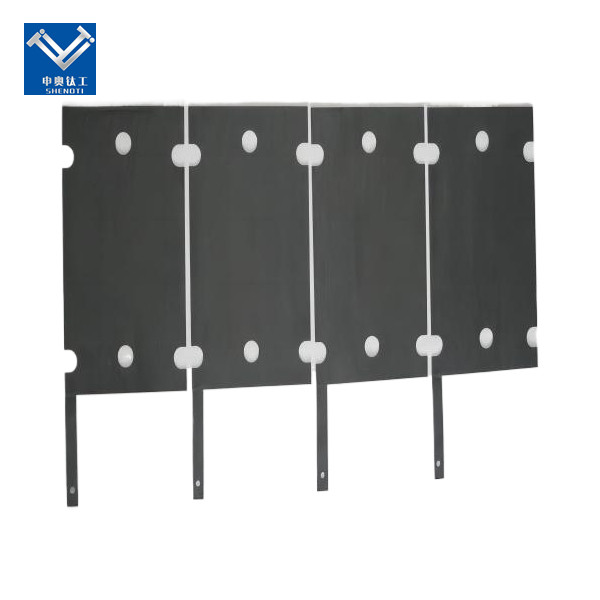
The performance of the titanium anode for electrolytic water treatment is rooted in its material system. The substrate employs high-purity titanium (Grade 1 or Grade 2), which after pretreatment develops a uniform micro-rough surface structure that helps enhance coating-to-substrate adhesion. The coating adopts a noble metal mixed oxide system, with coating thickness typically controlled within the 8 to 12 micrometer range and noble metal oxide loading in the 8 to 25 g/m² range.
This coating design serves the advanced oxidation process in two respects: first, reducing the competitive proportion of the oxygen evolution side reaction and directing more current toward hydroxyl radical generation; second, maintaining relatively stable electrocatalytic activity in actual wastewater containing multiple inorganic salts and organic pollutants, slowing performance decay caused by organic polymerization or inorganic salt deposition. The operating temperature tolerance reaches 60°C, with current density up to 2000 A/m², covering the operating window of most industrial wastewater advanced treatment scenarios. Under appropriate medium conditions, the electrode can provide extended cumulative operating time, with actual service life varying depending on wastewater composition, temperature, and operating parameters.
Engineering Value for the Refractory Wastewater Treatment Market
In the global industrial wastewater treatment market, particularly in regions with concentrated pharmaceutical and textile industries, discharge standards for COD and BOD parameters continue to tighten. While conventional biological treatment methods offer relatively lower operating costs, their degradation capability for aromatic and halogenated organics is relatively limited. Electrochemical advanced oxidation, as an advanced treatment or pretreatment method, can be positioned downstream of biological systems for effluent polishing, or placed upstream to break down biologically toxic substances and improve wastewater biodegradability.
The role of the titanium anode for electrolytic water treatment in this technical pathway is to provide a stable and sustained electrocatalytic interface for advanced oxidation reactions. Its dimensional stability means that throughout the service cycle, electrode geometry and inter-electrode spacing remain consistent, with current distribution maintained within the designed range, helping to ensure batch-to-batch consistency in treatment performance.
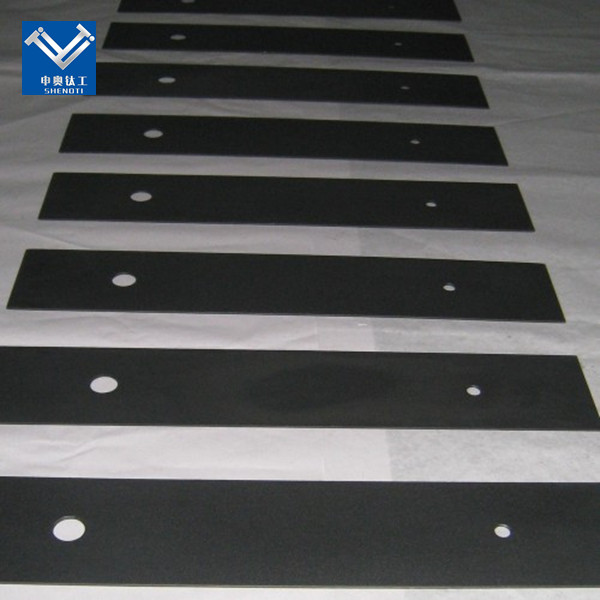
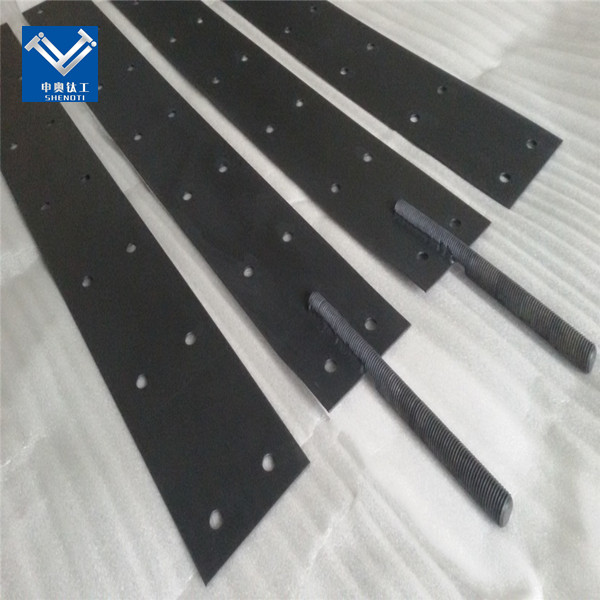
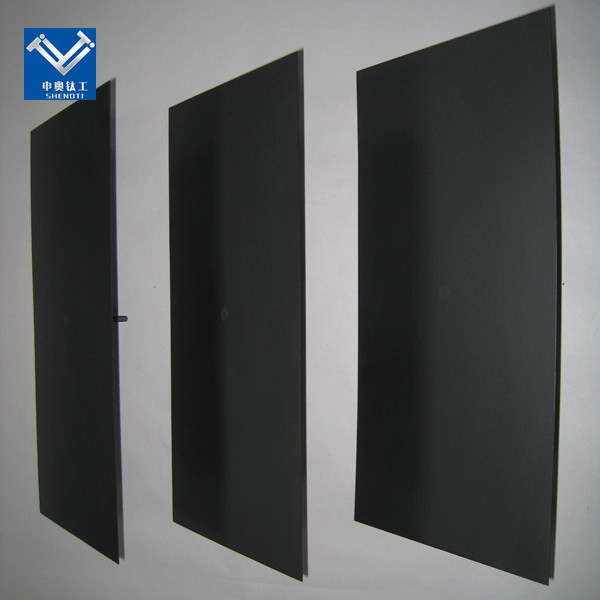
Our titanium anode products, built on high-purity titanium substrates with noble metal mixed oxide coatings, can be customized into various geometric configurations to suit different reactor structures. We recommend that environmental engineering firms and industrial users conduct bench-scale or pilot validation of titanium anodes based on the actual COD levels, pollutant composition, and salinity characteristics of their wastewater. By tracking indicators such as COD removal trends, BOD/COD ratio changes, and long-term electrode operating stability, the technical compatibility and economic return of the electrochemical advanced oxidation solution in specific application scenarios can be evaluated.
Important Note: The performance descriptions above are based on engineering experience under typical conditions or internal test data. Actual COD/BOD removal effectiveness, electrode working life, and mineralization extent may vary depending on wastewater quality, pollutant type, operating parameters, and system design, and do not constitute a guarantee of specific treatment results. This product involves electrochemical oxidation processes; users are advised to consult relevant safety documentation prior to operation and ensure the system is equipped with appropriate safety protection facilities. This product is designed for industrial wastewater treatment applications. Sufficient compatibility validation prior to bulk procurement is recommended.
Titanium Anode Manufacturer
Email: zh@baojiti.com.cn
Products: Titanium Anodes, MMO Titanium Anodes, DSA Coated Titanium Electrodes, Electrolysis Electrodes, Hydrogen Production Electrodes, Wastewater Treatment Titanium Anodes.