Titanium Anode for Electrocatalytic Nitrogen and Carbon Removal in Aged Landfill Leachate Treatment
2026-06-17 09:29:23
Aged landfill leachate contains high concentrations of ammonia nitrogen, recalcitrant humic substances, and heavy metal ions, with severely imbalanced carbon-to-nitrogen ratios. Certain organic components exhibit toxic inhibitory effects on microorganisms, making it difficult for conventional biological treatment processes to achieve stable compliance. Electrochemical oxidation technology, through in-situ generation of active species, can simultaneously achieve ammonia nitrogen conversion and organic matter degradation, with the titanium anode for sewage treatment serving as the core functional component.
The Electrochemical Pathway for Simultaneous Ammonia and Organic Removal
The treatment challenge of aged leachate lies in the dual loading of ammonia nitrogen and recalcitrant organics. Biological methods require substantial external carbon source supplementation to maintain denitrification, while humic-type organics have low bioavailability, making effluent chromaticity and COD often difficult to meet discharge requirements. Electrochemical technology offers a different treatment pathway.
When energized, the coating surface of the titanium anode for sewage treatment generates oxidative species such as hydroxyl radicals and active chlorine in situ through electrocatalytic reactions. For ammonia nitrogen removal, the primary pathway is active-chlorine-mediated indirect oxidation—the anode oxidizes chloride ions present in the leachate into hypochlorous acid, which then reacts with ammonia nitrogen to form nitrogen gas, achieving nitrogen removal. For recalcitrant organics, hydroxyl radicals can attack aromatic rings and conjugated double bond structures within humic substances, cleaving macromolecular organics into small-molecule intermediates, followed by further mineralization. This process can proceed at ambient temperature and pressure without the need for external carbon sources or chemical oxidants. Actual nitrogen and carbon removal efficiency varies depending on leachate quality, chloride ion concentration, pH, and current density.
Performance varies based on specific operating conditions. Actual results depend on leachate composition and operating parameters.

Electrode Tolerance: Addressing the Complex Composition of Leachate
The water quality characteristics of aged leachate place comprehensive tolerance demands on the electrode. High salinity and heavy metal ions may affect the chemical stability of the coating, while humic substances and suspended solids may cause physical fouling on the electrode surface.
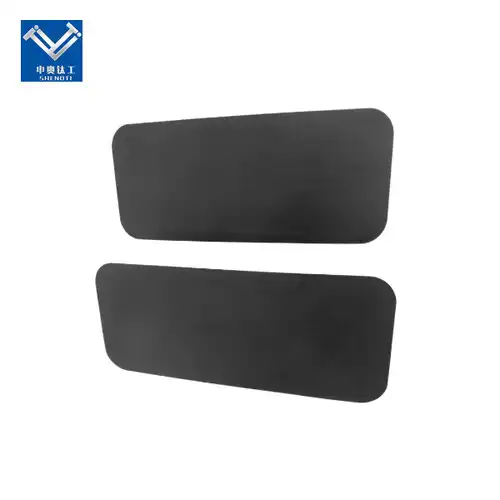
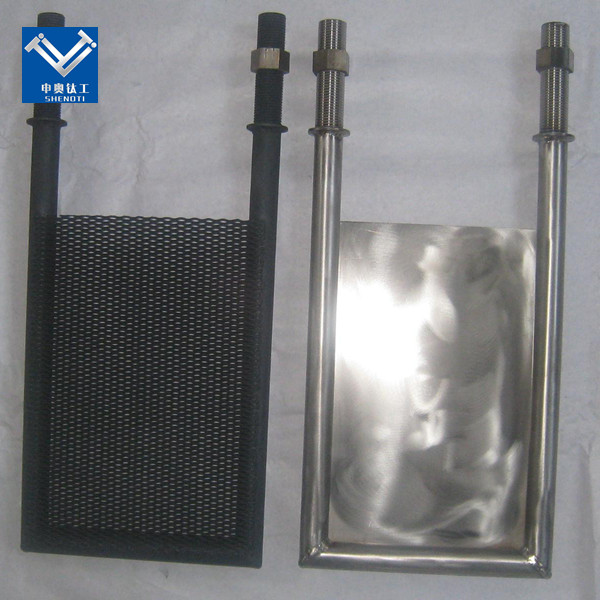
The titanium anode for sewage treatment employs high-purity titanium as the substrate. Titanium can spontaneously form a dense passive film in chloride-containing media, providing structural stability for long-term electrode operation in high-salinity, highly corrosive leachate. The coating adopts a mixed metal oxide system, applied through a precision coating process. The selection of active components in the coating balances chlorine evolution catalytic efficiency with durability in complex water matrices, while the introduction of inert components contributes to improved mechanical integrity and anti-fouling capability of the coating. The coating exhibits high bonding strength with the substrate, contributing to structural integrity under gas evolution conditions. Under typical operating conditions, the electrode can operate across a broad current density range, with operating voltage generally falling within a lower range. Actual working life varies depending on leachate composition, temperature, and operating parameters.
Engineering Value of Integrated Electrochemical Solutions
In the global landfill operation market, leachate discharge standards for ammonia nitrogen and COD continue to tighten. While conventional biological-membrane filtration combined processes are widely applied, they face challenges of membrane concentrate disposal difficulties and high carbon source dosing costs. Electrochemical oxidation, as an advanced treatment or pretreatment method, can be flexibly integrated into existing treatment flows.
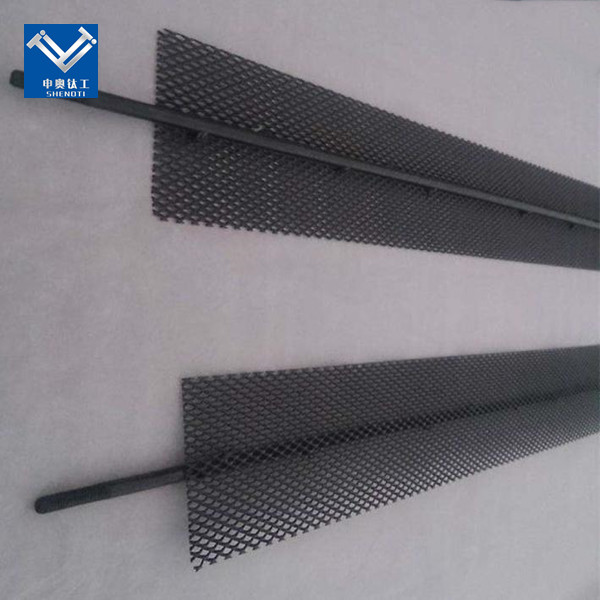
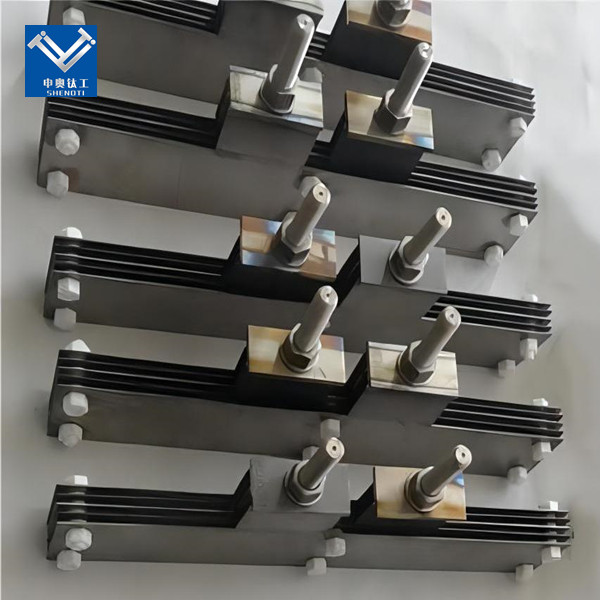
The engineering value of the titanium anode for sewage treatment in this technical pathway lies in integrating ammonia nitrogen conversion and organic matter degradation functions within a single reaction unit. Its dimensional stability means that during long-term operation, electrode geometry and inter-electrode spacing tend to remain stable, contributing to current distribution uniformity and batch-to-batch consistency in treatment performance. The coating consumption rate is gradual, with no macroscopic debris observed under typical operating conditions, helping to avoid introducing secondary pollution into the treated effluent. Our titanium anode products, built on high-purity titanium substrates and coated with mixed metal oxide coatings, can be customized into various geometric configurations to suit different reactor designs.
We recommend that landfill operators and environmental engineering firms conduct bench-scale or pilot validation of titanium anodes for sewage treatment based on their actual leachate ammonia nitrogen concentration, COD levels, chloride ion content, and water quality fluctuation characteristics. By tracking indicators such as ammonia nitrogen removal trends, COD degradation extent, energy consumption per ton of water, and long-term electrode operating performance, the technical compatibility and comprehensive economic benefits of the electrochemical treatment solution in specific application scenarios can be evaluated.
Important Note: The performance descriptions above are based on engineering experience under typical conditions or internal test data. Differences may exist between laboratory data and actual operating conditions. Actual nitrogen and carbon removal efficiency, working life, and energy consumption vary depending on leachate quality, operating parameters, and system design. This product is an industrial wastewater treatment equipment component, and its suitability must be verified by the user according to local regulations and application conditions. Sufficient compatibility validation prior to bulk procurement is recommended.
Titanium Anode Manufacturer
Email: zh@baojiti.com.cn
Products: Titanium Anodes, MMO Titanium Anodes, DSA Coated Titanium Electrodes, Electrolysis Electrodes, Hydrogen Production Electrodes, Wastewater Treatment Titanium Anodes.