Titanium Anode for Deep Electrooxidation and High-Efficiency Mineralization of Refractory Industrial Organic Wastewater
2026-06-17 09:30:44
Industrial wastewater containing aromatic, heterocyclic, and halogenated organic pollutants possesses stable chemical structures that conventional biological treatment processes have relatively limited capability to degrade. Electrochemical advanced oxidation technology, through in-situ generation of strong oxidizing species, can deeply convert organic pollutants into carbon dioxide and water, with the titanium anode for sewage treatment serving as the core functional component.
Deep Oxidation: From Pollutant Degradation to High-Efficiency Mineralization
Conventional wastewater treatment processes for recalcitrant organics often remain at the stage of partial oxidation or adsorptive transfer, with limited molecular structure destruction. The technical advantage of electrochemical deep oxidation lies in its ability to continuously oxidize organics to terminal products, rather than merely converting them into other intermediate forms.
When energized, the active sites on the coating surface of the titanium anode for sewage treatment can catalyze water molecule oxidation to generate hydroxyl radicals. Hydroxyl radicals possess a high oxidation-reduction potential and can, under appropriate conditions, attack aromatic rings, double bonds, and heteroatom functional groups. Through hydrogen abstraction, electrophilic addition, or electron transfer pathways, complex organic molecules are progressively cleaved into small-molecule organic acids, followed by further oxidation to carbon dioxide and water. For industrial wastewater containing recalcitrant substances such as phenolic compounds, azo dyes, and pharmaceutical intermediates, this technical pathway contributes to significant COD reduction and high-efficiency organic carbon mineralization. Actual mineralization efficiency varies depending on pollutant structure, wastewater composition, pH, and current density.
Performance varies based on specific operating conditions. Actual results depend on wastewater quality and operating parameters.

Electrode Design: Balancing Catalytic Efficiency and Structural Integrity
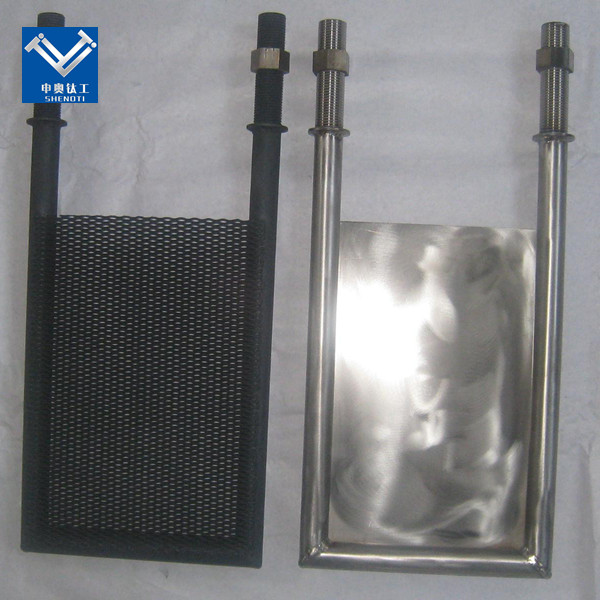
The performance of the titanium anode for sewage treatment is rooted in its material system. The substrate employs industrial pure titanium, which can spontaneously form a dense passive film under anodic polarization conditions, providing structural stability in acidic, neutral, or alkaline environments, adapting to the variable water quality conditions of industrial wastewater.
The coating adopts a mixed metal oxide system, applied through a precision coating process. This coating design serves two objectives: first, reducing the competitive proportion of the oxygen evolution side reaction and directing more current toward the generation of active species such as hydroxyl radicals; second, maintaining relatively stable electrocatalytic activity in actual wastewater containing multiple inorganic salts and organic pollutants. The coating exhibits high bonding strength with the substrate, contributing to the structural integrity of the coating under conditions of vigorous gas evolution. Under typical operating conditions, the electrode can operate across a broad current density range, with operating voltage generally falling within a lower range, covering the operating window of most industrial wastewater advanced treatment scenarios. Actual working life varies depending on wastewater composition, temperature, and operating parameters.
Engineering Value for the Industrial Wastewater Mineralization Market
In the global industrial wastewater treatment market, particularly in chemical, pharmaceutical, and textile dyeing sectors, discharge standards for COD and specific organic pollutants continue to tighten. While conventional biological treatment offers relatively lower operating costs, its mineralization capability for aromatic and halogenated organics is relatively limited. Electrochemical deep oxidation, as a terminal safeguard measure, can be positioned downstream of biological systems for effluent polishing, contributing to high-efficiency mineralization of recalcitrant organics.
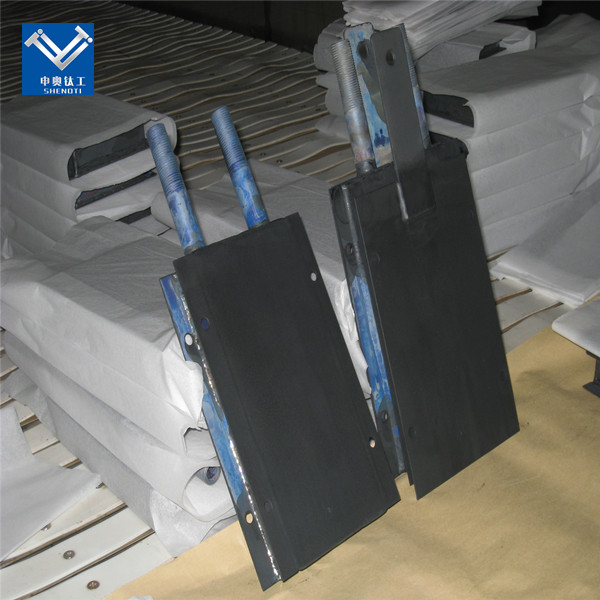
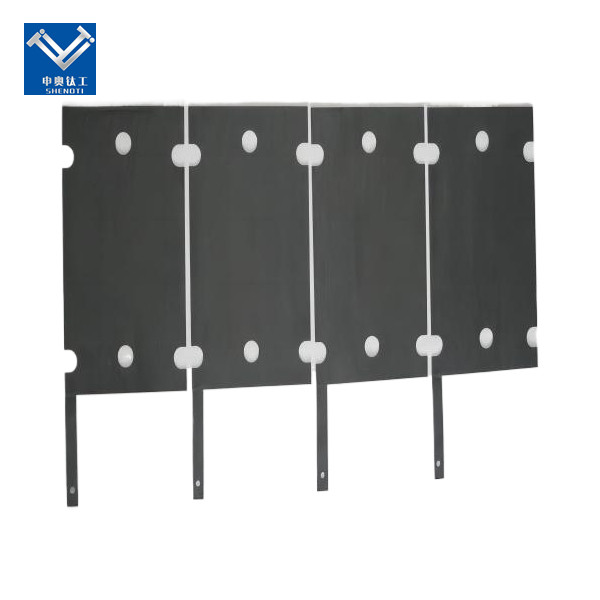
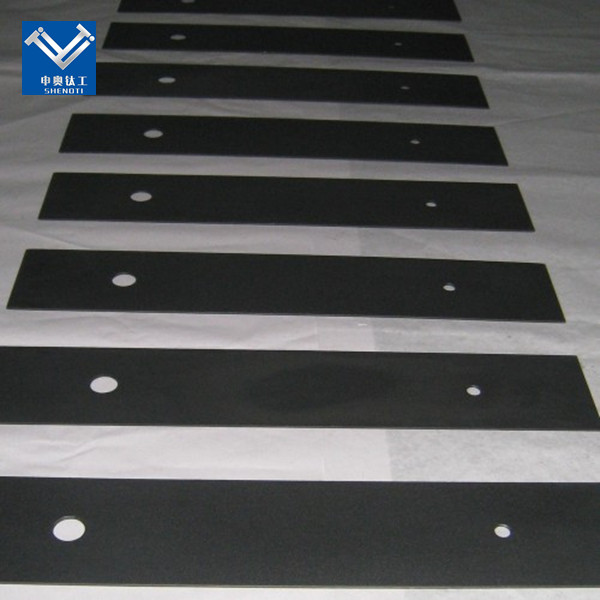
The engineering value of the titanium anode for sewage treatment in this technical pathway lies in combining hydroxyl radical generation capability with long-term stability in complex water matrices. Its dimensional stability means that during long-term operation, electrode geometry and inter-electrode spacing tend to remain stable, contributing to current distribution uniformity and batch-to-batch consistency in treatment performance. Our titanium anode products, built on high-purity titanium substrates and coated with mixed metal oxide coatings, can be customized into various geometric configurations to suit different reactor designs.
We recommend that environmental engineering firms and industrial users conduct bench-scale or pilot validation of titanium anodes for sewage treatment based on the actual COD levels, pollutant composition, and salinity characteristics of their wastewater. By tracking indicators such as COD removal trends, TOC mineralization rates, and long-term electrode operating stability, the technical compatibility and economic return of the electrochemical deep oxidation solution in specific application scenarios can be evaluated.
Important Note: The performance descriptions above are based on engineering experience under typical conditions or internal test data. Differences may exist between laboratory data and actual operating conditions. Actual mineralization efficiency, working life, and current efficiency vary depending on wastewater quality, pollutant type, operating parameters, and system design. This product is an industrial wastewater treatment equipment component, and its suitability must be verified by the user according to local regulations and application conditions. Sufficient compatibility validation prior to bulk procurement is recommended.
Titanium Anode Manufacturer
Email: zh@baojiti.com.cn
Products: Titanium Anodes, MMO Titanium Anodes, DSA Coated Titanium Electrodes, Electrolysis Electrodes, Hydrogen Production Electrodes, Wastewater Treatment Titanium Anodes.