MMO Titanium Anode with Polarity Reversal Resistance for Stable On-Site Electrochlorination
2026-06-16 09:26:10
On-site sodium hypochlorite generators and electrochlorination systems are widely applied in municipal water treatment and industrial disinfection. These systems require periodic polarity reversal during operation to remove calcium and magnesium scale deposits from cathode surfaces and maintain electrolysis efficiency. However, frequent polarity switching places stringent demands on the adhesion strength between the anode coating and titanium substrate. The MMO titanium anode is an electrochemical core component engineered specifically to withstand polarity reversal conditions.
Performance varies based on specific operating conditions.
Polarity Reversal: An Operational Necessity and Electrode Challenge in Electrochlorination
During electrochlorination, calcium and magnesium ions tend to deposit as carbonates and hydroxides on the cathode surface due to localized alkalinity elevation. As scale layers thicken, cell voltage rises and current efficiency declines, necessitating periodic polarity switching—converting the former cathode into an anode, where the acidic microenvironment generated by oxygen evolution dissolves the scale layer.
This maintenance strategy presents a contradictory set of demands on the electrode. Under normal polarity, the coating must maintain stable chlorine evolution catalytic activity. Upon polarity reversal, the former anode instantaneously becomes a cathode, with the coating surface experiencing a potential shift from oxygen evolution to hydrogen evolution, while simultaneously enduring mechanical stress from hydrogen gas generation. Coatings on conventional electrodes may delaminate under repeated polarity reversal due to accumulated interfacial stress, or undergo chemical reduction under hydrogen evolution conditions leading to activity decay. Therefore, polarity reversal resistance is a core indicator for evaluating the long-term reliability of anodes used in electrochlorination.

Synergistic Design of Coating and Substrate
The performance of the MMO titanium anode is rooted in the synergistic optimization of coating formulation and preparation processes. The coating employs mixed metal oxide systems such as IrO₂-Ta₂O₅ or RuO₂-IrO₂, with coating thickness generally controlled within the 5 to 20 micrometer range. The IrO₂ component exhibits high electrochemical stability under both oxygen and chlorine evolution conditions, while its electrical conductivity contributes to maintaining uniform current distribution within the coating during polarity reversal transients. The introduction of the inert Ta₂O₅ component can improve thermal expansion compatibility between the coating and titanium substrate, helping to reduce interfacial stress accumulation caused by repeated potential switching.
The substrate employs high-purity titanium (Grade 1 or Grade 2), which after pretreatment develops a uniform micro-rough surface structure that enhances coating adhesion. The passive film spontaneously formed on the titanium substrate under anodic polarization conditions can maintain structural integrity even when polarity is reversed to cathodic state, providing a stable supporting platform for the coating. The synergistic design of this material system makes the electrode suitable for frequent polarity reversal applications, with a tendency to maintain coating adhesion integrity and electrocatalytic activity. Actual resistance performance varies depending on electrolyte composition, reversal frequency, current density, and operating temperature.
Usage Guideline: The polarity reversal resistance of the electrode depends on electrolyte water quality and operating parameters. Specific performance varies with actual operating conditions; validation under target application conditions is recommended.
Extended Service Life: Reducing Total Lifecycle Costs
On-site electrochlorination systems typically require continuous operation, and the downtime and labor costs associated with electrode replacement are key concerns for operators. The MMO titanium anode can provide an extended service cycle under appropriate operating conditions, with current density up to 500 A/m² and operating temperature range spanning 10 to 80°C.
Its dimensional stability means that during long-term operation, electrode geometry and inter-electrode spacing tend to remain stable, contributing to maintaining cell voltage and current efficiency within design ranges. The coating consumption rate is gradual, without generating macroscopic debris or anode sludge, helping to maintain the cleanliness of electrolysis products. For application scenarios such as municipal water treatment and industrial cooling water disinfection, this long-cycle stability contributes to reduced maintenance costs and system downtime caused by frequent electrode replacement.
Engineering Adaptability for the On-Site Electrochlorination Market
In the global water treatment market, the application of on-site sodium hypochlorite generators and electrochlorination systems continues to expand. When selecting anodes, operators are shifting their focus from initial procurement cost to total cost of ownership, encompassing service life, polarity reversal resistance, and maintenance frequency.
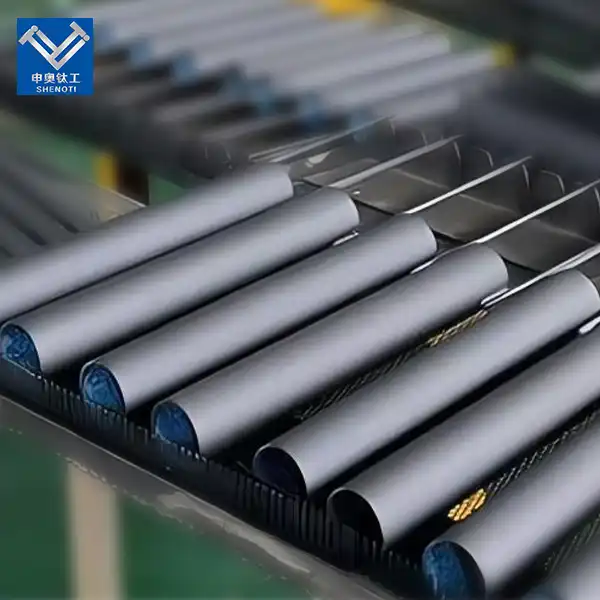
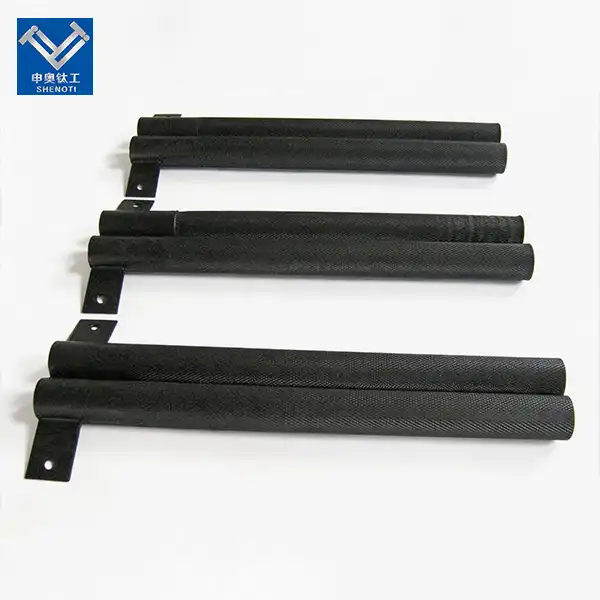
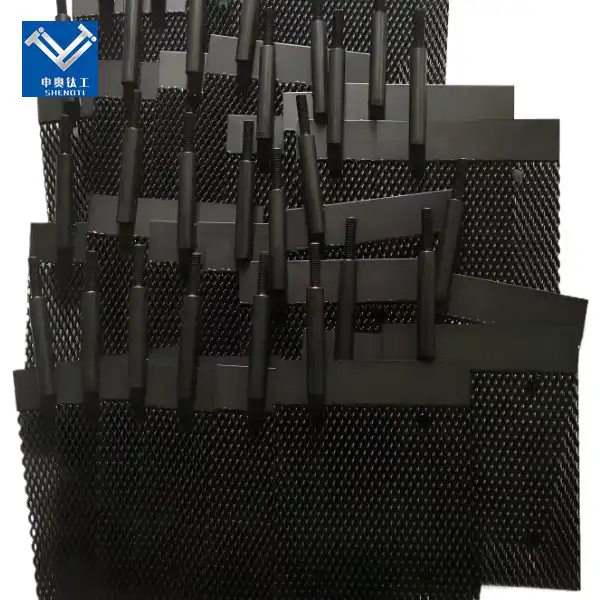
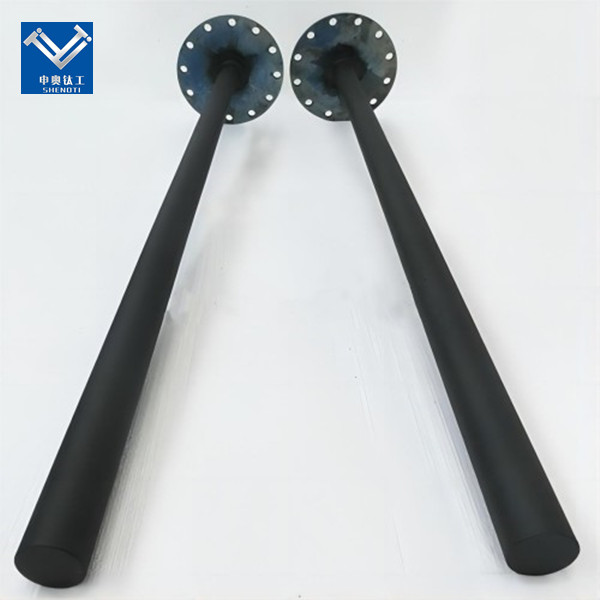
Our MMO titanium anode products, built on high-purity titanium substrates and coated with mixed metal oxide systems such as IrO₂-Ta₂O₅ or RuO₂-IrO₂, can be customized into plate, mesh, tubular, and other geometric configurations to suit different electrochlorination reactor designs. We recommend that water treatment equipment integrators and operators conduct bench-scale or pilot validation of MMO titanium anodes based on their specific feed water quality, polarity reversal cycles, and operating parameters. By tracking indicators such as cell voltage variation after reversal cycles, coating appearance, and current efficiency, the long-term reliability of the anode in the target application scenario can be evaluated.
Important Note: The performance descriptions above are based on engineering experience under typical conditions or internal test data. Actual polarity reversal resistance, working life, and current efficiency vary depending on electrolyte composition, reversal frequency, current density, temperature, and system design. Performance varies based on specific operating conditions. This product is an industrial and municipal water treatment equipment component, and its suitability must be verified by the user according to local regulations and application conditions. Sufficient compatibility validation prior to bulk procurement is recommended.
Titanium Anode Manufacturer
Email: zh@baojiti.com.cn
Products: Titanium Anodes, MMO Titanium Anodes, DSA Coated Titanium Electrodes, Electrolysis Electrodes, Hydrogen Production Electrodes, Wastewater Treatment Titanium Anodes.