Titanium Anode for Swimming Pool Disinfection in Maintenance-Free Applications for Household Salt Chlorinators
2026-07-27 10:28:20
Home pool owners pursue a low-maintenance, hassle-free water quality management experience. The traditional method of manually adding chlorine chemicals is not only cumbersome and odorous but also prone to water quality fluctuations due to inaccurate dosing—excess chlorine irritates skin and eyes, while insufficient levels lead to algae growth and cloudy water. Salt chlorinators, which dissolve a small amount of table salt in pool water and utilize electrolysis technology to continuously generate active chlorine, are becoming a common configuration for home swimming pools, with the titanium anode for swimming pool disinfection serving as the core component.
Continuous Chlorine Generation: The Core of Automated Water Quality Management
The working logic of a salt chlorinator is simple and reliable: pool water with low-concentration salt as the electrolyte is driven by the circulation pump through the electrolysis chamber, where the anode oxidizes chloride ions into active chlorine disinfectant. The active chlorine returns to the pool with the water flow, and after completing disinfection, part is decomposed by ultraviolet light while part is reconverted into chloride ions, forming a recyclable disinfection system.
The titanium anode for swimming pool disinfection employs high-grade titanium as the substrate, coated with an electrocatalytic active layer containing metal oxides such as RuO₂ and IrO₂. RuO₂ exhibits a relatively low overpotential for the chlorine evolution reaction, contributing to maintaining favorable chlorine evolution current efficiency at the relatively low salt concentrations typical of home pools. The introduction of IrO₂ helps enhance the electrochemical stability of the coating during long-term continuous operation, delaying activity decay. The system can be paired with an online controller to automatically adjust electrolysis power based on real-time oxidation-reduction potential, maintaining the active chlorine concentration within an appropriate range and helping to reduce the frequency of manual testing and dosing. Actual chlorine generation efficiency and disinfection effectiveness vary depending on pool water salt concentration, temperature, pH, and pool usage frequency.
Performance varies based on specific operating conditions. Actual results depend on water quality and operating parameters.

Long Life and Anti-Scaling: Engineering Assurance for Maintenance-Free Operation
The greatest expectation of home users for a salt chlorinator electrode is "minimal maintenance required." Achieving this goal requires the anode to possess both long working life and anti-scaling capability. Calcium and magnesium ions in pool water tend to deposit on the cathode surface during electrolysis, forming white scale layers that cover active sites and reduce chlorine generation efficiency. In severe cases, disassembly for cleaning or electrode replacement becomes necessary.
The titanium anode for swimming pool disinfection addresses the scaling challenge through synergistic coating design and system functionality. The titanium substrate can form a protective oxide layer under anodic polarization conditions, providing structural stability for the electrode in chlorinated pool water environments. The coating surface has undergone microstructural tuning to help reduce the tendency for calcium-magnesium deposits to attach to active sites. Salt chlorinators are typically equipped with an automatic periodic polarity reversal function—by switching electrode polarity, deposits detach from the original cathode surface and are carried away by the water flow. This self-cleaning mechanism helps significantly reduce the frequency of manual cleaning and replacement by users, supporting the anode in maintaining stable chlorine generation performance over several years. Actual working life and anti-scaling performance vary depending on pool water hardness, salt concentration, temperature, and operating mode.
Engineering Value for the Home Swimming Pool Market
In the global home swimming pool market, the penetration rate of salt chlorinators continues to grow, driven precisely by user demand for low-maintenance water quality management. The engineering value of the titanium anode for swimming pool disinfection in this market lies in combining stable chlorine generation with long-life anti-scaling capability, supporting salt chlorinators in achieving long-term low-maintenance automated water quality management in home environments.
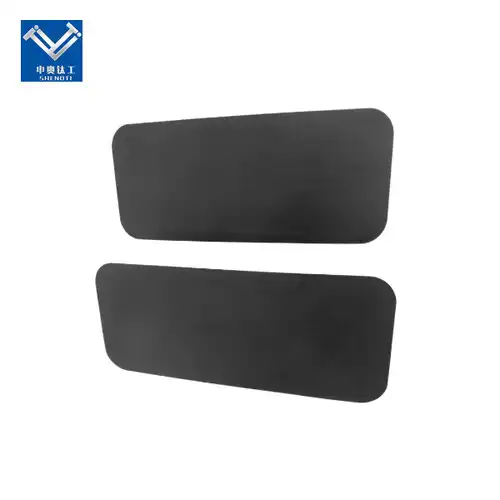
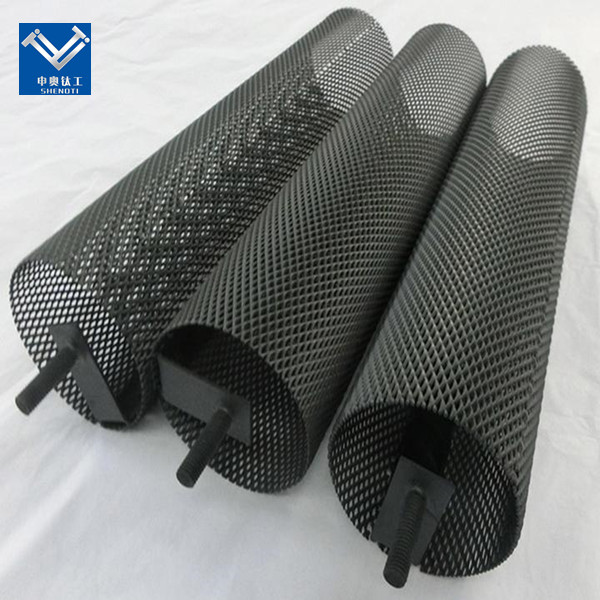
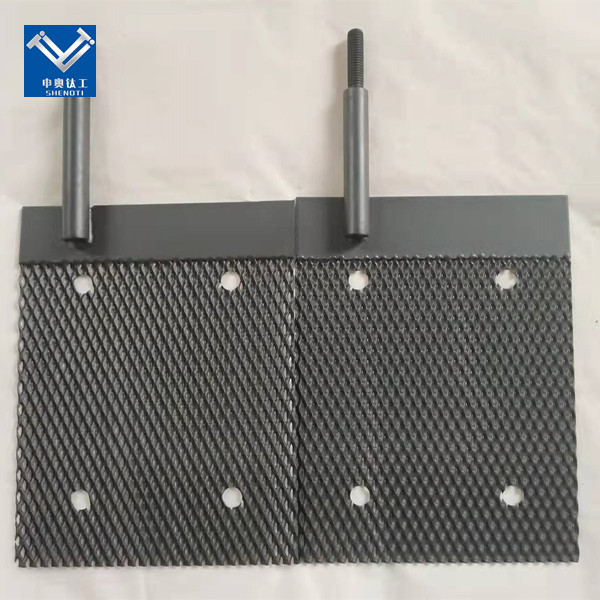
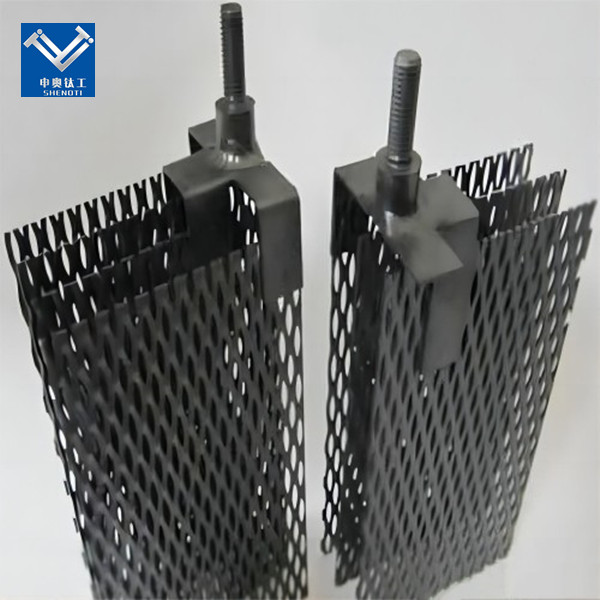
These titanium anode products are built on high-grade titanium substrates and coated with metal oxide systems such as RuO₂ and IrO₂, and can be customized into plate, mesh, tubular, and other geometric configurations according to the design requirements of household salt chlorinators. It is recommended that salt chlorinator brands and pool equipment integrators conduct multi-condition durability testing of titanium anodes for swimming pool disinfection based on the pool water quality characteristics and home user habits of their target markets. By tracking indicators such as long-term chlorine generation stability, scaling degree, and electrode service life, the technical compatibility and user satisfaction assurance capability of the anode solution in specific home application scenarios can be evaluated.
Important Note: The performance descriptions above are based on engineering experience under specific test conditions or internal test data. Differences may exist between laboratory results and actual operating conditions. Actual chlorine generation efficiency, working life, and anti-scaling performance vary depending on pool water salt concentration, hardness, temperature, pH, usage frequency, operating parameters, and system design. This product is a home swimming pool disinfection equipment component, and its suitability for specific applications must be verified by the user according to local water quality conditions and relevant standards.
Titanium Anode Manufacturer
Email: zh@baojiti.com.cn
Products: Titanium Anodes, MMO Titanium Anodes, DSA Coated Titanium Electrodes, Electrolysis Electrodes, Hydrogen Production Electrodes, Wastewater Treatment Titanium Anodes.