Titanium Anode for Pathogen Blocking in Aquaculture Intake and Effluent Water Disinfection
2026-07-02 08:41:11
Industrial mariculture farms face a dual biosecurity challenge: intake water may introduce pathogenic bacteria and viruses from the surrounding water body, threatening the culture safety of the entire production cycle; and effluent water, if discharged without effective disinfection, may lead to pathogen spread and environmental compliance risks. Online electrolytic disinfection technology can be deployed at both the intake and effluent ends, with the titanium anode for electrolytic disinfection in seawater aquaculture serving as its core component.
A Dual Disinfection Barrier at the Intake and Effluent Ends
The biosecurity defense line of an aquaculture farm begins at the intake. Pathogenic microorganisms such as Vibrio and viruses carried by nearshore seawater, if introduced into the culture tanks with the intake water, may proliferate rapidly under suitable conditions, causing disease outbreaks. Traditional intake disinfection methods rely on ultraviolet light or ozone; the former loses efficiency in high-turbidity seawater, while the latter involves complex equipment and high operating costs.
The titanium anode for electrolytic disinfection in seawater aquaculture, when energized, can convert natural chloride ions present in seawater into active chlorine species in situ, achieving broad-spectrum inactivation of pathogenic microorganisms in the intake water. During disease outbreak seasons or when abnormal influent pathogen concentrations are detected, the system can implement emergency high-flow disinfection by increasing the electrolysis current, with fast response times and no need for chemical stockpiling. At the effluent end, the same electrolysis technology can disinfect aquaculture discharge water, helping to reduce the risk of pathogen spread to surrounding water bodies and supporting farms in meeting effluent disinfection requirements. Intake and effluent treatment can share the same electrolytic disinfection equipment architecture, with operating modes switchable for separate treatment, reducing duplication of equipment investment. Actual disinfection effectiveness varies depending on seawater salinity, temperature, suspended solids concentration, and pathogen species.

Resistance to High Suspended Solids Scouring: Adapting to the Complex Water Quality of Nearshore Seawater
Aquaculture farm intakes are typically located in nearshore or harbor areas, where seawater contains relatively high concentrations of sediment, organic debris, and suspended particulate matter. High-turbidity seawater exerts continuous physical scouring and surface fouling stress on the anode coating, placing higher durability demands on the electrode than conventional electrolysis applications.
The titanium anode for electrolytic disinfection in seawater aquaculture employs high-purity titanium as the substrate. Titanium possesses relatively high mechanical strength and tends to maintain geometric integrity under long-term sand-laden seawater scouring conditions. The titanium substrate can spontaneously form a dense passive film under anodic polarization conditions, effectively suppressing electrochemical dissolution of the substrate itself in chloride-containing seawater environments. The coating adopts an electrocatalytic active layer containing metal oxides such as RuO₂ and IrO₂. The IrO₂ component exhibits high electrochemical stability under chlorine evolution conditions while also contributing to the mechanical strength of the coating matrix. The coating and substrate achieve high bonding strength through optimized pretreatment and thermal decomposition processes, tending to maintain stable adhesion under continuous scouring by seawater containing suspended solids. The coating thickness has been optimized to balance chlorine evolution activity with erosion and abrasion resistance. The system can assist in removing deposits from the electrode surface through periodic polarity reversal, helping to maintain stable electrolysis efficiency. Actual durability varies depending on seawater sand content, suspended solids concentration, flow velocity, and operating mode.
Engineering Value for the Aquaculture Biosecurity Market
In the global mariculture market, biosecurity management is a decisive factor in aquaculture success rates and economic returns. The engineering value of the titanium anode for electrolytic disinfection in seawater aquaculture in this market lies in combining dual disinfection capability for both intake and effluent water with resistance to complex water quality durability, supporting aquaculture farms in establishing a full-process pathogen blocking barrier.
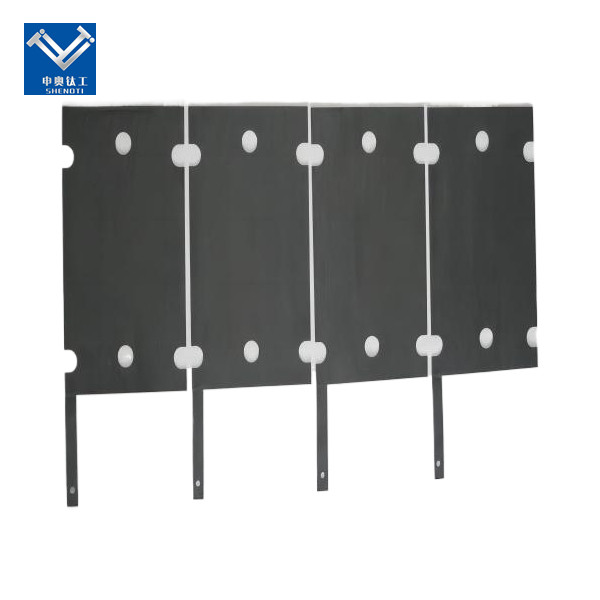
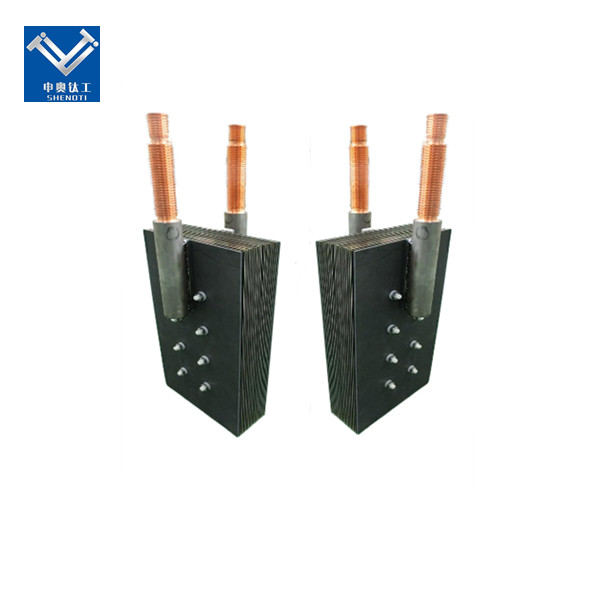
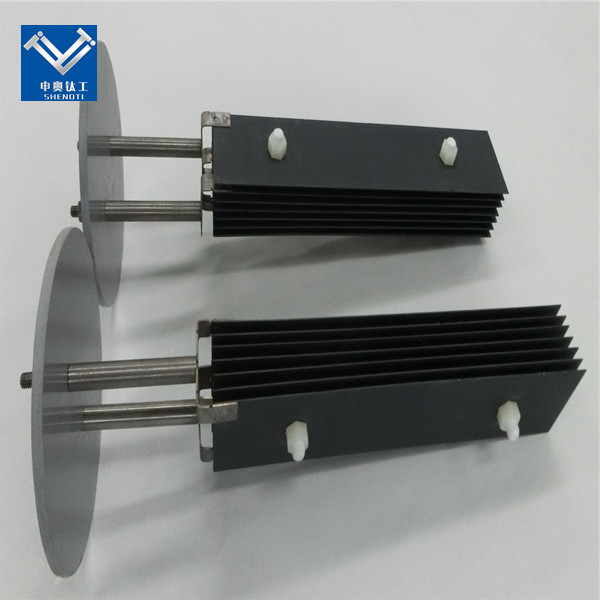
Online electrolytic disinfection solutions use seawater itself as raw material, eliminating the need for chemical storage and dosing at the intake end and not introducing new chemical residues at the effluent end, helping to simplify chemical management on the farm. These titanium anode products are built on high-purity titanium substrates and coated with metal oxide systems such as RuO₂ and IrO₂, and can be customized into plate, mesh, tubular, and other geometric configurations to suit electrolytic disinfection devices at intakes and effluent treatment channels. It is recommended that aquaculture enterprises and water treatment equipment integrators conduct field condition testing of titanium anodes for electrolytic disinfection in seawater aquaculture based on their intake water quality, cultured species, and effluent discharge standards. By tracking indicators such as microbial indicators in intake and effluent water, disinfection effectiveness persistence, and long-term anode operating performance, the technical compatibility and biosecurity assurance capability of the online electrolytic disinfection solution in specific aquaculture scenarios can be evaluated.
Important Note: The performance descriptions above are based on engineering experience under specific test conditions or internal test data. Differences may exist between laboratory results and actual operating conditions. Actual disinfection effectiveness, working life, and durability vary depending on seawater salinity, suspended solids concentration, temperature, flow velocity, pathogen species, operating parameters, and system design. This product is a mariculture water treatment equipment component, and its suitability for aquaculture disinfection must be verified by the user according to cultured species characteristics, local environmental regulations, and relevant standards. Sufficient compatibility validation prior to bulk procurement is recommended.
Titanium Anode Manufacturer
Email: zh@baojiti.com.cn
Products: Titanium Anodes, MMO Titanium Anodes, DSA Coated Titanium Electrodes, Electrolysis Electrodes, Hydrogen Production Electrodes, Wastewater Treatment Titanium Anodes.