Titanium Anode for Organic Wastewater Treatment with High-Salt Resistance and Simultaneous Nitrogen and Carbon Removal for Aged Landfill Leachate
2026-07-08 10:32:48
Aged landfill leachate is characterized by high chemical oxygen demand, high ammonia nitrogen, and high salinity—the "three highs"—along with poor biodegradability, making it difficult for conventional biological treatment systems to operate stably. As landfill age increases, the proportion of humic substances and recalcitrant organics in the leachate continues to rise, further intensifying treatment difficulty. Electrochemical oxidation technology, through in-situ generation of active species on the anode surface, can simultaneously achieve ammonia nitrogen conversion and organic degradation in high-salinity complex water matrices, with the titanium anode for organic wastewater treatment serving as its core component.
Simultaneous Nitrogen and Carbon Removal: Electrochemical Synergistic Pathways in High-Salinity Environments
The treatment challenge of aged leachate lies in the dual loading of ammonia nitrogen and recalcitrant organics. Biological methods require external carbon source supplementation to maintain denitrification, while humic-type organics have low bioavailability, often leaving effluent chemical oxygen demand and chromaticity difficult to meet discharge standards. High salinity further inhibits microbial activity, reducing biological system treatment efficiency.
When energized, the coating surface of the titanium anode for organic wastewater treatment generates oxidative species such as active chlorine and hydroxyl radicals in situ through electrocatalytic reactions. For ammonia nitrogen removal, the primary pathway is active chlorine-mediated indirect oxidation—the anode oxidizes the high concentration of chloride ions present in the leachate into active chlorine, which then reacts with ammonia nitrogen to progressively convert it into nitrogen gas, achieving nitrogen removal. For recalcitrant organics, hydroxyl radicals can attack aromatic rings and conjugated double bond structures in humic substances, cleaving macromolecular organics into small-molecule intermediates that are subsequently further mineralized. This process can proceed at ambient temperature and pressure without the need for external carbon sources or chemical oxidants, with the high salinity instead providing an abundant source of chloride ions for the chlorine evolution reaction. Actual nitrogen and carbon removal efficiency varies depending on leachate quality, chloride ion concentration, pH, and current density.
Performance varies based on specific operating conditions. Actual results depend on leachate composition and operating parameters.

High-Salt Corrosion Resistance: Electrode Durability in Complex Leachate Water Matrices
Aged leachate contains not only high concentrations of chloride ions but also various metal ions and humic complexes. Anodes operating long-term in such composite water quality face the dual risks of coating active site fouling and substrate chemical corrosion. The high conductivity of leachate subjects the electrode to relatively high current loading during electrolysis, placing elevated demands on the electrochemical stability of the coating.
The titanium anode for organic wastewater treatment employs high-purity titanium as the substrate. The titanium substrate can spontaneously form a dense passive film in high-salinity environments, helping to suppress electrochemical dissolution of the substrate itself and providing a stable supporting platform for the coating. The coating adopts an electrocatalytic active layer containing metal oxides such as RuO₂ and IrO₂. RuO₂ imparts a relatively low chlorine evolution overpotential to the coating, serving as the core component for efficient chlorine generation in high-salinity environments. The introduction of IrO₂ contributes to enhancing the electrochemical stability of the coating during long-term operation, delaying activity decay. The coating and substrate achieve high bonding strength through optimized pretreatment processes, supporting the maintenance of structural integrity during long-term operation. The coating thickness has been optimized to balance catalytic activity with anti-fouling and durability. Actual working life varies depending on leachate composition, salinity, temperature, and operating mode.
Engineering Value for the Leachate Treatment Market
In the global landfill operation market, environmentally compliant leachate treatment is a core link in the full lifecycle management of landfill sites. The engineering value of the titanium anode for organic wastewater treatment in this market lies in utilizing the inherent high-salinity characteristics of leachate to drive the chlorine evolution reaction, simultaneously achieving nitrogen and carbon removal, and supporting landfill sites in addressing leachate treatment challenges with a relatively compact process flow.
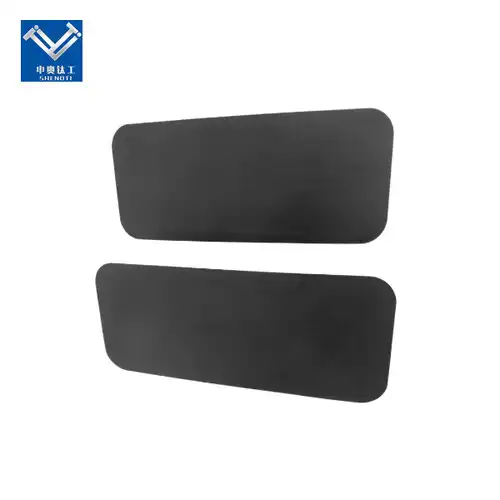
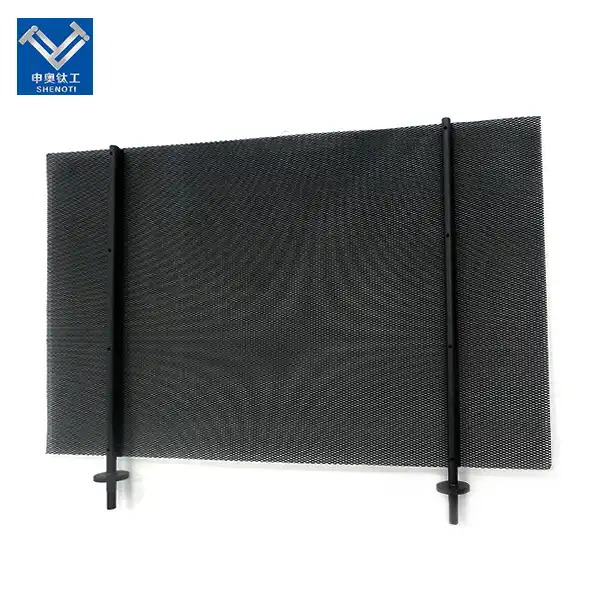
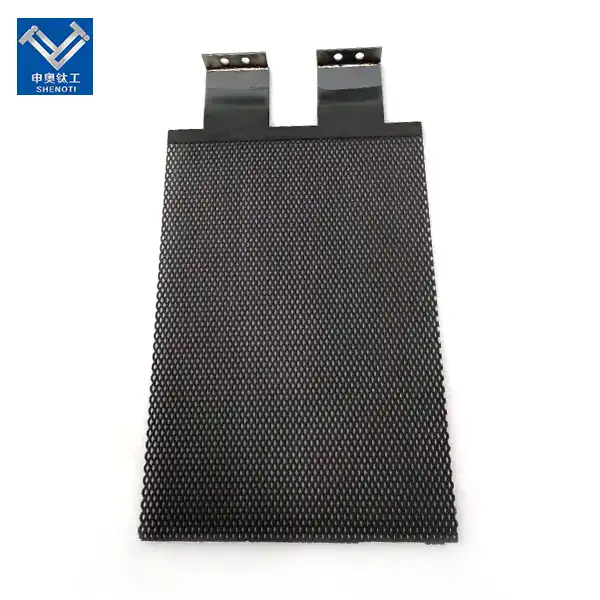
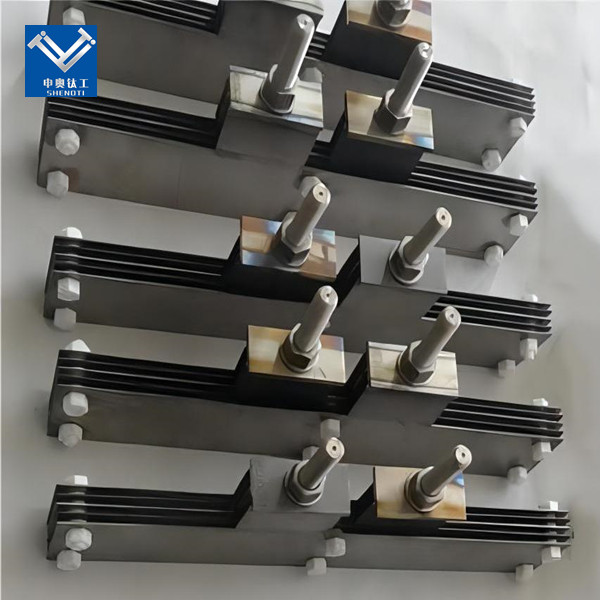
These titanium anode products are built on high-purity titanium substrates and coated with metal oxide systems such as RuO₂ and IrO₂, and can be customized into plate, mesh, tubular, and other geometric configurations to suit leachate electrochemical treatment devices of different scales. It is recommended that landfill operators and environmental engineering firms conduct field condition testing of titanium anodes for organic wastewater treatment based on their leachate quality characteristics, treatment capacity, and discharge standards. By tracking indicators such as ammonia nitrogen removal rate, COD degradation efficiency, unit energy consumption, and long-term anode operating performance, the technical compatibility and comprehensive operating cost of the electrochemical treatment solution in specific application scenarios can be evaluated.
Important Note: The performance descriptions above are based on engineering experience under specific test conditions or internal test data. Differences may exist between laboratory results and actual operating conditions. Actual nitrogen and carbon removal efficiency, working life, and energy consumption levels vary depending on leachate quality, chloride ion concentration, organic composition, temperature, current density, operating parameters, and system design. This product is an industrial wastewater treatment equipment component, and its suitability for leachate treatment must be verified by the user according to local environmental regulations and discharge standards. Sufficient compatibility validation prior to bulk procurement is recommended.
Titanium Anode Manufacturer
Email: zh@baojiti.com.cn
Products: Titanium Anodes, MMO Titanium Anodes, DSA Coated Titanium Electrodes, Electrolysis Electrodes, Hydrogen Production Electrodes, Wastewater Treatment Titanium Anodes.