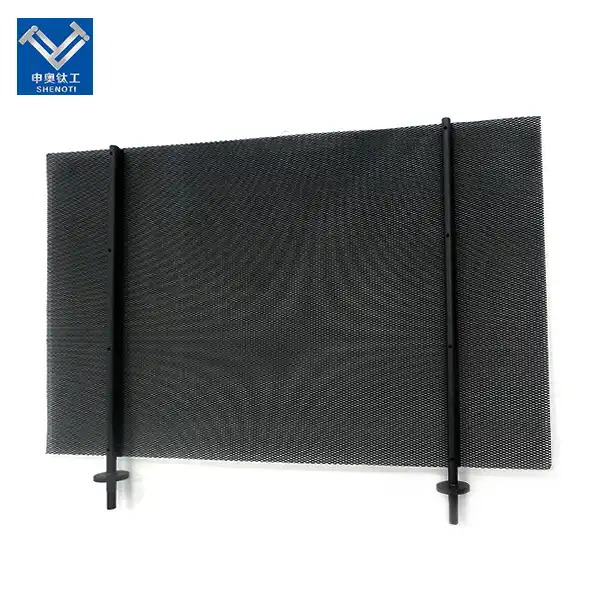
Titanium anode for coking wastewater treatment


Coating: Mixed Metal Oxide (MMO)
Coating Structure: Dense and highly conductive catalytic layer
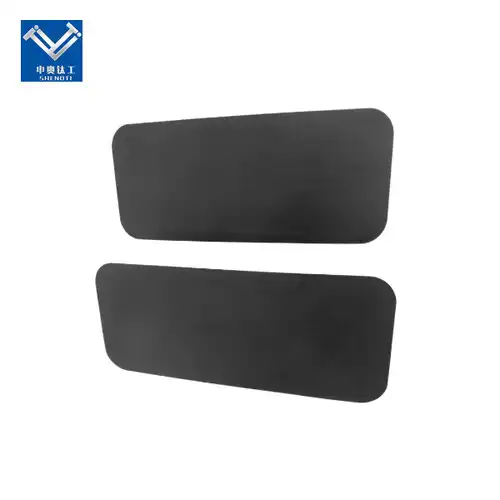
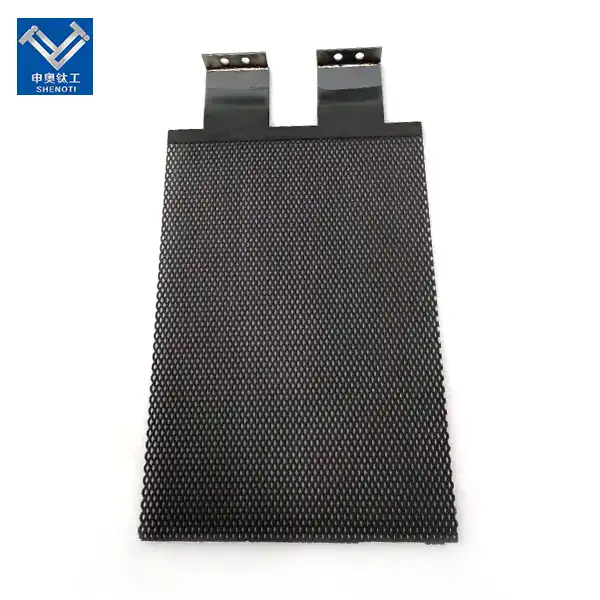
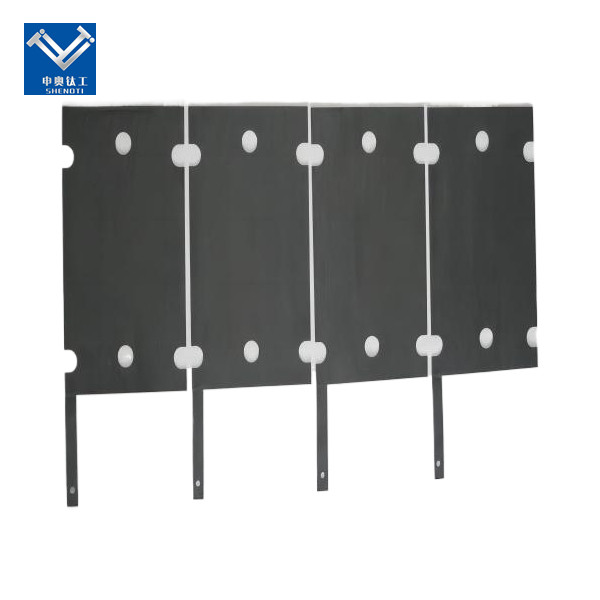
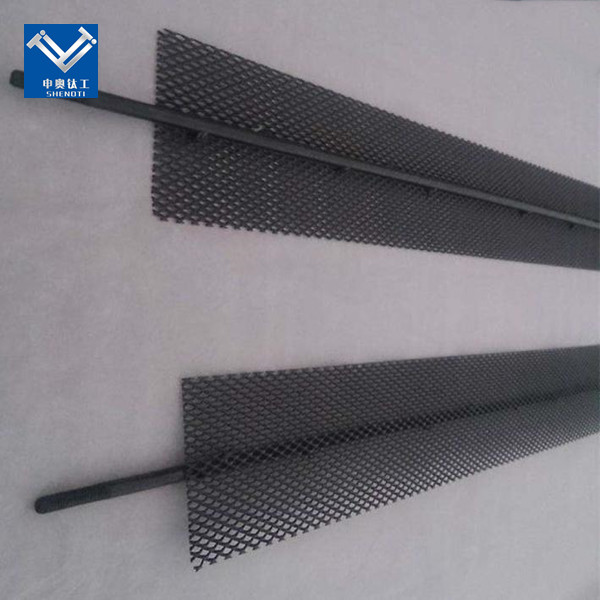
Custom made: Plate, Mesh, Tube, and Customed
Expected Lifespan: Capable of consistent output across long-duration applications
Advantage:
High electrocatalytic activity
Strong corrosion resistance
Long service life
Dimensionally stable
Titanium Anode for Coking Wastewater Treatment
Coking wastewater contains high concentrations of refractory pollutants such as phenols, polycyclic aromatic hydrocarbons, ammonia nitrogen, and cyanides, placing stringent demands on the catalytic activity and anti-fouling capability of electrode materials. Our Titanium Anode for Coking Wastewater Treatment at Baoji City ShenAo Metal Materials Co., Ltd. is designed specifically for the electrochemical oxidation treatment of coking wastewater. It uses Grade 1 or Grade 2 pure titanium as the substrate, with a noble metal oxide catalytic coating on the surface. The coating maintains stable electrocatalytic activity in the complex coking wastewater system containing phenols, cyanides, high salinity, and high COD, achieving deep oxidative degradation of refractory organics such as phenols and polycyclic aromatic hydrocarbons through strong oxidizing species such as hydroxyl radicals generated at the anode surface, while simultaneously achieving efficient removal of ammonia nitrogen through active chlorine generated by the chlorine evolution reaction. The anode maintains a stable chemical state during operation, minimizing the risk of metal ion dissolution, making it suitable for advanced treatment of biochemically treated coking wastewater effluent, pretreatment of ammonia distillation wastewater, and treatment of coking wastewater membrane concentrate, serving as a reliable electrode solution for ensuring coking wastewater compliance discharge and long-term stable system operation.
This product is for B2B Industrial Use Only. Operators should follow relevant chemical safety protocols and wastewater treatment operation standards.
Technical Specifications
|
Substrate Material |
Grade 1/2 Pure Titanium |
|
Coating Type |
Iridium-Tantalum (IrO₂-Ta₂O₅), Iridium-Tin (IrO₂-SnO₂), or Ruthenium-Iridium (RuO₂-IrO₂), customized per treatment stage and water quality |
|
Coating Thickness |
5–20 μm (adjusted based on current density and wastewater composition) |
|
Coating Loading |
10–200 g/m² (customized for rated current density) |
|
Current Density Range |
50–1,500 A/m² (adjusted based on treatment targets and wastewater conductivity) |
|
Operating Voltage Window |
0.8 V–4.0 V (typical coking wastewater electrolysis potential range) |
|
Anode Shapes |
Plate, Mesh, Tube, Perforated Plate, Custom |
|
Applicable Wastewater |
Biochemically treated coking effluent, ammonia distillation wastewater, coking wastewater membrane concentrate, phenol-containing and cyanide-containing high-COD wastewater |
Why Choose Our Titanium Anodes?
- Efficient Oxidative Degradation of Phenols and Polycyclic Aromatic Hydrocarbons
The most abundant organic pollutants in coking wastewater are phenols and their derivatives, along with structurally stable refractory organics such as polycyclic aromatic hydrocarbons. Our iridium-tantalum and iridium-tin coatings possess a high oxygen evolution overpotential, enabling efficient generation of hydroxyl radicals when treating low to medium concentration organic pollutants, carrying out electrophilic attack on the benzene ring structure of phenolic compounds and achieving ring-opening mineralization. For coking wastewater with higher chloride ion content, ruthenium-iridium coatings can be selected to utilize active chlorine for indirect oxidation, synergistically enhancing COD and color removal efficiency. - Dual-Function Activity for Simultaneous COD and Ammonia Nitrogen Removal
Biochemically treated coking wastewater often still contains residual concentrations of COD and ammonia nitrogen, requiring advanced treatment for compliance discharge. Our coating formulation balances direct oxidation activity (generating hydroxyl radicals for organic degradation) and chlorine evolution activity (generating active chlorine for ammonia nitrogen oxidation), achieving simultaneous COD and ammonia nitrogen removal within a single electrolytic unit, simplifying the treatment process flow and reducing equipment footprint. - Chemical Stability and Anti-Fouling Capability in Complex Coking Wastewater
Coking wastewater contains tar, oils, and suspended particulate matter, posing dual challenges of physical fouling and chemical attack on the electrode surface. Our coating formulation is optimized to maintain a low corrosion rate and good structural integrity in such complex media. Mesh and perforated plate anodes feature a high open area ratio, resisting clogging when treating coking wastewater containing suspended solids and oils, reducing treatment efficiency decay caused by surface fouling. - Flexible Modular Expansion and Maintenance
We can provide single or multiple anode modules in series-parallel combinations based on your treatment capacity and influent COD/ammonia nitrogen loading. Coking wastewater typically has large flow volumes and significant water quality fluctuations; the modular design facilitates flexible adjustment of operating parameters and expansion of treatment capacity according to influent variations. When anodes reach the end of their service life, they can be individually replaced. We also offer used anode inspection and recoating services, helping you reduce long-term operation and maintenance costs.
|
|
|
|
|
|
|
|
|
|
|
|




Real-World Applications
- Ammonia Stripping and Dephenolization Pretreatment Stage
Used for electrochemical oxidation pretreatment of coking ammonia-stripped wastewater and high-concentration phenolic wastewater, covering anodic oxidation degradation of residual volatile phenols and high-concentration COD in ammonia-stripped effluent from residual ammonia water, aromatic ring-opening and chain scission pretreatment of phenolic wastewater from coal tar processing, and electrochemical conversion and abatement of monohydric and polyhydric phenols in coal gasification scrubber condensate, effectively reducing the organic load and biotoxicity shock to the downstream biological treatment system under specific operating conditions. - Advanced Purification and Total Nitrogen Removal from Biologically Treated EffluentUsed for deep electrochemical oxidation upgrading treatment of effluent from A/O or A²/O biological treatment systems for coking wastewater, covering deep mineralization removal of recalcitrant residual COD and color in secondary clarifier effluent, electrocatalytic oxidation degradation of residual polycyclic aromatic hydrocarbons and heterocyclic compounds in biologically treated tail water, simultaneous electrochemical reduction and oxidation removal of nitrate nitrogen and residual ammonia nitrogen in biologically treated effluent, and deep decomposition of total cyanide and thiocyanate in the effluent, meeting increasingly stringent watershed discharge standards.
- Treatment of High-Salinity Brine and Membrane Filtration Concentrate
Used for electrochemical oxidation treatment of reverse osmosis and nanofiltration membrane concentrates in coking wastewater advanced treatment and reuse systems, covering mineralization of recalcitrant organics and COD reduction in membrane concentrates within coking wastewater zero-liquid-discharge processes, electrochemical ring-opening degradation of polycyclic aromatic hydrocarbons and organic nitriles in high-salinity concentrates, synergistic electrochemical removal of total nitrogen and non-biodegradable COD from concentrates, and deep purification pretreatment of organic load in high-salinity brine prior to evaporation and crystallization. - Coke Quenching Wastewater and Coal Gas Purification Circulating Water Treatment
Used for electrochemical purification treatment of wet coke quenching system wastewater and coal gas purification circulating scrubber water systems in coking plants, covering electrochemical oxidation control of accumulated phenols and cyanides in wet coke quenching circulating water, anodic oxidation decomposition of thiocyanates and thiosulfates in coke oven gas desulfurization and decyanidation scrubber circulating solutions, electrochemical suppression of microbial biofilms and organic accumulation control in coal gas final cooler circulating cooling water, and in-situ electrochemical degradation of volatile organic compounds in comprehensive wastewater collection ponds within the coking plant area.


The ShenAo Advantage
18 Years of Fabricating Excellence
Since 2008, we've specialized in valuable metal coated titanium anodes from our office in Baoji's "China Titanium Valley." Our develop bimetallic hazardous welding innovation and progressed coating forms provide items you can trust.
Customization for Your Correct Needs
Every generation line is diverse. We give custom fitted arrangements coordinating your particular current thickness necessities, electrolyte composition, and operational parameters. Whether you require little bunch testing or full-scale generation amounts, we convey on time.
Cost-Effective Lifecycle Management
When coating exhaustion happens, you do not dispose of the whole anode. Our proficient recoating benefit strips the ancient oxide layer, sandblasts the substrate, and reapplies new MMO coating. This expands resource life and decreases your add up to taken a toll of proprietorship considerably.

Frequently Asked Questions
Q: What coating is suitable for coking wastewater treatment?
A: It depends on the treatment stage and water quality characteristics. For advanced treatment of biochemically treated effluent, where COD and ammonia nitrogen typically coexist, iridium-tantalum coatings can be selected to balance direct oxidation and chlorine evolution activity. For stages with higher chloride ion content, such as ammonia distillation wastewater pretreatment or membrane concentrate treatment, ruthenium-iridium coatings can be selected to utilize active chlorine for efficient indirect oxidation. For front-end wastewater with higher oil and suspended solids content, mesh or perforated plate anodes are recommended to reduce clogging. You can provide us with a full water quality analysis report for your coking wastewater, and our engineers will recommend a matched coating solution and anode structure.
Q: How do oils and suspended solids in coking wastewater affect the anode?
A: Oils and suspended solids may form a fouling layer on the anode surface, hindering contact between active sites and the wastewater, leading to decreased current efficiency and increased cell voltage. It is recommended to install pretreatment measures such as oil separation and sedimentation before the electrochemical treatment unit to control influent oil content and suspended solids concentration. Additionally, mesh or perforated plate anodes with high open area ratios should be selected, and periodic online or offline cleaning should be scheduled to maintain anode treatment efficiency.
Q: What factors are related to the COD and ammonia nitrogen removal efficiency of the anode?
A: It is primarily related to wastewater conductivity, chloride ion concentration, current density, pH, and hydraulic retention time. Higher conductivity leads to lower cell voltage; higher chloride ion concentration leads to higher ammonia nitrogen indirect oxidation efficiency; current density and hydraulic retention time directly influence COD and ammonia nitrogen removal rates. Coking wastewater quality fluctuates significantly; it is recommended to configure adjustable power supplies and online monitoring instruments during system design to flexibly adjust operating parameters according to influent variations.
Q: How should anodes be handled when the coating reaches the end of its service life?
A: The titanium substrate remains stable in the coking wastewater treatment environment. The old coating can be chemically stripped, and once the substrate passes inspection, it can be recoated to restore performance to new-anode levels. We offer a full-service process including incoming inspection of used anodes, coating stripping, substrate treatment, and recoating.
Contact Us
You need a partner who not only supplies products but also solves your challenges alongside you. Our team is ready to engage with your inquiries and provide a tailored solution. Share your specific needs or key requirements with us today, and let us help you efficiently transform your breakthroughs into commercial value.
Titanium Anode Manufacturer
Email: zh@baojiti.com.cn
WhatsApp: +86-15877696471 (updated)
Products: Titanium Anodes, MMO Titanium Anodes, DSA Coated Titanium Electrodes, Electrolysis Electrodes, Hydrogen Production Electrodes, Wastewater Treatment Titanium Anodes.