Titanium Anode for On-Site Chlorine Generation on Offshore Platforms to Ensure Injection and Sewage Disinfection
2026-07-01 09:44:25
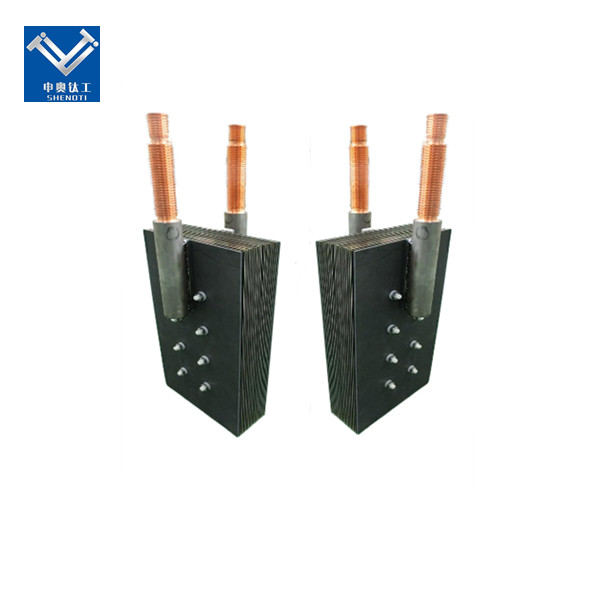
Offshore oil and gas platforms operate far from land-based supply lines, making it impractical to rely on external procurement and shipping for the disinfectants required by production water injection systems and domestic sewage treatment. On-site electrolytic chlorine generation from seawater is a critical technology for ensuring the autonomous operation of platform water treatment. The titanium anode for electrolysis of seawater to produce chlorine serves as the core functional component enabling this self-sufficient supply capability.
Offshore On-Site Chlorine Generation: From Supply Dependence to Autonomous Production
Traditional disinfectant supply for offshore platforms relies on regular shipping of commercial sodium hypochlorite or liquid chlorine. Deep-sea logistics are costly and heavily affected by sea conditions, while the storage of regulated chemicals within the confined spaces of a platform poses safety hazards. Commercially supplied chemicals also undergo continuous potency decay during prolonged storage, affecting dosing precision and disinfection reliability.
On-site electrolytic chlorine generation technology uses the virtually inexhaustible natural seawater surrounding the platform as raw material, converting chloride ions present in seawater into active chlorine species in situ through the titanium anode for electrolysis of seawater to produce chlorine when energized. The chlorine production rate can be precisely controlled online by adjusting the electrolysis current, automatically adapting to variations in injection water volume, domestic sewage flow rate, and water quality fluctuations. The system can start and stop synchronously with platform water treatment equipment, achieving on-demand continuous supply of disinfectant without manual intervention. This technical pathway transforms the platform's disinfectant source from an external supply chain to internal autonomous production, helping to mitigate logistics disruption risks while reducing the volume of chemicals stored on the platform. Actual chlorine generation efficiency varies depending on seawater salinity, temperature, and system design.
Performance varies based on specific operating conditions. Actual results depend on seawater quality and operating parameters.

Corrosion Resistance and Fluctuation Tolerance: Addressing the Composite Challenges of the Offshore Environment
The offshore platform environment places multiple demands on electrochemical equipment. The high-salt-spray atmosphere is highly corrosive to electrical connections and metallic structures. Platform power grids may experience voltage and frequency variations due to equipment start-stop cycles and load fluctuations. Seawater temperature varies across a broad range depending on season and sea area. The anode must maintain stable catalytic performance under these combined stresses.
The titanium anode for electrolysis of seawater to produce chlorine employs high-purity titanium as the substrate. Titanium exhibits high corrosion resistance in high-salt-spray and seawater environments. The titanium substrate can spontaneously form a dense passive film under anodic polarization conditions, effectively suppressing electrochemical dissolution of the substrate itself and providing a long-term stable supporting platform for the coating. The coating adopts an electrocatalytic active layer containing metal oxides such as RuO₂ and IrO₂. The IrO₂ component exhibits high electrochemical stability under chlorine evolution conditions while also contributing to the strengthening of the coating matrix. RuO₂ imparts a relatively low chlorine evolution overpotential to the coating, contributing to maintaining high current efficiency under varying current densities. The coating tends to maintain stable electrocatalytic activity across a broad temperature range, adapting to operational requirements under irregular current loading conditions. Platform electrochlorination systems are typically designed as modular skid-mounted structures, equipped with automatic monitoring and failover functions, adapting to the minimally attended operational mode of offshore platforms. Actual durability varies depending on seawater salinity, temperature fluctuations, current load variations, and maintenance levels.
Engineering Value for the Offshore Oil and Gas Market
In the global offshore oil and gas production market, the autonomous and reliable operation of water treatment systems is a critical safeguard for platform production continuity. The engineering value of the titanium anode for electrolysis of seawater to produce chlorine in this market lies in combining on-site autonomous chlorine generation with resistance to marine environment corrosion, supporting platform disinfection systems in achieving long-term low-maintenance operation under harsh deep-sea conditions.
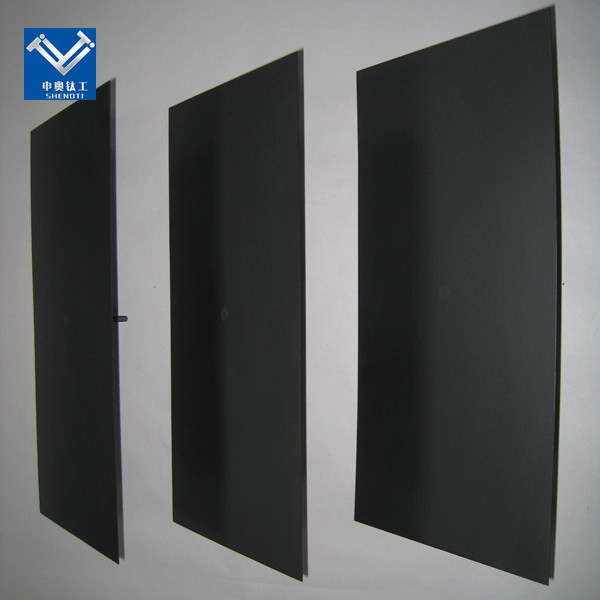
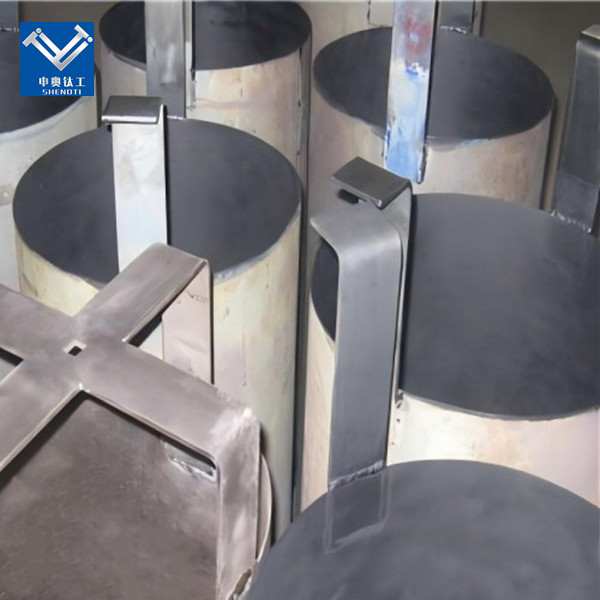
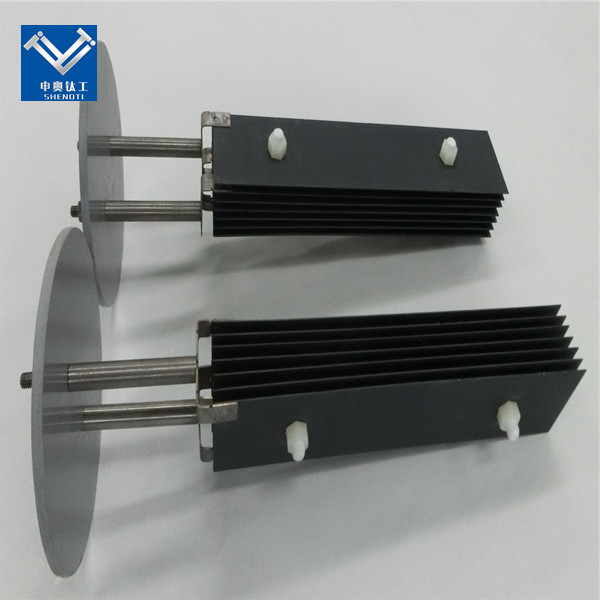
On-site chlorine generation solutions use seawater and electricity as inputs, eliminating the logistical burden of chemical shipping resupply and storage safety risks. These titanium anode products are built on high-purity titanium substrates and coated with metal oxide systems such as RuO₂ and IrO₂, and can be customized into plate, mesh, tubular, and other geometric configurations to suit compact skid-mounted electrolytic chlorine generation units. It is recommended that offshore platform operators and water treatment system integrators conduct field condition testing of titanium anodes for electrolysis of seawater to produce chlorine based on their injection water volume, domestic sewage treatment capacity, and sea area water quality conditions. By tracking indicators such as chlorine output concentration, system automatic operation rate, and long-term anode operating performance, the technical reliability and comprehensive operational benefits of the on-site electrolytic chlorine generation solution in specific platform application scenarios can be evaluated.
Important Note: The performance descriptions above are based on engineering experience under specific test conditions or internal test data. Differences may exist between laboratory results and actual operating conditions. Actual chlorine generation efficiency, working life, and corrosion resistance performance vary depending on seawater salinity, temperature fluctuations, current load variations, maintenance levels, and system design. This product is an offshore platform water treatment equipment component, and its suitability should be verified by the user according to local regulations, platform safety codes, and application conditions. Sufficient compatibility validation prior to bulk procurement is recommended.
Titanium Anode Manufacturer
Email: zh@baojiti.com.cn
Products: Titanium Anodes, MMO Titanium Anodes, DSA Coated Titanium Electrodes, Electrolysis Electrodes, Hydrogen Production Electrodes, Wastewater Treatment Titanium Anodes.