Titanium Anode for Erosion Resistance in Shipboard Ballast Water Electrochlorination
2026-06-30 08:58:32
Compliance requirements for ship ballast water discharge from the International Maritime Organization (IMO) and the United States Coast Guard (USCG) continue to tighten, compelling shipowners to ensure the reliable operation of ballast water treatment systems on every voyage. Shipboard electrochlorination systems, which generate active chlorine in situ through seawater electrolysis, represent one of the more widely adopted ballast water treatment technologies, with the titanium anode for electrolysis of seawater serving as the core component. Under the continuous scouring of high-velocity, high-salinity, sand-laden seawater, the erosion resistance of the anode coating directly determines the system's chlorine generation reliability and the vessel's compliance risk.
Erosion-Resistant Coating: Addressing the Mechanical Challenge of High-Velocity Sand-Laden Seawater
Ship ballast water treatment systems must continuously process large volumes of seawater during voyages, with high flow velocities within the electrolysis unit. The water intake is typically located at the bottom or side of the hull, where suspended sediment and debris carried by seawater pass over the anode surface at high velocity, subjecting the coating to continuous mechanical scouring. If the coating lacks sufficient erosion resistance, its thickness will decrease at an accelerated rate with operating time, leading to loss of active components and declining chlorine generation efficiency, potentially triggering ballast water treatment system alarms or even functional interruption.
The titanium anode for electrolysis of seawater employs high-purity titanium as the substrate. Titanium possesses relatively high mechanical strength and tends to maintain geometric integrity under high-velocity sand-laden water scouring conditions. The coating adopts an electrocatalytic active layer containing metal oxides such as IrO₂ and RuO₂. The IrO₂ component exhibits high electrochemical stability under chlorine evolution conditions while also contributing to the mechanical strength of the coating matrix. The coating and substrate achieve high bonding strength through optimized pretreatment processes and thermal decomposition preparation, tending to maintain stable adhesion under continuous high-velocity sand-laden seawater scouring conditions. The coating thickness has been optimized to balance catalytic activity with abrasion resistance, accommodating variations in sand content across different sea areas. Actual erosion resistance performance varies depending on seawater sand content, flow velocity, operating current density, and voyage region.
Performance varies based on specific operating conditions. Actual results depend on seawater quality and operating parameters.

High-Salinity Chlorine Evolution: Ensuring Chlorine Generation Reliability Across Broad Operating Conditions
Ship voyage routes span nearshore low-salinity waters and open-ocean high-salinity waters, with seawater temperature and salinity varying across a broad range. The anode must maintain stable chlorine evolution efficiency under different salinity and temperature conditions to support the ballast water treatment system in continuously meeting compliance requirements throughout the entire voyage.
The coating formulation of the titanium anode for electrolysis of seawater is based on the RuO₂-IrO₂ metal oxide system. RuO₂ exhibits a relatively low overpotential for the chlorine evolution reaction and serves as the primary carrier of chlorine evolution activity. The introduction of IrO₂ is designed to enhance the electrochemical stability of the coating during long-term operation, supporting stable chlorine evolution across a broad range of salinity and temperature conditions. Through synergistic modulation of composition ratios and microstructure, the coating tends to maintain relatively high chlorine evolution selectivity even in nearshore low-salinity seawater, while sustaining stable current efficiency in open-ocean high-salinity seawater. The coating can operate stably across a broad current density range, supporting flexible adjustment of electrolysis power according to ballast water treatment volume and target chlorine concentration. Actual chlorine generation efficiency varies depending on seawater salinity, temperature, flow velocity, and system design.
Engineering Value for the Shipboard Ballast Water Market
In the global shipping market, the compliant operation of ballast water treatment systems is directly linked to vessel operating permits and commercial scheduling. The engineering value of the titanium anode for electrolysis of seawater in this market lies in combining erosion resistance durability with chlorine generation stability across broad operating conditions, supporting shipboard electrochlorination systems in maximizing operational reliability in demanding marine environments.
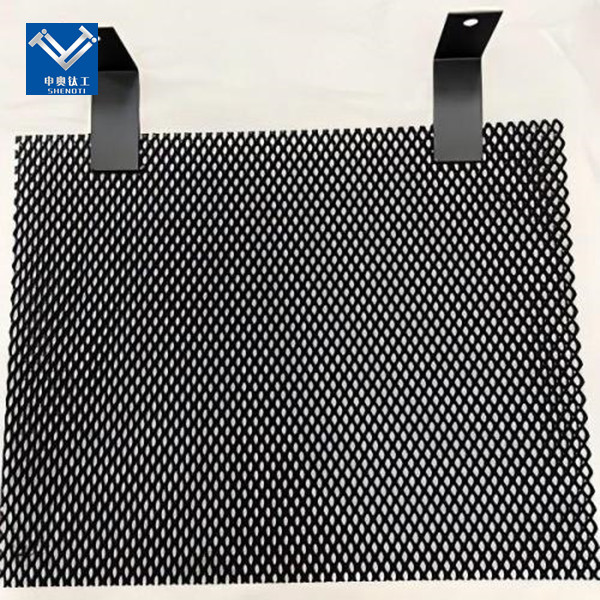
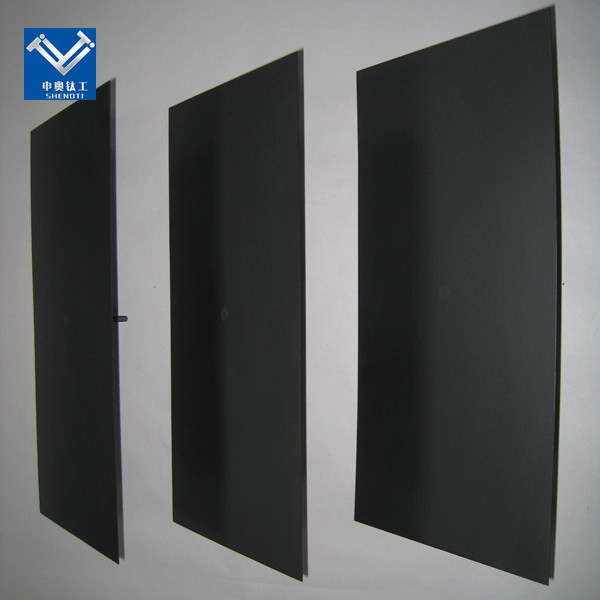
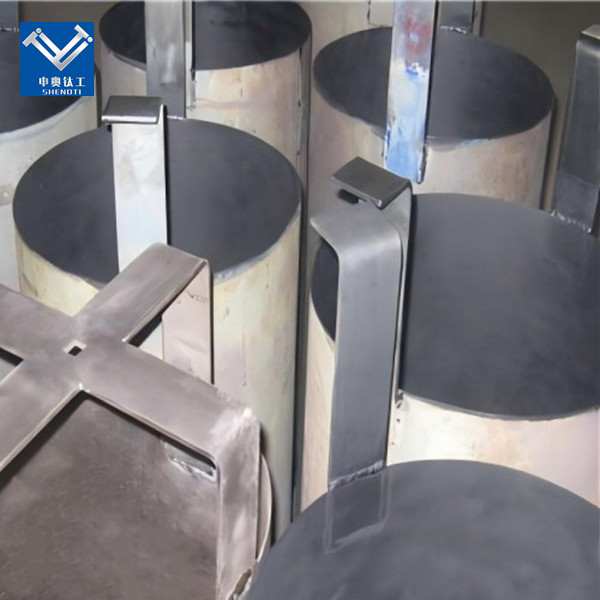
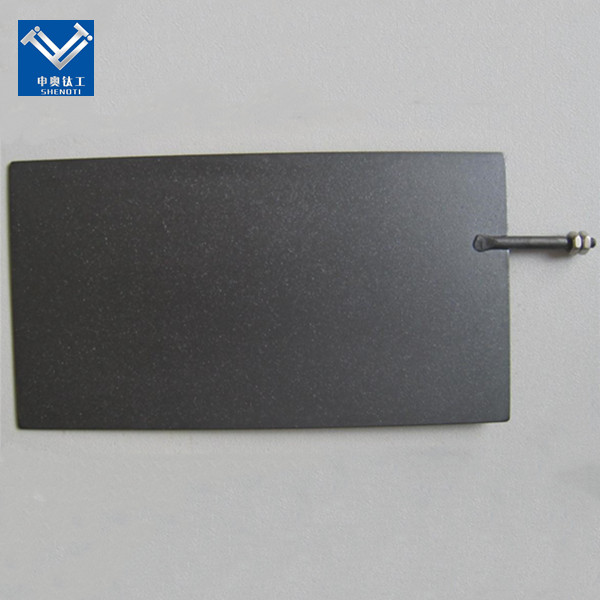
These titanium anode products are built on high-purity titanium substrates and coated with metal oxide systems such as RuO₂ and IrO₂, and can be customized into plate, mesh, tubular, and other geometric configurations to suit shipboard electrochlorination reactors of different specifications. The product is designed to meet the relevant performance requirements of international regulations such as IMO and USCG for ballast water treatment equipment. It is recommended that shipowners, ship management companies, and ballast water system integrators conduct field condition testing of titanium anodes for electrolysis of seawater based on their vessel routes, intake seawater quality, and ballast water treatment capacity. By tracking indicators such as chlorine output concentration, coating thickness variation, and system operation alarm records, the technical compatibility and compliance assurance capability of the anode in specific route and vessel type application scenarios can be evaluated.
Important Note: The performance descriptions above are based on engineering experience under specific test conditions or internal test data. Differences may exist between laboratory results and actual operating conditions. Actual erosion resistance performance, chlorine generation efficiency, and working life vary depending on seawater salinity, sand content, temperature, flow velocity, current density, operating mode, and system design. This product is a ship ballast water treatment equipment component, and its suitability for ballast water treatment must be verified by the user in accordance with IMO, USCG, and relevant classification society regulations. This product does not hold independent certification from the aforementioned bodies. Sufficient compatibility validation prior to bulk procurement is recommended.
Titanium Anode Manufacturer
Email: zh@baojiti.com.cn
Products: Titanium Anodes, MMO Titanium Anodes, DSA Coated Titanium Electrodes, Electrolysis Electrodes, Hydrogen Production Electrodes, Wastewater Treatment Titanium Anodes.