Titanium Anode for Low-Salt High-Efficiency Operation in On-Site Chlorine Generation from Brine Electrolysis
2026-06-29 16:28:04
Swimming pool operators and municipal water plants are accelerating their transition from purchasing liquid chlorine or commercial sodium hypochlorite to on-site electrolysis of brine for active chlorine disinfectant generation. The core driver behind this shift is the need to mitigate the transportation and storage risks associated with regulated chemicals while reducing dependence on commercial chemical supply chains. The titanium anode for electrolyzing salt water is the key electrochemical component enabling low-salt-consumption, high-stability on-site chlorine generation.
Low-Salt High-Efficiency Chlorine Evolution: The Logic of Coating Formulation Optimization
The operating costs of on-site chlorine generation systems are primarily composed of salt consumption and electricity consumption. The chlorine evolution overpotential of the anode directly correlates with the cell voltage and the DC power consumption per unit of chlorine produced, while the coating's selectivity for the chlorine evolution reaction affects salt utilization efficiency.
The titanium anode for electrolyzing salt water employs high-purity titanium as the substrate, coated with an electrocatalytic active layer containing metal oxides such as RuO₂ and IrO₂. RuO₂ exhibits a relatively low overpotential for the chlorine evolution reaction and serves as the primary carrier of chlorine evolution activity, contributing to maintaining a lower cell voltage at a given current density. The introduction of IrO₂ is designed to enhance the electrochemical stability of the coating during long-term operation, supporting stable chlorine generation efficiency. Through synergistic modulation of composition ratios and microstructure, the coating tends to maintain relatively high chlorine evolution selectivity even at lower brine concentrations, contributing to reduced salt consumption per unit of active chlorine produced. Under typical on-site chlorine generation conditions, the electrode can operate stably across a broad current density range, supporting flexible adjustment of chlorine production rates according to actual disinfection demand. Actual salt consumption and energy consumption levels vary depending on feed brine concentration, temperature, target chlorine output, and operating mode.
Performance varies based on specific operating conditions. Actual results depend on feed water quality and operating parameters.

Long-Cycle Operational Stability: Reducing Maintenance Downtime
On-site chlorine generation systems are typically required to operate continuously in synchronization with water supply or circulating water systems. The dimensional stability and coating durability of the anode are key factors determining system maintenance frequency and downtime. Traditional graphite anodes gradually consume themselves through oxidation during operation, altering electrode spacing and affecting current distribution uniformity, necessitating periodic replacement.
For the titanium anode for electrolyzing salt water, the titanium substrate surface can spontaneously form a dense passive film under anodic polarization conditions, effectively suppressing electrochemical dissolution of the substrate itself and tending to maintain long-term geometric stability in brine environments. Stable electrode spacing helps maintain uniform current distribution within the electrolysis cell, supporting batch-to-batch consistency in chlorine generation efficiency. The coating consumption rate is gradual, with macroscopic particulate release maintained at low levels under typical operating conditions, contributing to extended effective working life of the electrode and reduced system downtime associated with electrode replacement. Actual working life varies depending on brine concentration, current density, temperature, and operating mode.
Engineering Value for the On-Site Chlorine Generation Market
In the overseas swimming pool operation and municipal water supply markets, the application of on-site sodium hypochlorite generation technology continues to expand. The engineering value of the titanium anode for electrolyzing salt water in this market lies in combining low-salt-consumption chlorine evolution with long-cycle operational stability, supporting on-site chlorine generation systems in delivering safe, economical, and continuous disinfectant supply.
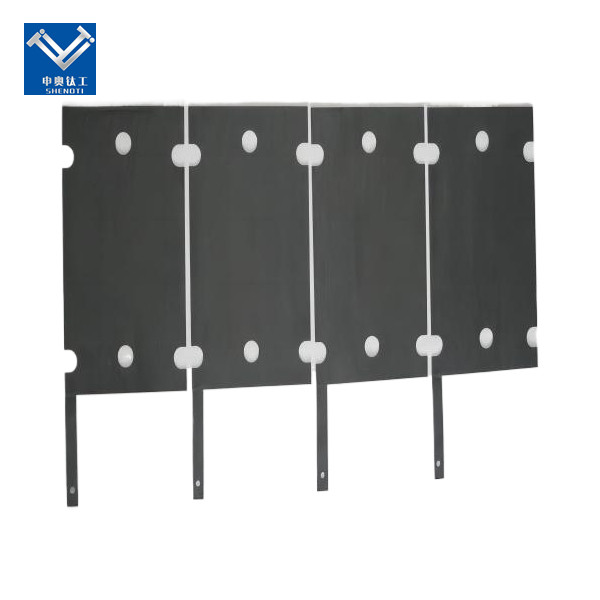
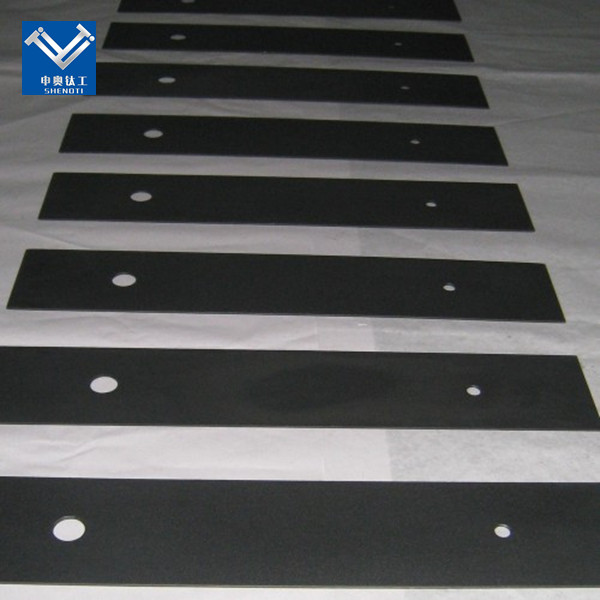
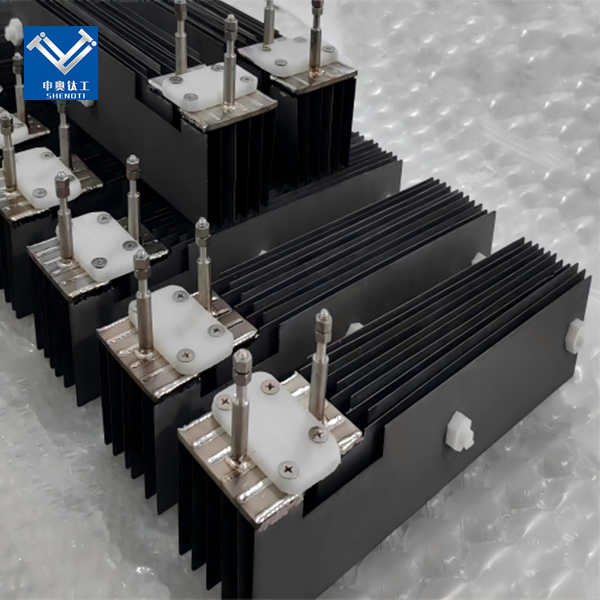
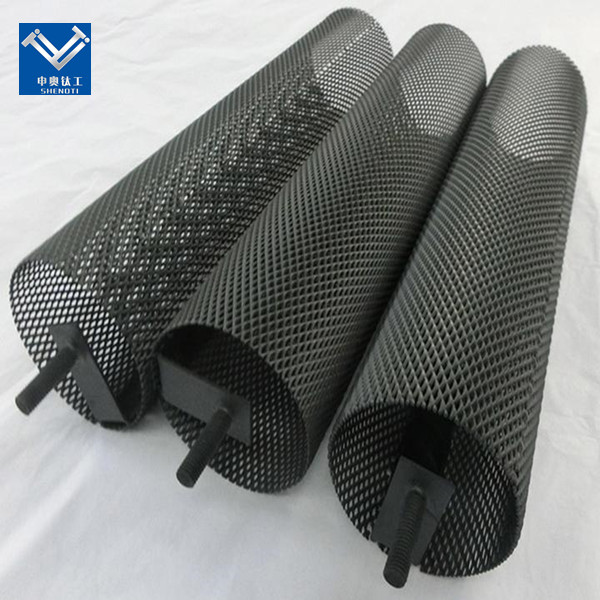
On-site generation solutions use salt, water, and electricity as basic inputs, reducing the need for hazardous chemical storage on site and helping to lower the safety management complexity of facilities. Our titanium anode for electrolyzing salt water products, built on high-purity titanium substrates and coated with metal oxide systems such as RuO₂ and IrO₂, can be customized into plate, mesh, tubular, and other geometric configurations to suit online electrolytic chlorine generation devices of different scales. We recommend that swimming pool operators, municipal water plants, and equipment integrators conduct pilot validation of titanium anodes for electrolyzing salt water based on their feed brine concentration, disinfectant demand, and operating conditions. By tracking indicators such as chlorine output concentration, salt consumption, electricity consumption, and long-term electrode operating performance, the technical compatibility and long-term operational cost-effectiveness of the on-site electrolytic chlorine generation solution in specific application scenarios can be evaluated.
Important Note: The performance descriptions above are based on engineering experience under specific test conditions or internal test data. Differences may exist between laboratory results and actual operating conditions. Actual chlorine generation efficiency, salt consumption, energy consumption, working life, and disinfection effectiveness vary depending on feed water quality, salt concentration, temperature, current density, operating parameters, and system design. This product is a water treatment and disinfection equipment component, and its suitability for specific application scenarios must be verified by the user according to local regulations and relevant standards. Sufficient compatibility validation prior to bulk procurement is recommended.
Titanium Anode Manufacturer
Email: zh@baojiti.com.cn
Products: Titanium Anodes, MMO Titanium Anodes, DSA Coated Titanium Electrodes, Electrolysis Electrodes, Hydrogen Production Electrodes, Wastewater Treatment Titanium Anodes.