Titanium Anode for High-Flow Seawater Electrochlorination with Long-Term Intake Pipeline Fouling Prevention
2026-06-30 08:57:31
Large-scale seawater desalination plants and coastal power stations face severe marine biofouling challenges at their intake ends. Barnacles, mussels, seaweed, and other marine fouling organisms proliferate on the interior walls of intake pipelines, pretreatment membrane modules, and condenser tube bundles, leading to reduced flow cross-sections and declining heat exchange efficiency. In severe cases, facilities may be forced to operate at reduced load or shut down for cleaning. Online electrochlorination treatment of massive seawater volumes at the intake is the mainstream industrial solution for ensuring the long-term unobstructed operation of intake systems. The titanium anode for electrolysis of seawater serves as the core functional component of this anti-fouling system.
High-Flow Chlorine Generation: Meeting the Anti-Fouling Demands of Massive Water Intake
Cooling water intake volumes for large-scale desalination plants and power stations are substantial, with daily treatment capacities reaching hundreds of thousands or even millions of cubic meters. Online electrochlorination systems must install electrolysis units within limited space and operate at high current densities to generate sufficient active chlorine to maintain effective anti-fouling concentrations in seawater. This places relatively high demands on the chlorine evolution efficiency and carrying capacity of the anode.
The titanium anode for electrolysis of seawater employs high-purity titanium as the substrate, coated with an electrocatalytic active layer containing metal oxides such as RuO₂ and IrO₂. RuO₂ exhibits a relatively low overpotential for the chlorine evolution reaction, contributing to maintaining lower cell voltage and higher current efficiency at high current densities, supporting large-scale chlorine generation with high power input. The introduction of IrO₂ is designed to enhance the electrochemical stability of the coating during long-term high-load operation, delaying activity decay. Through synergistic modulation of composition ratios and microstructure, the coating tends to maintain stable chlorine evolution selectivity across a relatively high current density range, enabling the electrolysis system to meet the anti-fouling demands of large-flow water intake within a compact footprint. The system's chlorine production rate can be controlled online by adjusting electrolysis power, allowing flexible adjustment based on seawater temperature, tides, and marine organism breeding seasons. Actual chlorine generation efficiency varies depending on seawater salinity, temperature, flow velocity, and system design.
Performance varies based on specific operating conditions. Actual results depend on seawater quality and operating parameters.

Coating Durability: Addressing the Challenge of Long-Cycle Continuous Operation
The intake systems of large-scale desalination plants and power stations typically operate continuously year-round, with unplanned shutdowns incurring high costs in lost water or power production. The maintenance windows of online electrochlorination systems must align with the overall overhaul cycles of the facility, and the anode must possess a working life matching the system's major maintenance intervals.
For the titanium anode for electrolysis of seawater, the titanium substrate surface can spontaneously form a dense passive film under anodic polarization conditions, effectively suppressing electrochemical dissolution of the substrate itself in high-salinity seawater environments and providing a long-term stable supporting platform for the coating. The IrO₂ component in the coating exhibits high electrochemical stability under chlorine evolution conditions, contributing to the structural integrity of the coating in oxidizing seawater environments. The coating and substrate achieve high bonding strength through optimized pretreatment and thermal decomposition processes, tending to maintain stable adhesion under continuous high-flow seawater scouring conditions. The coating thickness has been optimized to balance chlorine evolution activity with erosion and abrasion resistance. Through periodic polarity reversal, calcareous deposits on the electrode surface can be removed, assisting in maintaining long-term stability of chlorine evolution efficiency. Actual working life varies depending on seawater quality, current density, operating temperature, and polarity reversal cycle.
Engineering Value for Large-Scale Water Intake Facilities
In the global seawater desalination and coastal power generation markets, marine biofouling control for intake systems is a core link affecting facility reliability and operating costs. The engineering value of the titanium anode for electrolysis of seawater in this market lies in combining high-flow chlorine generation capability with long-cycle coating durability, supporting intake anti-fouling systems in achieving low-maintenance continuous operation.
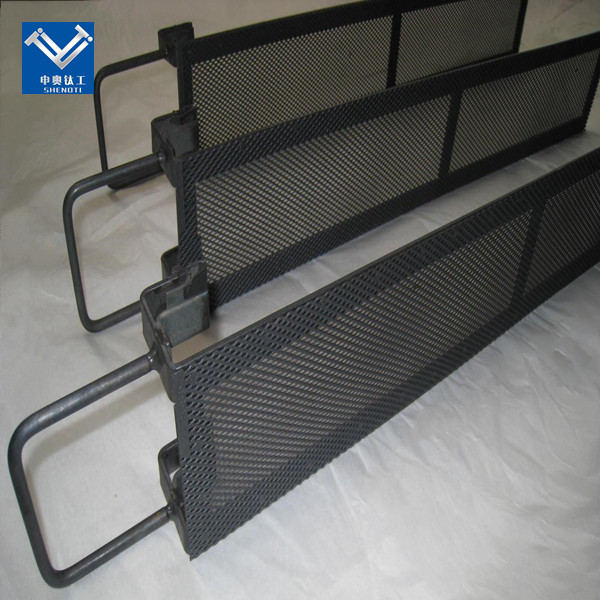
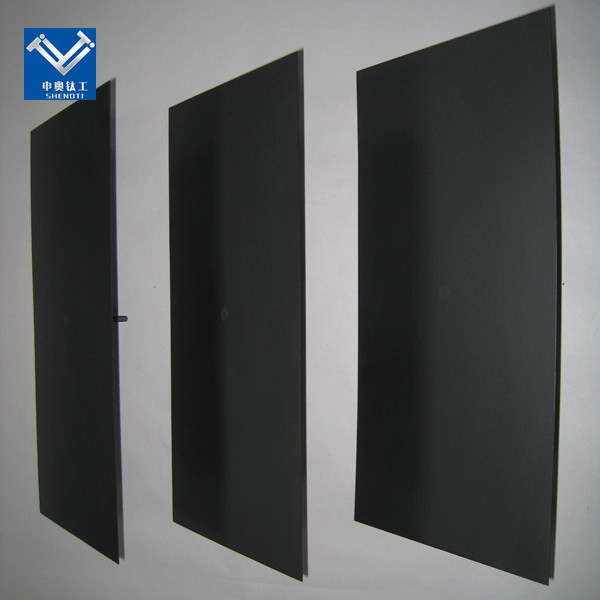
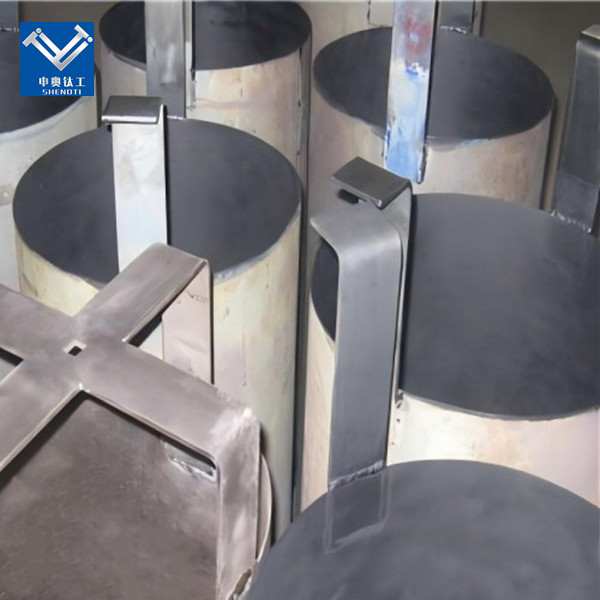
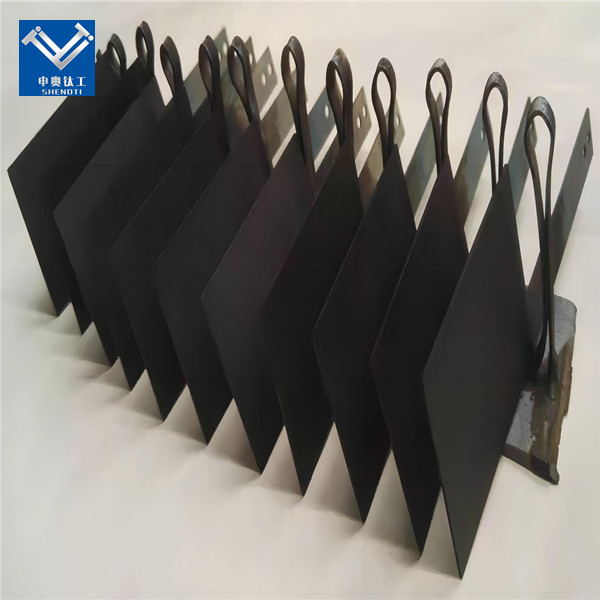
Online electrochlorination solutions use naturally occurring chloride ions in seawater as raw material, eliminating the need for continuous procurement and storage of chemical anti-fouling agents, helping to reduce the chemical management burden of large-scale facilities. These titanium anode products are built on high-purity titanium substrates and coated with metal oxide systems such as RuO₂ and IrO₂, and can be customized into plate, mesh, tubular, and other geometric configurations to suit intake electrolytic anti-fouling devices of different scales. It is recommended that desalination plant and power station operators conduct field condition testing of titanium anodes for electrolysis of seawater based on their intake volume, seawater quality, and pretreatment processes. By tracking indicators such as chlorine output concentration, intake pipeline marine organism attachment rates, and long-term anode operating performance, the technical compatibility and total lifecycle maintenance cost of the online electrochlorination anti-fouling solution in specific application scenarios can be evaluated.
Important Note: The performance descriptions above are based on engineering experience under specific test conditions or internal test data. Differences may exist between laboratory results and actual operating conditions. Actual chlorine generation efficiency, working life, and anti-fouling effectiveness vary depending on seawater salinity, temperature, flow velocity, marine organism species, current density, and system design. This product is an industrial water intake anti-fouling equipment component, and its suitability should be verified by the user according to local environmental regulations and application conditions. Sufficient compatibility validation prior to bulk procurement is recommended.
Titanium Anode Manufacturer
Email: zh@baojiti.com.cn
Products: Titanium Anodes, MMO Titanium Anodes, DSA Coated Titanium Electrodes, Electrolysis Electrodes, Hydrogen Production Electrodes, Wastewater Treatment Titanium Anodes.