Titanium Anode for Long-Life Application in Electrodialysis Desalination on Remote Islands
2026-06-29 16:24:56
Freshwater supply on remote islands has long relied on rainwater collection, shipping resupply, or small-scale thermal desalination units—approaches that are costly and limited in reliability. Compact electrodialysis reversal (EDR) desalination units, with their modular design, flexible start-up, and relatively low energy consumption, are becoming an important technological pathway for decentralized island water supply. However, island environments present unique challenges including high-turbidity raw water, limited maintenance personnel, and frequent polarity reversal cleaning, placing stringent durability requirements on the anode within the EDR membrane stack. The titanium anode for seawater desalination is a long-life electrochemical component engineered specifically to address such demanding operating conditions.
Polarity Reversal Resistance: The Electrode Durability Challenge in EDR Processes
The EDR process maintains long-term stable operation in high-hardness seawater by periodically switching electrode polarity to remove mineral deposits from membrane and electrode surfaces—a core operational strategy. However, frequent polarity reversal places severe demands on the anode coating. Under normal polarity, the coating must maintain stable chlorine evolution catalytic activity. Upon polarity reversal, the former anode instantaneously becomes a cathode, with the coating surface experiencing a potential shift from chlorine evolution to hydrogen evolution, while simultaneously enduring mechanical stress from hydrogen gas generation.
The titanium anode for seawater desalination employs high-purity titanium as the substrate, coated with an electrocatalytic active layer containing metal oxides such as IrO₂ and RuO₂. The IrO₂ component exhibits high electrochemical stability under both chlorine and hydrogen evolution conditions, and its electrical conductivity contributes to maintaining uniform current distribution within the coating during polarity reversal transients. The coating and substrate have high bonding strength, tending to maintain stable adhesion under repeated potential switching and bubble scouring conditions. The passive film formed on the titanium substrate under anodic polarization conditions can maintain structural integrity even when polarity is reversed to cathodic state, providing a stable supporting platform for the coating. Under typical EDR operating conditions, the electrode can withstand frequent polarity reversal cycles, supporting long-term maintenance-free or low-maintenance system operation. Actual resistance performance varies depending on seawater salinity, reversal frequency, current density, and temperature.
Performance varies based on specific operating conditions. Actual results depend on seawater quality and operating parameters.

High-Turbidity Corrosion Resistance: Addressing the Water Quality Challenges of Island Raw Water
Island intake environments are complex, with shallow coastal seawater often containing high levels of suspended sand, organic debris, and microorganisms. The risk of physical scouring and surface fouling on the anode from high-turbidity raw water is significantly greater than with the clean feedwater typical of conventional desalination plants. The anode must maintain structural integrity and electrocatalytic activity in high-suspended-solids environments.
The substrate of the titanium anode for seawater desalination employs high-purity titanium. Titanium possesses relatively high mechanical strength and tends to maintain geometric integrity under sand-laden seawater scouring conditions. The titanium substrate can spontaneously form a dense passive film under anodic polarization conditions, effectively suppressing electrochemical dissolution of the substrate in chloride-containing seawater environments. The coating surface has been microstructurally engineered to help reduce the tendency for irreversible adsorption of organic matter and suspended particles, supporting the anode in maintaining relatively stable chlorine evolution efficiency in high-turbidity water. The coating thickness has been optimized to balance catalytic activity with abrasion resistance, addressing the long-term scouring effects of sand-laden water flow. Actual high-turbidity resistance performance varies depending on seawater sand content, organic concentration, flow velocity, and operating mode.
Engineering Value for the Island Desalination Market
In the global remote island freshwater supply market, the application of compact EDR desalination units is progressively expanding. The engineering value of the titanium anode for seawater desalination in this market lies in combining polarity reversal resistance, high-turbidity corrosion resistance, and long-cycle operational stability, supporting island desalination units in achieving continuous and reliable water production under conditions of limited maintenance personnel and inconvenient spare parts supply.
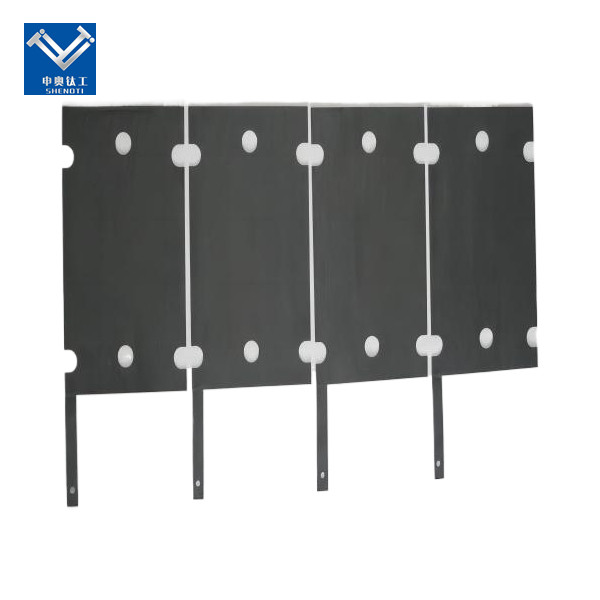
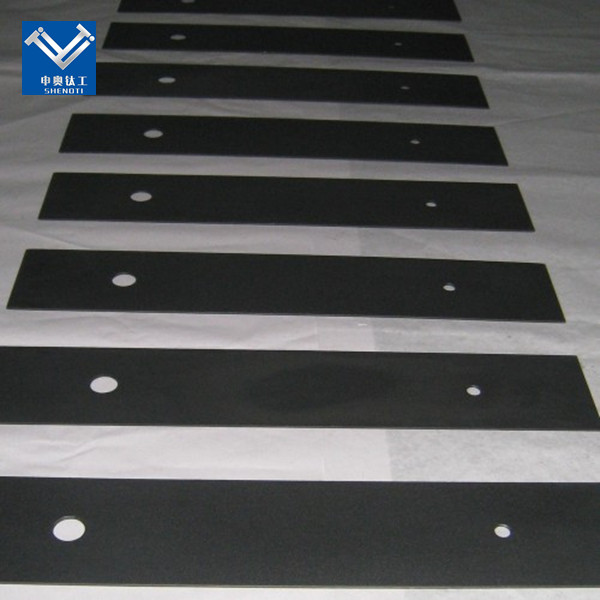
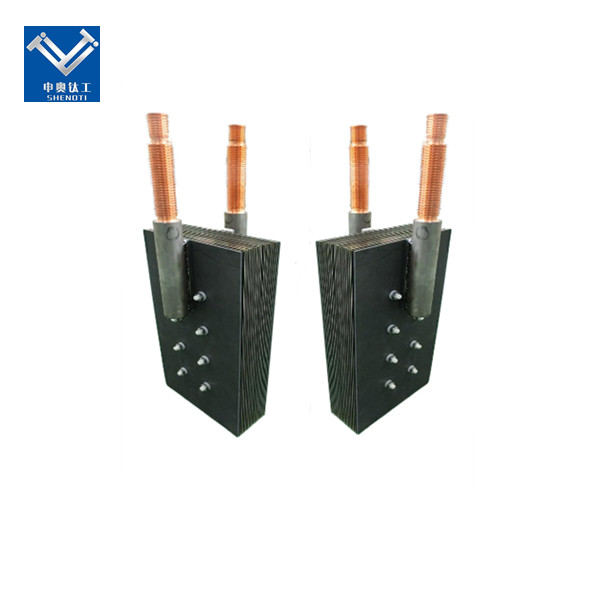
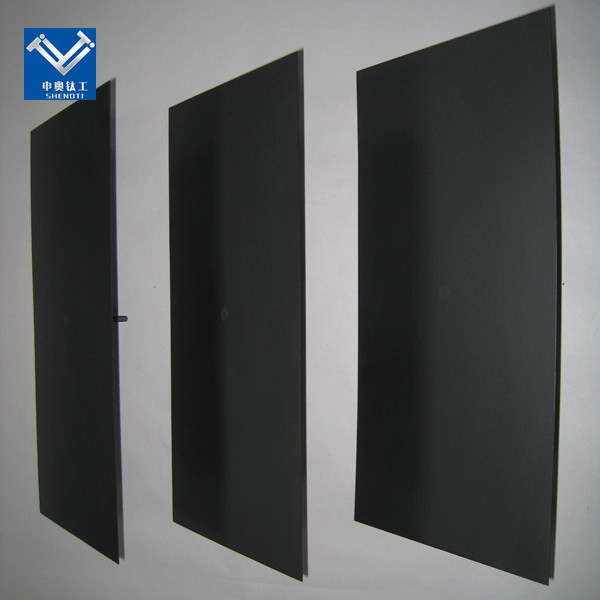
These titanium anode products are built on high-purity titanium substrates and coated with metal oxide systems such as IrO₂ and RuO₂, and can be customized into plate, mesh, and other geometric configurations to suit EDR membrane stack designs of different specifications. It is recommended that island water supply project operators and EDR equipment integrators conduct field condition testing of titanium anodes for seawater desalination based on their raw water quality, water production scale, and maintenance conditions. By tracking indicators such as membrane stack pressure drop, water production rate, salt rejection rate, and long-term anode operating performance, the technical compatibility and total lifecycle economics of the anode in specific island application scenarios can be evaluated.
Important Note: The performance descriptions above are based on engineering experience under specific test conditions or internal test data. Differences may exist between laboratory results and actual operating conditions. Actual polarity reversal resistance, working life, and high-turbidity resistance performance vary depending on seawater quality, sand content, salinity, temperature, reversal frequency, current density, and system design. This product is a seawater desalination equipment component, and its suitability should be verified by the user according to local regulations and application conditions. Sufficient compatibility validation prior to bulk procurement is recommended.
Titanium Anode Manufacturer
Email: zh@baojiti.com.cn
Products: Titanium Anodes, MMO Titanium Anodes, DSA Coated Titanium Electrodes, Electrolysis Electrodes, Hydrogen Production Electrodes, Wastewater Treatment Titanium Anodes.