Titanium Anode for Intake Electrochlorination to Prevent Fouling in Coastal Power Plant Cooling Pipelines
2026-06-29 16:26:02
Coastal power plant intake pipelines and condensers face the dual challenges of marine biofouling and mineral scaling. Barnacles, mussels, and other marine fouling organisms proliferate on the interior walls of pipelines, while calcium and magnesium ions deposit as scale on heat exchange surfaces. Together, these lead to continuous decline in heat exchange efficiency and, in severe cases, may force units to operate at reduced load or shut down for cleaning. On-site electrochlorination anti-fouling at the intake is becoming the mainstream technical solution for ensuring the long-term stable operation of cooling systems in coastal power plants, with the titanium anode for seawater desalination serving as its core functional component.
Online Electrochlorination: The In-Situ Anti-Fouling Logic Utilizing Seawater Resources
Seawater itself contains abundant chloride ions, making it a natural electrolyte resource. Online electrochlorination anti-fouling technology deploys electrolysis units at the intake, where the titanium anode for seawater desalination oxidizes chloride ions present in seawater into active chlorine species such as hypochlorous acid in situ when energized. These active chlorine species diffuse with the water flow throughout the entire cooling pipeline system, acting on the cellular structures of marine organism larvae and spores, inhibiting their attachment and growth on pipeline interior walls and heat exchanger surfaces.
Compared to traditional periodic dosing of commercial biocides, online electrochlorination can achieve continuous low-concentration dosing of active chlorine, helping to maintain a relatively stable anti-fouling environment within the pipeline system and avoiding cyclical rebounds in marine organism populations. After fulfilling their anti-fouling function in the pipelines, active chlorine residual concentrations can be further reduced through natural decay or neutralization treatment before discharge. The system's chlorine production rate can be controlled online by adjusting the electrolysis current, allowing flexible adjustment based on seawater temperature, tidal variations, and marine organism breeding seasons. Actual anti-fouling effectiveness varies depending on seawater salinity, temperature, flow rate, and marine organism species.
Performance varies based on specific operating conditions. Actual results depend on seawater quality and operating parameters.

Erosion Resistance and Anti-Scaling: Electrode Design for High-Flow Seawater Environments
Coastal power plant cooling water intake volumes are substantial, with high flow velocities, subjecting the anode to continuous scouring by large volumes of seawater over the long term. Additionally, calcium and magnesium ions in seawater tend to form calcareous deposits on the electrode surface due to localized alkalinity elevation at the cathode during electrolysis. The mechanical strength and anti-scaling capability of the anode are key factors determining the long-term maintenance-free operation of the system.
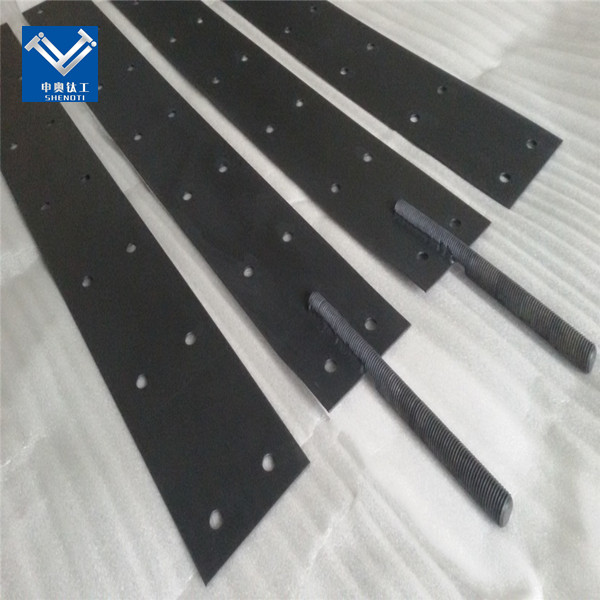
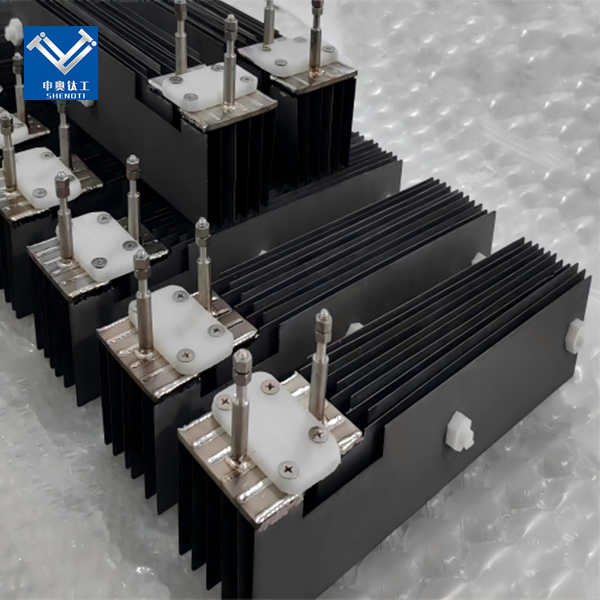
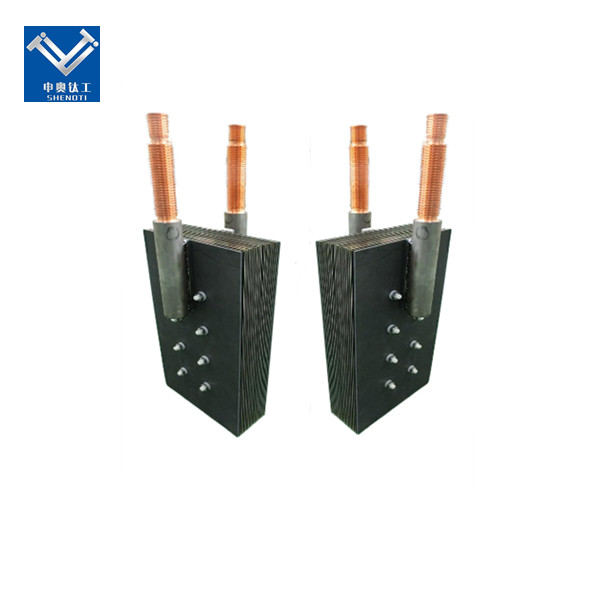
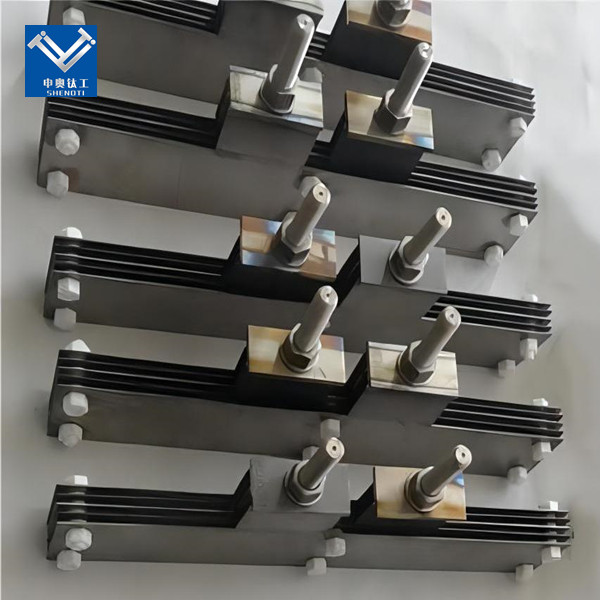
The titanium anode for seawater desalination employs high-purity titanium as the substrate. Titanium possesses relatively high mechanical strength and tends to maintain geometric integrity under high-flow seawater scouring conditions. The titanium substrate can spontaneously form a dense passive film under anodic polarization conditions, effectively suppressing electrochemical dissolution of the substrate itself in high-salinity seawater environments. The coating adopts an electrocatalytic active layer containing metal oxides such as RuO₂ and IrO₂. The IrO₂ component exhibits high electrochemical stability under chlorine evolution conditions, contributing to the structural integrity of the coating in oxidizing seawater environments. The coating and substrate have high bonding strength, tending to maintain stable adhesion over the long term under continuous high-velocity scouring conditions. Through periodic polarity reversal, calcareous deposits on the electrode surface can be removed, helping to maintain stable chlorine evolution efficiency. Actual erosion resistance and anti-scaling performance vary depending on seawater flow velocity, hardness, current density, and polarity reversal cycle.
Engineering Value for the Coastal Power Plant Market
In the global coastal power generation market, marine biofouling control for cooling systems is a key factor affecting unit availability and operating costs. The engineering value of the titanium anode for seawater desalination in this market lies in combining online continuous anti-fouling with long-cycle erosion-resistant stable operation, supporting power plant cooling systems in achieving low-maintenance operation.
Online electrochlorination solutions use naturally occurring chloride ions in seawater as raw material, eliminating the need for continuous procurement and storage of chemical anti-fouling agents, helping to reduce the chemical management burden of power plants. These titanium anode products are built on high-purity titanium substrates and coated with metal oxide systems such as RuO₂ and IrO₂, and can be customized into plate, mesh, tubular, and other geometric configurations to suit electrolytic anti-fouling devices for different intake structures. It is recommended that coastal power plant operators and anti-fouling system integrators conduct field condition testing of titanium anodes for seawater desalination based on their seawater quality, intake volume, and cooling pipeline design. By tracking indicators such as chlorine output concentration, pipeline marine organism attachment rates, and long-term electrode operating performance, the technical compatibility and comprehensive economic benefits of the online electrochlorination anti-fouling solution in specific application scenarios can be evaluated.
Important Note: The performance descriptions above are based on engineering experience under specific test conditions or internal test data. Differences may exist between laboratory results and actual operating conditions. Actual anti-fouling effectiveness, working life, and chlorine generation efficiency vary depending on seawater salinity, temperature, flow velocity, marine organism species, current density, and system design. This product is an industrial cooling water anti-fouling equipment component, and its suitability should be verified by the user according to local environmental regulations and application conditions. Sufficient compatibility validation prior to bulk procurement is recommended.
Titanium Anode Manufacturer
Email: zh@baojiti.com.cn
Products: Titanium Anodes, MMO Titanium Anodes, DSA Coated Titanium Electrodes, Electrolysis Electrodes, Hydrogen Production Electrodes, Wastewater Treatment Titanium Anodes.