Precious Metal Oxide Coated Anodes with Low Chlorine Evolution Overpotential for Cost-Effective Chlor-Alkali Electrolysis
2026-06-22 08:58:55
The chlor-alkali industry is one of the more energy-intensive sectors in electrochemistry. The chlorine evolution overpotential of the electrolyzer anode directly correlates with DC power consumption and represents a core variable affecting production costs. In diaphragm and ion-exchange membrane processes, the anode is also required to withstand prolonged exposure to high temperatures, high chloride ion concentrations, and the strongly corrosive environment of the chlorine evolution reaction. Precious metal oxide coated anodes are designed to provide an electrochemical core component solution for achieving low overpotential and long-cycle stable operation under such demanding conditions.
Chlorine Evolution Overpotential: An Important Control Factor for Chlor-Alkali Energy Consumption
The total cell voltage in chlor-alkali electrolysis comprises the theoretical decomposition voltage, membrane or diaphragm voltage drop, solution ohmic drop, and both cathodic and anodic overpotentials. Among these, the anodic chlorine evolution overpotential is the portion that can be modulated through electrocatalyst design and represents one of the main sources of electrical energy loss. A reduction in overpotential of even tens of millivolts can translate into meaningful electricity cost savings through the cumulative effect of continuous year-round operation.
The coating formulation of precious metal oxide coated anodes is typically based on systems such as RuO₂-IrO₂-TiO₂ or RuO₂-PtO₂. RuO₂ exhibits a relatively low overpotential for the chlorine evolution reaction and serves as the primary carrier of chlorine evolution activity. The introduction of IrO₂ or PtO₂ can enhance the electrochemical stability of the coating in high-temperature, strongly acidic environments, delaying activity decay. The addition of inert components such as TiO₂ contributes to improved mechanical integrity of the coating and its adhesion to the titanium substrate. Through synergistic optimization of composition ratios and microstructure, the coating tends to maintain a relatively low chlorine evolution overpotential under typical chlor-alkali operating conditions, contributing to keeping cell voltage within a narrower range and thereby reducing DC power consumption per unit of product. Actual energy savings may vary depending on electrolyte composition, operating temperature, and current density.
Performance varies based on specific operating conditions. Actual results depend on the electrolyte system and operating parameters.

Coating Anti-Spalling: Long-Cycle Assurance in High-Temperature, Highly Corrosive Environments
The anolyte environment of chlor-alkali electrolysis places severe demands on the coating. High-temperature concentrated brine is strongly corrosive, the nascent chlorine generated during the chlorine evolution reaction possesses strong oxidizing properties, and bubble scouring and temperature fluctuations during long-term operation continuously exert mechanical stress on the coating. Under the combined influence of these factors, the bonding strength at the coating-substrate interface is an important factor influencing electrode service life.
Precious metal oxide coated anodes address these challenges through synergistic design of coating formulation and preparation processes. Coating thickness is generally controlled within the 3 to 10 micrometer range. Components with relatively high stability, such as IrO₂, contribute to enhanced chemical inertness of the coating in strongly acidic and strongly oxidizing environments. The appropriate addition of inert components can improve thermal expansion compatibility between the coating and the titanium substrate, reducing interfacial stress accumulation caused by thermal cycling. The substrate employs high-purity titanium, which can spontaneously form a dense passive film under anodic polarization conditions, providing a stable supporting platform for the coating. Under appropriate electrolyte systems and operating conditions, the electrode can operate stably across a broad current density range, with operating temperature tolerance up to 80°C under typical conditions. Actual working life varies depending on electrolyte composition, temperature, and operating parameters.
Engineering Economic Value for the Chlor-Alkali Market
In the global chlor-alkali market, electricity cost is one of the core factors influencing product competitiveness. The engineering value of precious metal oxide coated anodes in this market lies in combining low chlorine evolution overpotential with coating anti-spalling capability, supporting the optimization of the total lifecycle cost of the electrolysis unit from two dimensions: reducing energy consumption and extending replacement cycles.
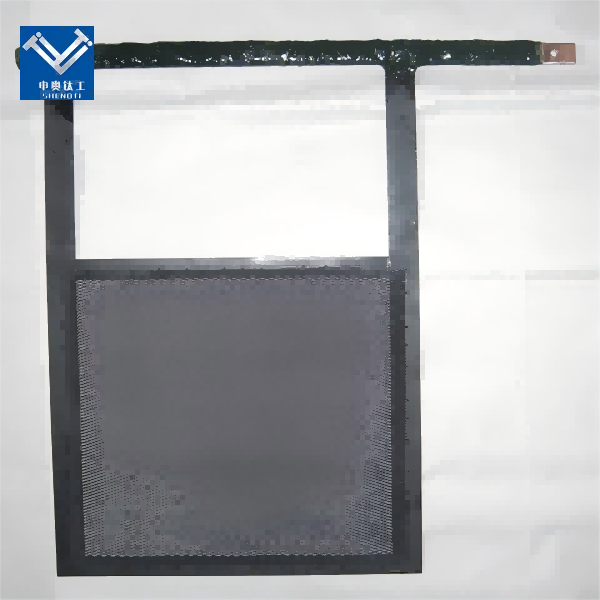
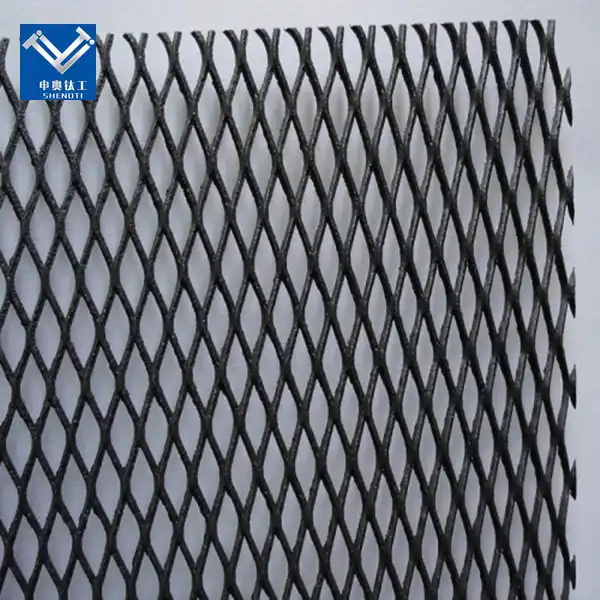
Their dimensional stability means that during long-term operation, electrode geometry and inter-electrode spacing tend to remain stable, contributing to current distribution uniformity and batch-to-batch consistency in chlorine generation efficiency. The coating consumption rate is gradual, with minimal debris observed under typical operating conditions, helping to maintain the cleanliness of the electrolysis system. Our precious metal oxide coated anode products, built on high-purity titanium substrates and coated with oxide systems such as IrO₂, RuO₂, PtO₂, and TiO₂, can be customized into various geometric configurations to suit diaphragm or ion-exchange membrane electrolyzer designs.
We recommend that chlor-alkali producers and equipment integrators conduct bench-scale or pilot validation of precious metal oxide coated anodes based on their specific electrolyte composition, temperature, and operating parameters. By tracking indicators such as cell voltage variation trends, chlorine evolution current efficiency, and long-cycle coating operating performance, the technical compatibility and total lifecycle economics of the anode in the target application scenario can be evaluated.
Important Note: The performance descriptions above are based on engineering experience under typical conditions or internal test data. Differences may exist between laboratory data and actual operating conditions. Actual chlorine evolution overpotential, working life, and energy savings vary depending on electrolyte composition, temperature, current density, and system design. This product is an industrial electrochemical equipment component, and its suitability should be verified by the user according to local regulations and application conditions. Sufficient compatibility validation prior to bulk procurement is recommended.
Titanium Anode Manufacturer
Email: zh@baojiti.com.cn
Products: Titanium Anodes, MMO Titanium Anodes, DSA Coated Titanium Electrodes, Electrolysis Electrodes, Hydrogen Production Electrodes, Wastewater Treatment Titanium Anodes.


_1776732179859.jpg "mixed metal oxide coated titanium anodes")
_1776734127532.png "dsa titanium anodes")