Mixed Metal Oxide Titanium Anodes with Anti-Passivation for Advanced Oxidation Degradation Treatment
2026-06-23 09:45:03
Industrial effluents from pharmaceutical, textile dyeing, and chemical sectors contain recalcitrant pollutants such as aromatic rings, heterocyclic compounds, and halogenated organics, for which conventional treatment processes have relatively limited mineralization capability. Electrochemical advanced oxidation technology, through in-situ generation of strong oxidizing species such as hydroxyl radicals, can achieve deep degradation of organic pollutants, with the mixed metal oxide titanium anode serving as the core functional component.
Anti-Passivation Mechanism: The Key to Maintaining Catalytic Activity in Complex Water Matrices
Organic substances, metal ions, and suspended solids commonly present in industrial wastewater may undergo polymerization deposition or form inert film layers on the anode surface, covering electrocatalytic active sites and causing continuous decline in current efficiency over operating time. This passivation phenomenon represents one of the main obstacles restricting the long-term stable operation of electrochemical oxidation technology in actual wastewater.
Mixed metal oxide titanium anodes address the passivation challenge through synergistic design of coating formulation and microstructure. The coating employs metal oxide systems such as IrO₂-RuO₂-Ta₂O₅. The IrO₂ component exhibits high electrochemical stability under oxygen evolution conditions, contributing to maintaining the structural integrity of the coating in oxidizing environments. The introduction of RuO₂ can enhance the electronic conductivity and catalytic activity of the coating, supporting the efficient generation of hydroxyl radicals. The inert Ta₂O₅ component can improve the mechanical strength and surface morphology of the coating, helping to reduce the tendency for irreversible adsorption of organic substances on the electrode surface. By modulating the micro-roughness and active site distribution of the coating, the electrode surface tends to maintain relatively stable electrocatalytic activity in actual wastewater containing multiple pollutants, delaying performance decay caused by passivation. Actual anti-passivation performance varies depending on wastewater composition, organic concentration, and operating parameters.
Performance varies based on specific operating conditions. Actual results depend on wastewater quality and operating parameters.

Hydroxyl Radical Generation: The Deep Oxidation Pathway for Recalcitrant Organics
The core technical advantage of electrochemical advanced oxidation lies in the ability to generate hydroxyl radicals in situ on the anode surface. Hydroxyl radicals possess a high oxidation-reduction potential and can, under appropriate conditions, attack aromatic rings, double bonds, and heteroatom functional groups with relative non-selectivity, progressively converting recalcitrant macromolecules into ring-opened intermediates and small-molecule organic acids, ultimately mineralizing them into carbon dioxide and water.
Mixed metal oxide titanium anodes, within a specific potential window, enable the active components in the coating to steer the water molecule oxidation pathway toward hydroxyl radical generation, rather than dissipating electrical energy solely through oxygen evolution. For textile dyeing wastewater containing azo dyes and pharmaceutical wastewater containing pharmaceutical intermediates, hydroxyl radicals can, under appropriate conditions, act on their characteristic functional groups and conjugated structures, contributing to reduced wastewater chromaticity and chemical oxygen demand, and supporting the improvement of effluent biodegradability. In high-salinity environments, the coating tends to maintain stable catalytic activity, enabling the electrode to sustain continuous generation of active oxidative species even in complex water matrices containing chloride ions. Actual mineralization effectiveness varies depending on pollutant structure, wastewater composition, pH, and current density.
Engineering Value for the Advanced Oxidation Market
In the overseas industrial wastewater advanced treatment market, particularly in pharmaceutical, textile dyeing, and chemical sectors, discharge standards for COD and specific organic pollutants continue to tighten. Electrochemical advanced oxidation, as an advanced treatment method, can be positioned downstream of biological systems for effluent polishing, or applied in the pretreatment stage to improve the biodegradability of refractory wastewater.
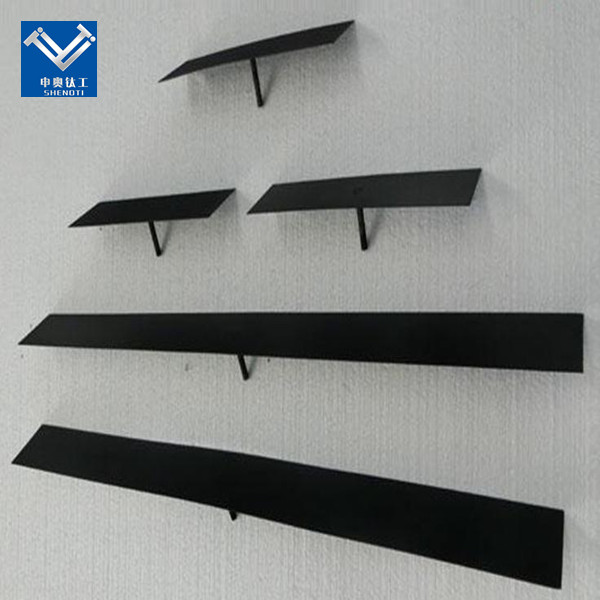
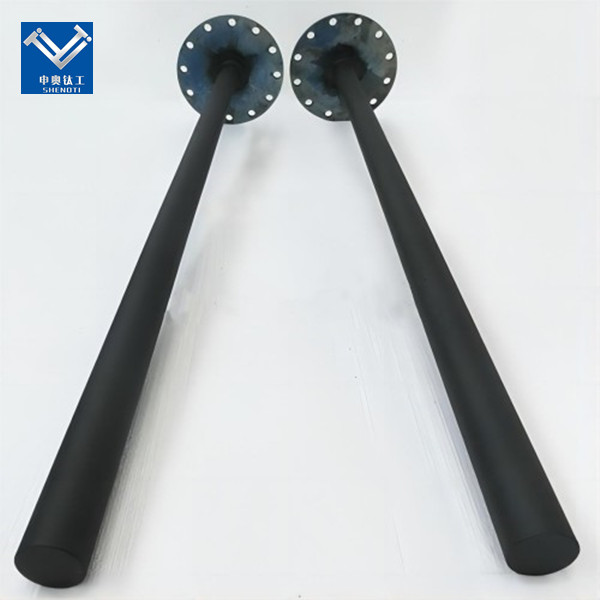
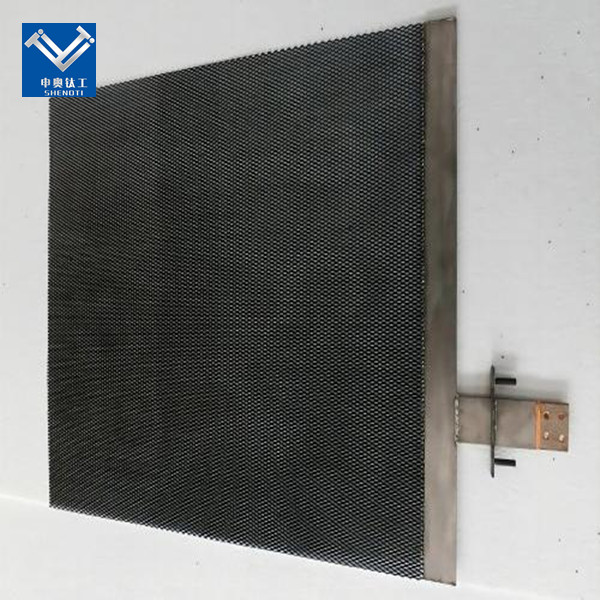
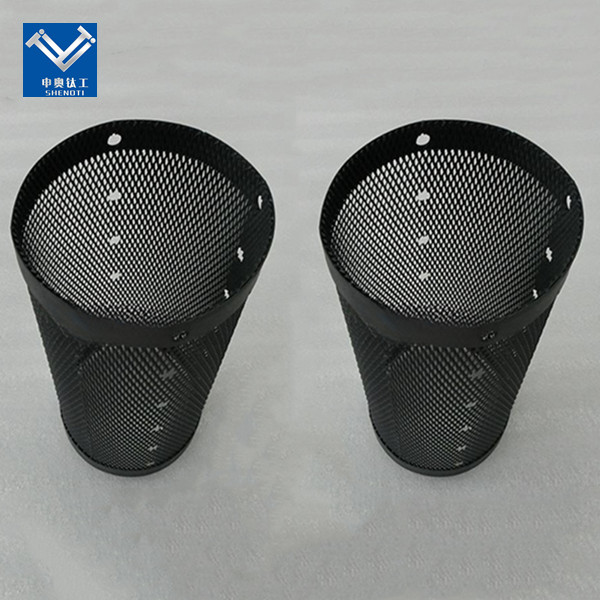
The engineering value of mixed metal oxide titanium anodes in this technical pathway lies in combining hydroxyl radical generation capability with anti-passivation stability. Their dimensional stability means that during long-term operation, electrode geometry and inter-electrode spacing tend to remain stable, contributing to current distribution uniformity and batch-to-batch consistency in treatment performance. The coating consumption rate is gradual, with minimal debris observed under typical operating conditions, helping to avoid introducing secondary pollution into the treated effluent. Our mixed metal oxide titanium anode products, built on high-purity titanium substrates and coated with metal oxide systems such as IrO₂, RuO₂, and Ta₂O₅, can be customized into plate, mesh, tubular, and other geometric configurations to suit different electrochemical reactor designs.
We recommend that environmental engineering firms and industrial users conduct bench-scale or pilot validation of mixed metal oxide titanium anodes based on the actual COD levels, pollutant composition, and salinity characteristics of their wastewater. By tracking indicators such as COD removal trends, degradation extent of characteristic pollutants, and long-term electrode operating stability, the technical compatibility and economic return of the electrochemical advanced oxidation solution in specific application scenarios can be evaluated.
Important Note: The performance descriptions above are based on engineering experience under specific test conditions or internal test data. Differences may exist between laboratory results and actual operating conditions. Actual anti-passivation performance, hydroxyl radical yield, and mineralization effectiveness vary depending on wastewater quality, pollutant type, operating parameters, and system design. This product is an industrial wastewater treatment equipment component, and its suitability should be verified by the user according to local regulations and application conditions. Sufficient compatibility validation prior to bulk procurement is recommended.
Titanium Anode Manufacturer
Email: zh@baojiti.com.cn
Products: Titanium Anodes, MMO Titanium Anodes, DSA Coated Titanium Electrodes, Electrolysis Electrodes, Hydrogen Production Electrodes, Wastewater Treatment Titanium Anodes.