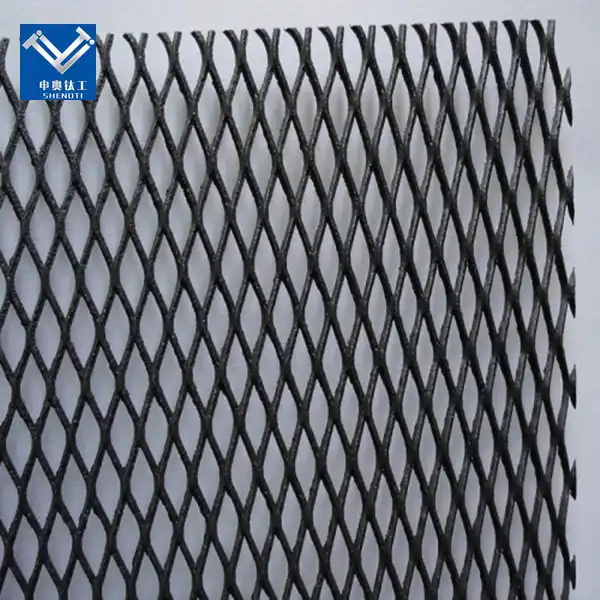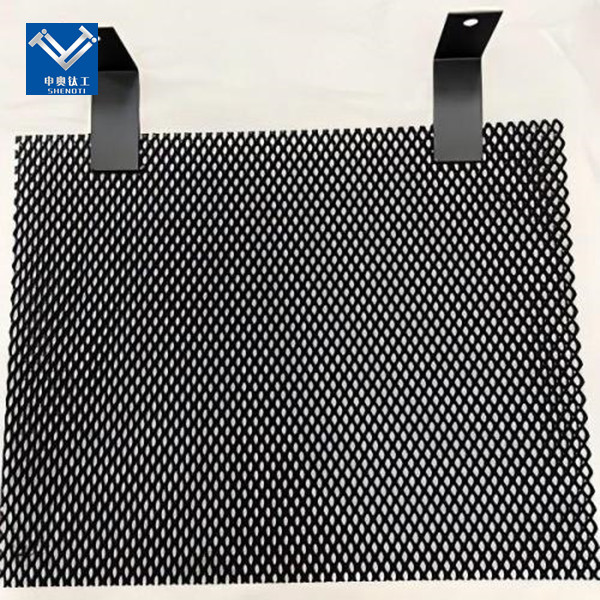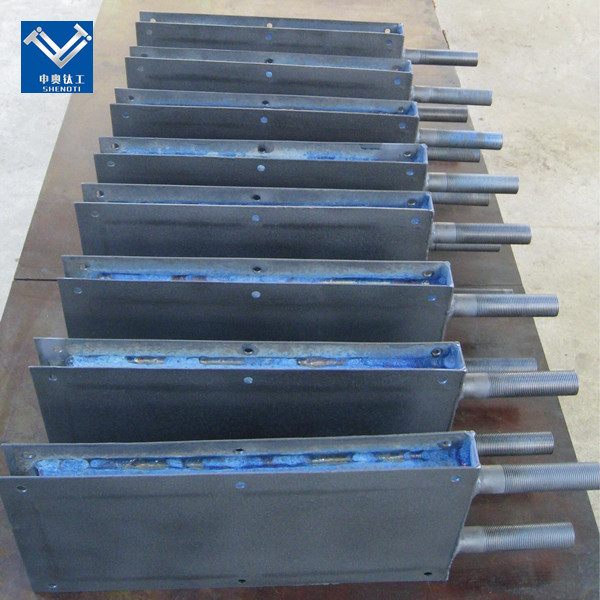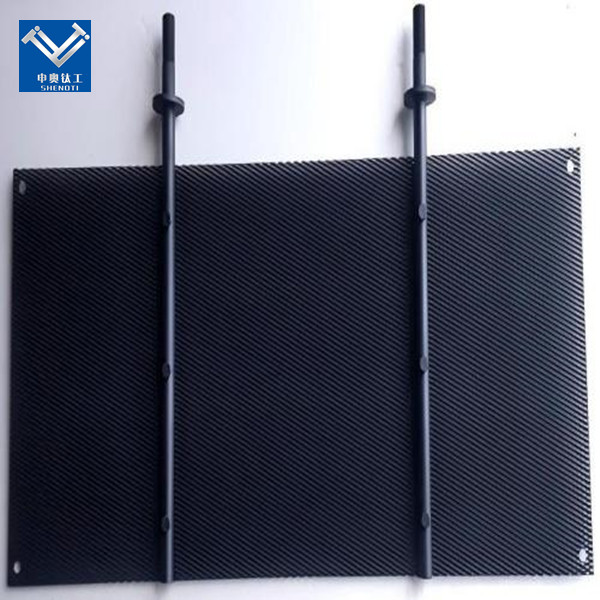
Electrolysis Titanium Electrode for Energy-Saving Applications in Ion-Exchange Membrane Caustic Soda Production
2026-06-05 14:04:10
In the chlor-alkali industry, the ion-exchange membrane electrolysis process stands as the mainstream production method. The economic viability of this technology depends largely on the performance of a core component: the anode within the electrolyzer. The electrolysis titanium electrode, known as the Dimensionally Stable Anode (DSA), offers a path for energy efficiency optimization grounded in electrocatalytic science. Its role is not a disruptive replacement, but rather a way to rationalize long-term operational costs by lowering key overpotentials within existing systems.
Substrate and Coating: Material Design for Chlor-Alkali Conditions
The performance of an electrolysis titanium electrode is rooted in its material architecture. We use pure titanium (Gr1 or Gr2) that conforms to ASTM B265 standards as the substrate. In the anolyte environment of an ion-exchange membrane cell—characterized by high temperature, strong alkalinity, and the presence of chlorine gas—the titanium surface naturally forms a dense, stable passive film. This characteristic provides a corrosion-resistant structural backbone, enabling the electrode to maintain its geometric stability under such demanding conditions.
Onto this base, a coating of noble metal oxides is applied via methods such as thermal decomposition. The coating formulation is typically based on a mixed oxide system containing RuO₂ and IrO₂. This layer acts as a fixed electrocatalyst on the titanium substrate. During the electrolysis of sodium chloride brine, it works by lowering the overpotential for the chlorine evolution reaction. This reduction in overpotential translates directly into a lower cell voltage at the macroscopic engineering level. This mechanism is the material-level key to rationalizing energy consumption in the electrolysis process.

The Energy-Saving Mechanism: A Functional Pathway to Reduced Cell Voltage
When an electrolysis titanium electrode is deployed in ion-exchange membrane caustic soda production, its direct functional contribution is the sustained optimization of cell voltage. In an ion-exchange membrane cell, the total voltage is composed of the theoretical decomposition voltage, membrane voltage drop, solution ohmic drop, and electrode overpotentials. Among these, the anodic chlorine evolution overpotential and cathodic hydrogen evolution overpotential are the parts that can be modulated through electrocatalyst design.
The design philosophy of the DSA is to provide highly active sites for the chlorine evolution reaction by tailoring the coating's composition and microstructure, thereby maintaining this portion of the overpotential at a lower level. If this suppressed overpotential state can be preserved over the electrode's service life, it converts into sustained electrical cost savings. For a caustic soda production line with considerable annual output, even a steady reduction in cell voltage can accumulate into meaningful engineering economic value over time.
(Disclaimer: The descriptions above regarding electrode service life and energy-saving effects are based on engineering experience under typical operating conditions. Actual energy savings and electrode working life depend on combined factors including cell design, ion-exchange membrane condition, brine quality, and operating current density. Performance may vary across different application scenarios.)
Long-Term Stability and Cost Implications in Continuous Operation
In the continuous operation of chlor-alkali production, the rate of electrode performance decay is another critical variable influencing total cost. Graphite anodes, which were historically used in the industry, are gradually consumed through oxidation over time, leading to changes in the electrode gap and rising cell voltage. In contrast, the coating wear rate of an electrolysis titanium electrode is relatively gradual, and the substrate's dimensional integrity is maintained throughout its lifecycle.
The benefits of this stability are multifaceted. First, it can extend the electrode's effective working life, maintaining functionality over an extended period under appropriate operating conditions. This stretches the replacement cycle and reduces labor and material costs associated with maintenance shutdowns. Second, a stable electrode gap helps maintain a uniform current distribution in the cell over its entire life, which is beneficial for the long-term health of the ion-exchange membrane. From the perspective of a plant operator, this predictable performance decay curve aids in developing more precise maintenance schedules and cost budgets.
Engineering Value for the Global Export Market
In the global chlor-alkali export market, producers maintain a persistent focus on the energy efficiency and operational stability of ion-exchange membrane cells. As a consumable component requiring periodic investment, the choice of electrolysis titanium electrode is directly linked to the core operating metrics of the electrolysis unit.
The product we offer is, in essence, a customizable electrocatalytic interface for chlor-alkali production. It is not positioned as a solution for all operational challenges, but for production lines aiming to achieve energy savings through reduced cell voltage, it provides an engineered technological option. We encourage potential users to conduct trial evaluations in a specific circuit based on their actual brine quality and cell operating conditions. By tracking and comparing cell voltage, current efficiency, and product quality, the electrode's compatibility and economic benefits in a given application environment can be validated. This prudent, data-based assessment is a reliable step toward smoothly translating an electrocatalytic material technology into a tangible production cost advantage.
Titanium Anode Manufacturer
Email: zh@baojiti.com.cn
Products: Titanium Anodes, MMO Titanium Anodes, DSA Coated Titanium Electrodes, Electrolysis Electrodes, Hydrogen Production Electrodes, Wastewater Treatment Titanium Anodes.