Electrolysis Titanium Electrode for Electrocatalytic Oxidation of Refractory Wastewater
2026-06-05 10:21:01
In industrial water treatment, electrochemical advanced oxidation processes (EAOPs) are drawing attention for tackling wastewater laden with recalcitrant organic pollutants. At the center of this technology lies a critical functional component: the electrode. The electrolysis titanium electrode, specifically the Dimensionally Stable Anode (DSA), offers a materials-science-grounded approach to these challenges. Its contribution is not about claiming singular, superior metrics, but about providing a predictable assurance of stability and economic viability for the electrocatalytic oxidation process through deliberate material design.
Substrate and Coating: The Foundation of Electrode Performance
The performance of an electrolysis titanium electrode starts with its precise construction. We employ pure titanium (Gr1 or Gr2) that complies with ASTM B265 standards as the substrate. This choice is based on titanium's inherent ability to passivate and its mechanical robustness in various aggressive environments, serving as a dimensionally stable and corrosion-resistant backbone. This is not a random material selection; it leverages the substrate's tendency to form a self-protective oxide film under anodic polarization, which helps suppress erosion from the start.
Onto this base, a coating of noble metal oxides is applied, using methods such as thermal decomposition. The coating formulation often includes RuO₂, IrO₂, Pt, Ta₂O₅, SnO₂, or their mixed-oxide systems. This thin layer functions as a fixed electrocatalyst on the electrode surface. During electrolysis, it works by lowering the overpotential for oxygen evolution reactions. This helps direct more of the electrochemical energy towards breaking down target organic pollutants instead of splitting water. The macroscopic result is a tendency towards lower cell voltage and more rational energy consumption, making operation at high current densities (for example, up to 10,000 A/m², depending on application-specific conditions) more feasible from an engineering economics perspective.

The Electrocatalytic Pathway: How COD Degradation Works
When an electrolysis titanium electrode is put to work in high-concentration organic wastewater or industrial effluent with complex matrices, its primary function is the reduction of Chemical Oxygen Demand (COD). Unlike oxidation that relies solely on direct electron transfer, DSA technology promotes an indirect oxidation path. Upon energization, the coating interface facilitates the generation of highly reactive species, such as hydroxyl radicals. These transient intermediates can attack a wide range of organic molecular structures with relative non-selectivity, mineralizing them into carbon dioxide, water, and simple inorganic salts.
In this light, a documented achievement of using this electrode in EAOPs is the further treatment of organics that resist biodegradation. In several engineered cases, post-treatment by an electrocatalytic unit, the BOD/COD ratio of the refractory wastewater showed an improving trend, creating more favorable conditions for a downstream biological stage. In other recirculating batch treatment scenarios, a decreasing trend in effluent COD concentration is observed. (Disclaimer: Actual treatment efficacy depends on the specific water matrix, system design, and operating parameters.) Throughout this, the electrode maintains its geometric stability, and the coating consumption rate is gradual. This attribute ensures that consistent treatment performance is not interrupted by electrode deformation or rapid deactivation, a point of practical value for continuous industrial operations.
Design Considerations for Industrial Uptake
Our electrode design focuses on several aspects that matter in real-world application scenarios:
Lifecycle Economics: The working life of an electrolysis titanium electrode typically falls within a range of 2 to 10 years, depending on water chemistry, applied current density, and maintenance regimes. This implies that under reasonable operating conditions, users have the potential to experience fewer unplanned shutdowns and less maintenance labor for electrode replacements, leading to more predictable long-term amortized equipment costs.
Mitigation of Secondary Contamination: Unlike consumable graphite anodes, the coating loss of an electrolysis titanium electrode is on a micro-scale and does not generate macroscopic sludge or fragments. This helps in maintaining the clarity of the treated water and aligns with increasingly stringent external requirements for effluent quality.
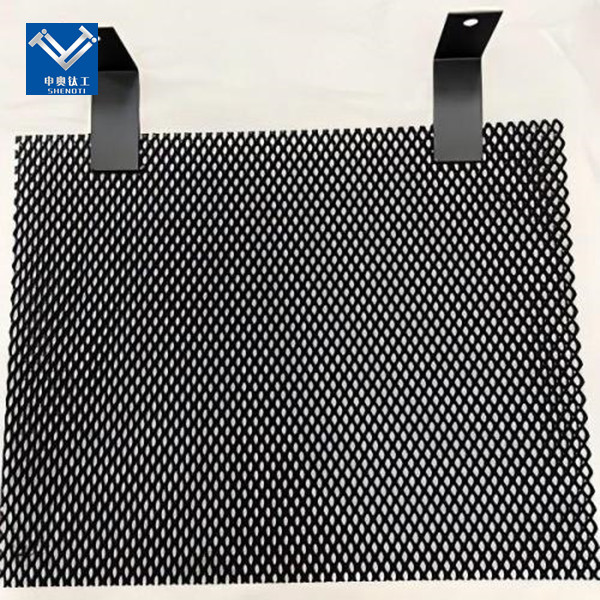
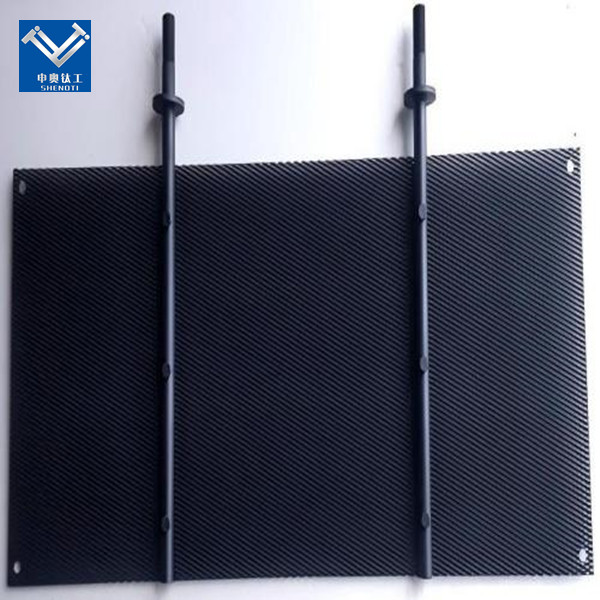
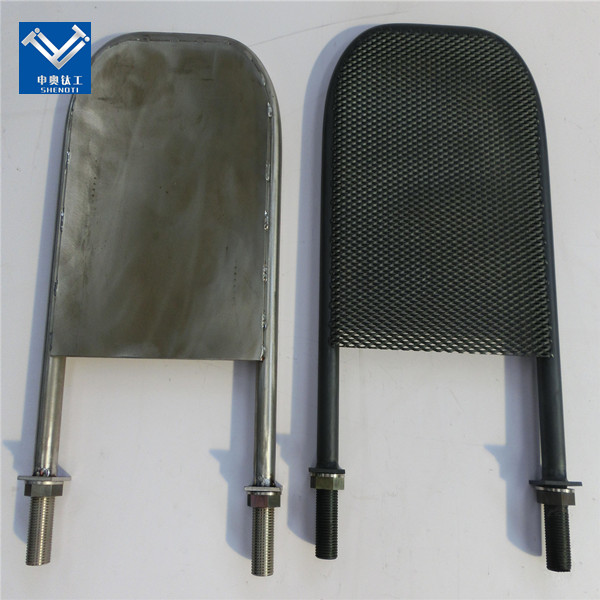
Geometric Adaptability: To accommodate different reactor designs and flow-field needs, we can configure the electrode in various geometric shapes, such as plates, meshes, or tubes. This flexibility allows the electrode to integrate better into a client's existing or newly designed treatment system, optimizing mass transfer efficiency instead of forcing the system to adapt to a standard component.
Engineering Reliability with a Market Focus
In international markets, the demand for advanced oxidation solutions for industrial wastewater—especially streams with complex water quality where conventional biotreatment faces limitations—is growing. The market acceptance of the electrolysis titanium electrode as a functional part in this technological pathway stems from its ability to address several practical pain points of legacy electrodes, like high wear rates or the risk of introducing new pollutants.
The product we provide is, in essence, a customizable electrocatalytic interface. It is not positioned as a one-size-fits-all answer for every wastewater challenge. However, for specific categories of recalcitrant organics, it provides a technically mature and operationally cleaner oxidation pathway. We encourage potential users and engineering firms to conduct pilot-scale or lab-scale validation based on their unique wastewater matrix. By matching mass transport conditions and current density, the electrode's performance can be evaluated for its specific application context. This is the prudent step in translating a material-based technology into tangible, productive capacity.
Titanium Anode Manufacturer
Email: zh@baojiti.com.cn
Products: Titanium Anodes, MMO Titanium Anodes, DSA Coated Titanium Electrodes, Electrolysis Electrodes, Hydrogen Production Electrodes, Wastewater Treatment Titanium Anodes.