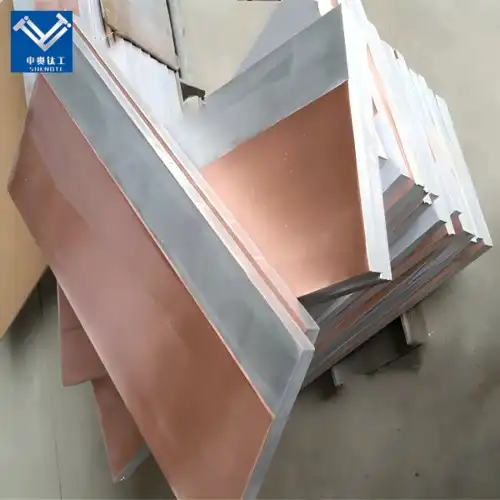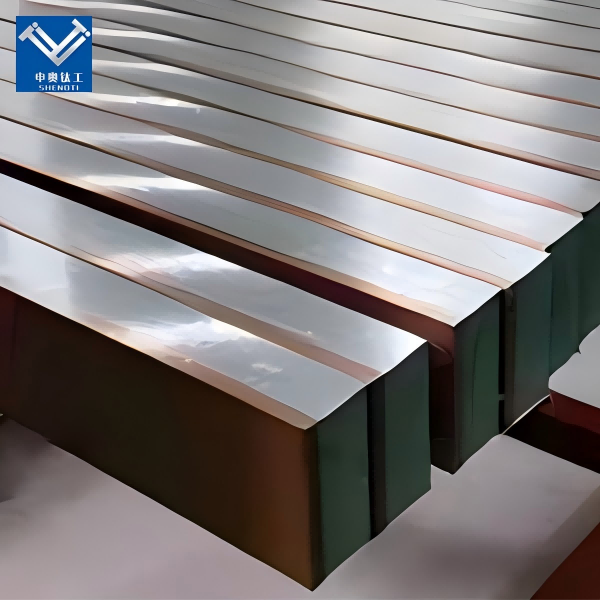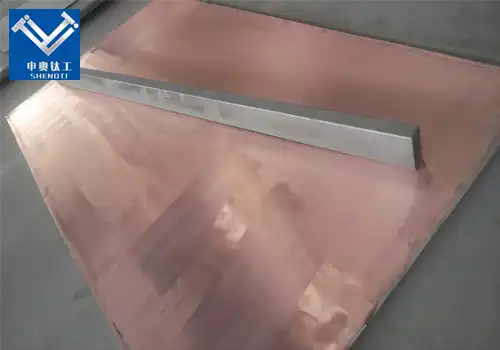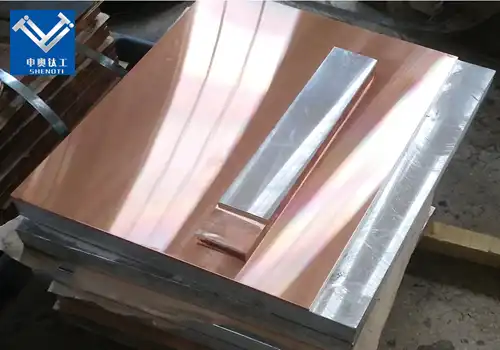
Copper Clad Aluminum Plate with Copper Corrosion Resistance for Long-Term Operation of Chemical Equipment
2026-07-06 09:40:14
Chemical equipment operating in corrosive gas or liquid environments faces the dual challenges of comprehensive performance and economic viability in material selection. While aluminum is lightweight and relatively low in cost, its chemical reactivity is high in acidic or alkaline media, and once the surface oxide film is compromised, it corrodes and fails rapidly. Pure copper offers excellent corrosion resistance but its high density and cost limit widespread application in large-scale tanks and pipelines. Copper clad aluminum plate, which protects the aluminum core with the chemical inertness of the copper layer, provides a composite solution that combines corrosion resistance with economic viability for chemical equipment.
Copper Layer Corrosion Resistance: Long-Cycle Protection Through Chemical Inertness
The variety of corrosive media encountered in chemical production is extensive, including sulfur-containing gases, organic acids, salt spray, and chloride-containing solutions. These media attack pure aluminum at relatively high rates. Once the surface passive film is lost, aluminum undergoes pitting or general corrosion, leading to wall thinning and even perforation leakage. Copper exhibits far lower corrosion rates than aluminum in these media. The product film formed on its surface—such as cuprous oxide or basic copper carbonate—possesses protective properties, effectively isolating the substrate from further contact with corrosive media.
Copper clad aluminum plate bonds a dense copper layer onto the surface of the aluminum core through explosive welding, imparting the corrosion resistance of copper to the service surface of the composite material. The copper layer serves as the first line of defense in contact with corrosive media, performing the barrier function against chemical attack. Even if slight corrosion occurs on the copper layer surface during long-term operation, the aluminum core remains physically isolated and protected by the copper layer, maintaining structural integrity. The copper-to-aluminum thickness ratio can be customized according to the design life and corrosion allowance of the equipment, optimizing copper usage and controlling material cost while meeting corrosion resistance requirements. Actual corrosion resistance performance varies depending on the type, concentration, temperature, and flow rate of the corrosive medium, as well as the operating environment.
Performance varies based on specific operating conditions. Actual results depend on the corrosive environment and operating parameters.

Interfacial Bonding: Explosive Welding Ensuring Reliable Interlayer Connection
Chemical equipment endures not only chemical attack during operation but also the composite conditions of temperature fluctuations and pressure variations. If the copper-aluminum interfacial bonding is inadequate, thermal stress from expansion and contraction will cause blistering and delamination of the copper layer, exposing the underlying aluminum core to corrosive media and accelerating equipment failure. Interfacial bonding quality is the key factor determining the long-term reliable operation of copper clad aluminum plate in chemical environments.
Copper clad aluminum plate employs the explosive welding process to achieve interfacial bonding. Explosive welding utilizes controlled detonation energy to drive copper and aluminum plates into high-velocity oblique collision. The instantaneous high pressure generated at the collision point, far exceeding the yield strength of the materials, causes plastic deformation and jetting of the interfacial metals, forming atomic-scale metallurgical bonding. This bonding interface exhibits a characteristic wavy interlocking morphology, with bonding strength typically exceeding 50 MPa, effectively increasing the contact area and mechanical interlocking force between the two metals. Under conditions of temperature fluctuations and pressure variations, the metallurgical bonding interface can effectively transfer and disperse stress, helping to suppress interlayer separation caused by differences in thermal expansion coefficients. Actual interfacial stability varies depending on the copper-to-aluminum thickness ratio, temperature fluctuation range, mechanical load, and operating environment.
Engineering Value for the Chemical Equipment Market
In the global chemical equipment market, the long-cycle reliable operation of equipment is directly linked to production safety and economic returns. The engineering value of copper clad aluminum plate in this market lies in utilizing the chemical inertness of the copper layer to protect the aluminum core, achieving long-term equipment service at a comprehensive cost lower than that of pure copper.
These copper clad aluminum plate products are manufactured using the explosive welding process, with the copper-to-aluminum thickness ratio customizable within a thickness range of 1 mm to 100 mm according to corrosion resistance requirements and structural design. They are applicable to chemical equipment such as reactors, storage tanks, transfer pipelines, and column components. It is recommended that chemical equipment manufacturers and engineering firms conduct field condition testing of copper clad aluminum plates based on the type, concentration, temperature, and operating pressure of the corrosive media their equipment contacts. By tracking indicators such as copper layer corrosion rate, interfacial bonding integrity, and long-cycle operating performance, the technical compatibility and total lifecycle economics of copper clad aluminum plate in specific application scenarios can be evaluated.
Important Note: The performance descriptions above are based on engineering experience under specific test conditions or internal test data. Differences may exist between laboratory results and actual operating conditions. Actual corrosion resistance performance, bonding strength, working life, and suitability vary depending on the type, concentration, temperature, flow rate of the corrosive medium, mechanical load, operating environment, and system design. This product is a composite material for chemical equipment, and its suitability for specific applications must be verified by the user according to actual operating conditions and relevant industry standards. Sufficient compatibility validation prior to bulk procurement is recommended.
Titanium Anode Manufacturer
Email: zh@baojiti.com.cn
Products: Titanium Anodes, MMO Titanium Anodes, DSA Coated Titanium Electrodes, Electrolysis Electrodes, Hydrogen Production Electrodes, Wastewater Treatment Titanium Anodes.