Copper Clad Aluminum Plate for Reliable Bonding Against Thermal Cycling in IGBT Baseplates
2026-07-06 09:40:40
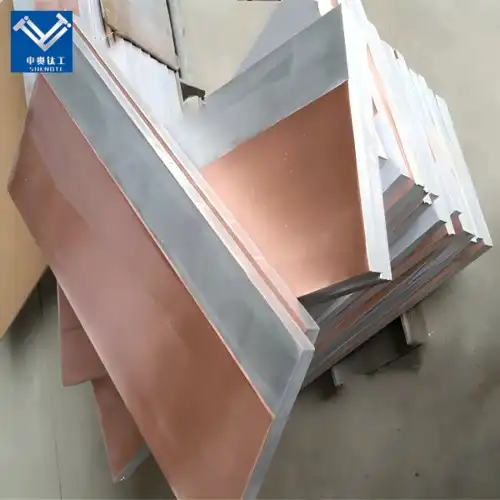
IGBT module baseplates, electrolytic cell busbars, and other industrial electronic components endure repeated thermal cycling and complex high-load conditions during operation. Joule heat generated by current flow, combined with ambient temperature variations, subjects the components to continuous expansion and contraction. If interlayer delamination occurs in the conductive baseplate, the resulting surge in contact resistance will trigger localized overheating, leading to performance degradation or even failure of the entire module. Copper clad aluminum plate, with its metallurgical bonding at the copper-aluminum interface achieved through explosive welding, is a composite conductive material engineered to address such thermomechanical fatigue challenges.
Interfacial Bonding Strength: The First Line of Defense Against Thermal Cycling Stress
Under typical operating conditions, the junction temperature of IGBT modules can surge from ambient levels to over one hundred degrees Celsius, fluctuating repeatedly through switching cycles. The thermal expansion coefficients of copper and aluminum differ—copper at approximately 17×10⁻⁶/K, aluminum at approximately 23×10⁻⁶/K. This difference means that each thermal cycle generates thermal stress at the interface between the two metals. If the interfacial bonding relies solely on mechanical interlocking or low-strength brazing, stress accumulation will gradually initiate microcrack formation and propagation, ultimately leading to interlayer delamination.
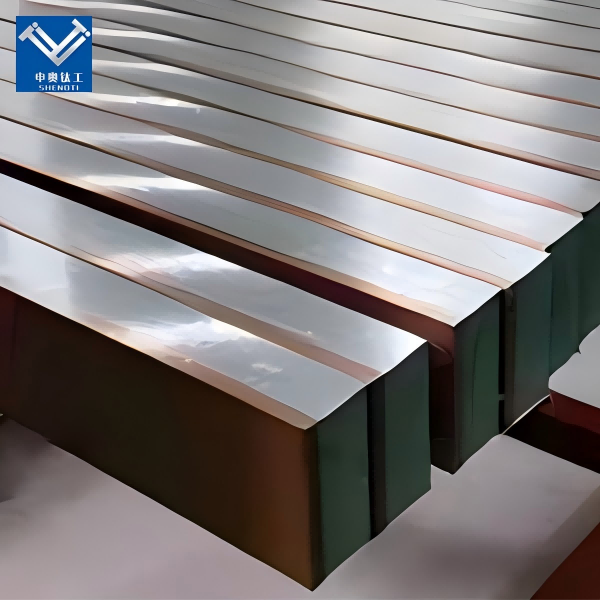
Copper clad aluminum plate achieves interfacial bonding through the explosive welding process. Explosive welding utilizes controlled detonation energy to drive the copper and aluminum plates into oblique collision at extremely high velocities. The instantaneous high pressure generated at the collision point far exceeds the yield strength of the materials, enabling atomic-scale metallurgical bonding at the interface through plastic deformation and jetting action. This bonding interface exhibits a characteristic wavy interlocking morphology that effectively increases the bonding area, with bonding strength typically exceeding 50 MPa. Under repeated thermal cycling, the metallurgical bonding interface can effectively transfer and disperse thermal stress, helping to suppress microcrack initiation. Actual thermal cycling resistance performance varies depending on the copper-to-aluminum thickness ratio, temperature fluctuation range, cycling frequency, and operating environment.
Performance varies based on specific operating conditions. Actual results depend on usage conditions and operating parameters.

Electrical and Thermal Conductivity: Synergistically Optimizing Module Performance
IGBT baseplates perform the dual functions of current conduction and heat dissipation. Copper possesses excellent electrical and thermal conductivity but has relatively high density and cost. Aluminum, while having somewhat lower electrical and thermal conductivity, offers the advantages of light weight and lower cost. Copper clad aluminum plate integrates the strengths of both metals—the copper layer provides low-resistance current pathways and efficient thermal diffusion paths, while the aluminum core reduces material weight and cost while maintaining overall performance.
In terms of thermal management, the bonding interface between the copper layer and aluminum core forms a continuous metallic connection after explosive welding, with relatively low thermal resistance, facilitating efficient heat transfer from the chip substrate through the copper layer to the aluminum core and heat sink. For electrical conduction, current can be rapidly conducted away through the copper layer, with the aluminum core serving as an auxiliary conductive pathway, supporting the component in maintaining low contact resistance under high-current conditions. The copper-to-aluminum thickness ratio can be custom designed according to specific current-carrying and heat dissipation requirements. Actual electrical and thermal conductivity performance varies depending on the copper-to-aluminum thickness ratio, interfacial bonding quality, and operating temperature.
Engineering Value for the Industrial Electronics Market
In the global IGBT module and power electronics equipment market, miniaturization, lightweighting, and high reliability are ongoing technological trends. The engineering value of copper clad aluminum plate in this market lies in combining the high electrical and thermal conductivity of copper, the lightweight advantages of aluminum, and the thermal fatigue resistance of the explosive-welded interface, supporting industrial electronic components in achieving stable and reliable operation under long-term thermal cycling conditions.
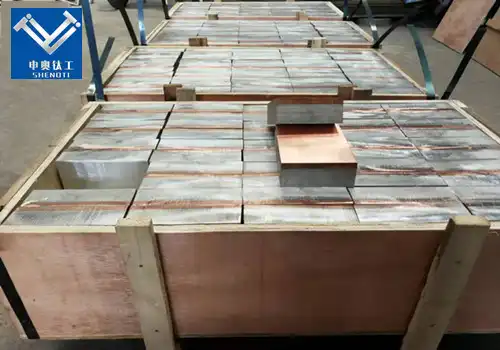
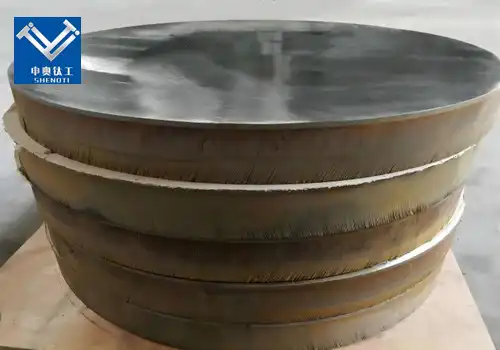
These copper clad aluminum plate products are manufactured using the explosive welding process, with interfacial bonding strength exceeding 50 MPa. The copper-to-aluminum thickness ratio can be customized within a thickness range of 1 mm to 100 mm according to customer requirements. It is recommended that IGBT module manufacturers and power electronics system integrators conduct field condition testing of copper clad aluminum plates based on their component current loads, thermal cycling conditions, and thermal management designs. By tracking indicators such as interfacial bonding integrity, contact resistance variation trends, and long-term thermal cycling performance, the technical compatibility and reliability assurance capability of copper clad aluminum plate in specific application scenarios can be evaluated.
Important Note: The performance descriptions above are based on engineering experience under specific test conditions or internal test data. Differences may exist between laboratory results and actual operating conditions. Actual thermal cycling resistance performance, bonding strength, electrical and thermal conductivity, and working life vary depending on the copper-to-aluminum thickness ratio, temperature fluctuation range, cycling frequency, operating environment, and system design. This product is an industrial electronic component material, and its suitability for specific applications must be verified by the user according to actual operating conditions and relevant industry standards. Sufficient compatibility validation prior to bulk procurement is recommended.
Titanium Anode Manufacturer
Email: zh@baojiti.com.cn
Products: Titanium Anodes, MMO Titanium Anodes, DSA Coated Titanium Electrodes, Electrolysis Electrodes, Hydrogen Production Electrodes, Wastewater Treatment Titanium Anodes.