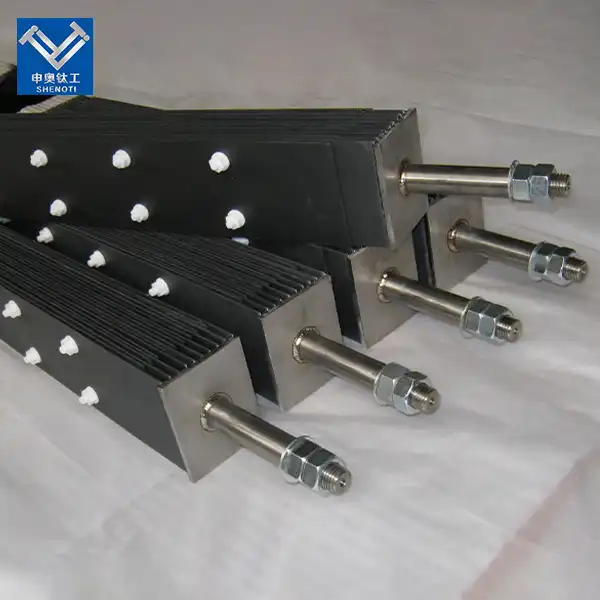
RuTi Anode for Ammonia Nitrogen Wastewater Treatment


Coating: Ruthenium Mixed Metal Oxide (Ru-MMO)
Coating Structure: Dense and highly conductive catalytic layer
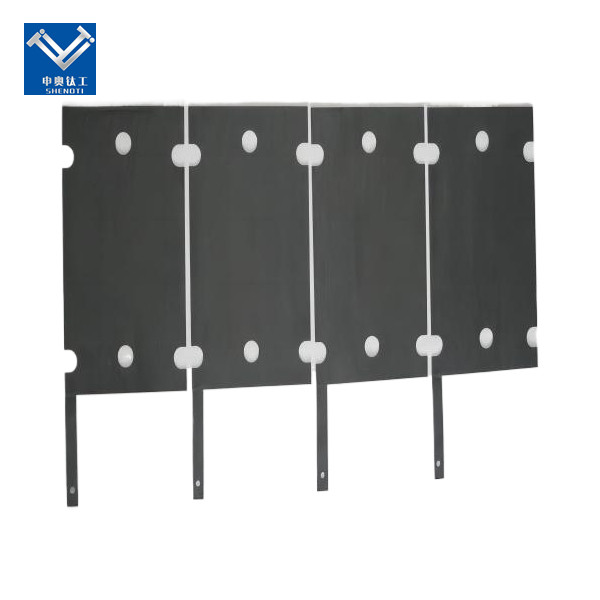
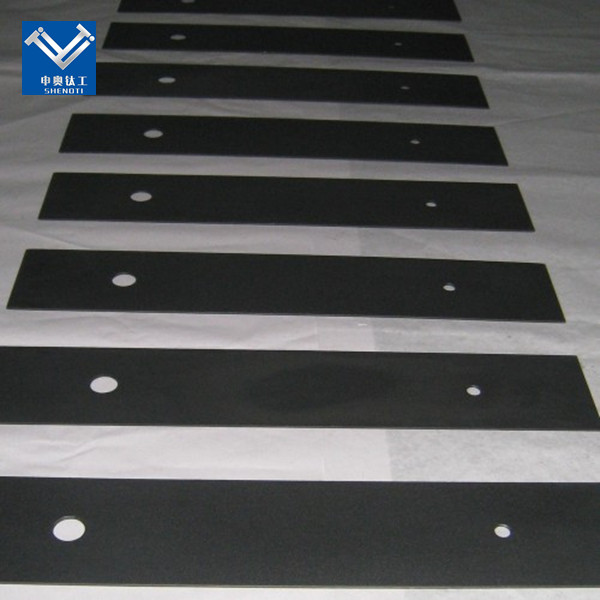
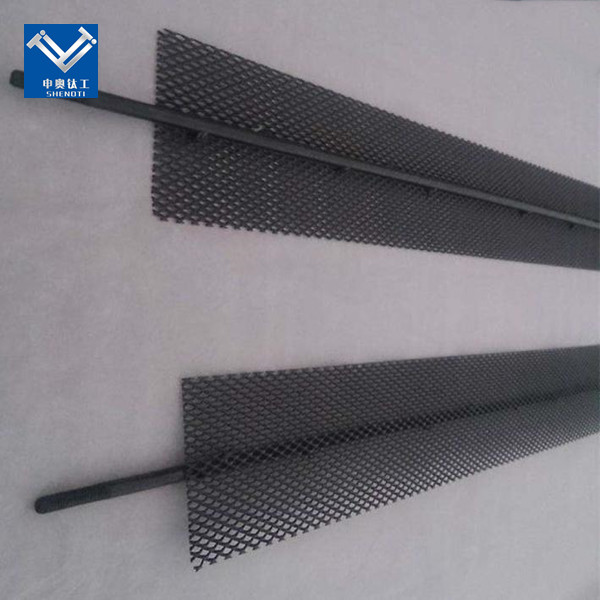
Custom made: Plate, Mesh, Tube, and Customed
Expected Lifespan: Capable of consistent output across long-duration applications
Advantage:
High electrocatalytic activity
Strong corrosion resistance
Long service life
Dimensionally stable
RuTi Anode for Ammonia Nitrogen Wastewater Treatment
In the electrochemical oxidation treatment of ammonia nitrogen wastewater, the chlorine evolution catalytic activity and electrochemical stability of the anode are key factors determining ammonia nitrogen removal efficiency and operating energy consumption. Our RuTi Anode for Ammonia Nitrogen Wastewater Treatment at Baoji City ShenAo Metal Materials Co., Ltd. is designed specifically for the electrochemical oxidation treatment of ammonia nitrogen-containing industrial wastewater. It uses Grade 1 or Grade 2 pure titanium as the substrate, with a ruthenium-based mixed metal oxide catalytic coating on the surface. The coating maintains stable chlorine evolution electrocatalytic activity in ammonia nitrogen wastewater containing chloride ions, achieving efficient conversion of ammonia nitrogen to nitrogen gas through the indirect oxidation reaction between active chlorine generated at the anode surface and ammonia nitrogen. The anode maintains a stable chemical state during operation, minimizing the risk of metal ion dissolution, making it suitable for the compliance treatment of ammonia nitrogen-containing wastewater from electroplating, metallurgy, chemical, livestock farming, and landfill leachate industries, serving as a reliable electrode solution for ensuring ammonia nitrogen removal efficiency and long-term stable system operation.
This product is for B2B Industrial Use Only. Operators should follow relevant chemical safety protocols and wastewater treatment operation standards.
Technical Specifications
|
Substrate Material |
Grade 1/2 Pure Titanium |
|
Coating Type |
Ruthenium-based Mixed Metal Oxide (RuO₂-MMO), formulation optimizable per chloride ion concentration and ammonia nitrogen loading |
|
Coating Thickness |
5–15 μm (adjusted based on current density and wastewater composition) |
|
Coating Loading |
10–150 g/m² (customized for rated current density) |
|
Current Density Range |
50–1,000 A/m² (adjusted based on ammonia nitrogen concentration and chloride ion content) |
|
Operating Voltage Window |
0.5 V–2.0 V (typical chlorine evolution potential range) |
|
Anode Shapes |
Plate, Mesh, Tube, Rod, Custom |
|
Applicable Wastewater |
Electroplating ammonia nitrogen wastewater, metallurgical ammonia nitrogen wastewater, chemical ammonia nitrogen wastewater, livestock farming wastewater, landfill leachate |
Why Choose Our Titanium Anodes?
- Efficient Chlorine Evolution Activity for Indirect Ammonia Nitrogen Oxidation
The electrochemical oxidation of ammonia nitrogen primarily relies on the indirect oxidation reaction between active chlorine generated by anodic chlorine evolution and ammonia nitrogen. Our ruthenium-based coating exhibits a very low chlorine evolution overpotential in chloride-containing water, enabling efficient active chlorine generation at low cell voltage to ensure efficient conversion of ammonia nitrogen to nitrogen gas. For ammonia nitrogen wastewater with lower chloride ion concentration, trace salt addition can assist in enhancing oxidation efficiency, offering lower energy consumption compared to direct electrochemical oxidation methods. - Chemical Stability in Chloride-Containing Ammonia Nitrogen Wastewater
Ammonia nitrogen wastewater often contains chloride ions, sulfates, and various coexisting pollutants, exerting continuous chemical attack on electrode materials. Our ruthenium-based coating formulation is optimized to maintain a low corrosion rate and good structural integrity in such complex wastewater environments, making it suitable for long-cycle continuous ammonia nitrogen treatment systems and reducing treatment efficiency decline and maintenance frequency caused by coating degradation. - Broad Chloride Ion Concentration Adaptability
From industrial chloride-containing ammonia nitrogen wastewater with chloride ion concentrations of several thousand milligrams per liter, to ordinary ammonia nitrogen wastewater with chloride ion concentrations of only tens of milligrams per liter, the ruthenium-based coating maintains high chlorine evolution current efficiency. For wastewater with low chloride ion concentration, trace salt addition can raise the chloride ion concentration to an economically reasonable level, utilizing the chlorine evolution–indirect oxidation mechanism to achieve efficient ammonia nitrogen removal. - Flexible Modular Expansion and Maintenance
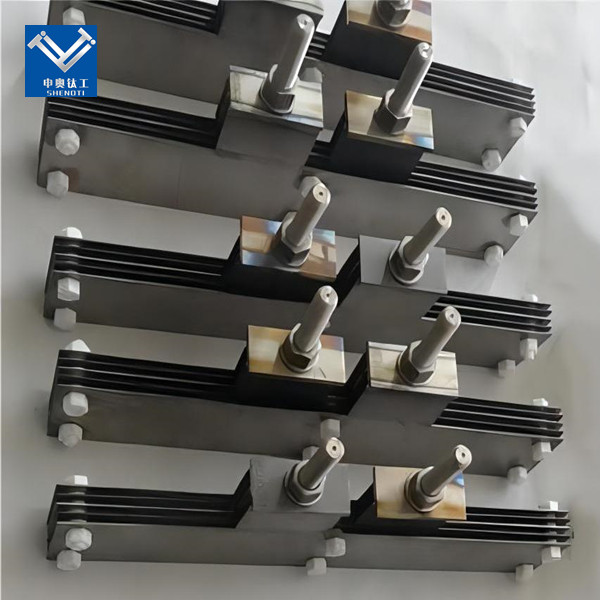
We can provide single or multiple anode modules in series-parallel combinations based on your treatment capacity and ammonia nitrogen concentration. Plate and mesh anodes are suitable for immersion-type electrolytic cells; tubular anodes are suitable for flow-through reactors; rod anodes are suitable for small-scale treatment units. When anodes reach the end of their service life, they can be individually replaced. We also offer used anode inspection and recoating services, helping you reduce long-term operation and maintenance costs.
|
|
|
|
|
|
|
|
|
|
|
|




Real-World Applications
- Industrial Wastewater Treatment: Used for the electrochemical oxidation treatment of ammonia nitrogen-containing industrial wastewater from the electroplating, metallurgy, and chemical industries, covering compliance removal of ammonia nitrogen from electroplating rinse water, metallurgical waste solutions, and chemical process wastewater.
- Landfill Leachate Treatment: Used for the electrochemical pretreatment or advanced treatment of high-concentration ammonia nitrogen in leachate from landfill sites, waste incineration plants, and waste transfer stations, covering ammonia nitrogen removal from membrane concentrates and aged leachate.
- Livestock and Poultry Farming Wastewater Treatment: Used for the electrochemical oxidation treatment of ammonia nitrogen in washing wastewater and biogas slurry from pig farms, cattle farms, and poultry farms, replacing or reducing aeration energy consumption and carbon source addition in biochemical treatment.
- Comprehensive Treatment of Ammonia Nitrogen-Containing Industrial Wastewater: Used for the electrochemical treatment of ammonia nitrogen-containing process wastewater from the pharmaceutical, food processing, and textile dyeing industries, achieving efficient oxidative decomposition of ammonia nitrogen through online active chlorine generation.


The ShenAo Advantage
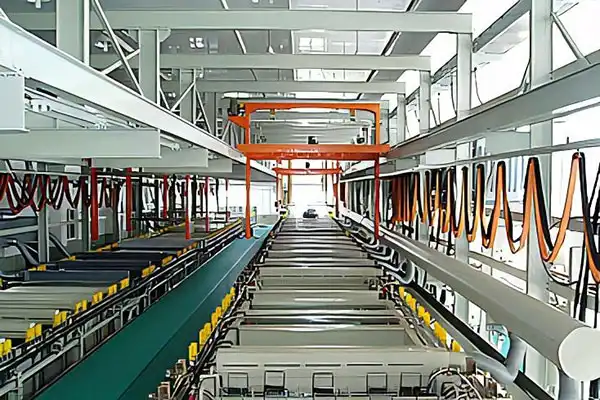
18 Years of Fabricating Excellence
Since 2008, we've specialized in valuable metal coated titanium anodes from our office in Baoji's "China Titanium Valley." Our develop bimetallic hazardous welding innovation and progressed coating forms provide items you can trust.
Customization for Your Correct Needs
Every generation line is diverse. We give custom fitted arrangements coordinating your particular current thickness necessities, electrolyte composition, and operational parameters. Whether you require little bunch testing or full-scale generation amounts, we convey on time.
Cost-Effective Lifecycle Management
When coating exhaustion happens, you do not dispose of the whole anode. Our proficient recoating benefit strips the ancient oxide layer, sandblasts the substrate, and reapplies new MMO coating. This expands resource life and decreases your add up to taken a toll of proprietorship considerably.

Frequently Asked Questions
Q: What coating is suitable for ammonia nitrogen wastewater treatment?
A: The electrochemical oxidation of ammonia nitrogen primarily relies on the chlorine evolution–indirect oxidation mechanism, making ruthenium-based coatings with high chlorine evolution activity a suitable choice. The ruthenium component exhibits a low chlorine evolution overpotential in chloride-containing water, efficiently generating active chlorine to react with ammonia nitrogen. If the chloride ion concentration in the wastewater is low (e.g., below 100 mg/L), trace salt addition can be considered to enhance treatment efficiency. You can provide your wastewater quality report, and our engineers will recommend a matched coating solution.
Q: What factors are related to the ammonia nitrogen removal efficiency of the anode?
A: It is primarily related to the chloride ion concentration in the wastewater, current density, initial ammonia nitrogen concentration, and wastewater pH. Chloride ions are the key reactant in the indirect oxidation reaction; higher chloride ion concentration leads to faster active chlorine generation rates. It is generally recommended that the molar ratio of chloride ions to ammonia nitrogen in the wastewater be no less than 3:1 to ensure sufficient oxidation reaction. Wastewater conductivity and temperature also affect treatment efficiency, and we can provide parameter optimization suggestions based on your wastewater quality.
Q: What should be noted when treating wastewater containing suspended solids with anodes?
A: For wastewater containing suspended solids, mesh or perforated plate anodes are recommended, utilizing their high open area ratio to reduce clogging. It is also advisable to install a pretreatment unit (such as sedimentation or filtration) at the inlet to control suspended solid particle size and concentration. During operation, periodically inspect the anode surface for solid deposit accumulation and arrange online or offline cleaning as needed. A reasonable cleaning schedule helps maintain anode treatment efficiency.
Q: How should anodes be handled when the coating reaches the end of its service life?
A: The titanium substrate remains stable in the ammonia nitrogen wastewater treatment environment. The old coating can be chemically stripped, and once the substrate passes inspection, it can be recoated to restore performance to new-anode levels. We offer a full-service process including incoming inspection of used anodes, coating stripping, substrate treatment, and recoating, helping you reduce long-term electrode renewal costs.
Contact Us
You need a partner who not only supplies products but also solves your challenges alongside you. Our team is ready to engage with your inquiries and provide a tailored solution. Share your specific needs or key requirements with us today, and let us help you efficiently transform your breakthroughs into commercial value.
Titanium Anode Manufacturer
Email: zh@baojiti.com.cn
WhatsApp: +86-15877696471 (updated)
Products: Titanium Anodes, MMO Titanium Anodes, DSA Coated Titanium Electrodes, Electrolysis Electrodes, Hydrogen Production Electrodes, Wastewater Treatment Titanium Anodes.