Titanium Anode for Sodium Hypochlorite Generators with Low-Maintenance Chlorine Production for Long-Term Wastewater Disinfection
2026-07-22 09:26:29
Wastewater treatment plants need to effectively disinfect effluent before discharge to control microbial indicators. UV disinfection incurs relatively high electricity costs at large flow rates, while purchased commercial sodium hypochlorite continuously generates transportation and storage costs, with chemical potency decaying over storage time. On-site sodium hypochlorite generation technology electrolyzes the inherent salts in wastewater to produce chlorine, offering an economical and autonomous alternative for wastewater disinfection, with the titanium anode for sodium hypochlorite generators serving as its core component.
On-Site Electrolytic Chlorine Generation: In-Situ Disinfection Logic Utilizing Wastewater Salinity
Wastewater disinfection typically only requires final treatment before discharge, with clear requirements for dosing precision and continuity. On-site sodium hypochlorite generators electrolyze naturally occurring chloride ions in wastewater to generate active chlorine species in situ on the anode surface. These species flow with the water into the disinfection contact tank, exert their disinfecting effect, and gradually decompose before discharge after completing disinfection.
The titanium anode for sodium hypochlorite generators employs high-grade titanium as the substrate, coated with an electrocatalytic active layer containing metal oxides such as RuO₂ and IrO₂. RuO₂ exhibits a relatively low overpotential for the chlorine evolution reaction, contributing to maintaining favorable chlorine evolution current efficiency at relatively low cell voltage. The introduction of IrO₂ is designed to enhance the electrochemical stability of the coating during long-term operation, delaying activity decay. Under typical wastewater operating conditions, the anode can utilize the varying concentrations of chloride ions present in the wastewater to generate active chlorine, with the chlorine production rate controlled online by adjusting the electrolysis current to adapt to wastewater flow and water quality fluctuations. The system can start and stop synchronously with the wastewater treatment process, helping to reduce the need for large-volume storage of commercial chemicals. Actual chlorine generation efficiency and disinfection effectiveness vary depending on wastewater chloride ion concentration, water quality composition, temperature, and operating current density.
Performance varies based on specific operating conditions. Actual results depend on wastewater quality and operating parameters.

Anti-Fouling and Low Maintenance: Electrode Design Adapted to Complex Wastewater Matrices
Even after secondary biological treatment and sedimentation, effluent from wastewater treatment plants still contains certain concentrations of suspended solids, greases, and dissolved organics. Anodes operating long-term in such water quality face the risk of active site fouling from organic adsorption, as well as physical scouring from suspended particles. When mixed with some industrial wastewater, corrosive ions may also be introduced, causing chemical attack on both the coating and substrate.
The titanium anode for sodium hypochlorite generators has been coating-optimized for wastewater operating conditions. The titanium substrate can form a protective oxide layer under anodic polarization conditions, providing structural stability for the electrode in chloride-containing wastewater environments. The coating surface has undergone microstructural tuning to help reduce the tendency for adsorption of greases and organics on active sites, supporting the anode in maintaining relatively stable chlorine evolution efficiency in wastewater containing suspended solids and organics. The coating and substrate achieve favorable bonding strength through optimized pretreatment processes, supporting the long-term maintenance of structural integrity under high-flow scouring conditions. The system can assist in removing deposits on the electrode surface through periodic acid washing or polarity reversal, helping to reduce manual maintenance frequency. Actual working life and anti-fouling performance vary depending on wastewater composition, suspended solids concentration, chloride ion content, and operating mode.
Engineering Value for the Wastewater Disinfection Market
In the global wastewater treatment market, the reliability and cost-effectiveness of effluent disinfection are core indicators of concern for plant operators. The engineering value of the titanium anode for sodium hypochlorite generators in this market lies in combining on-site autonomous chlorine generation with low-maintenance operation, supporting wastewater plants in achieving sustained disinfection compliance with reduced chemical dependence.
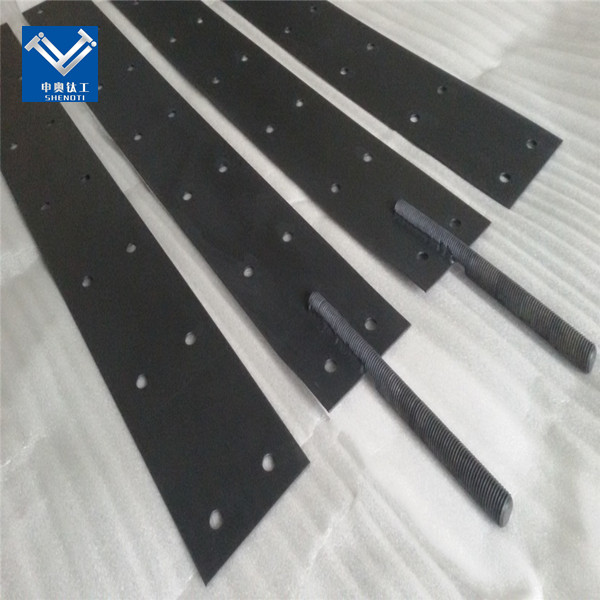
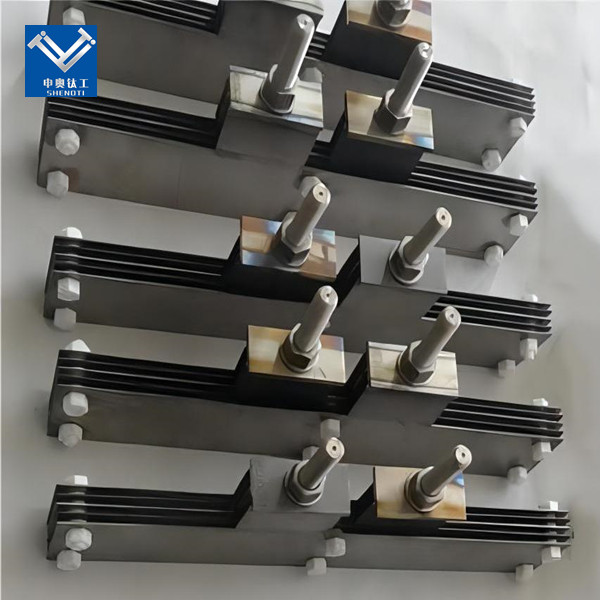
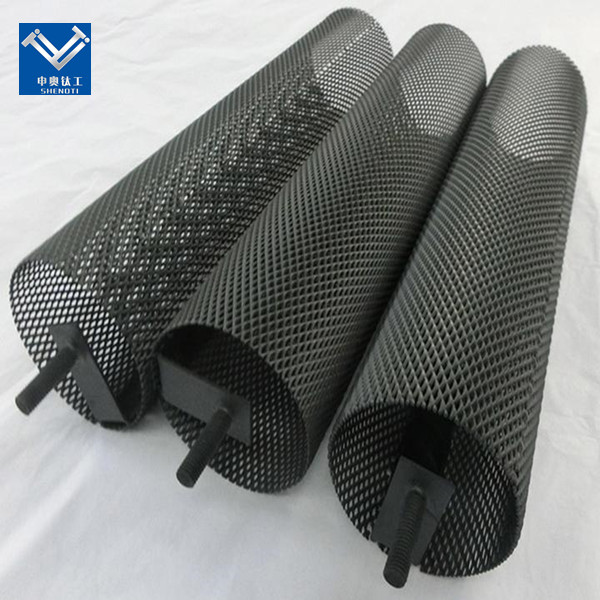
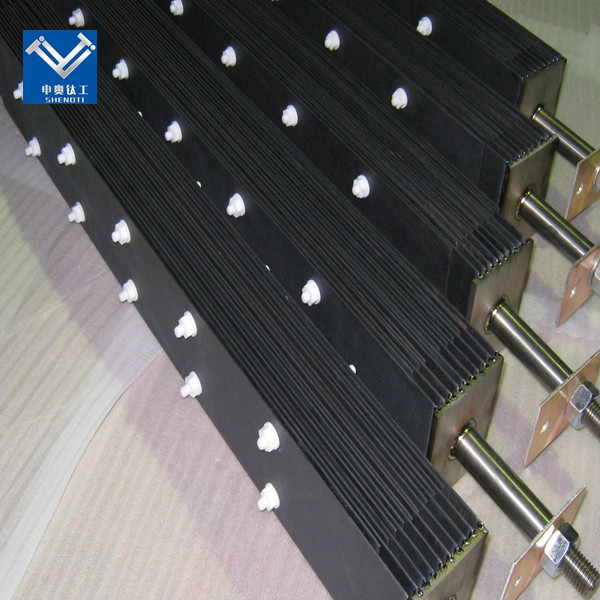
On-site electrolysis solutions use the wastewater's own salinity and electricity as inputs, helping to reduce the transportation and storage costs of purchased commercial chemicals. These titanium anode products are built on high-grade titanium substrates and coated with metal oxide systems such as RuO₂ and IrO₂, and can be customized into tubular, plate, mesh, and other geometric configurations to suit sodium hypochlorite generators of different scales. It is recommended that wastewater treatment plant operators and disinfection equipment integrators conduct field condition testing of titanium anodes for sodium hypochlorite generators based on their wastewater chloride ion concentration, effluent flow rate, and disinfection standards. By tracking indicators such as effluent microbial indicators, chlorine output concentration, unit energy consumption, and long-term anode operating performance, the technical compatibility and comprehensive operational benefits of the on-site electrolytic disinfection solution in specific wastewater plant scenarios can be evaluated.
Important Note: The performance descriptions above are based on engineering experience under specific test conditions or internal test data. Differences may exist between laboratory results and actual operating conditions. Actual chlorine generation efficiency, working life, and disinfection effectiveness vary depending on wastewater chloride ion concentration, water quality composition, suspended solids content, temperature, operating parameters, and system design. This product is a wastewater treatment and disinfection equipment component, and its suitability for specific applications must be verified by the user according to local discharge standards and relevant regulations.
Titanium Anode Manufacturer
Email: zh@baojiti.com.cn
Products: Titanium Anodes, MMO Titanium Anodes, DSA Coated Titanium Electrodes, Electrolysis Electrodes, Hydrogen Production Electrodes, Wastewater Treatment Titanium Anodes.