Titanium Anode for Electrolysis of Ionized Water Resisting High-Salt Chlorine Corrosion to Extend Industrial Disinfectant Production Cycles
2026-07-27 10:29:19
In industrial disinfectant production, the electrolysis of high-salt solutions to produce hypochlorous acid and sodium hypochlorite is one of the mainstream process routes. High concentrations of chloride ions in the electrolysis environment are strongly aggressive toward anode materials. The coatings of ordinary electrodes gradually spall during the chlorine evolution reaction, and once the substrate is corroded, current efficiency declines, cell voltage rises, and maintenance frequency and operating costs escalate accordingly. The titanium anode for electrolysis of ionized water, with its high-grade titanium substrate and noble metal oxide coating synergistically addressing the high-salt chlorine corrosion environment, aims to provide a long-cycle, low-maintenance anode solution for industrial disinfectant production.
Anti-Chlorine-Corrosion Coating Design: Addressing the Composite Challenges of High-Salt Electrolysis
During hypochlorous acid and sodium hypochlorite production, the electrolyte salt concentration is relatively high, and the chlorine evolution reaction on the anode surface is vigorous. Nascent chlorine possesses strong oxidizing properties and continuously impinges on the coating surface. Meanwhile, high-concentration chloride ions penetrate along coating microcracks to the substrate interface, potentially triggering electrochemical corrosion and weakening coating adhesion. In such a composite corrosive environment, the coating formulation and preparation process of the anode directly determine its working life and maintenance costs.
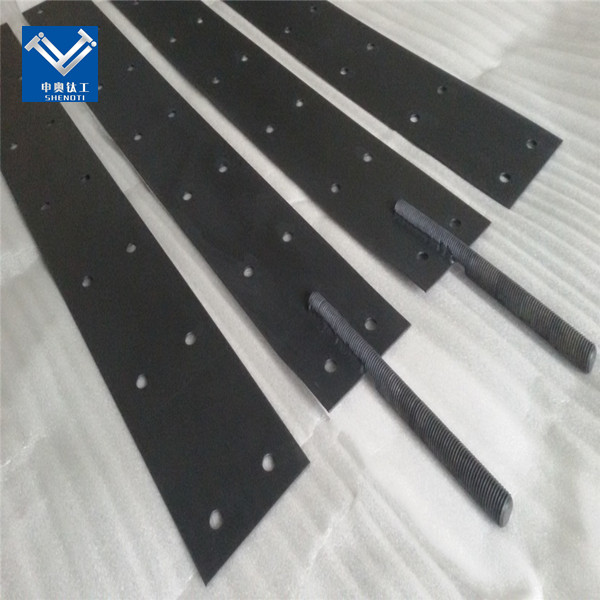
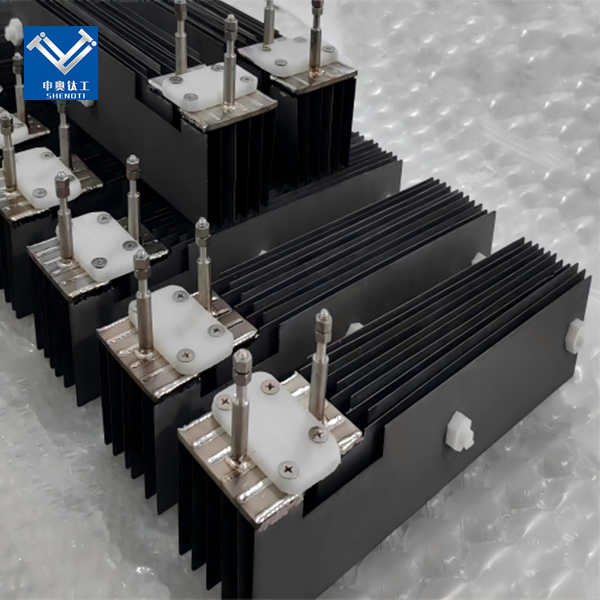
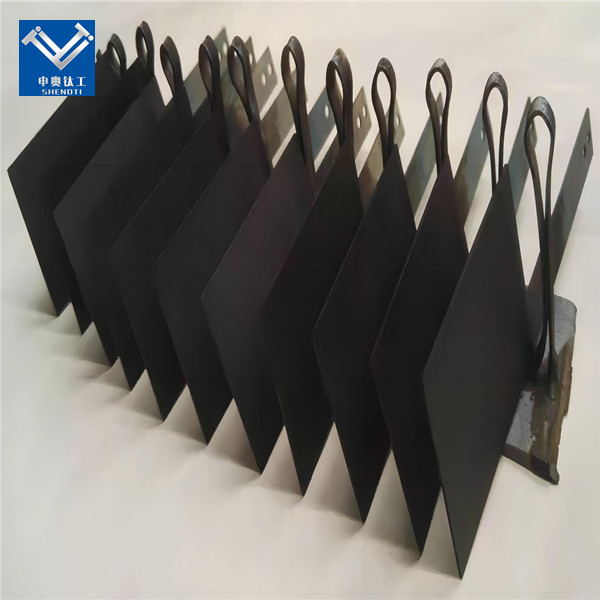
The titanium anode for electrolysis of ionized water employs high-grade titanium as the substrate. The titanium substrate can form a protective oxide layer under anodic polarization conditions, providing structural stability for the electrode in chloride-containing high-salt environments. The coating adopts an electrocatalytic active layer containing metal oxides such as RuO₂ and IrO₂. RuO₂ exhibits a relatively low overpotential for the chlorine evolution reaction, contributing to maintaining favorable chlorine evolution current efficiency in high-salt environments. The introduction of IrO₂ helps enhance the electrochemical stability of the coating during long-term chlorine evolution operation, delaying activity decay and coating spalling. The coating and substrate achieve favorable bonding strength through optimized pretreatment processes, supporting the maintenance of structural integrity under sustained high-salt electrolysis conditions. The coating thickness has been optimized to balance chlorine evolution activity with durability. Actual working life and chlorine corrosion resistance performance vary depending on electrolyte salt concentration, temperature, current density, and operating mode.
Performance varies based on specific operating conditions. Actual results depend on electrolyte composition and operating parameters.

Long-Cycle Operational Stability: Reducing Maintenance Frequency and Operating Costs
Industrial disinfectant production lines typically require long-term continuous operation, with unplanned downtime directly resulting in production capacity losses and equipment repair costs. The maintenance and replacement cycle of the anode is one of the key factors affecting the overall operational efficiency of the production line. Traditional anodes experience continuously rising cell voltage due to coating spalling during operation, requiring shutdown for replacement once the set upper limit is reached, with the arrangement of maintenance windows directly impacting production scheduling.
The titanium anode for electrolysis of ionized water, through coating formulation optimization and preparation process control, helps maintain a relatively long stable operating cycle. Under appropriate operating conditions, the anode can maintain a relatively low and stable chlorine evolution overpotential, with a relatively slow cell voltage rise rate, helping to extend replacement intervals. The corrosion resistance of the titanium substrate in high-salt electrolyte supports the anode in maintaining substrate integrity over multiple maintenance cycles, requiring only periodic replacement of the coating or electrode assembly, thereby reducing material and labor costs associated with complete substrate replacement. The system can predict anode status through online monitoring of cell voltage variation trends, supporting reasonable arrangement of maintenance plans. Actual working life and maintenance cycles vary depending on electrolyte salt concentration, temperature, current density, and operating duration.
Engineering Value for the Industrial Disinfectant Production Market
In the global industrial disinfectant production market, the continuous operational capability of production lines and maintenance costs are core factors affecting product competitiveness. The engineering value of the titanium anode for electrolysis of ionized water in this market lies in combining chlorine-corrosion-resistant coating with titanium substrate corrosion resistance, supporting industrial disinfectant manufacturers in extending equipment operating cycles and reducing anode replacement costs per unit of output.
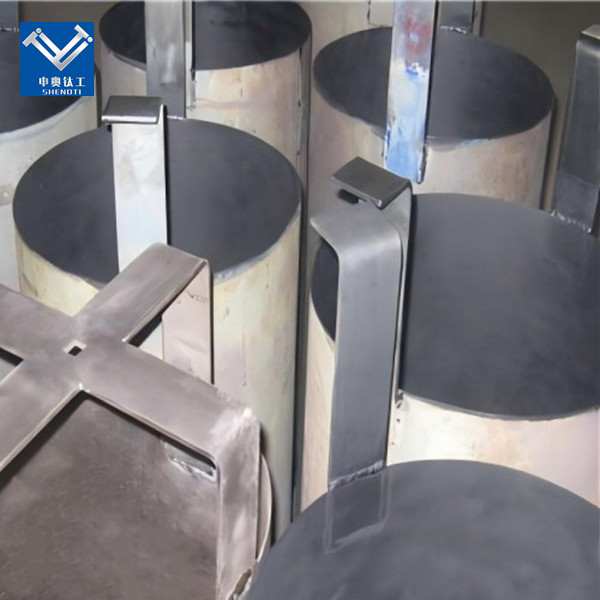
These titanium anode products are built on high-grade titanium substrates and coated with metal oxide systems such as RuO₂ and IrO₂, and can be customized into tubular, plate, mesh, and other geometric configurations to suit industrial hypochlorous acid and sodium hypochlorite generators of different scales. It is recommended that industrial disinfectant manufacturers and electrolysis equipment integrators conduct field condition testing of titanium anodes for electrolysis of ionized water based on their electrolyte formulation, target chlorine concentration, and operating mode. By tracking indicators such as cell voltage variation trends, current efficiency, and long-term anode operating performance, the technical compatibility and total lifecycle economics of the anode in specific production scenarios can be evaluated.
Important Note: The performance descriptions above are based on engineering experience under specific test conditions or internal test data. Differences may exist between laboratory results and actual operating conditions. Actual working life, chlorine corrosion resistance performance, and current efficiency vary depending on electrolyte salt concentration, temperature, current density, operating duration, and system design. This product is an industrial disinfectant production equipment component, and its suitability for specific applications must be verified by the user according to actual operating conditions and relevant industry standards.
Titanium Anode Manufacturer
Email: zh@baojiti.com.cn
Products: Titanium Anodes, MMO Titanium Anodes, DSA Coated Titanium Electrodes, Electrolysis Electrodes, Hydrogen Production Electrodes, Wastewater Treatment Titanium Anodes.