Copper Clad Aluminum Plate Sheet for Lightweight Low-Resistance Current Carrying to Optimize Power Battery Fast Charging and Range
2026-07-27 10:29:45
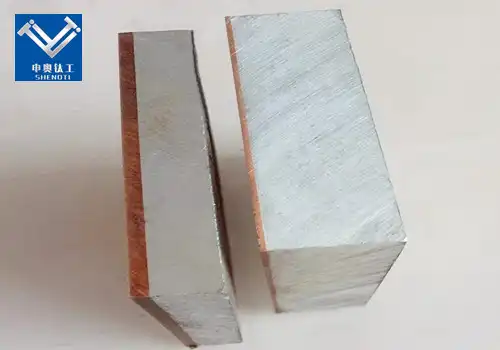
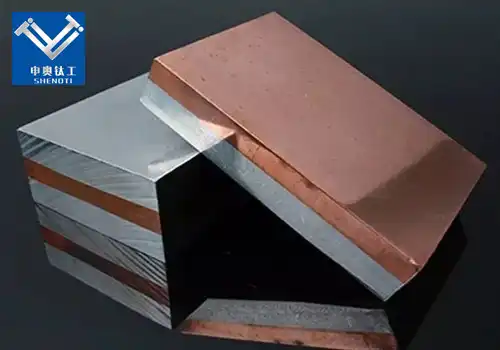
Pure copper busbars and interconnection components in power battery packs are substantial in weight, forming an important part of the vehicle's curb mass and directly limiting the driving range of electric vehicles. Fast charging systems impose stringent requirements on electrical connections: low contact resistance must be maintained under high current to avoid localized overheating, while lightweight structural design has become one of the core technical pathways for improving overall vehicle energy efficiency. The copper clad aluminum plate sheet, with an aluminum core reducing deadweight and a copper layer carrying current, aims to provide a composite conductor solution that balances high current-carrying capacity with significant weight reduction benefits for power batteries.
Lightweighting and Low Resistance: Material Optimization for Battery Interconnection Conductors
The density of copper is approximately 8.9 g/cm³, while that of aluminum is approximately 2.7 g/cm³, with the latter being only about one-third of the former. The large quantities of pure copper busbars used in power battery packs, while performing current-carrying functions, also constitute a significant source of battery pack structural weight due to their deadweight. Under fast charging high-current conditions, conductor resistance directly correlates with heating power and energy loss, placing relatively high demands on material conductivity.
The copper clad aluminum plate sheet is designed based on the skin effect for optimized material configuration. In DC fast charging applications, although the skin effect is less pronounced than in AC, the copper-aluminum clad structure, through appropriate copper layer thickness design, can still achieve noticeable weight reduction while maintaining cross-sectional conductivity equivalent to pure copper conductors. The outer copper layer provides a low-resistance current pathway, ensuring low heating and low energy loss under fast charging high current; the aluminum core, with lower density, replaces the copper core to assume structural support functions, supporting battery pack lightweight design objectives. The interface between copper and aluminum is achieved through metallurgical bonding via explosive welding or roll bonding processes, with the bonding interface exhibiting a wavy interlocking morphology that effectively increases the bonding area and mechanical interlocking force between the two metals, with relatively low interfacial electrical resistance. Actual current-carrying performance and weight reduction effects vary depending on copper-to-aluminum thickness ratio, current rating, and cross-sectional design.
Performance varies based on specific operating conditions. Actual results depend on operating conditions and design parameters.

Interfacial Thermal Stability: Supporting Long-Term Reliability Under Fast Charging Cycles
Power batteries endure high current during fast charging, causing conductor temperature to rise rapidly; temperature drops during discharge and idle phases. The temperature cycling generated by repeated charging and discharging imposes periodic thermal stress at the copper-aluminum interface. The thermal expansion coefficients of copper and aluminum are approximately 17×10⁻⁶/K and 23×10⁻⁶/K respectively, with the stress generated by this difference potentially causing microcrack initiation and propagation over long-term cycling.
The copper clad aluminum plate sheet achieves integrated connection between the copper layer and aluminum core through metallurgical bonding. Under repeated thermal cycling, the wavy metallurgical bonding interface can effectively transfer and disperse stress generated by thermal expansion differences, helping to suppress microcrack initiation and propagation, and supporting long-term stability of electrical connections. The battery pack also endures road vibration and shock during vehicle operation, and the high mechanical interlocking force of the metallurgical bonding interface helps maintain interlayer integrity under dynamic mechanical loading. The copper-to-aluminum thickness ratio can be custom designed according to specific current-carrying capacity, fast charging rate, and mechanical strength requirements. Actual interfacial stability and durability vary depending on temperature fluctuation range, charge-discharge rate, vibration conditions, and copper-to-aluminum thickness ratio.
Engineering Value for the Power Battery Market
In the global electric vehicle market, battery pack lightweighting and fast charging performance are key factors affecting overall vehicle competitiveness. The engineering value of the copper clad aluminum plate sheet in this market lies in replacing copper with aluminum to reduce battery interconnection conductor deadweight, supporting power batteries in achieving a balance between high driving range and fast charging capability from the perspective of reducing structural weight while maintaining low resistance.
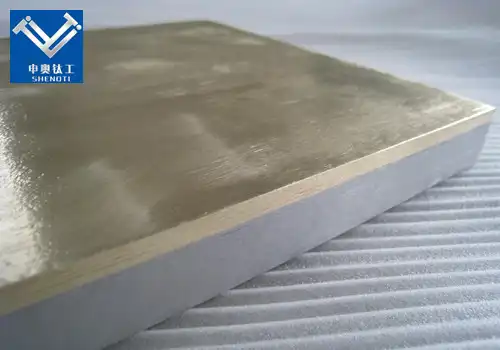
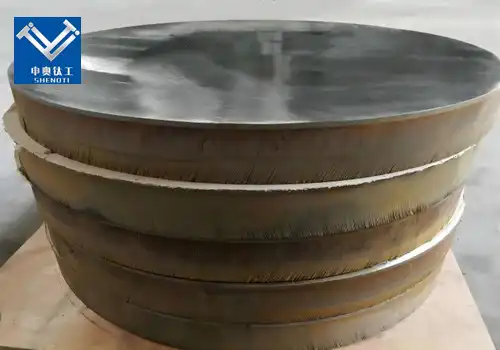
These copper clad aluminum plate sheet products are manufactured using explosive welding or roll bonding processes, with the copper-to-aluminum thickness ratio customizable within a thickness range of 1 mm to 100 mm according to current-carrying capacity, fast charging rate, and mechanical strength requirements. They are suitable for applications such as battery pack main busbars, inter-module interconnection bars, and charging interface connection bars. It is recommended that electric vehicle manufacturers and battery system engineers conduct field condition testing of copper clad aluminum plate sheets based on their battery pack design current, fast charging targets, and vibration conditions. By tracking indicators such as temperature rise, contact resistance variation trends, and long-term cyclic durability, the technical compatibility and comprehensive weight reduction benefits of the copper aluminum composite solution in specific battery system scenarios can be evaluated.
Important Note: The performance descriptions above are based on engineering experience under specific test conditions or internal test data. Differences may exist between laboratory results and actual operating conditions. Actual current-carrying performance, bonding strength, and working life vary depending on copper-to-aluminum thickness ratio, charge-discharge rate, temperature fluctuation range, vibration conditions, and system design. This product is a conductive connection component for power battery systems, and its suitability for specific applications must be verified by the user according to actual operating conditions and relevant industry standards.
Titanium Anode Manufacturer
Email: zh@baojiti.com.cn
Products: Titanium Anodes, MMO Titanium Anodes, DSA Coated Titanium Electrodes, Electrolysis Electrodes, Hydrogen Production Electrodes, Wastewater Treatment Titanium Anodes.