English

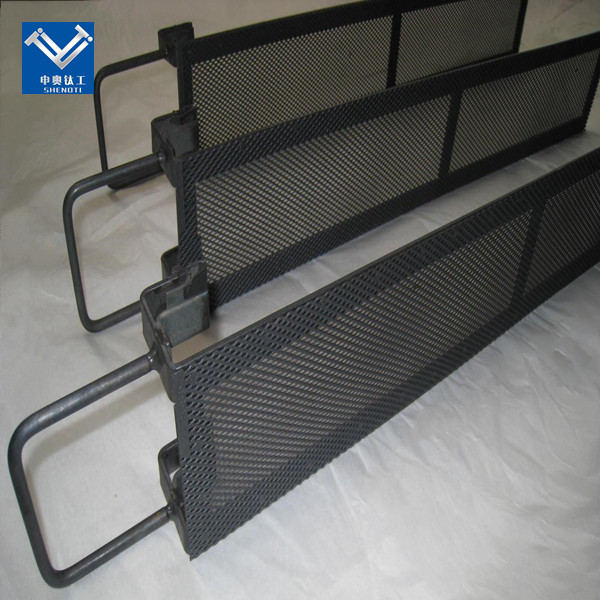
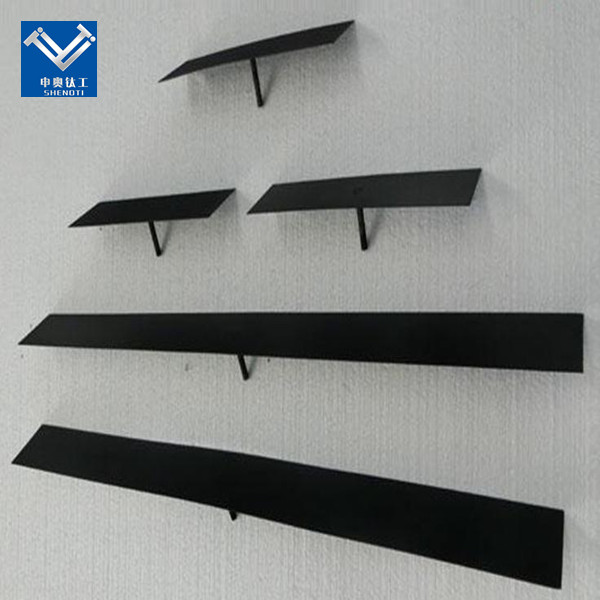
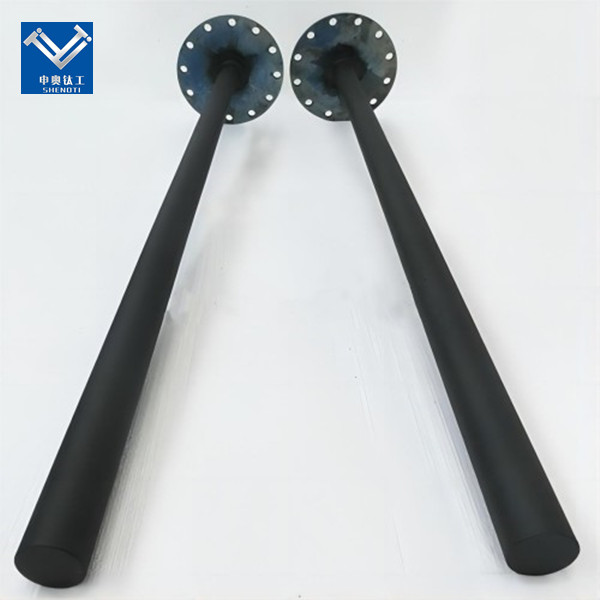
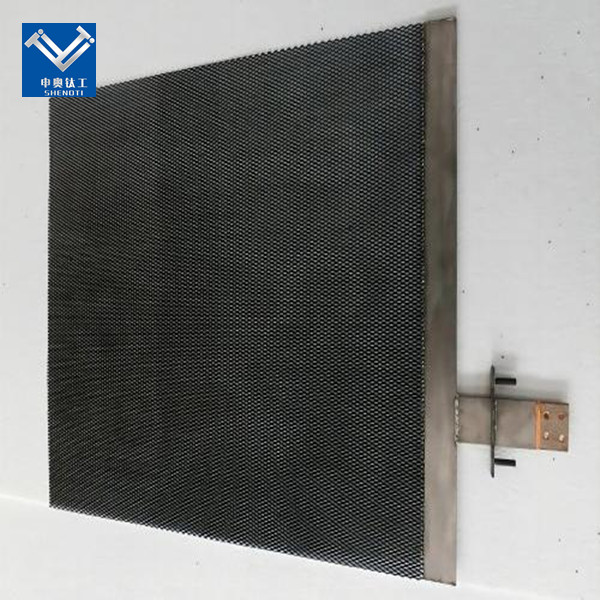
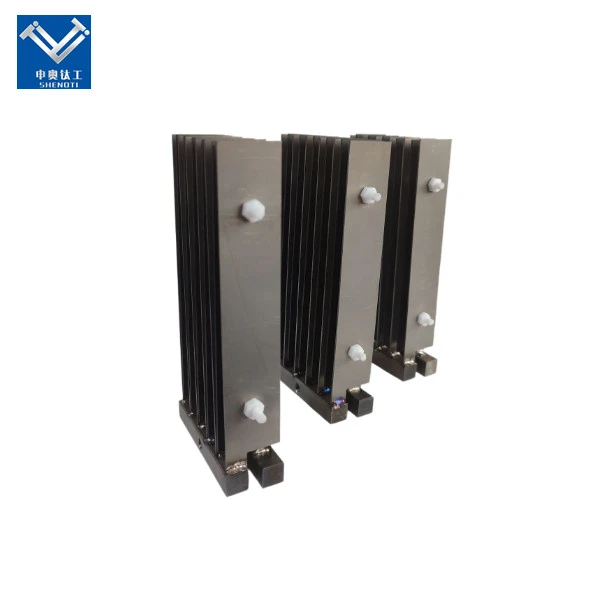
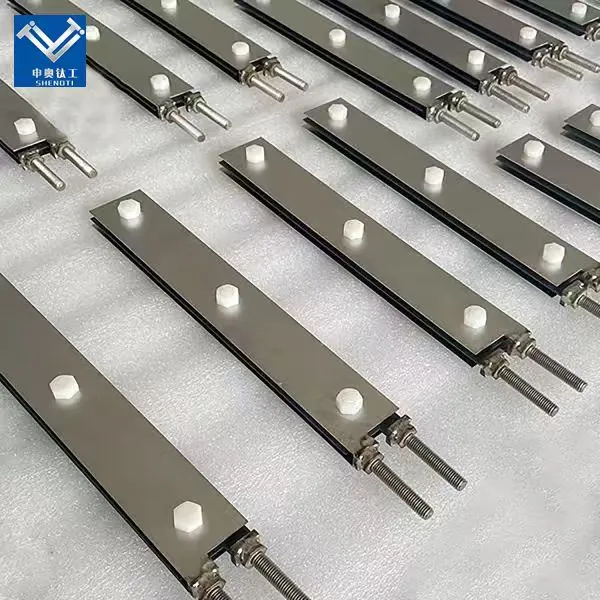
Titanium anode for chlorine production by electrolyzing seawater
2026-03-31 09:50:25
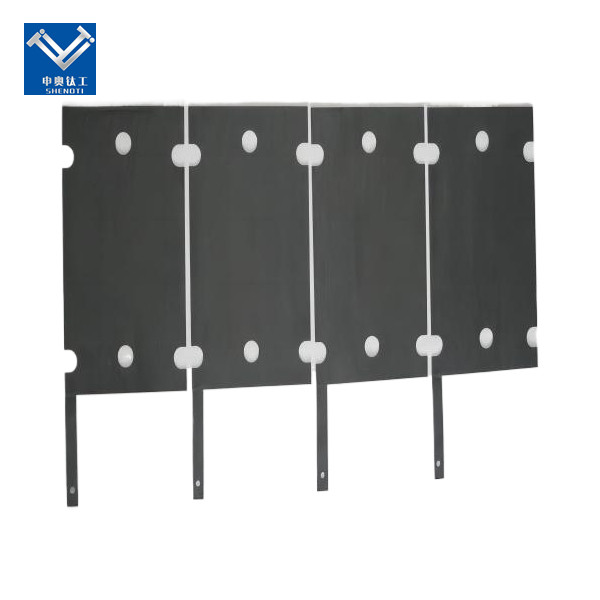
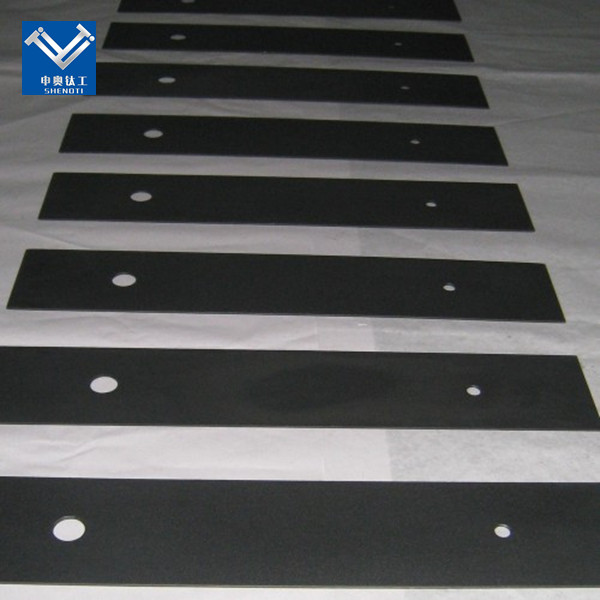
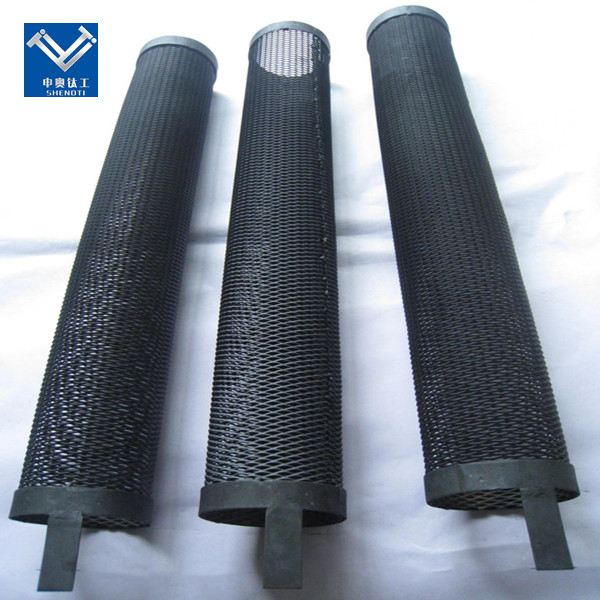
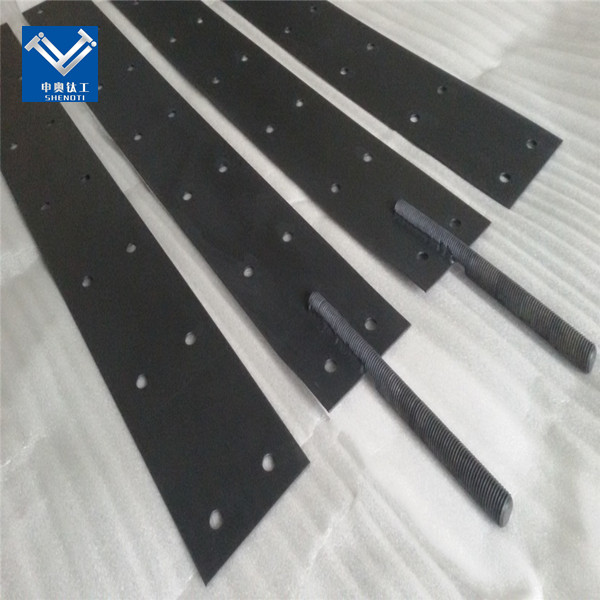
1.Basic Structure: Grade 1/2 pure titanium substrate (excellent corrosion resistance in seawater and chlorine environment) with Ru-Ir oxide as the mainstream coating (low chlorine evolution overpotential, high selectivity); IrO₂-Ta₂O₅ can be used for ultra-high durability requirements. Coating thickness is typically 10–20 μm, after sandblasting and acid washing pretreatment to ensure coating adhesion.
- Electrochemical Principle:
- Anode:2Cl¯→Cl₂+2e¯
- Cathode:2H₂O+2e¯→H₂↑+2OH¯
- Typical Operating Conditions: Current density 800–1500 A/m², temperature 30–60°C, pH controlled near neutral/weakly alkaline; often uses diaphragm cells to separate Cl₂ and H₂, preventing back-mixing and explosion risks.
- Main Applications: Coastal power plant cooling water systems, large-scale seawater desalination pretreatment, industrial brine electrolysis, marine ballast water treatment (high chlorine output scenarios).
- Advantages: Dimensional stability (no dissolution contamination), high current efficiency (>85%), long service life (5+ years under proper conditions), low energy consumption, recyclable substrate after recoating
-
Maintenance
- Fouling & Passivation: Seawater’s Ca²⁺, Mg²⁺, and biofilms can cause anode scaling; regular acid cleaning or reverse polarity cleaning is required, and anti-fouling coatings can be added.
- Coating Degradation: High temperature, excessive current density, or fluorine ion contamination accelerate coating loss; control operating parameters and use high-purity seawater as much as possible.
- Safety: Strictly manage H₂ discharge (explosive limit 4–75%), and avoid over-chlorination to prevent corrosion to pipelines and damage to aquatic organisms.


YOU MAY LIKE