MMO Titanium Anode with Anti-Fouling Electrooxidation for Long-Term Treatment of Complex Industrial Wastewater
2026-06-16 09:25:10
In electrocoagulation and advanced oxidation processes treating complex industrial wastewater containing oils, high turbidity, and recalcitrant organics, the anode surface is susceptible to pollutant adsorption, leading to continuous decline in current efficiency over operating time. Meanwhile, variable water quality compositions pose potential challenges to substrate corrosion resistance. The MMO titanium anode is an electrochemical core component engineered specifically for such complex operating conditions.
Performance may vary based on specific operating conditions. Actual results depend on wastewater quality and operating parameters.
Anti-Fouling Mechanism: Maintaining Active Site Accessibility on the Electrode Surface
Greases, surfactants, and macromolecular organics commonly present in industrial wastewater may form adsorption layers or polymer films on the anode surface, covering electrocatalytic active sites and hindering contact between target reactants and the electrode surface. This fouling effect is one of the primary causes of electrochemical treatment efficiency decline over time.
The MMO titanium anode addresses the fouling challenge through synergistic design of coating formulation and surface microstructure. The coating employs mixed metal oxide systems such as IrO₂-Ta₂O₅ or RuO₂-IrO₂, with coating thickness generally controlled within the 5 to 20 micrometer range. The coating surface typically exhibits a certain degree of micro-roughness, contributing to an increased effective electrochemical active area, enabling the electrode to tend toward maintaining stable current output even when some active sites are covered. Additionally, the IrO₂ component in the coating can generate intermediate reactive oxygen species under oxygen evolution conditions. These active species may exert in-situ oxidation on organic pollutants adsorbed on the electrode surface at the moment of generation, assisting in maintaining active site accessibility. This self-cleaning effect contributes, to a certain extent, to delaying performance decay caused by pollutant adsorption. Actual anti-fouling performance varies depending on wastewater composition, pollutant type, and operating parameters.
Usage Guideline: The anti-fouling performance of the electrode depends on wastewater quality and operating conditions. Specific performance varies with actual operating conditions; validation under target wastewater is recommended.

Substrate and Coating: Synergistic Protection Against Variable Water Quality
Complex industrial wastewater exhibits a relatively broad range of quality fluctuations, with pH, conductivity, and corrosive ion concentrations potentially varying significantly with production batch changes. This places multi-faceted demands on the overall tolerance of the anode.
The MMO titanium anode employs high-purity titanium (Grade 1 or Grade 2) as the substrate. Titanium can spontaneously form a dense passive film in oxidizing environments and chloride-containing media, providing structural stability for long-term electrode operation in acidic or high-salinity wastewater. The inert Ta₂O₅ component in the coating can improve the bonding strength and thermal expansion compatibility between the coating and substrate, helping to reduce the stress impact on the coating interface caused by temperature variations associated with water quality fluctuations. The synergistic design of this material system enables the electrode to tend toward maintaining structural integrity and electrocatalytic activity in actual wastewater containing multiple inorganic salts, organic pollutants, and corrosive ions. Under typical test conditions, current density can reach 500 A/m², with the operating temperature range spanning 10 to 80°C, adaptable to the operating windows of most industrial wastewater treatment scenarios. Actual durability varies depending on wastewater composition, temperature, and operating parameters.
Engineering Value for the Complex Industrial Wastewater Market
In the global industrial wastewater treatment market, particularly in chemical, pharmaceutical, and textile dyeing sectors, the continuous tightening of discharge standards is driving demand for efficient advanced treatment technologies. Electrocoagulation and advanced oxidation, as chemical-free or low-chemical treatment solutions, demonstrate technical adaptability in oily wastewater demulsification, recalcitrant organic mineralization, and chromaticity removal.
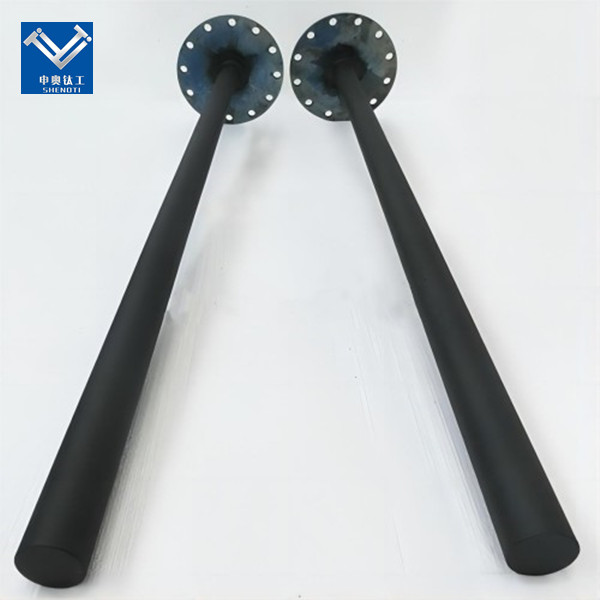
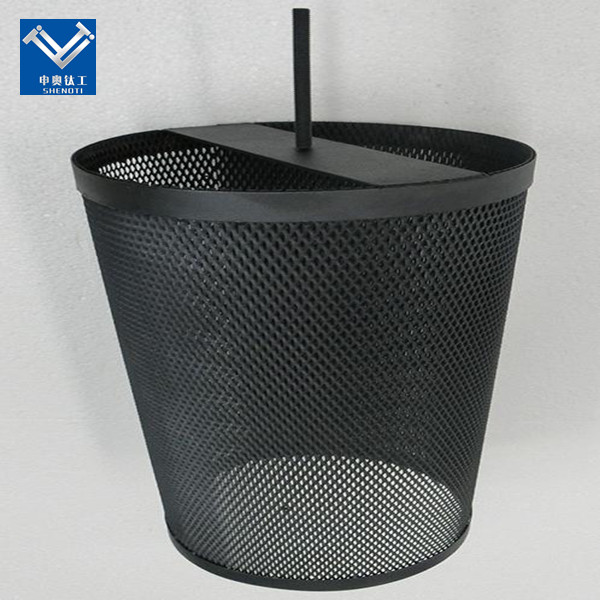
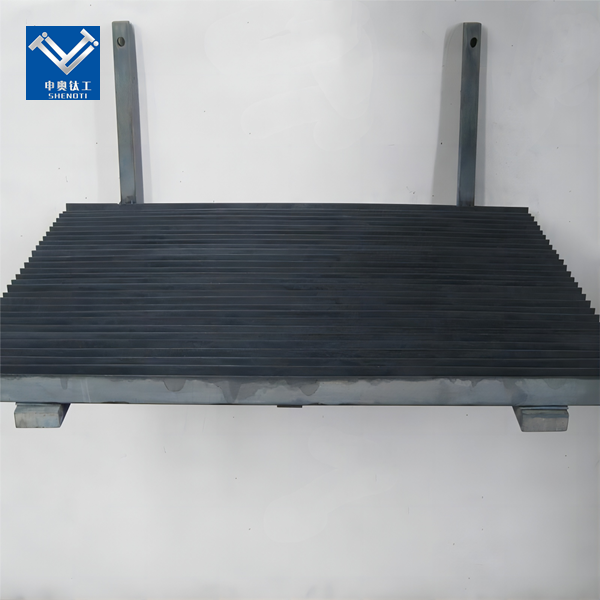
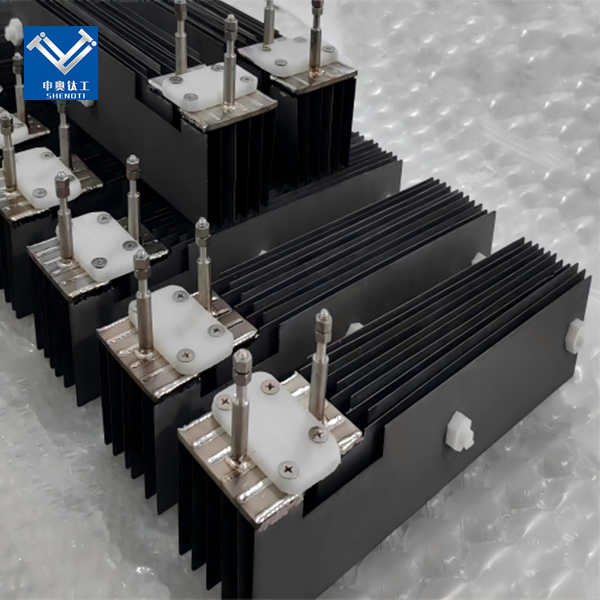
The engineering value of the MMO titanium anode in this market lies in combining anti-fouling capability with electrocatalytic activity. Its dimensional stability means that during long-term operation, electrode geometry and inter-electrode spacing tend to remain stable, contributing to current distribution uniformity and batch-to-batch consistency in treatment performance. The coating consumption rate is gradual, with no macroscopic debris observed under typical operating conditions, helping to avoid introducing secondary pollution during treatment. Our MMO titanium anode products, built on high-purity titanium substrates and coated with mixed metal oxide systems such as IrO₂-Ta₂O₅ or RuO₂-IrO₂, can be customized into plate, mesh, tubular, and other geometric configurations to suit different electrochemical reactor designs.
We recommend that environmental engineering firms and industrial users conduct bench-scale or pilot validation of MMO titanium anodes based on the pollutant composition, salinity, and pH characteristics of their actual wastewater. By tracking indicators such as current efficiency variation trends, pollutant removal rates, and long-term electrode operating performance, the technical compatibility and economic return of the electrochemical treatment solution in specific application scenarios can be evaluated.
Important Note: The performance descriptions above are based on engineering experience under typical conditions or internal test data. Differences may exist between laboratory data and actual operating conditions. Actual anti-fouling performance, working life, and current efficiency vary depending on wastewater quality, pollutant type, operating parameters, and system design. This product is an industrial wastewater treatment equipment component, and its suitability must be verified by the user according to local regulations and application conditions. Sufficient compatibility validation prior to bulk procurement is recommended.
Titanium Anode Manufacturer
Email: zh@baojiti.com.cn
Products: Titanium Anodes, MMO Titanium Anodes, DSA Coated Titanium Electrodes, Electrolysis Electrodes, Hydrogen Production Electrodes, Wastewater Treatment Titanium Anodes.