DSA Titanium Anodes: Enhancing Copper Recovery Efficiency in Acidic Etching Wastewater
2026-06-03 15:12:26
PCB manufacturing and metal finishing industries generate large volumes of acidic etching solutions containing elevated concentrations of copper ions. Effective treatment of this wastewater requires electrochemical recovery systems that can operate reliably under aggressive conditions. Dimensionally Stable Anodes (DSA) made of titanium have emerged as a practical solution for improving copper recovery efficiency.
Technical Challenges in Acidic Etching Wastewater Treatment
Acidic etching solutions typically contain copper ions along with strong acids such as hydrochloric or sulfuric acid. During electrolytic recovery, the anode material is exposed to this corrosive environment at elevated temperatures. Traditional electrodes—including graphite or lead-based alloys—may experience gradual corrosion, dimensional changes, or surface passivation over extended operation periods. These issues can lead to increased cell voltage, fluctuations in current efficiency, and inconsistent recovered copper purity. Wastewater systems therefore need an anode material that combines electrical conductivity, electrochemical activity, and resistance to acidic corrosion.

Functional Analysis—Electrochemical Corrosion Protection of DSA Titanium Anodes
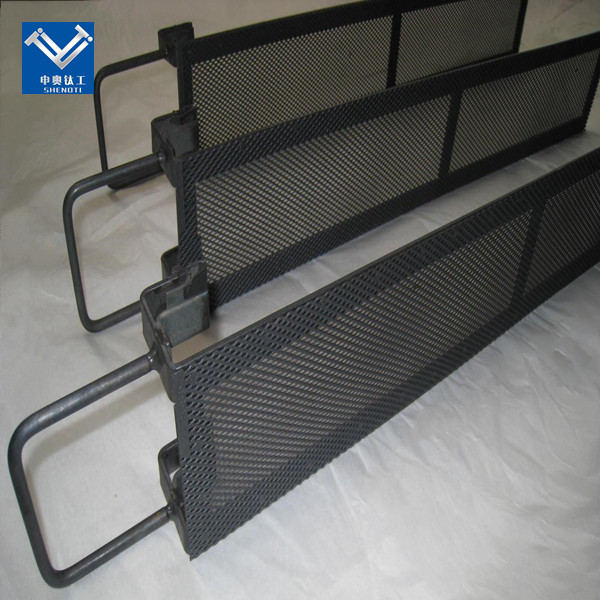
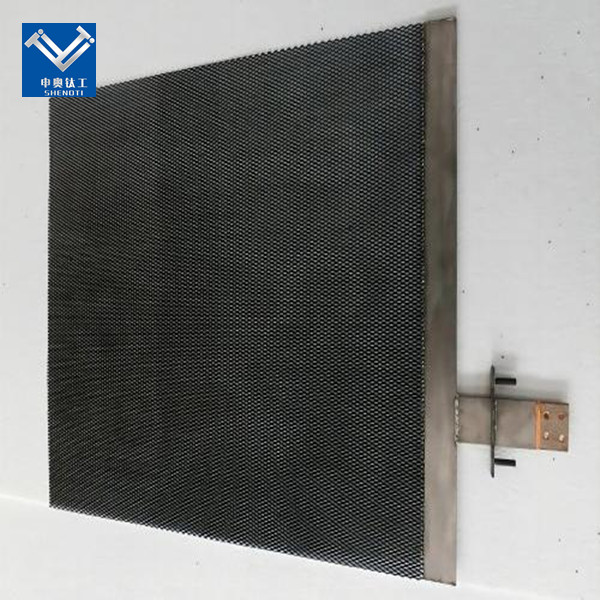
A DSA titanium anode consists of a titanium metal substrate coated with a mixed metal oxide (MMO) layer, typically containing iridium, tantalum, ruthenium, or similar noble metals. From an electrochemical corrosion protection perspective, three functional characteristics are particularly relevant:
Self-Repairing Passivation Mechanism
Titanium is a metal with a strong tendency toward passivation. In acidic etching solutions, the titanium substrate rapidly forms a stable, dense oxide (TiO₂) passivation layer, which exhibits a relatively low dissolution rate under typical electrolysis conditions. If minor damage occurs to the oxide coating during operation, the titanium substrate can regenerate the passivation film through anodic oxidation within a specific potential range. This behavior can help inhibit further substrate corrosion. In acidic etching solutions with high chloride concentrations, this characteristic can assist DSA titanium anodes in maintaining mechanical integrity while reducing the risk of secondary contamination from dissolved base metals.
Controlled Oxygen Overpotential
The primary anodic reaction in copper recovery from acidic etching solutions is oxygen evolution (OER). DSA titanium anodes with properly formulated oxide coatings can achieve a somewhat lower oxygen overpotential compared to uncoated or graphite electrodes. At a given current density, this can contribute to a moderately reduced cell voltage. A lower cell voltage not only helps reduce energy consumption but may also suppress undesirable side reactions such as chlorine evolution, thereby supporting electrolyte stability. Unlike anodes that gradually corrode and change shape, DSA titanium anodes can remain relatively dimensionally stable during oxygen evolution, which may contribute to more consistent copper deposition quality over multiple operating cycles.
Resistance to Electrochemical Dissolution
In high-acidity, high-current-density electrochemical systems, conventional anodes may undergo electrochemical dissolution, releasing metal ions into the solution. This can potentially lower the purity of recovered copper or increase the treatment burden for downstream wastewater processes. The noble metal oxide coating on DSA titanium anodes shows a relatively low electrochemical dissolution rate in acidic oxygen-evolving environments. Under specific electrolyte compositions and current density ranges, the anode can maintain catalytic activity across multiple electrolytic cycles, which may assist in achieving reasonable maintenance intervals for large-scale wastewater operations.
Practical Observations in Acidic Etching Copper Recovery
Based on the corrosion protection functions described above, DSA titanium anodes have demonstrated several operationally positive outcomes in acidic etching solution treatment systems:
Contribution to Current Efficiency
Electrolysis systems using DSA titanium anodes can help maintain a relatively stable current distribution. Unlike some traditional electrodes that may develop uneven current densities due to localized corrosion, DSA titanium anodes with uniform coatings can promote more even copper deposition on the cathode. Under appropriate process control—such as managing free acid concentration and temperature—the system's current efficiency may reach a consistent range.
Potential for Extended Operational Cycles
The corrosion-resistant titanium substrate together with a stable oxide coating enables DSA titanium anodes to show potential for a longer service life in acidic etching solutions compared to conventional graphite electrodes. Reduced anode replacement frequency can minimize production line downtime, providing favorable conditions for continuous production operations.
Role in Reducing Secondary Contamination Risk
Using DSA titanium anodes can help reduce the introduction of anode dissolution products into the electrolyte. Traditional lead-based anodes may release small amounts of lead ions into the solution over time. These heavy metal ions can potentially contaminate the recovered copper and complicate efforts to meet wastewater discharge standards. In contrast, the dissolution rate of noble metal oxides from DSA coatings in acidic media is generally low, which can assist facilities in working toward compliance with environmental discharge regulations. *(Note: Specific environmental compliance outcomes should be evaluated based on the overall water treatment process and third-party testing reports. Users are encouraged to verify that their own equipment maintains relevant environmental management system certifications.)*
In Summary
DSA titanium anodes offer a practical technical pathway for improving copper recovery efficiency from acidic etching wastewater. This capability derives from their electrochemical corrosion protection performance in aggressive environments—including a self-repairing passivation mechanism, controlled oxygen overpotential, and resistance to electrochemical dissolution. In real-world wastewater treatment operations, they can help maintain current efficiency, assist in extending system run times, and contribute to reducing secondary contamination risks. As an engineering material, the specific value of DSA titanium anodes is best validated and evaluated through testing under the user's own process parameters.