Copper Clad Aluminum Bimetallic Material for Weight Reduction While Maintaining Current Capacity to Optimize Distribution Cabinet Structural Design
2026-07-23 09:22:39
Pure copper busbars and switch components in distribution cabinets have significant deadweight, imposing continuous loading on cabinet frames, support insulators, and installation foundations. This leads to increased structural member cross-sectional dimensions and higher quantities of installation hardware, with the overall cabinet weight and manufacturing costs rising accordingly. The copper clad aluminum bimetallic material, with an aluminum core providing structural support and a copper layer carrying current, aims to provide a composite conductor solution that balances conductive performance with lightweight benefits for distribution equipment.
Material Lightweighting: The Structural Optimization Logic of Replacing Copper with Aluminum
The density of copper is approximately 8.9 g/cm³, while that of aluminum is approximately 2.7 g/cm³, with the latter being only about one-third of the former. The large quantities of pure copper busbars used in distribution cabinets, while performing current-carrying functions, also constitute the main source of loading in cabinet structural design due to their deadweight. In AC distribution applications, the skin effect causes current to concentrate near the conductor surface at a certain depth, with relatively low current density in the conductor core, providing the electrical basis for replacing copper with aluminum.
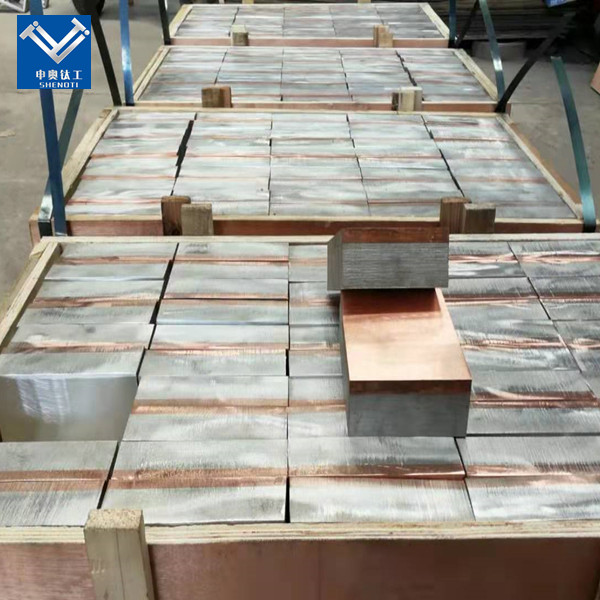
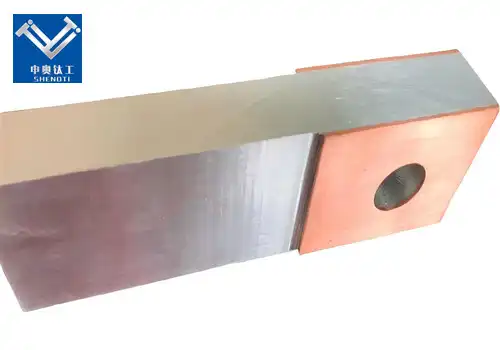
The copper clad aluminum bimetallic material is designed based on this principle to optimize material configuration: the outer layer employs copper with high electrical conductivity as the primary current-carrying medium, fully utilizing the characteristic that the surface layer carries the majority of current under the skin effect; the core uses aluminum with lower density to replace the copper core and assume the structural support function. By appropriately matching the thickness ratio of the copper layer to the aluminum core, substantial weight reduction can be achieved while maintaining current-carrying capacity equivalent to pure copper conductors of the same specification. The reduction in conductor deadweight within the cabinet directly decreases the loading requirements on support insulators and the load-bearing demands of the cabinet frame, supporting more lightweight cabinet structural design and helping to reduce transportation and installation costs. The interface between copper and aluminum is integrally connected through metallurgical bonding processes, supporting the composite plate in maintaining interlayer integrity during processing such as punching, bending, and connection. Actual current-carrying performance and weight reduction effects vary depending on current frequency, copper-to-aluminum thickness ratio, and cross-sectional design.
Performance varies based on specific operating conditions. Actual results depend on operating conditions and design parameters.

Interfacial Bonding: Ensuring Long-Term Electrical Reliability in Operation
Distribution cabinets endure sustained current-induced thermal effects and periodic load fluctuations throughout their service life. The thermal expansion coefficients of copper and aluminum differ—copper at approximately 17×10⁻⁶/K, aluminum at approximately 23×10⁻⁶/K—with temperature fluctuations caused by load variations generating thermal stress at the copper-aluminum interface. If bonding quality is insufficient, long-term accumulation will lead to interfacial microcrack initiation and interlayer delamination, with contact resistance rising accordingly.
The copper clad aluminum bimetallic material achieves integrated connection between the copper layer and aluminum core through metallurgical bonding processes. The composite interface exhibits a characteristic wavy interlocking morphology or diffusion layer structure, effectively increasing the bonding area and mechanical interlocking force between the two metals, with relatively low interfacial electrical resistance. Under repeated thermal cycling, the metallurgical bonding interface can transfer and disperse stress generated by thermal expansion differences, helping to reduce microcrack initiation and propagation, and supporting long-term stability of electrical connections. The copper-to-aluminum thickness ratio can be custom designed according to specific current-carrying capacity, short-circuit withstand, and mechanical strength requirements.
Engineering Value for the Distribution Equipment Market
In the global distribution equipment market, cabinet structural costs and conductor material costs account for a relatively high proportion of total switchgear and distribution cabinet manufacturing costs. The engineering value of the copper clad aluminum bimetallic material in this market lies in replacing copper with aluminum to reduce conductor deadweight within the cabinet, optimizing the comprehensive manufacturing cost of distribution cabinets from the perspective of reducing structural loading and simplifying installation.
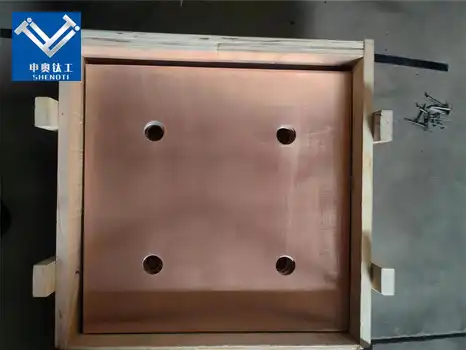
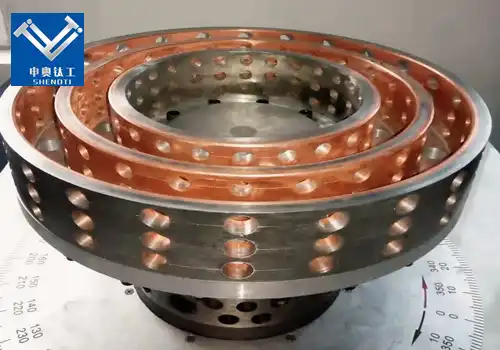
These copper clad aluminum bimetallic material products are manufactured using metallurgical bonding processes, with the copper-to-aluminum thickness ratio customizable within a thickness range of 1 mm to 100 mm according to current-carrying capacity, short-circuit withstand, and mechanical strength requirements. They are suitable for applications such as distribution cabinet main busbars, branch busbars, and switch connection bars. It is recommended that distribution equipment manufacturers and electrical engineering design firms conduct field condition testing of copper clad aluminum bimetallic materials based on their rated current, short-circuit withstand requirements, and cabinet structural design. By tracking indicators such as temperature rise, contact resistance variation trends, and long-term operating performance, the technical compatibility and comprehensive economic benefits of the copper aluminum composite solution in specific distribution cabinet scenarios can be evaluated.
Important Note: The performance descriptions above are based on engineering experience under specific test conditions or internal test data. Differences may exist between laboratory results and actual operating conditions. Actual current-carrying performance, bonding strength, and working life vary depending on the copper-to-aluminum thickness ratio, current frequency, temperature fluctuation range, installation environment, and system design. This product is a composite material for power distribution equipment, and its suitability for specific applications must be verified by the user according to actual operating conditions and relevant industry standards.
Titanium Anode Manufacturer
Email: zh@baojiti.com.cn
Products: Titanium Anodes, MMO Titanium Anodes, DSA Coated Titanium Electrodes, Electrolysis Electrodes, Hydrogen Production Electrodes, Wastewater Treatment Titanium Anodes.