Titanium Anode for Disinfectant Generators Adapting to Variable Water Hardness for Stable Operation of Household Miniature Disinfectors
2026-07-27 10:27:10
Portable household disinfectors serve users across different regions worldwide, where tap water hardness varies significantly—from soft water in Northern Europe to high-hardness mineralized water in the Middle East, spanning an extremely broad range of water quality conditions. Miniature disinfectors generate active chlorine disinfection by electrolyzing naturally occurring chloride ions in water or with a small amount of added salt, with the titanium anode for disinfection machine serving as the core component. The anode must maintain stable chlorine evolution performance across broad water quality conditions while meeting the size and consistency requirements of miniaturized design.
Broad Water Quality Adaptability: Electrode Design Addressing Global Hardness Variations
The usage scenario of household disinfectors dictates that they must adapt to water quality variations across different regions and seasons. Soft water contains relatively low chloride ion concentrations, requiring the anode to maintain adequate chlorine evolution efficiency under low conductivity conditions. High-hardness water contains elevated calcium and magnesium ion concentrations, which tend to form carbonate deposits on the cathode during electrolysis, potentially affecting electrolysis efficiency. Groundwater in some areas may also contain metal ions such as iron and manganese, posing potential fouling risks to the coating.
The titanium anode for disinfection machine employs high-grade titanium as the substrate, coated with an electrocatalytic active layer containing metal oxides such as RuO₂ and IrO₂. RuO₂ exhibits a relatively low overpotential for the chlorine evolution reaction, contributing to maintaining favorable chlorine evolution current efficiency even under relatively low chloride ion concentration conditions, supporting stable operation in soft water. The introduction of IrO₂ helps enhance the electrochemical stability of the coating during long-term operation, delaying activity decay. The coating surface has undergone microstructural tuning to help reduce the tendency for calcium-magnesium deposits and metal ions to attach to active sites, supporting the anode in maintaining relatively stable chlorine evolution performance across water of varying hardness. Miniaturized electrodes are manufactured through precision processing techniques, helping to ensure batch-to-batch consistency in dimensions and performance. Actual chlorine generation efficiency and water quality adaptability vary depending on influent chloride ion concentration, hardness, temperature, and operating current.
Performance varies based on specific operating conditions. Actual results depend on influent water quality and operating parameters.

Miniaturization and Durability: Engineering Balance for Household Applications
Portable household disinfectors are compact in size with limited electrolysis chamber space, placing relatively high demands on the dimensional precision and per-unit-area catalytic efficiency of the anode. Household devices have irregular usage frequency and single-operation duration, requiring the anode to maintain stable performance output under intermittent operation and frequent start-stop conditions. Additionally, consumer products have relatively high expectations for electrode service life and maintenance convenience, requiring the anode to operate reliably under maintenance-free or low-maintenance conditions.
The titanium anode for disinfection machine achieves relatively high chlorine evolution activity density on a small electrode area through optimized coating formulation and preparation processes, supporting the design requirements of miniaturized electrolysis chambers. The coating and substrate achieve favorable bonding strength through optimized pretreatment processes, supporting the maintenance of structural integrity under repeated start-stop cycles and water quality fluctuations. The titanium substrate can form a protective oxide layer under anodic polarization conditions, providing structural stability for the electrode in chloride-containing water environments. The device can assist in removing trace deposits on the electrode surface through low-current automatic polarity reversal or periodic acid washing, helping to reduce user maintenance frequency. Actual working life and performance stability vary depending on usage frequency, influent water quality, and operating mode.
Engineering Value for the Household Disinfector Market
In the global household disinfector market, product universality and reliability are key to building consumer brand trust. The engineering value of the titanium anode for disinfection machine in this market lies in combining broad water quality adaptability with miniaturized durability, supporting household disinfectors in providing consistent and stable disinfection experiences for users under varying water quality conditions worldwide.
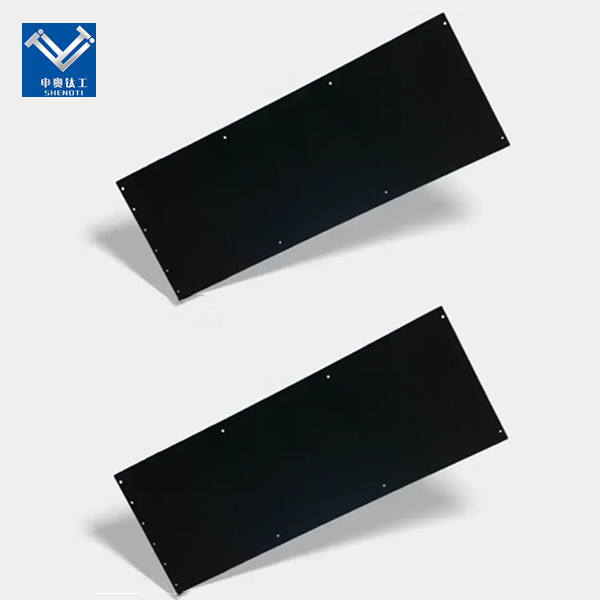
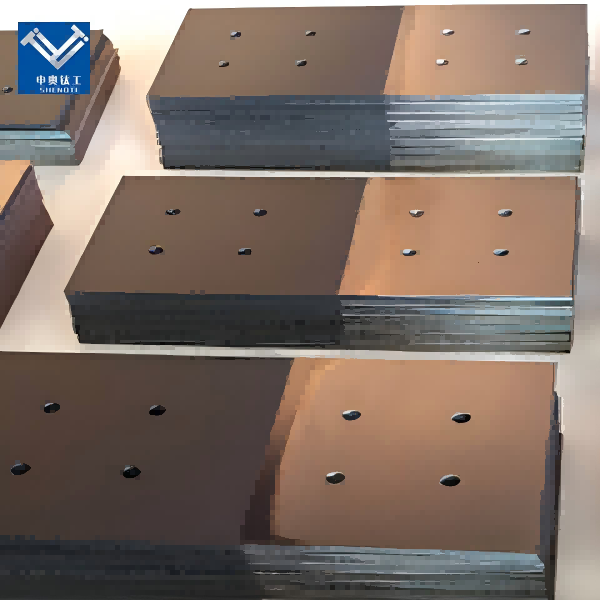
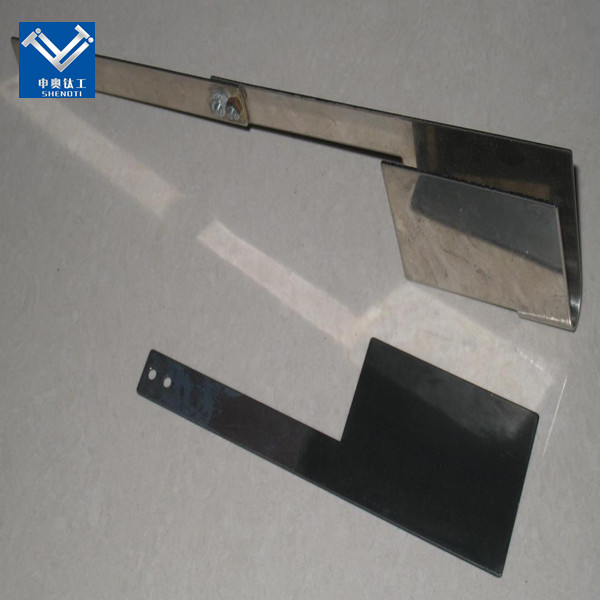
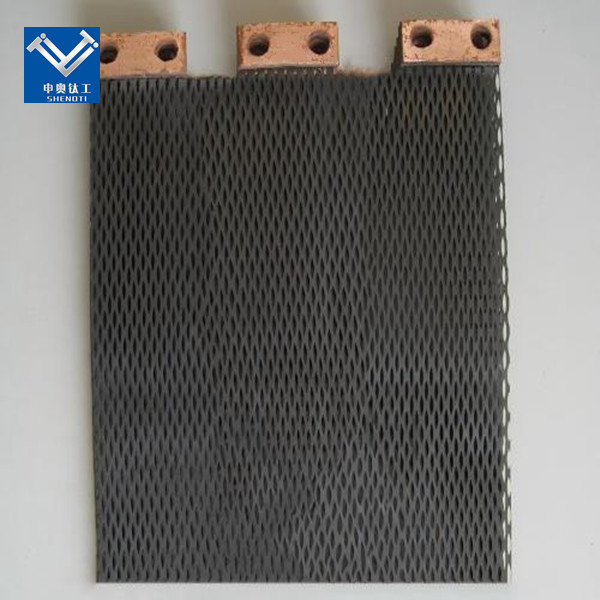
These titanium anode products are built on high-grade titanium substrates and coated with metal oxide systems such as RuO₂ and IrO₂, and can be customized into small plate, mesh, or tubular geometric configurations according to the design requirements of miniature disinfectors. It is recommended that household disinfector brands and manufacturers conduct multi-water-quality condition testing of titanium anodes for disinfection machine based on the water quality characteristics of their target markets and product design specifications. By tracking indicators such as chlorine generation efficiency under different water qualities, electrode service life, and product consistency, the technical compatibility and batch supply capability of the miniature anode solution in diverse global water quality scenarios can be evaluated.
Important Note: The performance descriptions above are based on engineering experience under specific test conditions or internal test data. Differences may exist between laboratory results and actual operating conditions. Actual chlorine generation efficiency, working life, and water quality adaptability vary depending on influent chloride ion concentration, hardness, temperature, usage frequency, operating parameters, and system design. This product is a household disinfector equipment component, and its suitability for specific applications must be verified by the user according to local water quality conditions and relevant standards.
Titanium Anode Manufacturer
Email: zh@baojiti.com.cn
Products: Titanium Anodes, MMO Titanium Anodes, DSA Coated Titanium Electrodes, Electrolysis Electrodes, Hydrogen Production Electrodes, Wastewater Treatment Titanium Anodes.