Copper aluminum transition joint reduces galvanic corrosion in grids
2026-07-29 14:30:32
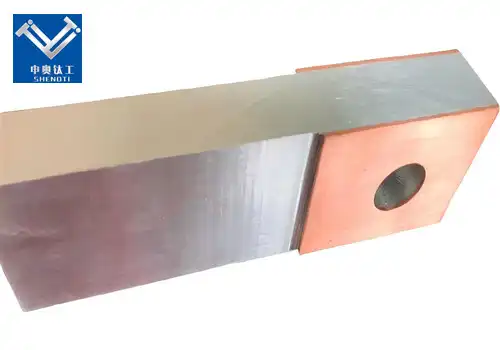
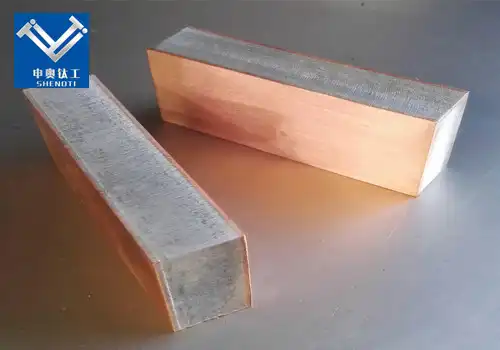
In power transmission and distribution systems, the direct connection between copper and aluminum conductors has long been challenged by galvanic corrosion. When copper and aluminum are placed in contact within a humid or electrolyte-containing environment, the difference in their electrochemical potentials initiates a galvanic cell effect. In this configuration, aluminum, being the more anodic material, undergoes accelerated corrosion, and a high-resistance oxide film gradually forms at the interface. As this oxide layer thickens, the contact resistance rises progressively, leading to increased heating at the joint, which can ultimately trigger equipment failure or service interruption. The copper aluminum transition joint, fabricated through an explosive welding process that achieves a metallurgical bond between a copper layer and an aluminum plate, is designed to mitigate galvanic corrosion at the material level. This composite component aims to provide a stable conductive connection under normal operating conditions solution for power transmission and distribution networks, addressing the persistent issue of interface degradation.
Explosive Welding Metallurgical Bond: The Key Mechanism for Mitigating Interface Corrosion
The performance of a copper aluminum transition joint depends critically on the bonding method between the copper layer and the aluminum substrate. Traditional mechanical crimping or brazing techniques often fail to prevent the formation of brittle intermetallic compounds at the interface. These compounds not only reduce the mechanical strength of the joint but also create pathways for corrosion initiation and propagation. Explosive welding, in contrast, utilizes the energy of a controlled detonation to drive the copper plate and aluminum plate into high-velocity collision, producing a molecular-level diffusion bond at the interface.
This process avoids the generation of a continuous brittle intermetallic layer. Instead, the atoms of copper and aluminum intermingle directly in the interfacial region, effectively reducing oxide layers and gaps. The resulting bond provides a physical barrier that prevents the ingress of corrosive media. The copper layer and aluminum plate form a stable metallurgical bond through the explosive welding interface, enabling the joint to maintain a relatively low contact resistance under normal operating conditions. This bonding mechanism is fundamental to the joint's ability to resist galvanic corrosion, as it removes the exposed copper-aluminum contact surface that would otherwise drive electrochemical reactions. The absence of a continuous brittle phase also helps the joint withstand thermal and mechanical stresses encountered in grid applications.

Mitigating Galvanic Corrosion: Reducing the Risk of Contact Resistance Degradation
In transmission and distribution lines, the primary function of the copper aluminum transition joint is to mitigate the degradation of contact resistance caused by galvanic corrosion. Once the copper layer and aluminum plate are joined through metallurgical bonding, the exposed copper-aluminum contact surface is reduced at the interface, and the galvanic cell effect is reduced. The copper layer maintains a conductivity of no less than 99% IACS under specific test conditions, assuming the primary role of current conduction. In humid or polluted environments, the sealed interface prevents corrosive media from penetrating, so the variation in contact resistance remains relatively small.
Compared with direct copper-to-aluminum connections, the rate of resistance increase is reduced, and the maintenance interval is extended. The actual mitigation effect varies depending on environmental humidity, the type of pollutants present, and operating temperature. The copper aluminum transition joint helps maintain stable electrical performance by preventing the progressive oxidation of the aluminum surface at the junction. Without this protective interface, the aluminum conductor would continue to corrode, forming a thick, insulating oxide layer that elevates contact resistance and generates excessive heat. By removing the direct electrochemical contact between copper and aluminum, the joint preserves the low-resistance pathway necessary for efficient power transmission. This design is particularly valuable in outdoor substations, industrial environments, and coastal areas where moisture and airborne contaminants accelerate corrosion processes.
Engineering Adaptation and Long-Term Benefits in Transmission and Distribution Systems
In applications such as transmission networks and transformer terminals, the copper aluminum transition joint must accommodate a wide temperature range and vibrational conditions. The explosive welding interface maintains structural stability across temperatures from -50°C to 300°C. The differential thermal expansion between the copper layer and the aluminum plate is managed through the buffering effect of the interfacial layer, which helps coordinate the dimensional changes and reduces the interfacial stress induced by thermal cycling. The joint dimensions and layer thicknesses can be customized according to current-carrying capacity, making the component suitable for transmission and distribution components at various voltage levels. For grid operation and maintenance teams, adopting the copper aluminum transition joint helps reduce the risks associated with increased contact resistance and joint heating caused by galvanic corrosion. The frequency of line inspections and tightening operations can be decreased as a result. Under normal operating conditions, the stability of contact resistance has practical implications for reducing line losses and improving power supply reliability. The copper aluminum transition joint contributes to these objectives by maintaining a consistent electrical interface that does not degrade progressively under normal operating conditions. Designers are advised to conduct condition-specific testing based on the actual operating environment to evaluate the technical compatibility of the joint for their particular application. Factors such as ambient temperature range, humidity levels, presence of corrosive gases, and mechanical loading should all be considered when selecting the appropriate joint configuration.
The copper aluminum transition joint also offers advantages in terms of installation simplicity and compatibility with existing infrastructure. Because the joint provides a ready-made metallurgical bond between copper and aluminum, field personnel can make connections without the need for specialized anti-corrosion compounds or complex surface preparation procedures. This reduces the potential for installation errors that could compromise long-term performance. In addition, the joint's ability to maintain low contact resistance over time helps stabilize the overall impedance of the transmission line, which is beneficial for power quality and system efficiency. The reduction in heating at connection points also lowers the risk of thermal runaway events that could damage adjacent equipment or insulation materials. From a system perspective, the use of copper aluminum transition joints supports the broader goal of minimizing energy losses in the grid, as each connection point that maintains stable resistance contributes to lower overall line losses. While the initial cost of the joint may be higher than that of simple mechanical connectors, the extended service life and reduced maintenance requirements often provide a favorable total cost of ownership over the operational lifetime of the equipment.
Important Note: The performance descriptions above are based on engineering experience under specific test conditions or internal test data. Differences may exist between laboratory results and actual operating conditions. Actual conductive performance, corrosion resistance effectiveness, and working life vary depending on copper layer thickness, aluminum plate material, environmental humidity, pollutant type, temperature, current density, and operating conditions.
Titanium Anode Manufacturer
Email: zh@baojiti.com.cn
Products: Titanium Anodes, MMO Titanium Anodes, DSA Coated Titanium Electrodes, Electrolysis Electrodes, Hydrogen Production Electrodes, Wastewater Treatment Titanium Anodes.