Titanium Anode for Industrial Circulating Water Descaling to Improve Condenser Efficiency in Power Plants
2026-07-29 14:29:39
In thermal power generation, the stable operation of the circulating cooling water system directly influences the thermal efficiency and output capacity of the generating unit. The condenser, as a key component at the cold end of the steam cycle, relies on effective heat transfer within its tube bundles to maintain vacuum pressure. Scaling on the inner walls of condenser heat exchange tubes is a primary factor that degrades vacuum quality, leading to increased backpressure on the steam turbine and higher coal consumption per kilowatt-hour generated. Traditional chemical cleaning methods, while capable of temporarily alleviating scale buildup, present limitations including high chemical procurement costs, elevated risks of equipment corrosion, and extended downtime for maintenance. The titanium anode for industrial circulating water descaling offers an electrochemical approach to regulate the crystallization behavior of scale-forming ions in water, providing power plants with an alternative solution that balances scale prevention effectiveness with equipment protection.
Principle of Scale Prevention with Titanium Anodes: Modifying Crystallization Behavior Rather Than Simple Inhibition
Calcium and magnesium ions present in circulating water tend to precipitate as dense mineral scale on heat exchange surfaces when temperature rises or pH shifts occur. The working principle of the titanium anode for industrial circulating water descaling does not rely on chemical additives to chelate or sequester these ions. Instead, by applying a controlled direct current, electrochemical reactions are induced at the anode surface. These reactions alter the local pH microenvironment and ion distribution in the water, prompting scale-forming minerals such as calcium carbonate to precipitate in a soft, non-adherent crystalline form. This loosely structured precipitate remains suspended in the water flow and is subsequently discharged from the system, rather than adhering firmly to heat transfer surfaces.
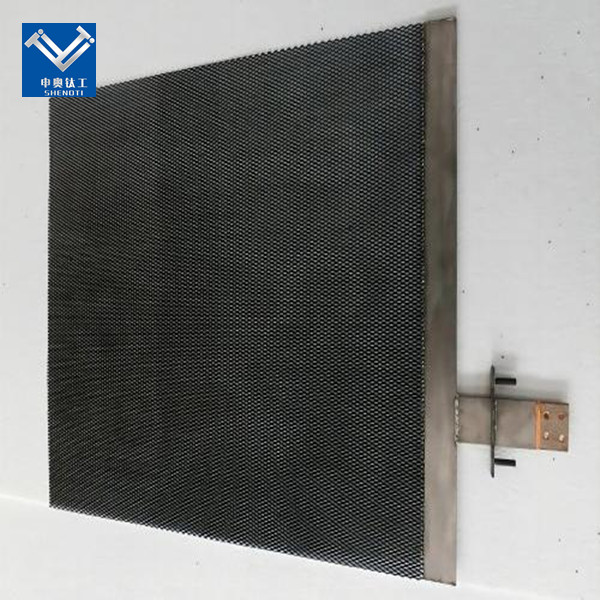
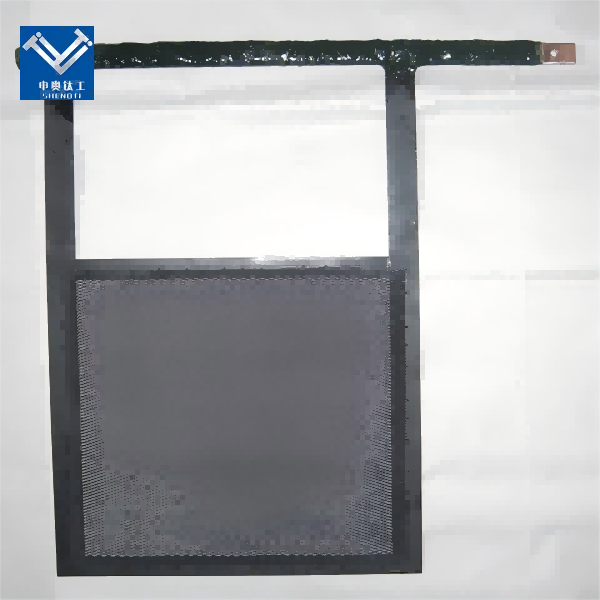
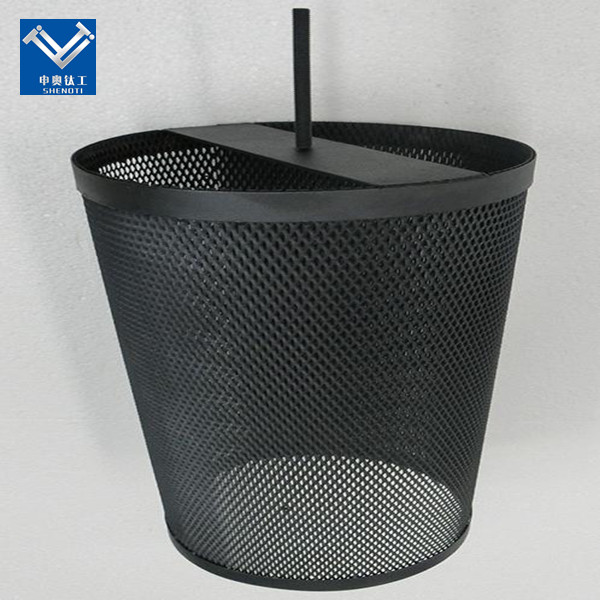
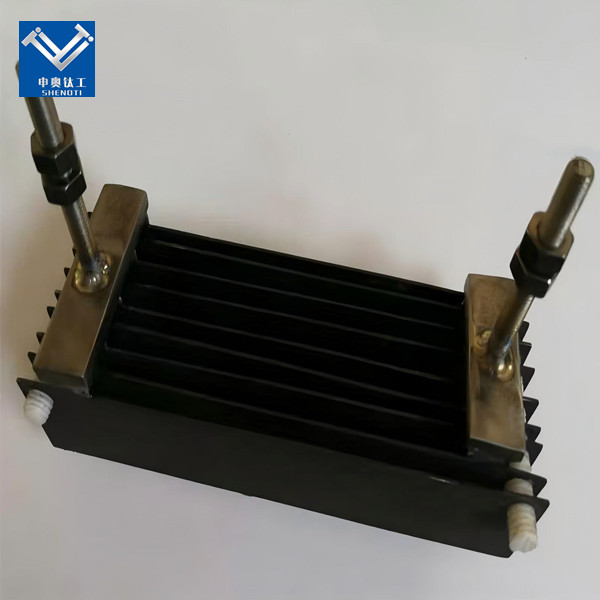
The anode substrate is constructed from titanium, selected for its inherent corrosion resistance in chloride-containing water environments. The titanium base is coated with a mixed metal oxide (MMO) layer, which provides electrochemical activity and dimensional stability under continuous current application. This coating composition is designed to maintain uniform current distribution across the anode surface, ensuring that the electrochemical field reaches the targeted areas where scale formation is most problematic. By positioning the titanium anode at the condenser inlet or within specific zones of the circulating water loop, an effective barrier against scale deposition can be established without interrupting normal plant operations.
The electrochemical process differs fundamentally from conventional scale inhibitors or dispersants. Rather than attempting to prevent precipitation entirely, the method encourages controlled precipitation in a form that does not compromise heat transfer efficiency. This approach reduces the accumulation of insulating scale layers on tube walls, preserving the thermal conductivity of the condenser tubes over extended operating periods. The actual effectiveness of this scale modification mechanism depends on water hardness levels, the concentration of bicarbonate and sulfate ions, and the specific current density applied.

Maintaining Condenser Efficiency: Transition from Passive Cleaning to Active Prevention
The decline in condenser heat transfer efficiency is typically observed through two measurable parameters: increasing terminal temperature difference and decreasing vacuum pressure. As scale builds up on the inner surfaces of heat exchange tubes, the thermal resistance of the fouling layer reduces the rate of heat transfer from the steam side to the cooling water side. This forces the steam turbine exhaust pressure to rise, which in turn reduces the enthalpy drop available for power generation and increases the heat rate of the unit. Traditional approaches to this problem involve shutting down the unit once scale accumulation reaches a certain threshold, followed by mechanical brushing or chemical acid cleaning to restore tube cleanliness. These methods are inherently reactive, addressing the symptom after the damage to efficiency has already occurred.
The application of the titanium anode for industrial circulating water descaling shifts the focus from post-fouling remediation to pre-fouling prevention. By maintaining a low current density electric field continuously within the circulating water system, scale-forming ions undergo crystallization transformation before they reach the heat exchange surfaces. This proactive mechanism inhibits the formation of dense, adherent scale layers on tube walls, allowing the condenser to operate closer to its design heat transfer coefficient for longer intervals between maintenance outages. The reduction in scale-related thermal resistance helps stabilize vacuum levels, supporting consistent turbine backpressure and reducing the frequency of performance degradation cycles.
The electrochemical prevention approach also reduces the need for chemical dosing equipment, storage tanks, and handling procedures associated with traditional scale inhibitors. Power plants that adopt this method may observe fewer unscheduled shutdowns related to condenser fouling, as the system maintains its thermal performance within acceptable limits over extended periods. The actual degree of efficiency preservation varies with water quality parameters such as total hardness, alkalinity, and the concentration of chloride ions, as well as with operating temperature and the specific current density settings applied. Regular monitoring of condenser vacuum and terminal temperature difference provides feedback for adjusting the electrochemical parameters to match changing water conditions.
Engineering Value for the Power Generation Industry: Reducing Maintenance Costs and Equipment Risks
In the power generation sector, the costs associated with circulating water system chemical cleaning extend beyond the direct procurement of cleaning agents and neutralization chemicals. The disposal of spent cleaning solutions, which may contain heavy metals, acids, and chelating agents, requires compliance with environmental regulations and often involves specialized waste treatment services. Furthermore, improper acid cleaning procedures can lead to localized corrosion or pitting of heat exchange tubes, creating long-term risks of tube failure and unplanned outages. The titanium anode for industrial circulating water descaling provides a physical, electrochemical means of scale management that reduces dependence on chemical additives.
The mixed metal oxide coating on the titanium anode is engineered to maintain catalytic activity in the presence of chloride ions commonly found in circulating water. This coating composition supports stable electrochemical performance over extended service periods, with the anode structure retaining its dimensional integrity under continuous current loading. Maintenance requirements for the anode system are relatively low, typically involving quarterly visual inspections and periodic checks of current output and voltage levels. Unlike chemical dosing systems that require frequent replenishment and calibration, the electrochemical system operates with minimal routine intervention once the initial current parameters are established.
For power plant operators, the adoption of this electrochemical scale prevention approach can help reduce the frequency of scale-related unplanned outages and mitigate the equipment corrosion risks associated with chemical treatment methods. The reduction in cleaning cycles also decreases the mechanical stress on tube bundles from brushing or hydroblasting operations, potentially extending the service life of condenser tubes. The economic viability of this solution depends on site-specific factors including water quality analysis results, condenser design parameters, target scale prevention intervals, and local electricity prices. A comprehensive evaluation should consider the capital investment for anode installation, the ongoing power consumption for current supply, and the projected savings from reduced chemical usage, lower maintenance labor, and improved thermal efficiency over the expected service life of the anode system.
Important Note: The performance descriptions above are based on engineering experience under specific water quality conditions and laboratory test environments. Actual scale prevention effectiveness, anode service life, and impact on condenser efficiency vary depending on circulating water quality parameters (hardness, chloride concentration, pH), operating temperature, current density settings, and system hydraulic conditions. This product is an electrochemical device for industrial circulating water treatment, and its suitability for specific power plant operating conditions must be verified by the user according to actual operational data and relevant industry standards.
Titanium Anode Manufacturer
Email: zh@baojiti.com.cn
Products: Titanium Anodes, MMO Titanium Anodes, DSA Coated Titanium Electrodes, Electrolysis Electrodes, Hydrogen Production Electrodes, Wastewater Treatment Titanium Anodes.