Coated Titanium Anode for Electric Field Uniformity in Precision Plating of Complex Workpieces
2026-06-10 14:47:42
In high-end electroplating, coating uniformity is a core indicator of product quality. Complex-shaped workpieces such as automotive decorative parts and electronic connectors are prone to the tip effect during plating, where localized current density concentration can lead to burnt deposits or skip plating defects. The coated titanium anode, featuring a high-purity titanium substrate (Grade 1 or Grade 2) with an IrO₂, RuO₂, Pt, or mixed metal oxide coating, is a Dimensionally Stable Anode (DSA) engineered to address such electric field distribution challenges.
Electric Field Uniformity: The Engineering Challenge of Complex Workpiece Plating
In an electroplating bath, current always tends to follow the path of least resistance. For complex workpieces with deep holes, recesses, or sharp edges, this physical principle means that current density at protrusions can be substantially higher than in recessed areas, resulting in notable variations in coating thickness. Traditional soluble anodes, constrained by their fixed geometry and consumption rate, may struggle to maintain electric field uniformity over extended operating periods.
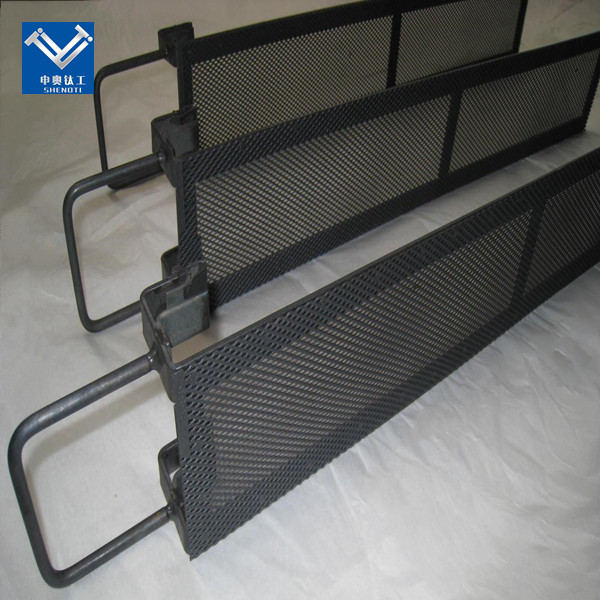
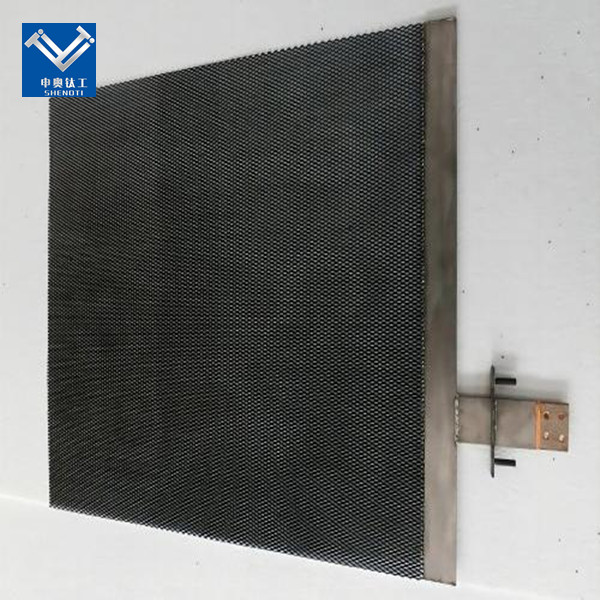
The coated titanium anode addresses this challenge through the synergistic optimization of coating formulation and geometric design. On one hand, the electrocatalytic properties of the IrO₂ or RuO₂-based noble metal oxide coating help maintain stable oxygen or chlorine evolution overpotential across a broad current density range, which can help suppress current concentration caused by localized potential fluctuations. On the other hand, the anode can be customized into plate, mesh, rod, or tubular configurations based on workpiece geometry, optimizing primary current distribution from a geometric perspective by adjusting the relative positioning and area ratio between anode and workpiece. This homogenization effect can help reduce the risk of tip burning and minimize ineffective deposition of precious metal plating materials.
Usage Guideline: The degree of electric field uniformity is closely related to workpiece geometric complexity, bath composition, and operating parameters. Evaluation under actual production line conditions is recommended.

Coating System: Balancing Catalytic Activity and Dimensional Stability
The performance of the coated titanium anode is rooted in its material structure. The substrate employs high-purity titanium (Grade 1 or Grade 2) conforming to industry standards, whose surface can spontaneously form a passive film under anodic polarization conditions, providing structural stability in acidic or alkaline plating baths. The noble metal oxide active layer coated on the substrate, with coating thickness in the micrometer range, may be formulated with IrO₂, RuO₂, Pt, or mixed metal oxide systems.
This coating serves a dual function during the electroplating process. As an electrocatalyst, it can lower the overpotential of the anodic reaction, helping the cell voltage remain at a lower level at a given current density, thereby contributing to energy consumption control. As a protective layer, it helps shield the titanium substrate from chemical attack by the plating solution, allowing the electrode to maintain geometric stability over an extended service cycle. Unlike graphite or lead-based anodes, the coated titanium anode does not generate macroscopic debris or anode sludge during operation, which can help maintain bath cleanliness and reduce the risk of pitting or inclusion defects in the deposit. Under appropriate current density and bath conditions, the electrode may maintain effective working life over a service period of several years, with actual performance varying depending on bath composition, temperature, and operating current density.
Engineering Adaptability for the Precision Plating Market
In precision plating production lines, coating uniformity is directly linked to product yield and precious metal utilization. Rework and plating material waste can account for a meaningful proportion of electroplating shop operating costs, and electrode performance is one of the key variables influencing both metrics.
The value of the coated titanium anode lies precisely in supporting coating thickness consistency through electric field homogenization. For bright chrome plating on automotive decorative parts, uniform current distribution can help avoid insufficient corrosion resistance caused by overly thin deposits in recessed areas. For functional gold plating on electronic connectors, optimized current distribution can help control precious metal usage while ensuring contact reliability. Our coated titanium anode products, built on Grade 1 or Grade 2 titanium substrates with IrO₂, RuO₂, Pt, or mixed metal oxide coatings, can be supplied with customized geometric solutions based on workpiece shape and bath design, adaptable to various process formats including rack plating, barrel plating, and continuous plating.
We encourage electroplating enterprises and line integrators to conduct coupon tests or small-batch validation of coated titanium anodes based on their workpiece characteristics and bath systems. By tracking indicators such as coating thickness distribution, cell voltage stability, and electrode appearance changes, the technical compatibility in specific application scenarios can be evaluated.
Important Note: The performance descriptions above are based on engineering experience under typical conditions or internal test data. Actual performance may vary depending on bath composition, temperature, current density, workpiece geometry, and system design. This product is designed for industrial electroplating applications. Sufficient compatibility validation prior to bulk procurement is recommended.
Titanium Anode Manufacturer
Email: zh@baojiti.com.cn
Products: Titanium Anodes, MMO Titanium Anodes, DSA Coated Titanium Electrodes, Electrolysis Electrodes, Hydrogen Production Electrodes, Wastewater Treatment Titanium Anodes.


_1776734127532.png "dsa titanium anodes")