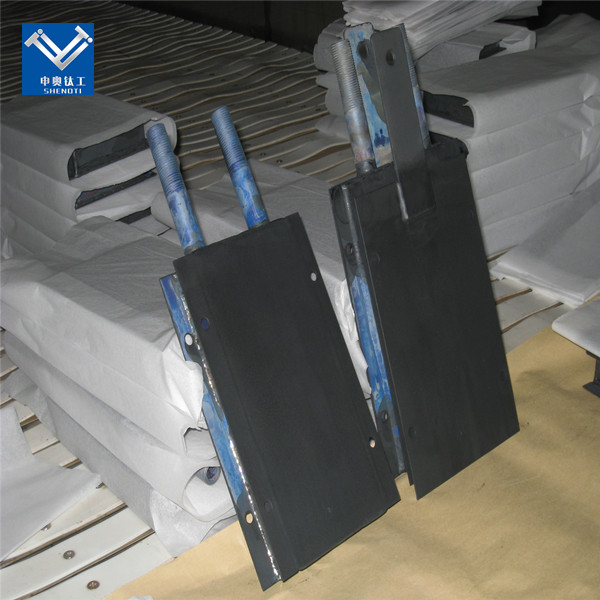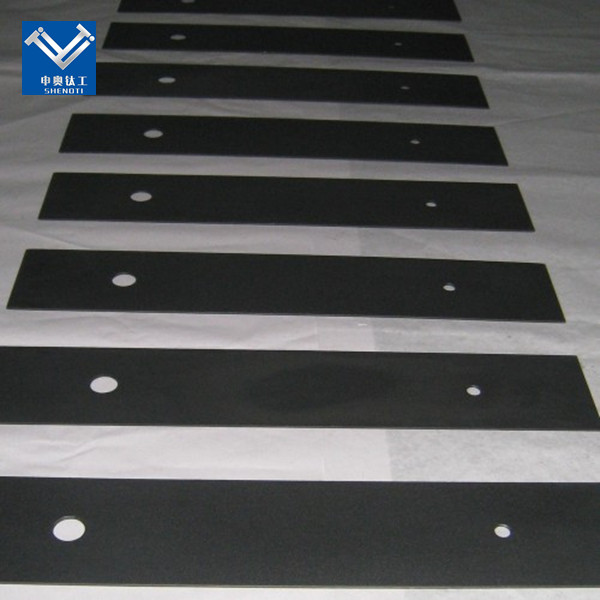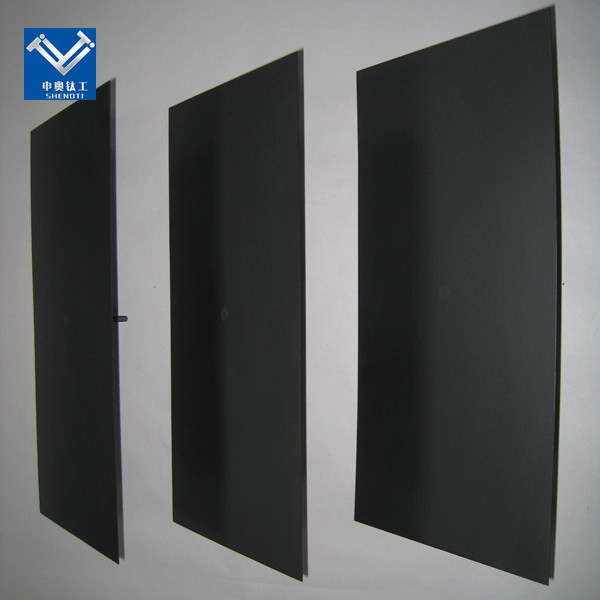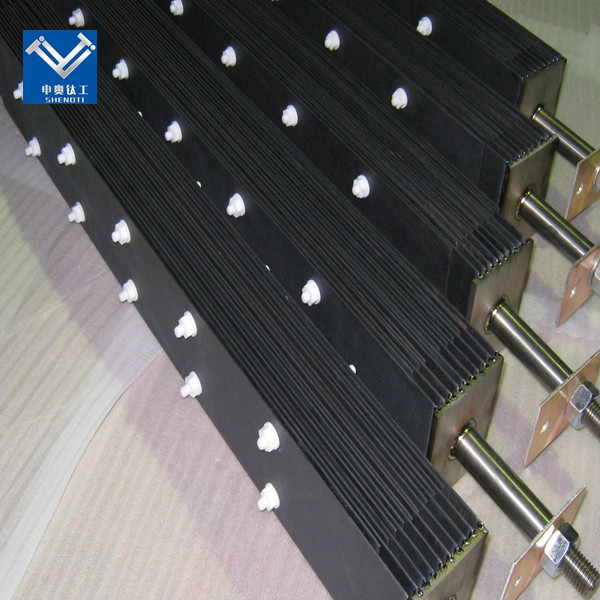
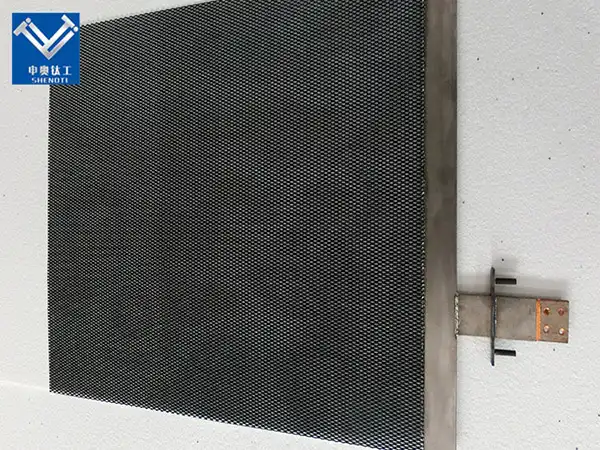
Titanium anode for electrolytic hydrogen production Manufacturer


Coating Type:MMO (IrO₂ / RuO₂ / Pt)
Current Density:500–3000 A/m²
Coating Thickness:5–15 μm
Operating Temperature:≤ 80°C
Electrolyte:Acidic / Alkaline
Lifetime:8,000–10,000 hours
High-Performance Titanium Anodes for Efficient Hydrogen Production
Baoji Shenao Metal Materials Co., Ltd. is a professional manufacturer of titanium anodes for electrolytic hydrogen production, specializing in MMO-coated titanium anodes, ruthenium-iridium-coated titanium electrodes, and customized electrolytic anode solutions for hydrogen production systems. We provide industrial-grade titanium anodes with high conductivity, low energy consumption, long service life, and stable electrochemical performance.
Whether for alkaline electrolyzers, PEM hydrogen production systems, seawater electrolysis equipment, or industrial hydrogen production plants, our titanium anodes offer reliable performance and lower operating costs.
Titanium anodes for electrolytic hydrogen production are electrochemical electrodes used in water electrolysis systems to produce hydrogen. The titanium substrate is coated with a catalytic noble metal oxide, such as ruthenium, iridium, platinum, or mixed metal oxides (MMO).
During electrolysis:
Water decomposes into hydrogen and oxygen.
Hydrogen is produced at the cathode.
The titanium anode promotes the oxygen evolution reaction (OER).
The coating improves catalytic efficiency and corrosion resistance.
Compared to traditional graphite or lead electrodes, titanium anodes offer:
Higher conductivity
Better corrosion resistance
Longer service life
Lower energy consumption
Stable electrochemical activity
Titanium anodes for hydrogen electrolysis have become the ideal choice for the modern hydrogen energy industry.
Working Principle of Titanium Anodes in Hydrogen Electrolysis
Electrochemical Reaction Process
In hydrogen electrolysis systems, electricity is applied to water or electrolyte solutions.
At the Cathode
Hydrogen ions gain electrons and form hydrogen gas:
2H++2e−→H22H^+ + 2e^- → H_22H++2e−→H2At the Titanium Anode
Water molecules lose electrons and generate oxygen:
2H2O→O2+4H++4e−2H_2O → O_2 + 4H^+ + 4e^-2H2O→O2+4H++4e−The titanium anode coating acts as an electrocatalyst to accelerate oxygen evolution while maintaining stable operation under harsh electrochemical conditions.
Technical Specifications
Titanium Anode for Electrolytic Hydrogen Production Parameters
|
Parameter |
Specification |
|
Base Material |
Grade 1 / Grade 2 Titanium |
|
Coating Type |
Ru-Ir, Ir-Ta, Pt |
|
Coating Thickness |
5–15 μm |
|
Current Density |
500–10000 A/m² |
|
Operating Temperature |
≤ 85°C |
|
Electrolyte Type |
Acidic / Alkaline |
|
Shape |
Plate, Mesh, Tube, Rod |
|
Titanium Purity |
≥ 99.6% |
|
Service Life |
2–8 Years |
|
Dimension |
Customized |
|
Voltage Stability |
Excellent |
|
Corrosion Resistance |
High |
|
 |
|
|
|
|




Advantages of Titanium Anodes in Electrolytic Hydrogen Production
1. Corrosion Resistance
Titanium naturally forms a stable oxide film, effectively preventing corrosion in the following environments:
Acidic solutions
Alkaline electrolytes
Seawater environments
Extending service life.
2. High Electrochemical Efficiency
Our titanium anodes offer the following advantages:
Low oxygen evolution overpotential
Lower energy consumption
Higher hydrogen generation efficiency
This reduces the operating costs of industrial hydrogen production systems.
3. Long Service Life
Compared to graphite or traditional metal electrodes, titanium anodes offer the following advantages:
Stable coating performance
Low consumption rate
Long-term continuous operation
Service life can reach several years, depending on operating conditions.
4. Lightweight and High-Strength
Titanium combines the following advantages:
High mechanical strength
Lightweight structure
Excellent dimensional stability
This simplifies installation and maintenance.
5. Customizable Designs
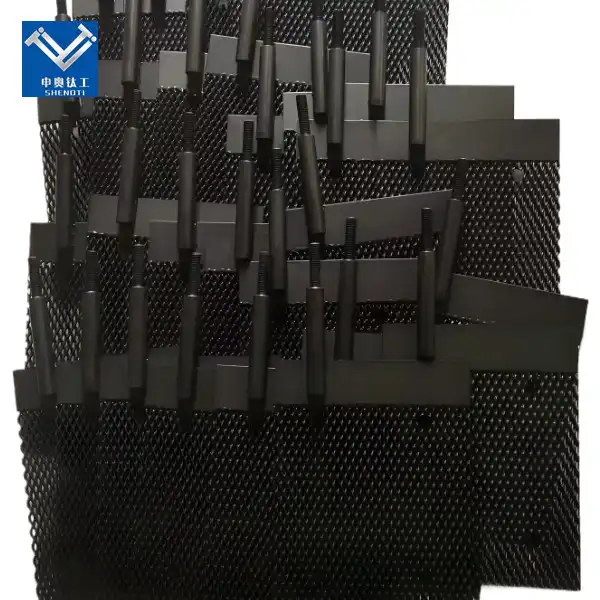
We support the following customizations:
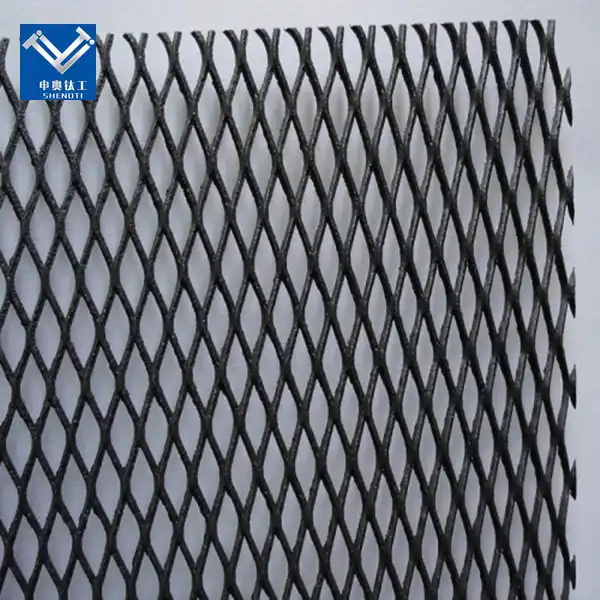
Mesh Anode
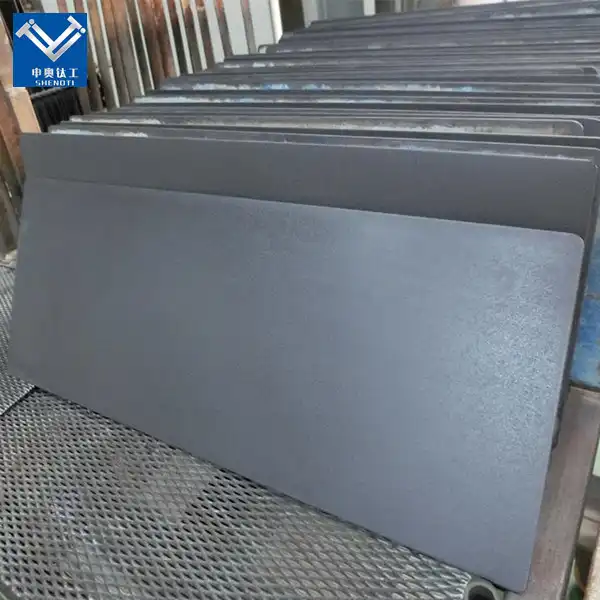
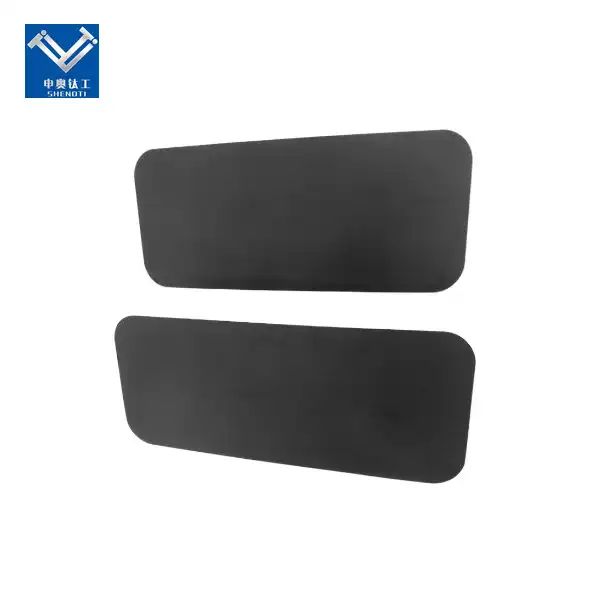
Plate Anode
Tube Anode
Rod Anode
Expanded Metal Anode
Sizes and coating formulations can be customized to the customer's electrolytic cell system.
Applications of Titanium Anodes in Hydrogen Production
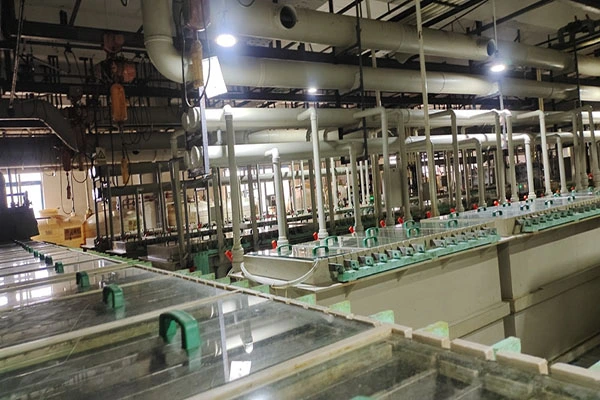
Industrial Hydrogen Production Plants
Large-scale electrolysis systems require durable titanium anodes to ensure stable oxygen evolution reaction (OER) and efficient hydrogen production.
PEM Water Electrolysis
PEM electrolyzers require high-performance titanium anodes with strong acid resistance and low overpotential.
Alkaline Water Electrolysis
MMO-coated titanium anodes are used in alkaline hydrogen production systems due to their long service life and stable catalytic activity.
Renewable Energy Hydrogen Production Projects
Hydrogen production utilizing the following energy sources:
Solar Energy
Wind Energy
Hydropower
Highly efficient electrolysis electrodes are required to improve energy conversion efficiency.
Seawater Electrolysis
Specially coated titanium anodes can operate in chloride-containing environments and are suitable for seawater hydrogen production projects.
 |
 |
 |
 |
Product production process
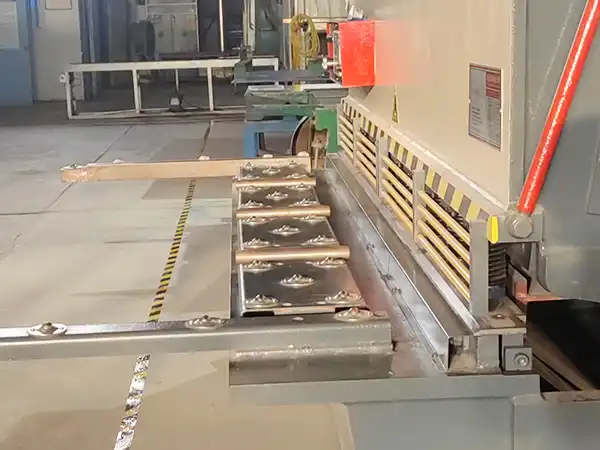
An experienced manufacturer of titanium anodes for electrolytic hydrogen production strictly controls every stage of production to ensure stable product quality and long electrode life.
1 – Titanium Substrate Treatment
High-purity Grade 1 or 2 titanium is used.
The titanium surface undergoes the following treatments:
Sandblasting
Acid pickling
Surface roughening
Ultrasonic cleaning
This helps improve coating adhesion.
2 – Noble Metal Coating
Advanced thermal decomposition technology is used to uniformly coat the titanium substrate with a catalytic coating.
Coating materials include:
RuO2
IrO2
Ta2O5
Pt
Multiple coating cycles ensure:
Uniform coating thickness
High catalytic activity
Strong adhesion
3 – High-Temperature Sintering
The coated titanium anode is sintered at a controlled temperature.
Advantages:
Stronger metallurgical bonding
Higher coating stability
Stronger corrosion resistance
4 – Quality Inspection
Each titanium anode used for electrolytic hydrogen production undergoes the following inspections:
Coating thickness test
Current density test
Adhesion test
Electrochemical performance test
Lifetime simulation test
|
|
|
|
|
|


Why Choose Us as Your Titanium Anode for Electrolytic Hydrogen Production Manufacturer?
Advanced Production Technology
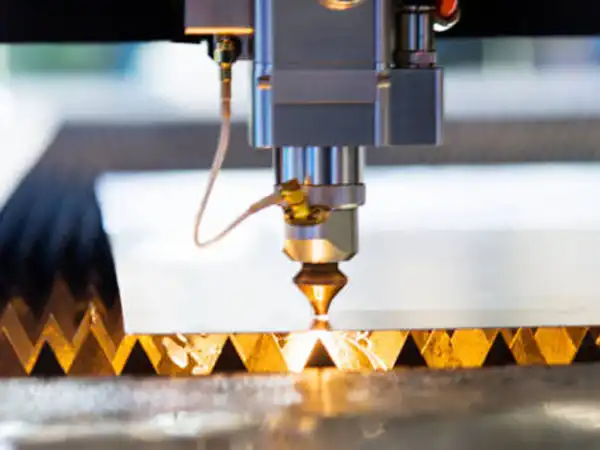
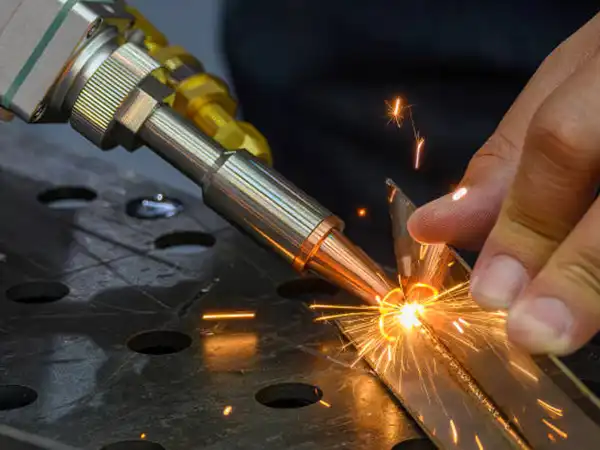
We use advanced coating technology and precision thermal treatment equipment to ensure consistent electrode quality.
Strict Quality Control
Each Titanium anode for electrolytic hydrogen production is tested before delivery.
Inspection includes:
Coating adhesion
Electrochemical activity
Dimensional accuracy
Lifetime testing
Customized Solutions
We provide custom titanium anodes according to:
Electrolyzer type
Current density
Electrolyte composition
Operating temperature
Dimension requirements
Fast Delivery
With stable raw material supply and mature production lines, we ensure fast delivery for bulk industrial orders.
Global Export Experience
Our titanium anodes are exported worldwide for:
Hydrogen energy projects
Water treatment systems
Electrochemical industries
Chlor-alkali applications
Case Study – Titanium Anode for Industrial Hydrogen Electrolysis Project
Customer Background
A hydrogen energy company required durable titanium anodes for a large alkaline electrolysis hydrogen plant.
Challenges
The customer faced:
High electrode consumption
Large power consumption
Frequent maintenance
Short electrode lifespan
Our Solution
We supplied customized MMO coated Titanium anode for electrolytic hydrogen production systems with optimized Ru-Ir coating formulation.
Features included:
High oxygen evolution efficiency
Uniform current distribution
Enhanced corrosion resistance
Results
After installation:
Energy consumption reduced by 12%
Electrode lifespan increased significantly
Maintenance frequency reduced
Hydrogen production efficiency improved
The customer achieved stable continuous operation and lower production costs.
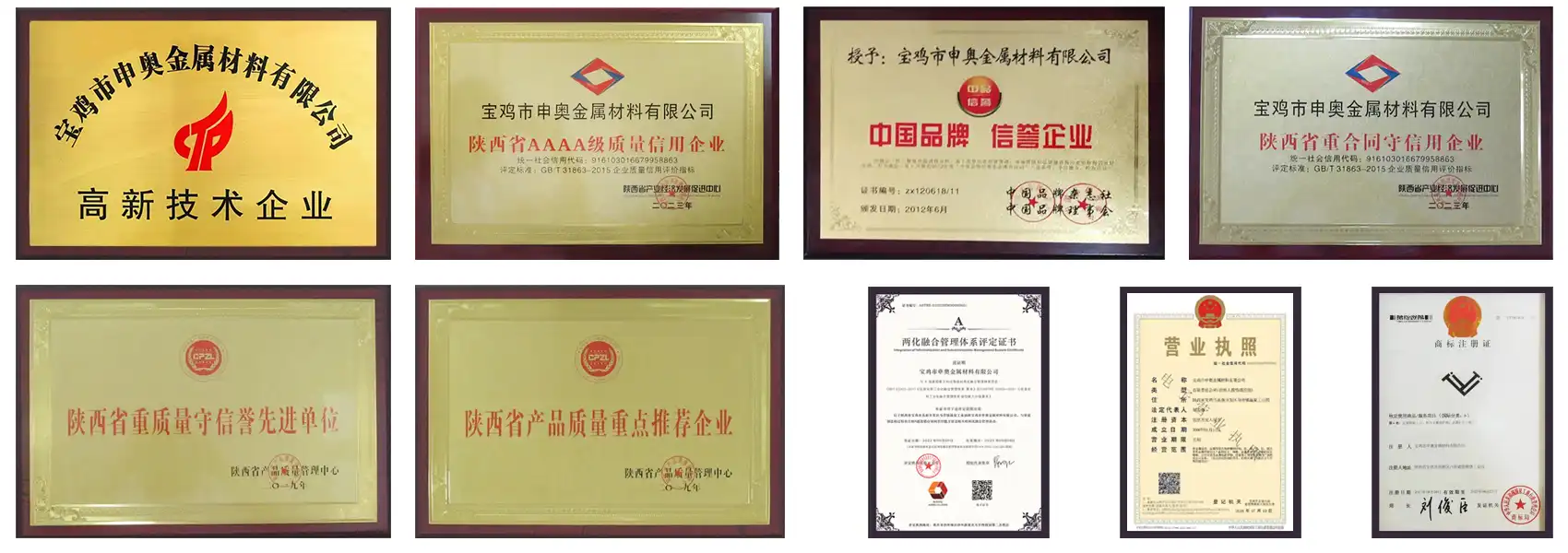
Our Patents and Honors
FAQ – Titanium Anode for Electrolytic Hydrogen Production
What coating is best for hydrogen electrolysis titanium anodes?
Ru-Ir MMO coatings are commonly used for alkaline electrolysis, while Ir-Ta coatings are preferred for acidic PEM systems.
How long does a titanium anode last?
The service life depends on operating conditions, current density, and electrolyte type. Generally, titanium anodes can last from 2 to 8 years.
Can titanium anodes be customized?
Yes. We support customized dimensions, shapes, coating types, and current density requirements for different electrolyzer systems.
Are titanium anodes suitable for seawater electrolysis?
Yes. Special MMO coatings provide excellent corrosion resistance in chloride-containing seawater environments.
What is the advantage of titanium anodes over graphite electrodes?
Titanium anodes offer:
Longer lifespan
Lower power consumption
Better corrosion resistance
Higher electrochemical efficiency
Lower maintenance costs
Contact Us
Ready to enhance your hydrogen production efficiency with Titanium anode for electrolytic hydrogen production Manufacturer?
Reach out to our team at zh@baojiti.com.cn for technical specifications and quotations.