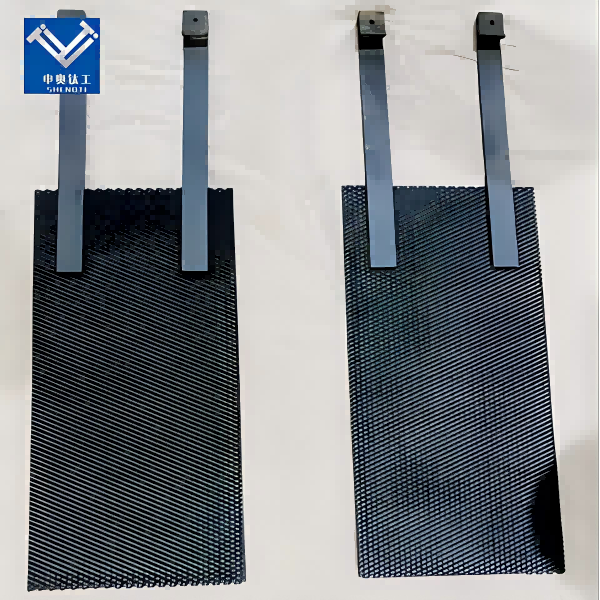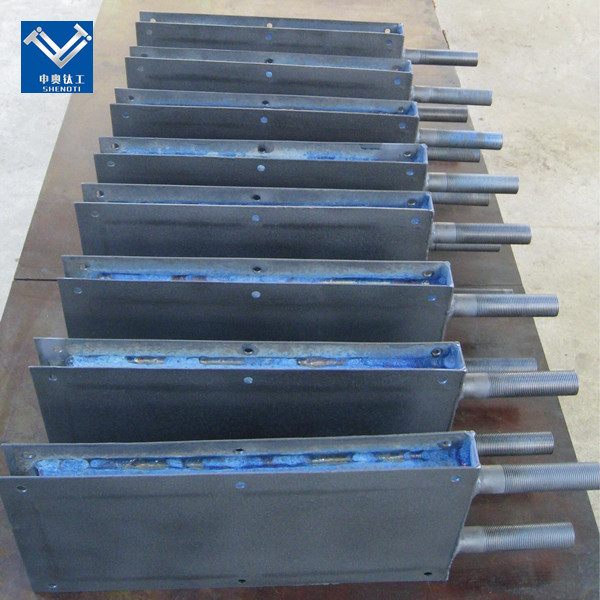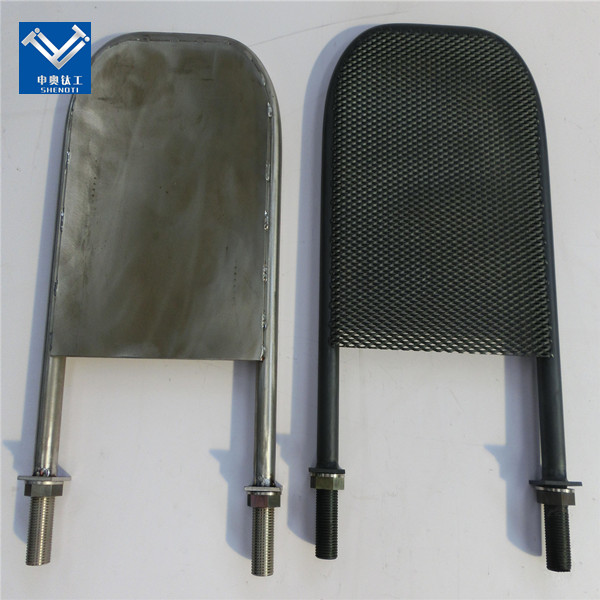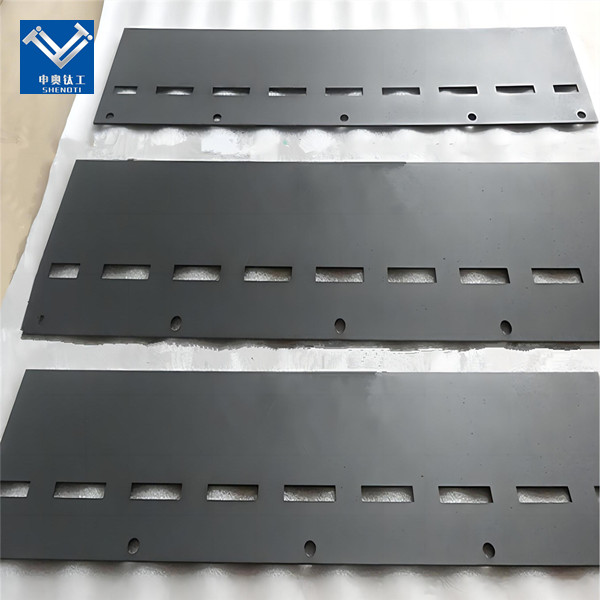
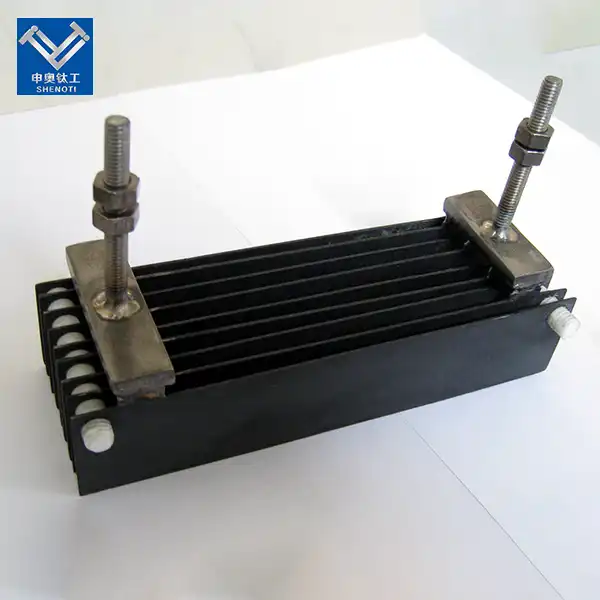
Ruthenium oxide MMO anode


Coating: Ruthenium Oxide Mixed Metal Oxide (RuO₂-MMO)
Coating Structure: Dense and highly conductive catalytic layer
Custom made: Plate, Mesh, Tube, Rod, and Customed
Expected Lifespan: Engineered for reliable endurance in continuous service
Advantage:
High electrocatalytic activity
Strong corrosion resistance
Long service life
Dimensionally stable
Ruthenium Oxide MMO Anode
In electrochemical processes dominated by the chlorine evolution reaction, the chlorine evolution catalytic activity of the anode directly determines active chlorine generation efficiency and operating energy consumption. Our Ruthenium Oxide MMO Anode at Baoji City ShenAo Metal Materials Co., Ltd. is designed specifically for high-efficiency chlorine evolution applications. It uses Grade 1 or Grade 2 pure titanium as the substrate, with a mixed metal oxide catalytic coating featuring ruthenium oxide as the primary active component on the surface. The ruthenium component imparts a very low chlorine evolution overpotential to the coating, enabling efficient active chlorine generation at low cell voltage in saturated brine, dilute brine, seawater, and chloride-containing wastewater. By introducing auxiliary components such as iridium and titanium to optimize the coating's microstructure and chemical stability, this anode achieves a service cycle suited for continuous industrial production while maintaining high chlorine evolution activity. From chlor-alkali electrolysis and sodium hypochlorite generators to seawater electrolysis for chlorine generation and chloride-containing wastewater treatment, the Ruthenium Oxide MMO Anode provides an electrode solution that balances efficiency and reliability for your chlorine evolution processes.
This product is for B2B Industrial Use Only. Operators should follow relevant chemical safety protocols and electrolysis operation standards.
Technical Specifications
|
Substrate Material |
Grade 1/2 Pure Titanium |
|
Coating Type |
Ruthenium Oxide-based Mixed Metal Oxide (RuO₂-MMO), with optional optimization via doping of iridium, titanium, tin, and other components |
|
Coating Thickness |
5–15 μm (adjusted based on current density and electrolyte composition) |
|
Coating Loading |
10–150 g/m² (customized for rated current density) |
|
Current Density Range |
100–5,000 A/m² (adjusted based on application type and electrolyte concentration) |
|
Operating Voltage Window |
0.5 V–2.0 V (typical chlorine evolution potential range) |
|
Anode Shapes |
Plate, Mesh, Tube, Rod, Ribbon, Custom |
|
Applicable Media |
Saturated brine, dilute brine, seawater, chloride-containing wastewater, acidic chloride solutions |
Why Choose Our Titanium Anodes?
- Very Low Chlorine Evolution Overpotential
Ruthenium oxide exhibits the lowest chlorine evolution overpotential among noble metal oxides, enabling efficient active chlorine generation at low cell voltage in chloride-containing media. For large-scale industrial chlorine generation installations such as chlor-alkali electrolysis and sodium hypochlorite generators, a lower chlorine evolution overpotential translates to reduced DC power consumption at the same chlorine output. In long-term continuous operation, the cumulative electricity cost savings from every 0.1V reduction in cell voltage can be noteworthy over long-term operation. - Efficient Chlorine Evolution Across a Wide Chloride Ion Concentration Range
From saturated brine to chloride-containing wastewater with chloride ion concentrations of only a few hundred milligrams per liter, the ruthenium oxide coating maintains high chlorine evolution current efficiency. This broad concentration adaptability allows the anode to serve both high-concentration brine electrolysis in the chlor-alkali industry and online chlorine generation in low chloride ion concentration scenarios such as industrial circulating water disinfection and chloride-containing wastewater treatment. - Optimized Coating Durability
While pure ruthenium oxide coatings offer very high chlorine evolution activity, they consume relatively quickly in conditions accompanied by the oxygen evolution side reaction. Our MMO formulation forms a stable composite oxide solid solution structure by introducing auxiliary components such as iridium and titanium, effectively enhancing the coating's tolerance to the oxygen evolution side reaction while maintaining high chlorine evolution activity. This optimization enables the anode to demonstrate favorable adaptability under complex operating conditions such as dilute chloride solutions, intermittent operation, or significant water quality fluctuations. - Multi-Form Customization for Different Electrolyzer Configurations
We can supply plate, expanded mesh, woven mesh, tubular, rod, and ribbon anodes, fully compatible with filter-press electrolyzers, shell-and-tube reactors, flow-through disinfection modules, and immersion electrolytic cells. Based on your cell dimensions, installation method, and electrical connection requirements, anode profiles, bus bar interfaces, and overall assembly solutions can be customized to achieve seamless compatibility with existing production lines.
|
|
|
|
|
|
|
|
|
|
|
|





Real-World Applications
- Chlor-Alkali Industry and Chlorate Electrolytic Synthesis
Used as chlorine-evolving anodes in ion-exchange membrane caustic soda electrolysis and chlorate electrochemical synthesis processes, covering the anode compartment of ion-exchange membrane electrolyzers for the production of caustic soda, chlorine gas, and hydrogen from sodium chloride brine electrolysis in the chlor-alkali industry, electrolytic synthesis anodes for industrial oxidizers such as sodium chlorate and potassium chlorate, core anode assemblies in electrolytic cells for sodium hypochlorite generators, and chlorine-evolving electrodes in direct seawater or brine electrolysis chlorination systems, achieving high current efficiency operation through the exceptionally low chlorine evolution overpotential and excellent electrocatalytic activity of ruthenium oxide coatings. - Electrochemical Treatment of Industrial Circulating Water and Swimming Pool WaterUsed for electrochemical microbial control and algae control treatment in industrial circulating cooling water systems, swimming pools, and SPA water bodies, covering electrochemical suppression of microbial biofilms in open-loop circulating cooling water of power plants and petrochemical industries, microbial management in HVAC and data center cooling water piping, low-salt on-site electrolytic disinfection of large commercial swimming pools and water park water bodies, and algae control purification of landscape fountains and ornamental fish ponds, achieving effective microbial control even under low-salinity conditions through the high chlorine evolution efficiency of ruthenium oxide anodes.
- Auxiliary Anode for Cathodic Protection
Used as cathodic protection auxiliary anodes for buried metallic structures, harbor and marine engineering steel structures, and reinforced concrete constructions, covering anode ground beds at cathodic protection stations along long-distance oil and gas pipelines, impressed current cathodic protection of petrochemical storage tank bottom exterior surfaces and industrial heat exchangers, seawater environment corrosion protection for sea-crossing bridge foundations and wharf steel pipe piles, and cathodic protection anode mesh for reinforced concrete in water intake and discharge culverts and circulating water pipelines of coastal power plants. - Auxiliary Anode for Electroplating and Metal Surface Finishing
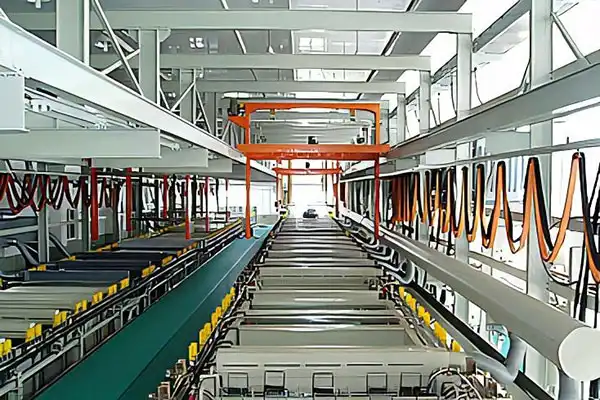
Used as insoluble auxiliary anodes in electroplating production lines and metal surface finishing processes, covering anode strips and ribbons in reel-to-reel zinc and tin electroplating lines, auxiliary anode arrangements in horizontal electroplating lines and via-filling electroplating processes for printed circuit boards, conductive anodes for electronic component electrodeposition and precision electroforming processes, and auxiliary electrode applications in continuous steel pickling lines and stainless steel passivation treatment.


The ShenAo Advantage
18 Years of Fabricating Excellence
Since 2008, we've specialized in valuable metal coated titanium anodes from our office in Baoji's "China Titanium Valley." Our develop bimetallic hazardous welding innovation and progressed coating forms provide items you can trust.
Customization for Your Correct Needs
Every generation line is diverse. We give custom fitted arrangements coordinating your particular current thickness necessities, electrolyte composition, and operational parameters. Whether you require little bunch testing or full-scale generation amounts, we convey on time.
Cost-Effective Lifecycle Management
When coating exhaustion happens, you do not dispose of the whole anode. Our proficient recoating benefit strips the ancient oxide layer, sandblasts the substrate, and reapplies new MMO coating. This expands resource life and decreases your add up to taken a toll of proprietorship considerably.

Frequently Asked Questions
Q: What is the main difference between ruthenium oxide anodes and ruthenium-iridium anodes?
A: Ruthenium oxide anodes feature ruthenium oxide as the primary active component, offering the highest chlorine evolution activity, making them suitable for conditions where chlorine evolution is the absolute dominant reaction with minimal oxygen evolution side reaction, such as high-concentration brine electrolysis. Ruthenium-iridium anodes, by introducing a higher proportion of iridium, enhance resistance to oxygen evolution corrosion while maintaining relatively high chlorine evolution activity, making them suitable for conditions with lower chloride concentration or higher oxygen evolution proportion. In short: choose ruthenium oxide for the lowest chlorine evolution overpotential; choose ruthenium-iridium to balance oxygen evolution durability.
Q: Are ruthenium oxide anodes suitable for environments containing fluoride ions?
A: This requires careful evaluation. Fluoride ions attack not only the titanium substrate but also the ruthenium oxide coating. If the fluoride ion concentration in the electrolyte exceeds 10 ppm, we recommend consulting with us, as a special protective solution or niobium substrate option may need to be considered. It is important to inform us of fluoride and other impurity levels during the selection stage.
Q: How do I select the appropriate current density based on chloride ion concentration?
A: Current density should be determined comprehensively based on chloride ion concentration, desired chlorine generation rate, and electrolyzer design. In saturated brine systems, current densities of 3,000–5,000 A/m² can be used for high chlorine output. In dilute brine or chloride-containing wastewater, current densities are typically set at 100–1,000 A/m² to avoid an increased proportion of the oxygen evolution side reaction due to insufficient chloride ion supply. You can provide specific water quality parameters and chlorine generation targets, and we will recommend an appropriate current density range.
Q: How should anodes be handled when the coating reaches the end of its service life?
A: The titanium substrate remains stable in chloride-containing media. The old coating can be chemically stripped, and once the substrate passes inspection, it can be recoated to restore performance to new-anode levels. We offer a full-service process including incoming inspection of used anodes, coating stripping, substrate treatment, and recoating, helping you reduce long-term electrode renewal costs.
Contact Us
You need a partner who not only supplies products but also solves your challenges alongside you. Our team is ready to engage with your inquiries and provide a tailored solution. Share your specific needs or key requirements with us today, and let us help you efficiently transform your breakthroughs into commercial value.
Titanium Anode Manufacturer
Email: zh@baojiti.com.cn
WhatsApp: +86-15877696471 (updated)
Products: Titanium Anodes, MMO Titanium Anodes, DSA Coated Titanium Electrodes, Electrolysis Electrodes, Hydrogen Production Electrodes, Wastewater Treatment Titanium Anodes.