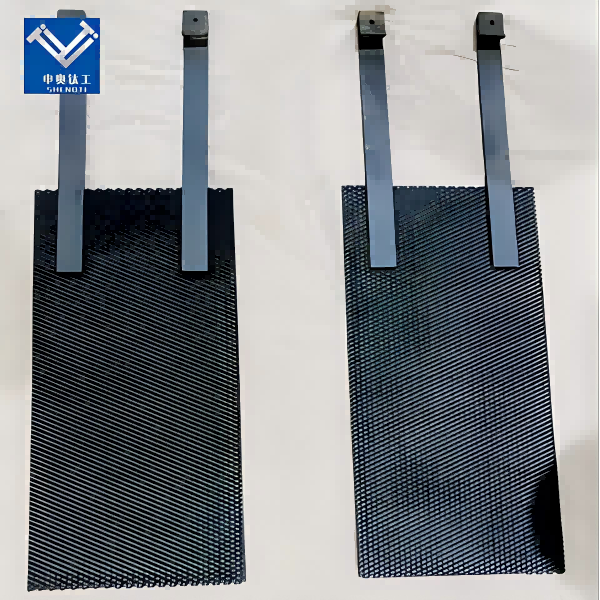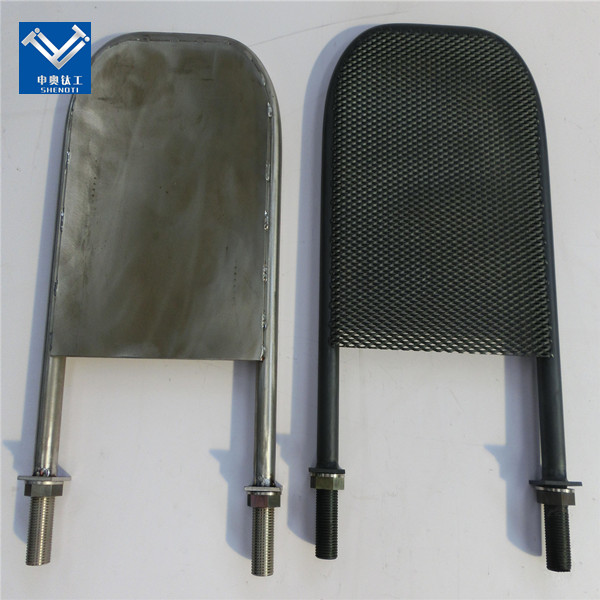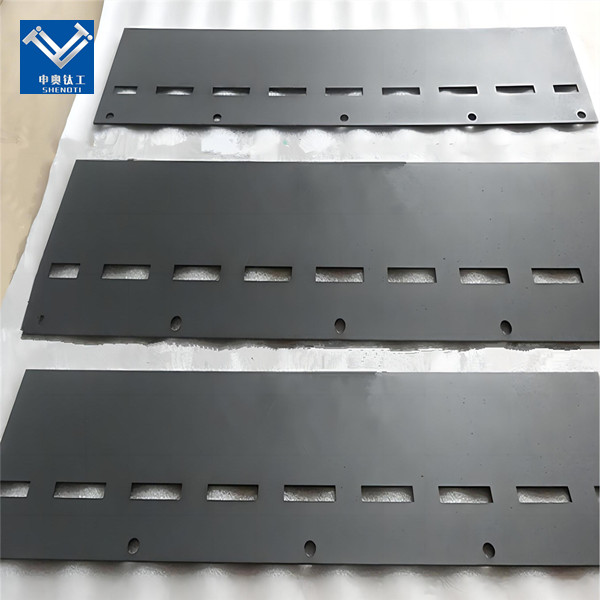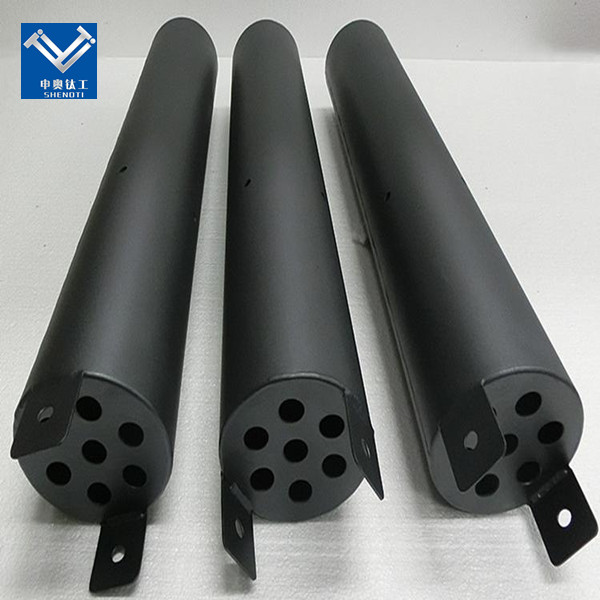
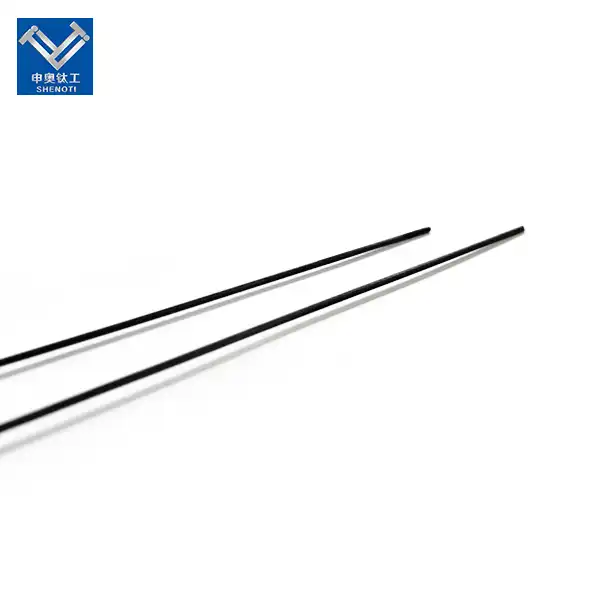
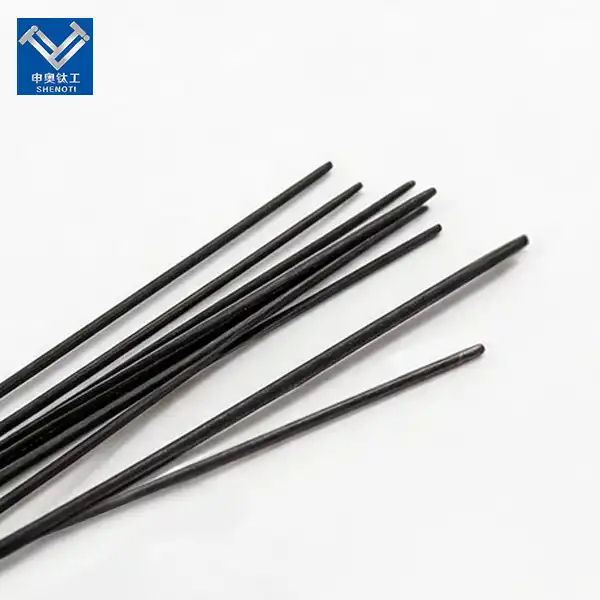
Ruthenium Coated Titanium Wire Anode


Coating: Ruthenium Mixed Metal Oxide (Ru-MMO)
Coating Structure: Dense and highly conductive catalytic layer
Custom made: Wire (Standard), and Customed
Expected Lifespan: Designed for sustained performance over prolonged operational cycles
Advantage:
High electrocatalytic activity
Strong corrosion resistance
Long service life
Dimensionally stable
Ruthenium Coated Titanium Wire Anode
In precision electroplating, electrochemical analysis, and small-scale electrolysis devices, the dimensional accuracy and electrochemical stability of anode wire have a direct influence on process results. Our Ruthenium Coated Titanium Wire Anode at Baoji City ShenAo Metal Materials Co., Ltd. is designed specifically for efficient chlorine evolution in chloride-containing media. It uses Grade 1 or Grade 2 pure titanium wire as the substrate, with a ruthenium-based mixed metal oxide catalytic coating on the surface. The ruthenium component imparts a very low chlorine evolution overpotential to the coating, enabling efficient active chlorine generation at low cell voltage in environments such as dilute brine, chloride-containing wastewater, and acidic chloride systems. The titanium wire substrate provides sufficient mechanical strength and flexibility, facilitating bending, shaping, and installation. This anode wire is suitable for electrochemical sensors, micro-disinfection devices, laboratory research, and precision electroplating applications, serving as a reliable electrode choice for your small-scale chloride-containing electrolysis needs.
This product is for B2B industrial and laboratory use only. Operators should follow relevant chemical safety protocols.
Technical Specifications
|
Substrate Material |
Grade 1/2 Pure Titanium Wire |
|
Coating Type |
Ruthenium-based Mixed Metal Oxide (RuO₂-MMO), with optional doping of iridium, titanium, and other components per application system |
|
Coating Thickness |
3–10 μm (adjusted based on current density and operating environment) |
|
Coating Loading |
5–50 g/m² (customized for rated current density) |
|
Current Density Range |
50–1,000 A/m² (adjusted based on wire diameter and application type) |
|
Operating Voltage Window |
0.5 V–2.0 V (typical chlorine evolution potential range) |
|
Wire Diameter |
Φ0.5mm–Φ6mm (common), other specifications available upon request |
|
Applicable Media |
Dilute brine, chloride-containing wastewater, acidic chloride solutions, seawater |
Why Choose Our Titanium Anodes?
- Very Low Chlorine Evolution Overpotential
The ruthenium-based coating exhibits a very low chlorine evolution overpotential in chloride-containing media, enabling efficient active chlorine generation at low cell voltage even under low chloride ion concentration conditions. For small-scale electrolysis devices or sensors requiring extended operation, lower voltage translates to reduced energy consumption and heat generation, contributing to longer equipment service life and stable electrochemical output. - Excellent Flexibility and Formability
The pure titanium wire substrate offers good ductility and workability, allowing bending into spiral, U-shaped, ring-shaped, or custom profiles to flexibly fit the internal space of various micro-electrolyzers and sensors. The coating bonds tightly with the titanium wire substrate and remains intact after moderate bending, resisting spalling or cracking, providing convenience for installation and adjustment. - Clean and Safe Material System
The coating and titanium substrate maintain a stable chemical state during electrolysis, with minimal dissolution of metal impurities into the electrolyte within the normal chlorine evolution potential range. For laboratory electrochemical research, water quality monitoring sensors, and food-contact-related disinfection applications, this material system helps maintain the reliability of test results and the safety of products. - Flexible Length and Connection Customization
We can customize the coated section length, bare titanium section length, and end connection type of the anode wire according to your requirements. Common connection methods include direct titanium wire connection, crimp sleeve, and threaded connector. For applications requiring sealed penetration through the cell wall, encapsulation solutions with PTFE or other sealing materials can be provided, ensuring ease of installation and reliable electrical connection.
|
|
|
|
|
|
|
|
|
|
|
|




Real-World Applications
- Electrochemical Water Treatment and Disinfection Purification
Used for electrochemical treatment, disinfection, and purification of industrial circulating cooling water, swimming pool water, landscape water, and domestic drinking water, covering electrochemical suppression of microbial biofilms and bio-slime removal in closed-loop circulating cooling water systems, low-salt on-site electrolytic disinfection of swimming pool and SPA water, algae control purification of landscape ponds and fountains, and electrolysis module anodes for terminal point-of-use drinking water disinfection equipment, achieving efficient microbial control through the excellent chlorine evolution catalytic activity of ruthenium coatings. - Auxiliary Anode in Cathodic Protection Systems
Used as auxiliary anodes in cathodic protection systems for buried pipelines, storage tanks, heat exchangers, and reinforced concrete structures, covering point-type anode ground beds at cathodic protection stations along urban gas pipeline networks and long-distance oil and gas pipelines, auxiliary protection of sacrificial anodes in storage water heater inner tanks and industrial heat exchangers, impressed current cathodic protection of sea-crossing bridge and wharf steel pipe piles, and cathodic protection anode mesh in reinforced concrete structures of coastal buildings, accommodating conformable placement on complex geometries through the flexibility and formability of ruthenium-coated titanium wire anodes. - Electrolytic Chlorination and On-Site Disinfectant Generation
Used as anode assemblies in small-scale electrolytic chlorination units and on-site disinfectant generation equipment, covering anode components of brine or seawater electrolysis sodium hypochlorite generators, small-scale on-site chlorine-containing disinfectant solution generation devices for hospitals and laboratories, electrolytic disinfectant water preparation equipment for food processing and catering industries, and on-site electrolytic disinfectant generation systems for aquaculture and livestock farming facilities. - Auxiliary Electrode for Metal Recovery and Electrochemical Synthesis
Used as auxiliary electrodes in electrochemical metal recovery and organic electrosynthesis processes, covering selective electrodeposition recovery anodes for dilute precious metals in electronic electroplating wastewater, auxiliary electrodes for laboratory organic electrosynthesis and electrochemical analytical testing, counter electrode assemblies in electrochemical sensors and microelectrode systems, and auxiliary conductive anode wires in printed circuit board microvia electroplating and via-filling processes.


The ShenAo Advantage
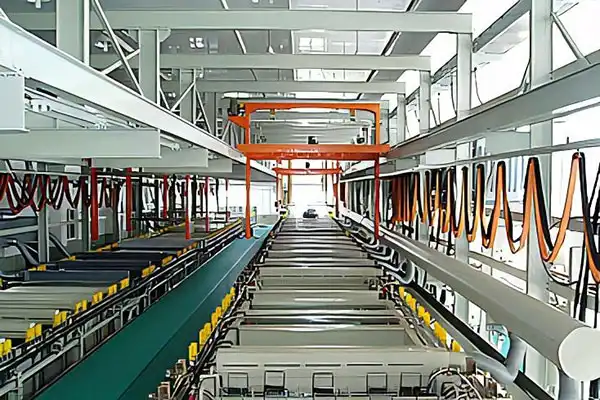
18 Years of Fabricating Excellence
Since 2008, we've specialized in valuable metal coated titanium anodes from our office in Baoji's "China Titanium Valley." Our develop bimetallic hazardous welding innovation and progressed coating forms provide items you can trust.
Customization for Your Correct Needs
Every generation line is diverse. We give custom fitted arrangements coordinating your particular current thickness necessities, electrolyte composition, and operational parameters. Whether you require little bunch testing or full-scale generation amounts, we convey on time.
Cost-Effective Lifecycle Management
When coating exhaustion happens, you do not dispose of the whole anode. Our proficient recoating benefit strips the ancient oxide layer, sandblasts the substrate, and reapplies new MMO coating. This expands resource life and decreases your add up to taken a toll of proprietorship considerably.

Frequently Asked Questions
Q: How do I choose between ruthenium coated titanium wire anodes and platinized titanium wire anodes?
A: The choice primarily depends on the working medium and the desired electrochemical reaction. Ruthenium coated titanium wire anodes have a very low chlorine evolution overpotential, offering higher active chlorine generation efficiency in chloride-containing media, making them suitable for processes dominated by chlorine evolution. Platinized titanium wire anodes offer better chemical inertness in acidic environments and organic electrolytes, making them suitable for oxygen evolution or applications with very strict requirements on metal dissolution. If your application primarily involves chloride-containing media and requires efficient chlorine evolution, ruthenium coated titanium wire anodes are a more economical choice.
Q: Can the anode wire be bent? Will bending affect the coating?
A: Moderate bending is possible. The titanium wire substrate has good ductility, and the coating bonds tightly with the substrate. Within the bending radius typically required for installation (generally recommended to be no less than 3 times the wire diameter), the coating will not spall or crack. However, repeated large-amplitude bending at the same position is not recommended, nor is sharp-angle bending on the coated section. If you require a specific shape, we recommend providing a drawing when ordering; we can pre-form the wire before coating treatment.
Q: How are the lengths of the coated section and bare titanium section determined?
A: The coated section is the active working portion immersed in the electrolyte, and its length is back-calculated based on the anode area you require and the wire diameter. The bare titanium section is used for electrical connection and mounting, typically with 50–100mm reserved; the specific length can be customized based on your electrolyzer structure and wiring method. Simply provide your operating current and installation space requirements, and we can recommend a suitable wire diameter and section lengths.
Q: Can the anode wire be recoated when the coating reaches the end of its service life?
A: Titanium wire substrates have relatively small diameters, and coating stripping and reprocessing require evaluation of the remaining wall thickness and surface condition of the substrate. For anode wires with thicker diameters (Φ3mm and above), recoating is typically feasible. For thinner diameter anode wires, direct replacement is recommended to ensure reliable performance. You can provide the specifications and usage history of the used anode wire, and we will assess the feasibility of recoating.
Contact Us
You need a partner who not only supplies products but also solves your challenges alongside you. Our team is ready to engage with your inquiries and provide a tailored solution. Share your specific needs or key requirements with us today, and let us help you efficiently transform your breakthroughs into commercial value.
Titanium Anode Manufacturer
Email: zh@baojiti.com.cn
WhatsApp: +86-15877696471 (updated)
Products: Titanium Anodes, MMO Titanium Anodes, DSA Coated Titanium Electrodes, Electrolysis Electrodes, Hydrogen Production Electrodes, Wastewater Treatment Titanium Anodes.