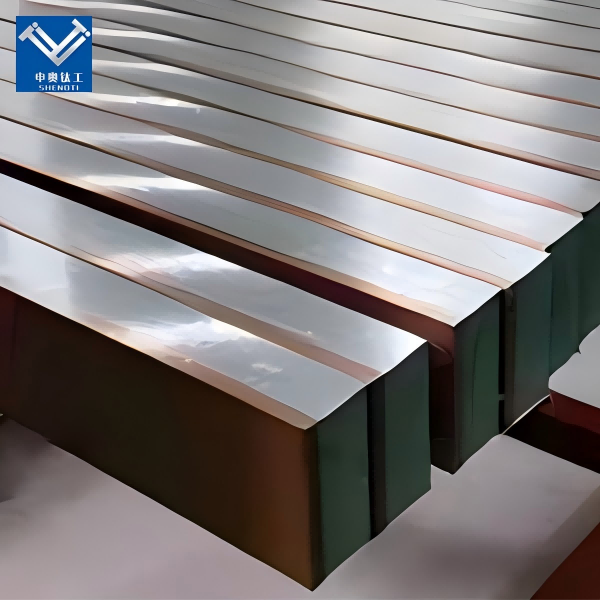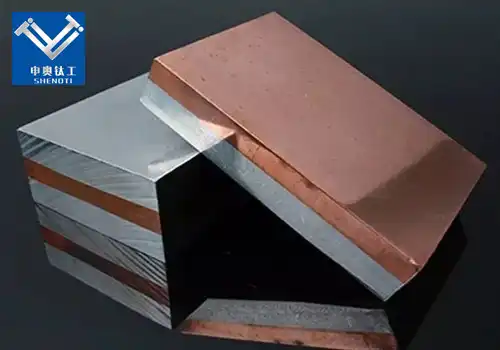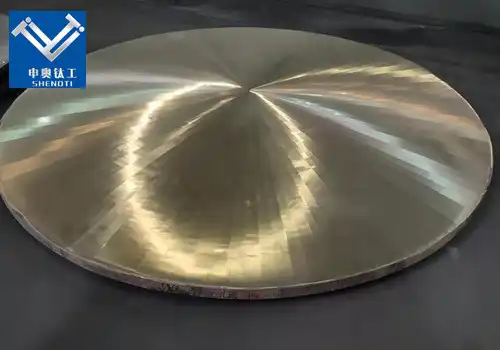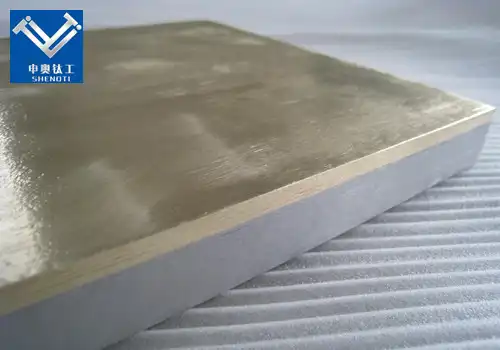
TU2/5083 Copper Aluminum Clad Plate for Interfacial Stability and High Conductivity Under Cryogenic Conditions
2026-07-08 10:33:43
Cryogenic energy facilities such as LNG receiving terminals, superconducting magnets, and low-temperature energy storage systems require conductive connection components to repeatedly withstand severe temperature cycling across a broad range from extremely low temperatures to ambient levels. At temperatures as low as -196°C or even -269°C, conventional bimetallic composite materials often experience interlayer delamination due to the difference in thermal expansion coefficients between copper and aluminum, leading to surging contact resistance and functional failure. TU2/5083 copper aluminum clad plate, which achieves metallurgical bonding through explosive welding, is a composite material engineered to address interfacial stability and electrical reliability under extreme cryogenic conditions.
Cryogenic Interfacial Stability: An Engineering Solution for Extreme Temperature Cycling Through Explosive Welding
TU2 oxygen-free copper and 5083 aluminum alloy each exhibit excellent individual material properties in cryogenic environments—TU2 copper demonstrates significantly improved electrical and thermal conductivity at low temperatures, while 5083 aluminum alloy maintains favorable low-temperature toughness and strength. However, the difference in their thermal expansion coefficients is dramatically amplified under cryogenic conditions: when cooled from room temperature to -196°C, aluminum contracts significantly more than copper, generating substantial thermal stress at the interface. If the bonding relies solely on mechanical clamping or brazing, stress accumulation will initiate microcrack formation and propagation, ultimately leading to interlayer separation.
TU2/5083 copper aluminum clad plate employs the explosive welding process to achieve interfacial bonding. This process utilizes high-velocity impact energy to drive the copper and aluminum plates into oblique collision at extremely high speeds. The instantaneous high pressure generated at the collision point far exceeds the yield strength of the materials, enabling atomic-scale metallurgical bonding at the interface through plastic deformation and jetting action. This process introduces no solder or intermediate layers, and the resulting bonding interface exhibits a characteristic wavy interlocking morphology that effectively increases the bonding area and mechanical interlocking force. During repeated cryogenic-warmup cycling, the wavy metallurgical interface can effectively transfer and disperse stress generated by differential thermal contraction, helping to suppress microcrack initiation and propagation and maintain interfacial integrity. Actual cryogenic cycling resistance performance varies depending on temperature fluctuation range, cycling frequency, copper-to-aluminum thickness ratio, and operating environment.
Performance varies based on specific operating conditions. Actual results depend on temperature conditions and operating parameters.

High Conductivity and Material Optimization: The Synergistic Advantages of TU2 and 5083
Cryogenic energy systems place stringent demands on the electrical performance of conductive connection components. TU2 oxygen-free copper, with a purity exceeding 99.95% and extremely low oxygen content, exhibits a significant decrease in resistivity at cryogenic temperatures, with conductive performance notably superior to standard copper, making it a preferred solution for cryogenic high-current low-loss conduction. 5083 aluminum alloy, belonging to the Al-Mg alloy series, not only maintains favorable electrical conductivity in cryogenic environments but also offers low-temperature toughness and seawater corrosion resistance, making it particularly suitable for marine environments such as LNG terminals.
TU2/5083 copper aluminum clad plate integrates the advantages of both materials: the copper layer provides a low-resistance current pathway, achieving efficient conduction under cryogenic conditions; the aluminum layer, while ensuring overall conductive performance, also offers low-temperature toughness and material compatibility with aluminum alloy structures. The thickness ratio of the copper and aluminum layers can be custom designed according to specific current-carrying capacity and thermal conduction requirements. With the interface maintaining metallurgical bonding, current can be efficiently conducted through the copper layer, with the aluminum layer serving as an auxiliary conductive pathway, supporting the component in maintaining low contact resistance and stable electrical performance under cryogenic high-current conditions. Actual electrical and thermal conductivity performance varies depending on the copper-to-aluminum thickness ratio, operating temperature, current density, and interfacial bonding quality.
Engineering Value for the Cryogenic Energy Market
In the global LNG receiving terminal, superconducting power, and low-temperature energy storage markets, the cryogenic reliability of conductive connection components serves as an essential support for system operational safety. The engineering value of TU2/5083 copper aluminum clad plate in this market lies in addressing extreme temperature cycling through explosive-welded metallurgical interfaces, supporting cryogenic energy equipment in achieving long-cycle stable electrical conduction.
These TU2/5083 copper aluminum clad plate products are manufactured using the explosive welding process, with the copper-to-aluminum thickness ratio customizable within a thickness range of 1 mm to 100 mm according to current-carrying capacity and structural design. They are suitable for cryogenic conductive components such as LNG transfer pump connection bars, superconducting magnet current leads, and cryogenic storage tank grounding systems. It is recommended that cryogenic equipment manufacturers and energy project engineering firms conduct field condition testing of TU2/5083 copper aluminum clad plates based on their equipment's temperature conditions, current loading, and operating environment. By tracking indicators such as interfacial bonding integrity after cryogenic cycling, contact resistance variation trends, and long-term operating performance, the technical compatibility and safety assurance capability of the composite conductive material in specific cryogenic application scenarios can be evaluated.
Important Note: The performance descriptions above are based on engineering experience under specific test conditions or internal test data. Differences may exist between laboratory results and actual operating conditions. Actual cryogenic cycling resistance performance, bonding strength, electrical and thermal conductivity, and working life vary depending on temperature fluctuation range, cycling frequency, copper-to-aluminum thickness ratio, current loading, operating environment, and system design. Specific numerical values mentioned herein are reference values under typical test conditions. This product is a conductive composite material for cryogenic energy equipment, and its suitability for specific applications must be verified by the user according to actual operating conditions and relevant industry standards. Sufficient compatibility validation prior to bulk procurement is recommended.
Titanium Anode Manufacturer
Email: zh@baojiti.com.cn
Products: Titanium Anodes, MMO Titanium Anodes, DSA Coated Titanium Electrodes, Electrolysis Electrodes, Hydrogen Production Electrodes, Wastewater Treatment Titanium Anodes.