Titanium Anode for Circulating Water Descaling: Chemical-Free Scale Prevention to Enhance Industrial Cooling Tower Thermal Efficiency
2026-07-13 09:49:15
Large-scale cooling towers in petrochemical plants and power generation facilities perform critical heat dissipation functions, with their heat exchange efficiency directly impacting unit energy consumption and output levels. Under high cycles of concentration operation, the deposition of calcium and magnesium ions on heat exchanger tube walls intensifies continuously. The effectiveness of traditional chemical scale inhibitors diminishes in extreme water quality conditions, while chemically-laden blowdown water adds to end-of-pipe disposal burdens. Electrochemical descaling technology achieves solid-phase separation of calcium and magnesium through cathodic alkalization, with the titanium anode for circulating water descaling serving as its core component.
Electrochemical Descaling: Cathodic Alkalization Driving Solid-Phase Separation of Calcium and Magnesium
Electrochemical descaling utilizes the water electrolysis reaction to create a controlled crystallization environment within the reactor. In an electrolysis unit with the titanium anode at its core, the water reduction reaction on the cathode surface generates hydroxide ions and releases hydrogen gas, forming a localized high-pH micro-zone adjacent to the cathode. Within this micro-zone, bicarbonate ions convert to carbonate ions, prompting calcium and magnesium ions to preferentially crystallize and precipitate as calcium carbonate and magnesium hydroxide on the cathode surface, rather than depositing on heat exchanger tube walls.
The titanium anode for circulating water descaling carries out the oxygen evolution reaction in this process, providing sustained electrochemical driving force for cathodic alkalinity control. The mixed metal oxide coating on the anode surface can maintain a relatively low oxygen evolution overpotential across a broad current density range, contributing to controlled system operating energy consumption. Periodic removal of cathode deposits through mechanical scraping or polarity reversal supports continuous online descaling operation, helping to reduce heat exchange efficiency decline caused by scaling. Actual descaling efficiency varies depending on circulating water hardness, alkalinity, cycles of concentration, and operating current density.
Performance varies based on specific operating conditions. Actual results depend on circulating water quality and operating parameters.

Anode Durability: Adapting to High-Temperature, High-Hardness Circulating Water Conditions
The circulating water in petrochemical cooling towers exhibits elevated temperatures and high hardness levels, placing composite tolerance demands on the anode. High-temperature environments accelerate electrode reaction kinetics and may also intensify coating performance degradation. In high-hardness water, calcium and magnesium ions tend to deposit on the anode surface, affecting active site accessibility. Furthermore, chloride ions present in the circulating water may be oxidized to active chlorine during electrolysis, causing chemical attack on both the coating and substrate.
The titanium anode for circulating water descaling employs high-purity titanium as the substrate. The titanium substrate can form a dense passive film under anodic polarization conditions, providing structural stability for the electrode in chloride-containing high-temperature circulating water. The coating adopts an electrocatalytic active layer containing metal oxides such as IrO₂ and RuO₂. The IrO₂ component exhibits high electrochemical stability under oxygen evolution conditions, contributing to maintaining the catalytic activity of the coating during long-term operation. The coating and substrate achieve high bonding strength through optimized pretreatment processes, supporting the maintenance of structural integrity under high-temperature and high-flow-rate conditions. Through periodic polarity reversal, calcareous deposits on the electrode surface can be removed, maintaining oxygen evolution efficiency. Actual working life varies depending on circulating water hardness, temperature, chloride ion concentration, and operating mode.
Engineering Value for the Industrial Cooling Market
In the global petrochemical and power generation markets, scale control for cooling towers is a critical link in maintaining heat exchange efficiency and reducing operating energy consumption. The engineering value of the titanium anode for circulating water descaling in this market lies in combining online continuous descaling with reduced chemical dependence, supporting cooling tower systems in maintaining relatively high heat exchange efficiency under high cycles of concentration.
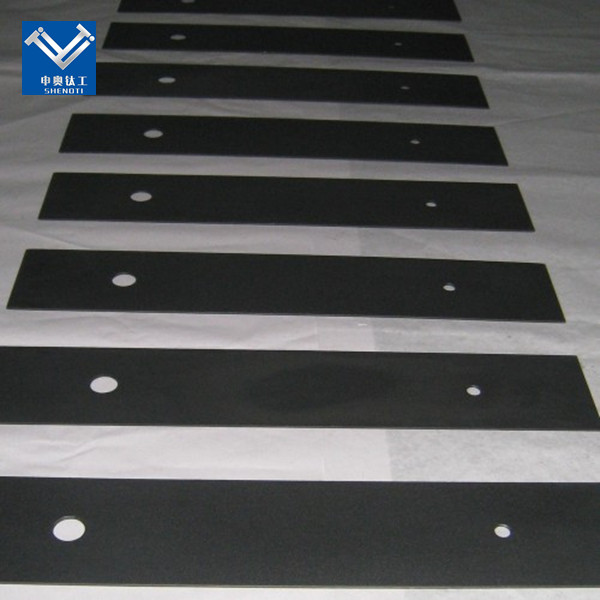
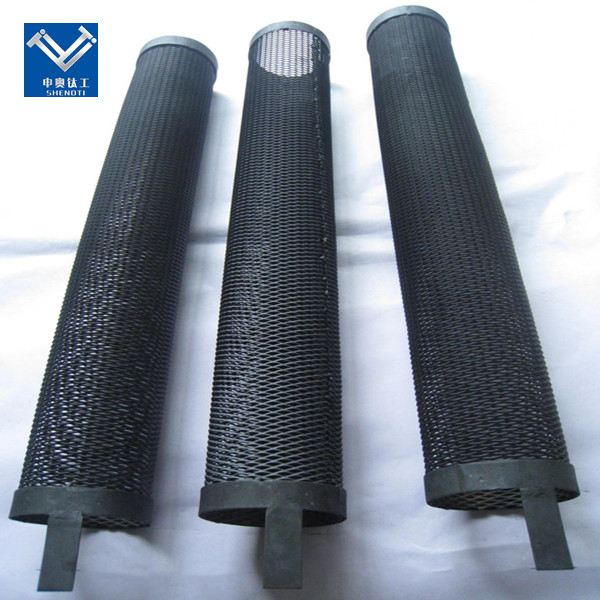
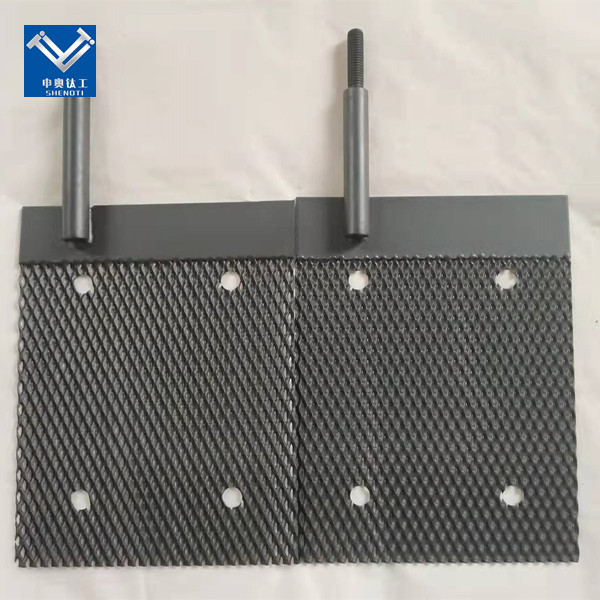
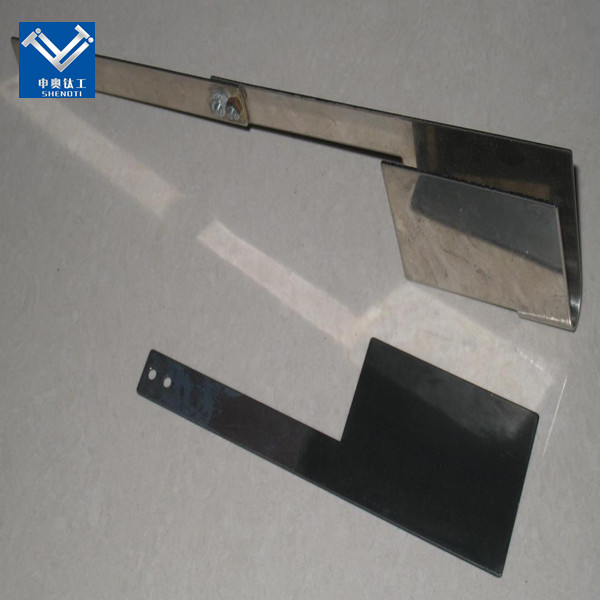
Online electrochemical descaling solutions use electric current as the driving force, helping to reduce the need for continuous dosing of chemical scale inhibitors, lowering chemical residues in blowdown water, and simplifying blowdown treatment processes. These titanium anode products are built on high-purity titanium substrates and coated with metal oxide systems such as IrO₂ and RuO₂, and can be customized into plate, mesh, tubular, and other geometric configurations to suit cooling tower side-stream descaling devices of different scales. It is recommended that cooling tower operators and industrial water treatment engineering firms conduct field condition testing of titanium anodes for circulating water descaling based on their circulating water hardness, cycles of concentration, and circulation flow rate. By tracking indicators such as heat exchange efficiency variation trends, scaling rate, and long-term anode operating performance, the technical compatibility and comprehensive energy-saving benefits of the electrochemical descaling solution in specific application scenarios can be evaluated.
Important Note: The performance descriptions above are based on engineering experience under specific test conditions or internal test data. Differences may exist between laboratory results and actual operating conditions. Actual descaling efficiency, working life, and energy consumption levels vary depending on circulating water hardness, alkalinity, chloride ion concentration, temperature, cycles of concentration, operating parameters, and system design. This product is an industrial cooling water treatment equipment component, and its suitability for specific applications must be verified by the user according to actual operating conditions and relevant industry standards.
Titanium Anode Manufacturer
Email: zh@baojiti.com.cn
Products: Titanium Anodes, MMO Titanium Anodes, DSA Coated Titanium Electrodes, Electrolysis Electrodes, Hydrogen Production Electrodes, Wastewater Treatment Titanium Anodes.