Potential cost of poor anodes in PCB electroplating
2026-04-01 15:38:05
Potential cost of poor anodes in PCB electroplating
If you are engaged in PCB manufacturing, you will know the setbacks: uneven copper deposition in high aspect ratio through holes, constant anode replacement, plating bath pollution, and extremely high additive consumption. Not only will it damage quality, but it will also erode profits, slow down production, and damage your reputation.
For many years, soluble phosphor copper anodes have been the standard. As the PCB shrinks to 0.2mm micropores and 15:1 aspect ratio, traditional anodes will malfunction. Uneven dissolution generates sludge, which cannot handle the high current density of modern reverse pulse electroplating lines. 20-30% scrap rate, 30% cycle time extension, and 15% energy cost increase - all come from one component: anode.
Baoji Bid Metal Materials Co., Ltd. has over 18 years of factory experience in producing titanium anodes for the global PCB industry, and has solved problems for more than 300 manufacturers in North America, Europe, and Asia.
What is a titanium anode used for PCB copper plating?
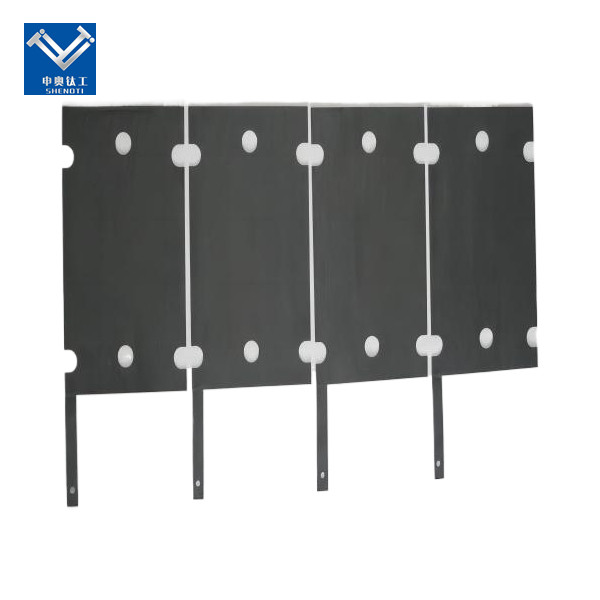
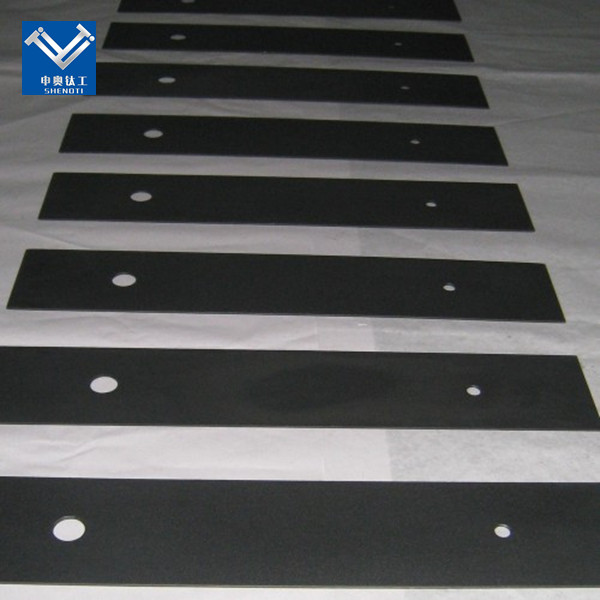
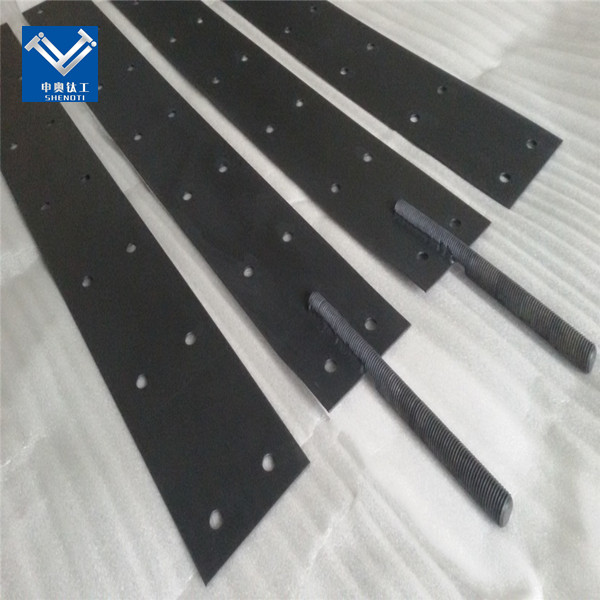
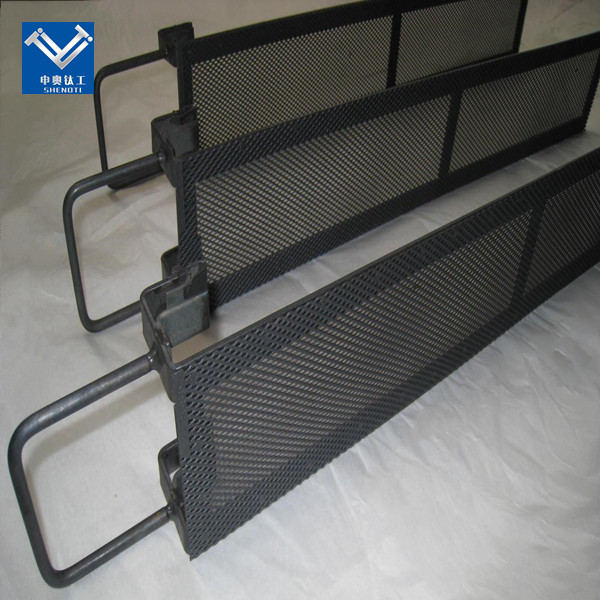
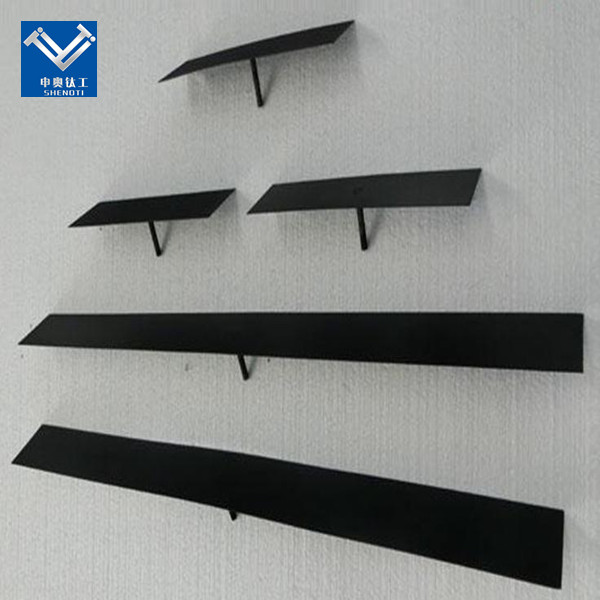
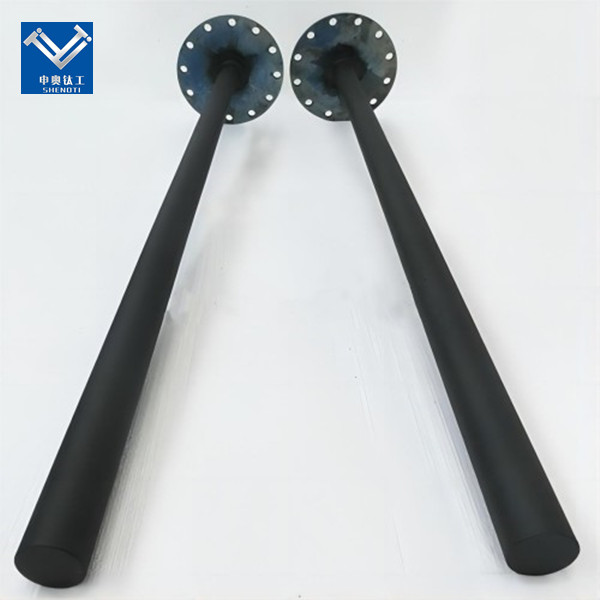
The titanium anode used for PCB copper plating, also known as size stable anode (DSA) or MMO (mixed metal oxide) anode, is an insoluble electrode made of high-purity titanium (Gr.1/TA1) substrate coated with iridium tantalum (IrO) mixture ₂ - Ta ₂ O ₅ oxide.
working principle
Unlike soluble copper anodes dissolved in a bath, our titanium anode acts as a catalyst for oxygen evolution reaction (OER). During the electroplating process:
Cathode (PCB): The reduction of Cu ² ⁺ ions forms a uniform copper layer.
Anode (titanium): Water oxidation produces O ₂, and the anode itself does not dissolve.
This stability brings benefits:
Zero anode sludge: eliminates bath filtration and pollution.
Fixed geometric shape: The anode cathode spacing is consistent, and the coating is uniform.
High current density: operates at 500-1000 A/m ² (100-250 A/m ² for copper anodes) to achieve faster electroplating.
Long service life: It can be used continuously for 12-24 months before repainting.
5 non-negotiable standards for selecting PCB titanium anodes
1. Substrate purity and mechanical integrity
Material: Only grade 1 (TA1) pure titanium (99.6%+Ti). Gr.2 or lower grades corrode faster in acidic sulfate baths.
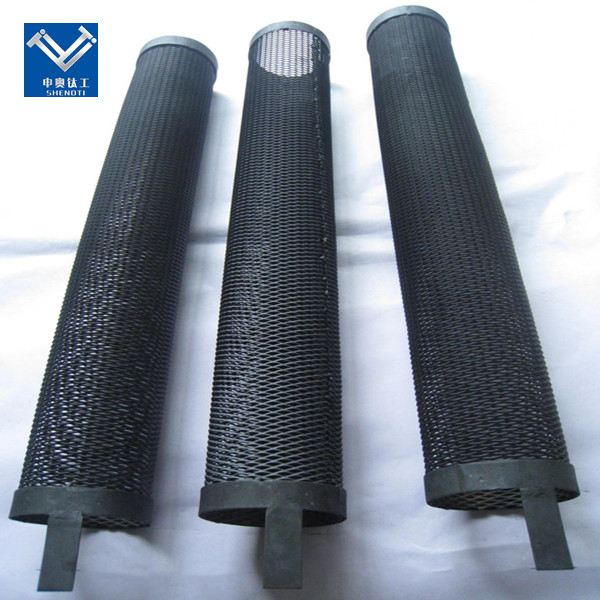
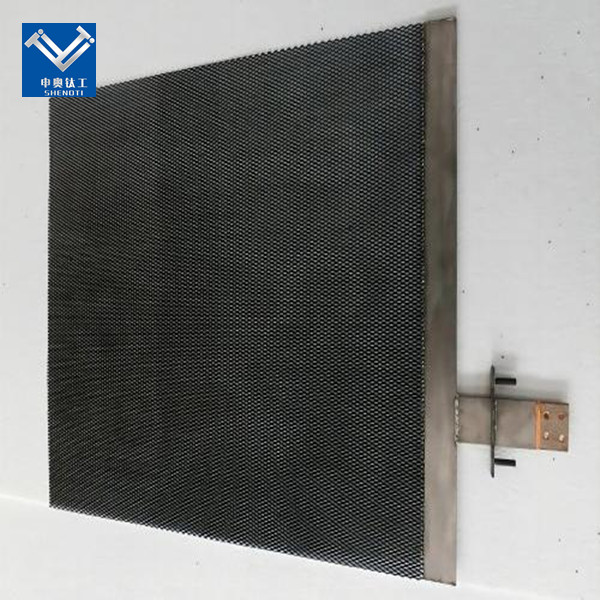
Form: For reverse pulse electroplating, use expanded titanium mesh (30-60% opening area). The mesh structure ensures uniform current distribution on high-density PCB panels.
Thickness: Rigid 1.0-2.0 millimeters; Thinner grids will warp under high current.
Factory inspection: Our anodes use cold-rolled titanium plates with a surface finish of Ra ≤ 0.5 μ m to achieve coating adhesion.
2. Coating composition and thickness
Formula: IrO ₂ - Ta ₂ O ₅ (70:30 ratio) is the industry standard for acidic copper plating on PCBs. Iridium driven electrocatalytic activity; Tantalum can stabilize coatings and prevent reverse pulse damage.
Thickness: 2.0-5.0 μ m (control ± 0.2 μ m). Too thin → short lifespan; Too thick → high cost, poor adhesion.
Deposition method: Thermal decomposition is carried out in a vacuum furnace (450-550 ° C). Surface area "mud cracking" structure, achieving low overpotential.
Test data: Our coating has an oxygen evolution overpotential of ≤ 1.2 V at 1000 A/m ², which reduces energy consumption by 12-18% compared to ordinary anodes.
3. Current density and pulse compatibility
Maximum operating current: 500-1000 A/m ² (forward); 1500-3000 A/m ² (reverse pulse).
Pulse elasticity: The coating must be able to withstand reverse pulses of 1-5ms without delamination. Our double-layer coating design (Ir Ta top, Ti-O buffer layer) can resist reverse current corrosion.
Factory specification: The anode undergoes over 500 hours of 100% pulse testing before shipment.
4. Corrosion resistance and compatibility with plating solution
Acid resistance: resistant to H ₂ SO ₄ (50-150g/L) and copper sulfate ₄ (100-300 g/L), at temperatures of 20-60 ° C.
Additive stability: Will not accelerate the decomposition of leveling agents, whitening agents, or carriers. Our low catalyst coating can reduce additive consumption by 20-30%.
Prohibition: Fluoride, cyanide, or high phosphate salt baths can damage the titanium passivation layer, do not use them in these systems.
5. Lifespan and recyclability
Service life: 12-24 months (depending on current density and maintenance).
Reusable: Titanium substrate can be 100% reused. We provide factory recoating services at 60% of the cost of new anodes.
Warranty: We offer a 12-month performance warranty for coating failures (excluding mechanical damage).
Common errors and quality issues
After analyzing over 1200 failed anode installations, the following are the 4 most costly mistakes made by PCB manufacturers and our solutions:
1. Use a universal anode for reverse pulse electroplating
Problem: Standard Ir Ru coatings will delaminate within 3-6 months under reverse pulse. High reverse current will attack the coating substrate interface.
Our solution: a double-layer composite coating (Ir Ta top+Ti-O buffer layer) and a pure titanium backing mesh to absorb reverse current stress.
Result: The lifespan of the reverse pulse line is extended by 2 times.
2. Poor adhesion and porosity of the coating
Problem: Low cost anodes have high porosity (≥ 5%). Acid penetration, corrosion of titanium substrate → expansion, peeling, and bath contamination.
Our solution: 5-step pretreatment (degreasing → pickling → etching → activation → drying) and vacuum thermal deposition to achieve a porosity of<1%.
Test results show that our anode has passed the 48 hour salt spray test without corrosion.
3. Insufficient current distribution (thin center, thick edges)
Problem: Solid titanium plate or low opening area mesh causes top/bottom current imbalance → thickness variation of through-hole exceeds 20%.
Our solution: Optimized the extended grid (45% open area) and multi-point electrical connections to minimize voltage drop on the anode surface.
Result: The thickness variation of the 18 × 24 inch panel is ≤ 5%.
4. Ignoring regional process differences
North America: Focusing on high-capacity, high aspect ratio (10:1+) HDI boards → Prioritizing pulse elasticity and uniformity.
Europe: Strictly comply with REACH and RoHS regulations → 100% heavy metal free coating and complete material traceability.
Asia: Cost sensitive mixed production → using standard Ir Ta (2 μ m) coating to balance performance and price.
Our advantage: We customize coating thickness and mesh design for typical process parameters in each region.
Real case study: Production speed increased by 30%, cost reduced by 25%
Client: Germany's leading PCB manufacturer (specializing in automotive and industrial PCBs)
Challenge: Reverse pulse electroplating line with 12:1 aspect ratio through holes; The old anode results in 25% waste and weekly maintenance of the electrolytic cell.
Solution: Our Ir Ta coated titanium mesh anode (4 μ m coating, 45% open area).
Results after 6 months:
Electroplating speed: increased by 30% through higher current density (from 8 μ m/min to 5.6 μ m/min).
Scrap rate: reduced from 25% to 3.2%.
Additional cost: reduced by 28% (decreased consumption).
Anode replacement: from every 6 months to every 18 months.
Return on investment: Achieved within 4.2 months.
Customized logic: Customize anodes for your production line
We do not sell "one size fits all" anodes. Our customization process ensures a perfect match with your device:
Process review: We will review your plating line type (vertical/horizontal), current density, pulse parameters, plating solution chemical composition, and panel size.
Design optimization:
Mesh/board: uniform mesh; Solid board for high current areas.
Coating thickness: standard 2 μ m; 5 μ m is used for high pulse and high acidity pipelines.
Size: Precision cutting, suitable for your fuel tank (± 0.1mm tolerance).
Sample testing: We provide 2-4 weeks of testing anodes for your production line before placing a full order.
Lifetime support: free installation and maintenance training; Provide 24/7 technical support to global customers.
The titanium anode used for PCB copper plating is not an upgrade, but a necessity for modern high-quality PCB production. They eliminate the pain points of soluble anodes and provide a measurable return on investment.
Final selection list
Substrate: Gr.1 titanium, thickness 1.0-2.0mm, Ra ≤ 0.5 μ m.
Coating: IrO ₂ - Ta ₂ O ₅, 2-5 μ m thick, thermally decomposed, porosity<1%.
Performance: Forward processing of 500-1000 A/m ², backward pulse compatibility.
Warranty: Over 12 months of performance warranty, with the option to repaint.
Supplier: Factory direct sales, with expertise in PCB electroplating and customization capabilities.
Don't let bad anodes drain your profits. Apply for free process review and customized anode quotation immediately. The PCB electroplating expert team of Baoji's bid for the Olympics will:
Analyze the pain points of the current production line.
Provide performance predictions supported by data.
Free sending of anode samples for on-site testing.


YOU MAY LIKE