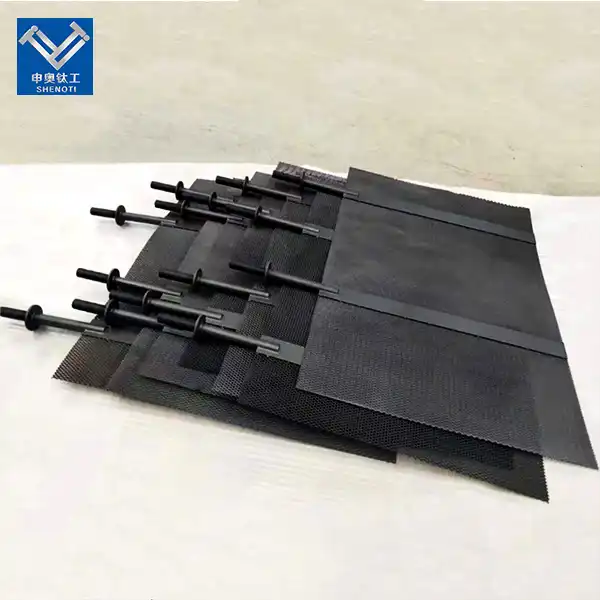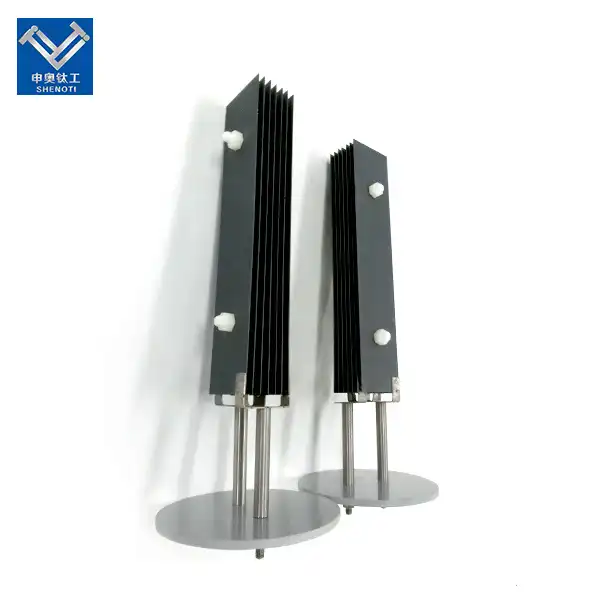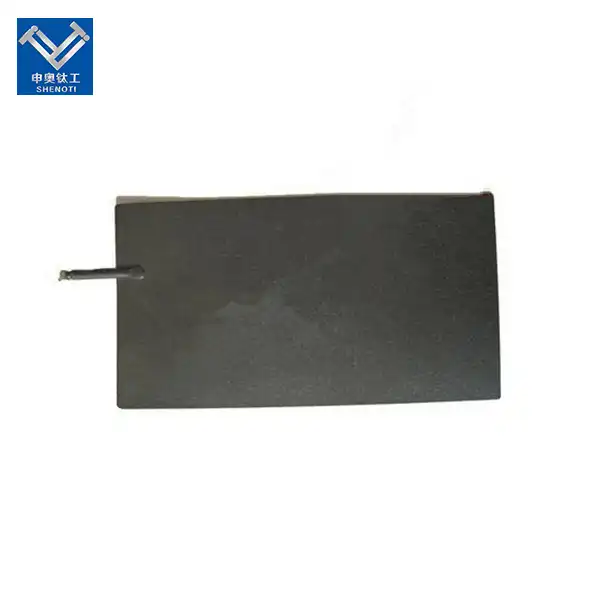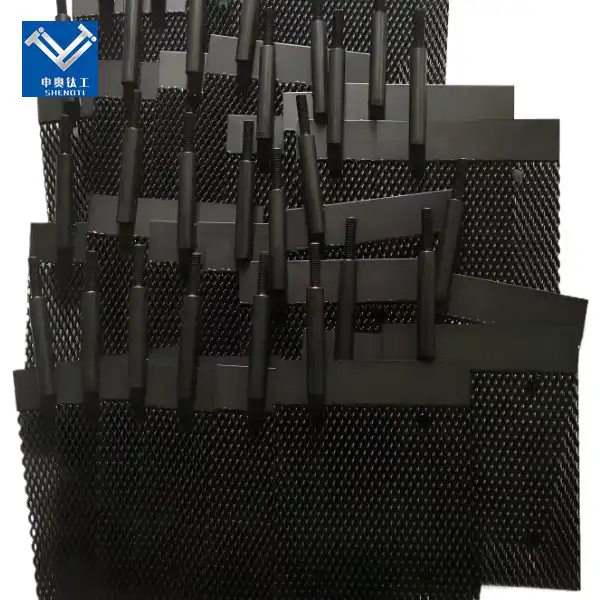
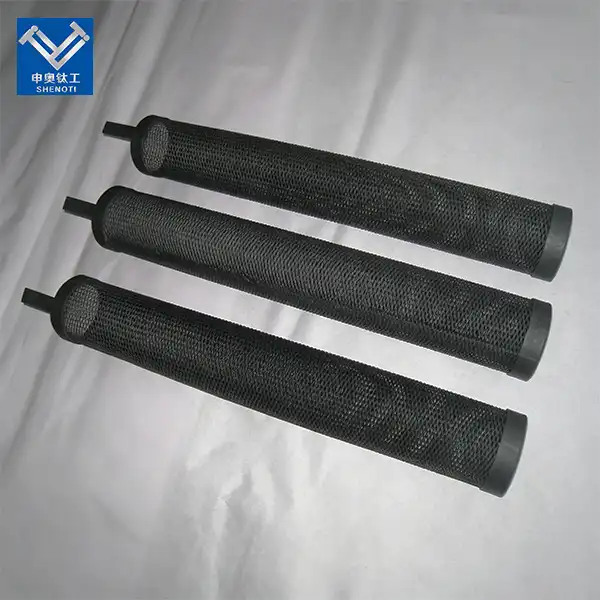
Titanium Mesh Cylinder Anode for Circulating Water Descaling


Coating: Mixed Metal Oxide (MMO)
Coating Structure: Dense and highly conductive catalytic layer
Custom made: Mesh Cylinder (Standard), Plate, Tube, and Customed
Expected Lifespan: Designed for sustained performance over prolonged operational cycles
Advantage:
High electrocatalytic activity
Strong corrosion resistance
Long service life
Dimensionally stable
Titanium Mesh Cylinder Anode for Circulating Water Descaling
In industrial circulating cooling water systems, scale deposition is a major factor leading to decreased heat exchange efficiency, increased energy consumption, and accelerated equipment corrosion. Our Titanium Mesh Cylinder Anode for Circulating Water Descaling at Baoji City ShenAo Metal Materials Co., Ltd. is designed specifically for electrochemical descaling equipment in circulating water systems. It uses Grade 1 or Grade 2 pure titanium expanded mesh or woven mesh rolled and welded into a cylindrical substrate, with an iridium-based mixed metal oxide catalytic coating on the surface. The mesh cylinder structure provides ample flow channels for the circulating water. Working in conjunction with an internal cathode under a DC electric field, the localized alkaline environment generated near the anode promotes the preferential deposition of calcium and magnesium ions in the form of scale on the cathode surface, where it is mechanically removed. At the same time, the active oxygen and active chlorine generated by the anode inhibit bacteria and algae in the water. This anode mesh cylinder is suitable for electrochemical descaling equipment in industrial circulating cooling water, chilled water, and heat exchange systems, serving as a reliable electrode solution for achieving water conservation, emission reduction, and efficient operation and maintenance of circulating water systems.
This product is for B2B Industrial Use Only. Operators should follow relevant chemical safety protocols and electrochemical equipment operation standards.
Technical Specifications
|
Substrate Material |
Grade 1/2 Pure Titanium Mesh |
|
Coating Type |
Iridium-based Mixed Metal Oxide (IrO₂-MMO), formulation optimizable per water quality conditions |
|
Coating Thickness |
5–15 μm (adjusted based on current density and water quality conditions) |
|
Coating Loading |
10–120 g/m² (customized for rated current density) |
|
Current Density Range |
20–200 A/m² (adjusted based on water hardness and treatment flow rate) |
|
Operating Voltage Window |
0.5 V–2.5 V (typical circulating water descaling potential range) |
|
Cylinder Dimensions |
Φ100mm–Φ500mm (common), length customized per design, other specifications available upon request |
|
Mesh Type |
Expanded mesh, woven mesh, open area ratio 30%–60% |
Why Choose Our Titanium Anodes?
- Mesh Cylinder Structure Optimized for Water Flow Distribution and Descaling Efficiency
The titanium mesh cylinder is formed by rolling and welding, with uniformly distributed mesh openings providing 360° omnidirectional flow channels for the circulating water. Water flows smoothly through the cylinder wall, forming a uniform electric field distribution with the internal cathode to ensure sufficient deposition and removal of calcium and magnesium ions on the cathode surface. The high open area ratio of the mesh cylinder structure resists clogging by scale and suspended solids, making it suitable for long-term continuous operation in circulating water systems. - Dual Function of Electrochemical Descaling and Biocide Action
During operation, the anode mesh cylinder not only promotes preferential scale deposition on the cathode surface through the electric field effect, but also generates active oxygen and trace active chlorine at the anode surface, providing continuous inhibition of bacteria, algae, and other microorganisms in the circulating water. This dual function contributes to reducing the dosage of chemical scale inhibitors and biocides, lowering the operating costs and environmental burden of circulating water systems. - Chemical Stability in Neutral to Slightly Alkaline Circulating Water
Industrial circulating cooling water is typically neutral to slightly alkaline, containing certain concentrations of chloride ions, sulfate, and dissolved oxygen, exerting continuous corrosive attack on metallic electrodes. Our iridium-based coating maintains a low corrosion rate and good structural integrity in such water environments, making it suitable for long-term stable operation of circulating water descaling equipment. - Customized Cylinder Design and Convenient Installation
We can customize the diameter, length, mesh specifications, and conductive connection method of the anode mesh cylinder based on your descaling equipment dimensions, treatment flow rate, and installation requirements. The cylinder can be designed with single-end or double-end flanged connections for rapid integration with existing descaling equipment and convenient maintenance and replacement.
|
|
|
|
|
|
|
|
|
|
|
|






Real-World Applications
- Water Treatment and Disinfection: Used in electrochemical descaling units for industrial circulating cooling water systems, covering online descaling and microbial control on the circulating water side of cooling towers and heat exchangers in the petrochemical, power, steel, and chemical industries.
- Industrial Wastewater Treatment: Used in electrochemical water stabilization equipment for chilled water systems and closed circulating water loops, covering cooling capacity transfer circulating water treatment in data centers, pharmaceutical plants, and food processing industries.
- Hydrometallurgy and Metal Recovery: Used in electrochemical descaling and auxiliary heavy metal ion removal for circulating water systems in the metallurgy and electroplating industries, covering comprehensive water quality management of smelting flue gas acid-making circulating water and electroplating workshop circulating cooling water.
- Industrial Metallic Structure Protection: Used in electrochemical descaling units for central air conditioning cooling water and chilled water systems in commercial buildings, covering water conservation and emission reduction retrofits for HVAC circulating water systems in large shopping malls, office buildings, and hotels.


The ShenAo Advantage
18 Years of Fabricating Excellence
Since 2008, we've specialized in valuable metal coated titanium anodes from our office in Baoji's "China Titanium Valley." Our develop bimetallic hazardous welding innovation and progressed coating forms provide items you can trust.
Customization for Your Correct Needs
Every generation line is diverse. We give custom fitted arrangements coordinating your particular current thickness necessities, electrolyte composition, and operational parameters. Whether you require little bunch testing or full-scale generation amounts, we convey on time.
Cost-Effective Lifecycle Management
When coating exhaustion happens, you do not dispose of the whole anode. Our proficient recoating benefit strips the ancient oxide layer, sandblasts the substrate, and reapplies new MMO coating. This expands resource life and decreases your add up to taken a toll of proprietorship considerably.

Frequently Asked Questions
Q: How does the titanium anode mesh cylinder achieve descaling in electrochemical descaling?
A: The principle of electrochemical descaling utilizes a DC electric field to create a localized strongly alkaline environment on the cathode surface, promoting the conversion of bicarbonate ions in the water to carbonate ions, which combine with calcium and magnesium ions to form calcium carbonate and magnesium hydroxide deposits on the cathode surface. These deposits are then periodically removed by scraping or flushing. The anode mesh cylinder serves as the counter electrode, providing a stable oxygen evolution reaction to complete the current circuit, while the active oxygen and active chlorine generated simultaneously inhibit microorganisms in the water. This process does not involve the addition of chemical agents and represents a green, physical descaling method.
Q: How are the open area ratio and mesh specifications of the cylinder selected?
A: The selection of mesh specifications requires comprehensive consideration of the treatment flow rate, flow velocity, and electric field uniformity. A higher open area ratio facilitates water flow and gas venting, but an excessively low open area ratio reduces the effective reaction area. An open area ratio between 30% and 60% is generally recommended, with mesh opening sizes determined based on the equipment cylinder diameter and internal structure design. You can provide the cylinder design parameters and treatment flow rate of your descaling equipment, and our engineers will recommend matched mesh specifications.
Q: What factors affect the service life of the anode mesh cylinder?
A: Key factors include the chloride ion concentration, pH value, operating current density, and water temperature of the circulating water. Higher chloride ion concentration in the circulating water increases the proportion of the chlorine evolution side reaction at the anode. The content of solid particulates and suspended solids in the water also affects the cleanliness of the cylinder surface. It is recommended to install filtration equipment at the circulating water inlet and periodically inspect the cylinder surface condition, arranging online cleaning as needed.
Q: How should the anode mesh cylinder be handled when the coating reaches the end of its service life?
A: The titanium mesh substrate remains stable in the circulating water environment. The old coating can be chemically stripped, and once the substrate passes inspection, it can be recoated to restore performance to new anode mesh cylinder levels. We offer a full-service process including incoming inspection of used anode mesh cylinders, coating stripping, substrate treatment, and recoating.
Contact Us
You need a partner who not only supplies products but also solves your challenges alongside you. Our team is ready to engage with your inquiries and provide a tailored solution. Share your specific needs or key requirements with us today, and let us help you efficiently transform your breakthroughs into commercial value.
Titanium Anode Manufacturer
Email: zh@baojiti.com.cn
WhatsApp: +86-15877696471 (updated)
Products: Titanium Anodes, MMO Titanium Anodes, DSA Coated Titanium Electrodes, Electrolysis Electrodes, Hydrogen Production Electrodes, Wastewater Treatment Titanium Anodes.