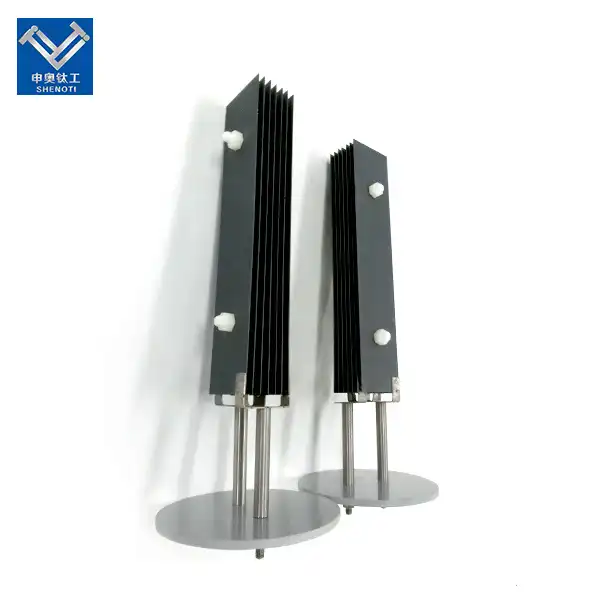
Titanium Anode for Hydrogen Production via Water Electrolysis


Coating: Mixed Metal Oxide (MMO)
Coating Structure: Dense and highly conductive catalytic layer
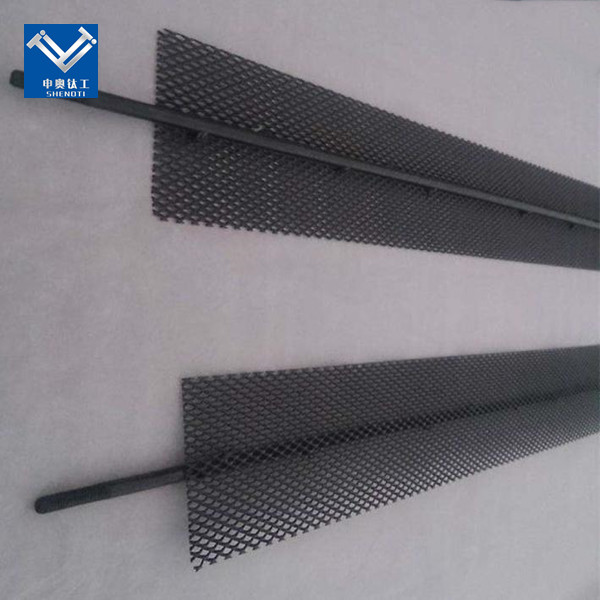
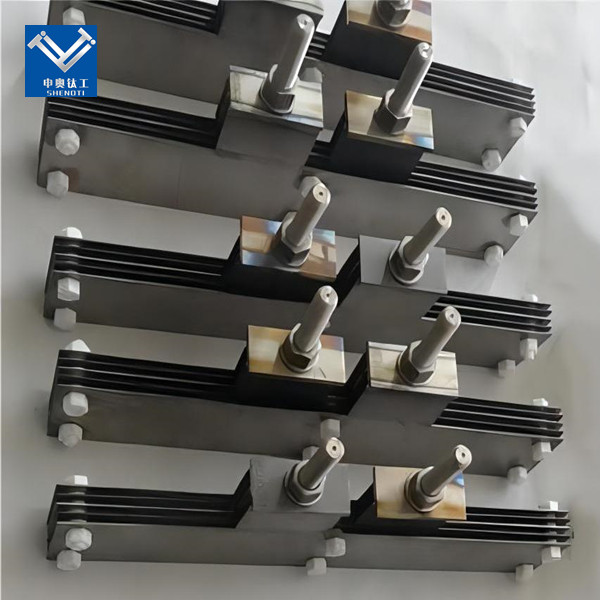
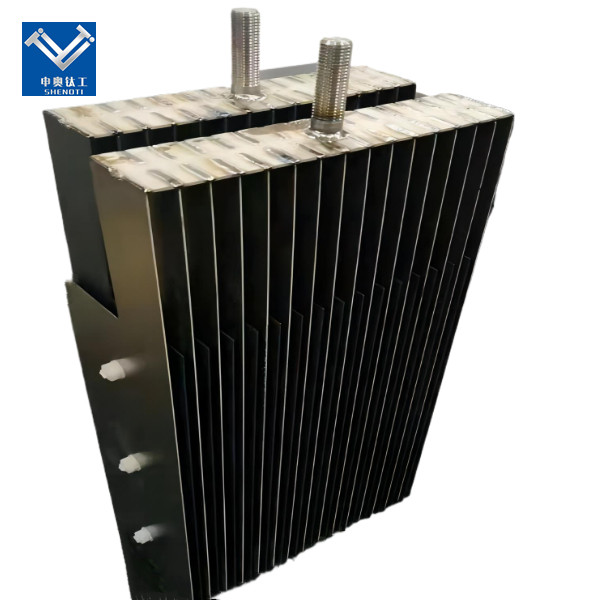
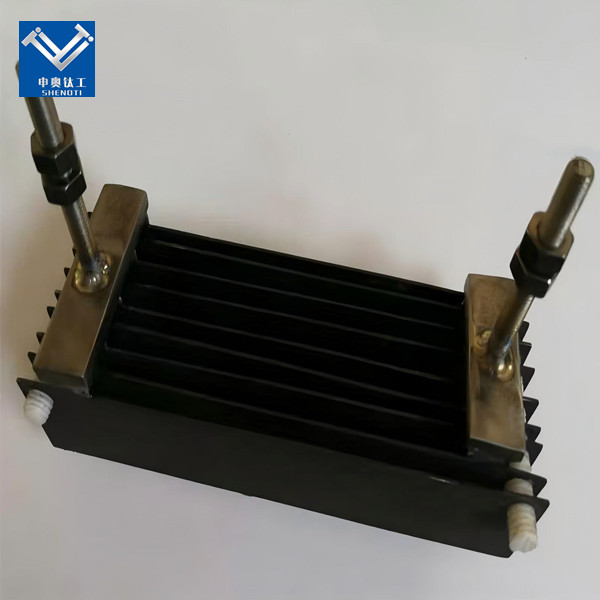
Custom made: Plate, Mesh, Tube, and Customed
Expected Lifespan: Built to maintain functional integrity throughout extended deployment
Advantage:
High electrocatalytic activity
Strong corrosion resistance
Long service life
Dimensionally stable
Titanium Anode for Hydrogen Production via Water Electrolysis
In hydrogen production via water electrolysis, the oxygen evolution catalytic activity and durability of the anode directly determine electrolysis energy consumption and the long-term operational economics of the system. Our Titanium Anode for Hydrogen Production via Water Electrolysis at Baoji City ShenAo Metal Materials Co., Ltd. is designed specifically for the anode side of alkaline water electrolysis and PEM water electrolysis hydrogen production units. It uses Grade 1 or Grade 2 pure titanium as the substrate, with a noble metal oxide catalytic coating on the surface. In alkaline electrolyzers, the coating maintains stable oxygen evolution catalytic activity in high-temperature concentrated alkaline solutions, promoting the oxygen evolution reaction at low overpotential. In PEM electrolyzers, the coating maintains excellent chemical stability and structural integrity at the strongly acidic perfluorosulfonic acid membrane interface, withstanding the demanding conditions of high current density and vigorous oxygen evolution. This anode provides your water electrolysis hydrogen production system with a reliable electrode solution that balances energy efficiency and durability.
This product is for B2B Industrial Use Only. Operators should follow relevant chemical safety protocols and electrolysis operation standards.
Technical Specifications
|
Substrate Material |
Grade 1/2 Pure Titanium |
|
Coating Type |
Iridium-based (IrO₂), Iridium-Tantalum (IrO₂-Ta₂O₅), or Iridium-Ruthenium (IrO₂-RuO₂), customized per electrolyzer type |
|
Coating Thickness |
5–20 μm (adjusted based on current density and electrolyte type) |
|
Coating Loading |
10–200 g/m² (customized for rated current density) |
|
Current Density Range |
1,000–10,000 A/m² (adjusted based on electrolyzer type and designed capacity) |
|
Operating Voltage Window |
1.4 V–2.5 V (typical water electrolysis oxygen evolution potential range) |
|
Anode Shapes |
Plate, Expanded Mesh, Perforated Plate, Custom |
|
Applicable Electrolytes |
30% KOH alkaline solution (alkaline electrolysis), perfluorosulfonic acid membrane (PEM electrolysis) |
Why Choose Our Titanium Anodes?
- Low Oxygen Evolution Overpotential for Reduced Electrolysis Energy Consumption
The anode oxygen evolution overpotential accounts for a significant portion of the total energy consumption in hydrogen production via water electrolysis. Our iridium-based coatings exhibit a low oxygen evolution overpotential in both alkaline and acidic media, enabling stable operation at low cell voltage even at industrial-grade current densities. For megawatt-scale water electrolysis hydrogen production plants, the electricity cost savings from every 0.1V reduction in oxygen evolution overpotential can be noteworthy over long-term operation, directly improving the comprehensive energy consumption indicators and operational economics of hydrogen production. - Long-Term Durability in Alkaline Electrolyzers
Alkaline electrolyzers use 30% KOH solution as the electrolyte, with operating temperatures typically ranging from 60–90°C, placing stringent demands on the alkali corrosion resistance and thermal stability of the anode. Our iridium-ruthenium coatings maintain a stable chemical state in high-temperature concentrated alkaline solutions, without significant component dissolution or passivation due to prolonged immersion and thermal cycling. The protective film formed by self-passivation of the titanium substrate in alkaline environments further enhances the electrode's corrosion resistance, ensuring the long-cycle safe operation of the electrolyzer. - Chemical Stability in the Strongly Acidic Environment of PEM Electrolyzers
The anode side of PEM electrolyzers is in direct contact with the perfluorosulfonic acid membrane, with local pH values that can reach strongly acidic levels, while simultaneously withstanding the demanding conditions of high current density and vigorous oxygen evolution. Our iridium-tantalum coatings exhibit a very low corrosion rate among noble metal oxides under strongly acidic, high-potential conditions, maintaining stable catalytic activity and structural integrity during long-term operation on the anode side of PEM electrolyzers. - Optimized Bubble Management Through Porous Structure
Expanded mesh and perforated plate anodes feature a high open area ratio and favorable surface structure, facilitating the rapid detachment of oxygen bubbles generated during oxygen evolution from the electrode surface and reducing the loss of effective reaction area and additional ohmic voltage drop caused by bubble coverage. This structural advantage is particularly pronounced during high current density operation, contributing to the maintenance of stable cell voltage and current efficiency.
|
|
|
|
|
|
|
|
|
|
|
|




Real-World Applications
- Renewable Energy Hydrogen Production: Used as the anode assembly in water electrolysis hydrogen production units powered by wind, solar, and other renewable energy sources, covering large-scale green hydrogen production bases, integrated wind-solar-hydrogen-storage projects, and distributed renewable hydrogen refueling stations, providing stable oxygen evolution catalytic activity for electrolyzers under fluctuating power input.
- Industrial By-Product Hydrogen Purification and Hydrogen Refueling Station Integration: Used on the anode side of industrial by-product hydrogen electrolytic purification units and on-site hydrogen generation systems at refueling stations, covering the purification of by-product hydrogen from steel, chemical, and other industries, as well as online hydrogen production equipment for fuel cell vehicle refueling stations.
- Hydrogen Metallurgy and Industrial Decarbonization: Used in water electrolysis hydrogen production units for industrial decarbonization scenarios such as steelmaking, ammonia synthesis, and methanol production, providing green hydrogen feedstock for high-temperature thermochemical processes and replacing fossil-based reducing agents and raw materials.
- Hydrogen Energy Storage and Distributed Energy: Used in electrolytic hydrogen production modules within hydrogen energy storage systems, covering grid peak-shaving storage, backup power, and off-grid energy supply scenarios, converting surplus electricity into hydrogen for storage and enabling cross-period energy dispatch.


The ShenAo Advantage
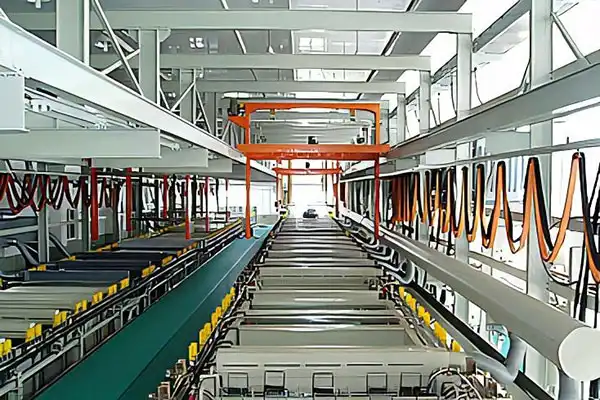
18 Years of Fabricating Excellence
Since 2008, we've specialized in valuable metal coated titanium anodes from our office in Baoji's "China Titanium Valley." Our develop bimetallic hazardous welding innovation and progressed coating forms provide items you can trust.
Customization for Your Correct Needs
Every generation line is diverse. We give custom fitted arrangements coordinating your particular current thickness necessities, electrolyte composition, and operational parameters. Whether you require little bunch testing or full-scale generation amounts, we convey on time.
Cost-Effective Lifecycle Management
When coating exhaustion happens, you do not dispose of the whole anode. Our proficient recoating benefit strips the ancient oxide layer, sandblasts the substrate, and reapplies new MMO coating. This expands resource life and decreases your add up to taken a toll of proprietorship considerably.

Frequently Asked Questions
Q: What are the differences in anode coating requirements between alkaline electrolysis and PEM electrolysis?
A: Alkaline electrolyzers use 30% KOH solution with operating temperatures of 60–90°C, requiring the anode coating to have excellent alkali corrosion resistance and thermal stability, typically using iridium-ruthenium coatings. The anode side of PEM electrolyzers is in contact with the strongly acidic perfluorosulfonic acid membrane, requiring the coating to have a very low corrosion rate under strong acid and high potential conditions, typically using iridium-tantalum coatings. The formulation and iridium loading of both coatings are customized according to the electrolyzer type and operating current density.
Q: How significantly does the oxygen evolution overpotential of the anode affect energy consumption in water electrolysis for hydrogen production?
A: The oxygen evolution overpotential is a significant component of the energy consumption in hydrogen production via water electrolysis. At industrial-grade current densities, every 0.1V reduction in oxygen evolution overpotential can reduce unit hydrogen production electricity consumption by approximately 4–5%. For megawatt-scale electrolysis units, the cumulative effect of this saving over long-term operation is noteworthy. Our coatings strike a balance between activity and stability through formulation optimization, minimizing oxygen evolution overpotential as much as possible while ensuring service life.
Q: How does the open structure of the anode affect water electrolysis performance?
A: The porous structure facilitates the rapid detachment of oxygen bubbles generated during oxygen evolution from the electrode surface, reducing the loss of effective reaction area and additional ohmic voltage drop caused by bubble coverage. Bubble management is particularly important during high current density operation. The open area ratio and pore size distribution of expanded mesh and perforated plate anodes can be customized according to the electrolyzer design to achieve optimal bubble detachment and electrolyte flow performance.
Q: How should anodes be handled when the coating reaches the end of its service life?
A: The titanium substrate remains stable in both alkaline and acidic electrolysis environments. The old coating can be chemically stripped, and once the substrate passes inspection, it can be recoated to restore performance to new-anode levels. We offer a full-service process including incoming inspection of used anodes, coating stripping, substrate treatment, and recoating, helping you reduce the long-term electrode renewal costs of your water electrolysis hydrogen production unit.
Contact Us
You need a partner who not only supplies products but also solves your challenges alongside you. Our team is ready to engage with your inquiries and provide a tailored solution. Share your specific needs or key requirements with us today, and let us help you efficiently transform your breakthroughs into commercial value.
Titanium Anode Manufacturer
Email: zh@baojiti.com.cn
WhatsApp: +86-15877696471 (updated)
Products: Titanium Anodes, MMO Titanium Anodes, DSA Coated Titanium Electrodes, Electrolysis Electrodes, Hydrogen Production Electrodes, Wastewater Treatment Titanium Anodes.