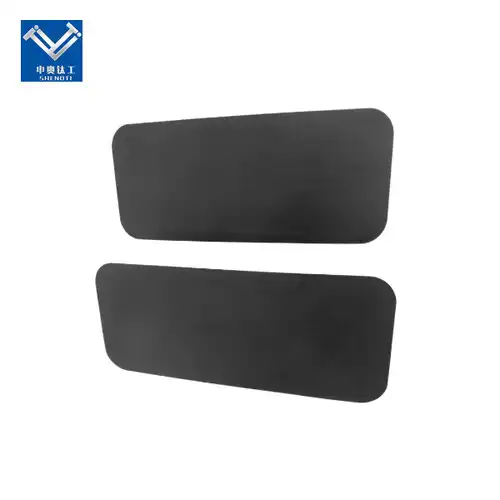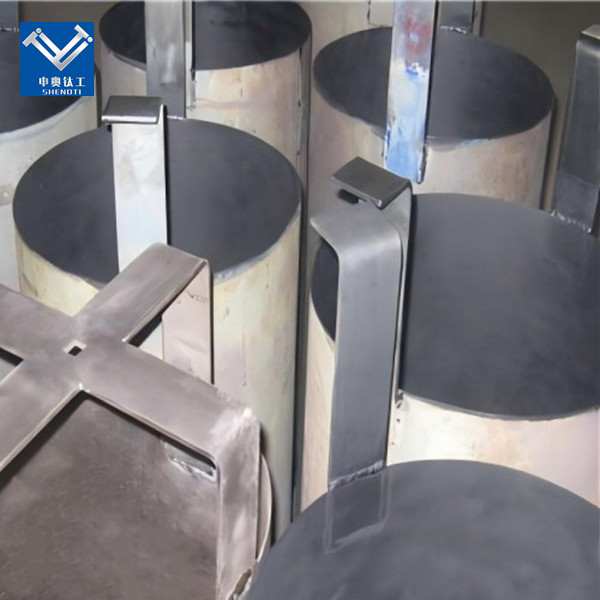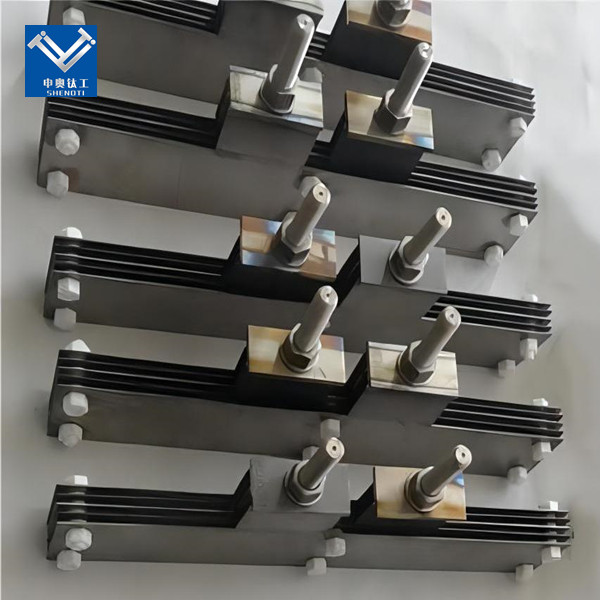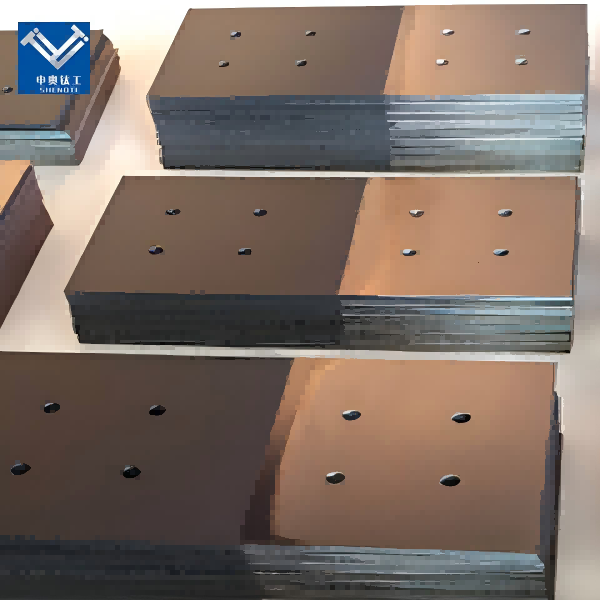
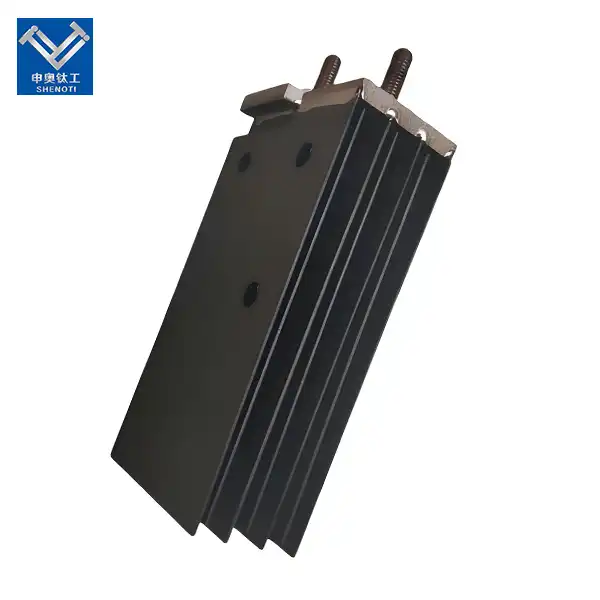
Titanium Electrolytic Cell for Sodium Hypochlorite Generator


Coating: Mixed Metal Oxide (MMO)
Coating Structure: Dense and highly conductive catalytic layer
Custom made: Tubular, Plate, Mesh, and Customed
Expected Lifespan: Designed for sustained performance over prolonged operational cycles
Advantage:
High electrocatalytic activity
Strong corrosion resistance
Long service life
Dimensionally stable
Titanium Electrolytic Cell for Sodium Hypochlorite Generator
In on-site sodium hypochlorite generation equipment, the electrolytic cell serves as the core reaction unit, with its design rationality and material durability directly determining the available chlorine output, energy consumption level, and long-term operational reliability of the equipment. Our Titanium Electrolytic Cell for Sodium Hypochlorite Generator at Baoji City ShenAo Metal Materials Co., Ltd. is designed specifically for the dilute brine electrolysis chlorine generation process. It uses Grade 1 or Grade 2 pure titanium for the cell body and electrode substrates, with a ruthenium-iridium mixed metal oxide catalytic coating on the anode surface. The electrolytic cell features an optimized electrode spacing and flow channel design, enabling uniform distribution of dilute brine between electrodes and efficient active chlorine generation at the anode while maintaining low cell voltage. The complete electrolytic cell maintains stable electrochemical performance and structural integrity in chlorine-containing brine environments, minimizing the risk of metal ion dissolution, and is suitable for various commercial and industrial-grade sodium hypochlorite generation equipment.
Technical Specifications
|
Electrode Substrate |
Grade 1/2 Pure Titanium |
|
Anode Coating |
Ruthenium-Iridium Mixed Metal Oxide (RuO₂-IrO₂) |
|
Coating Thickness |
5–15 μm (adjusted based on current density and brine concentration) |
|
Coating Loading |
10–150 g/m² (customized for rated available chlorine output) |
|
Current Density Range |
100–1,500 A/m² (adjusted based on generator specification and chlorine output) |
|
Operating Voltage Window |
0.5 V–2.0 V (typical dilute brine electrolysis potential range) |
|
Cell Structure |
Filter-press, monopolar, bipolar, tubular, customizable |
Why Choose Our Titanium Anodes?
- Optimized Electrode Spacing and Flow Channel Design
The interior of the electrolytic cell features a proven electrode spacing and flow channel layout, enabling uniform distribution of dilute brine across the electrode surfaces. This design helps reduce concentration polarization effects, maintain stable cell voltage, and allows the active chlorine generated at the anode to exit the electrode surface quickly with the water flow, reducing side reaction losses and improving the current efficiency of available chlorine output. - High Chlorine Evolution Activity of the Ruthenium-Iridium Coating
The anode uses a ruthenium-iridium mixed metal oxide coating with a very low chlorine evolution overpotential in dilute brine systems. Compared to graphite or stainless steel electrodes, this significantly reduces cell voltage at the same current density, thereby lowering equipment operating power consumption. The introduction of the iridium component also enhances the coating's durability in the oxygen evolution side reaction environment, extending the electrolytic cell maintenance interval. - Long-Term Reliability of the All-Titanium Structure in Brine Environments
Both the cell body and electrode substrates are fabricated from pure titanium, providing excellent corrosion resistance in chlorine-containing brine environments. The naturally formed passive film on the titanium surface remains stable under normal electrolysis conditions, minimizing the dissolution of metal ions into the generated sodium hypochlorite solution and contributing to consistent disinfectant solution quality. - Modular Design for Easy Maintenance and Capacity Expansion
The electrolytic cell can adopt a monopolar or multi-polar modular design, allowing equipment manufacturers to flexibly configure the number of electrode sets according to different chlorine output requirements. The electrode assembly of an individual module can be independently removed for cleaning or replacement, reducing the operational difficulty and time cost of routine maintenance.
|
|
|
|
|
|
|
|
|
|
|
|




Real-World Applications
- Municipal Water Supply and Urban Wastewater Treatment Disinfection: Used for on-site sodium hypochlorite generation in drinking water plants, municipal wastewater treatment facilities, and reclaimed water reuse systems, covering terminal chlorination of potable water pipelines, effluent disinfection at wastewater treatment plants, and microbial control in reclaimed water systems, replacing liquid chlorine and commercial hypochlorite dosing for improved operational safety.
- Power Plant and Industrial Circulating Cooling Water Biocide Treatment: Used in circulating cooling water systems of thermal power plants, nuclear power stations, and industrial facilities in the petrochemical and steel sectors, covering biofouling control in condenser cooling water pipelines, Legionella suppression in cooling towers, and microbial-induced corrosion protection in industrial heat exchangers, achieving continuous biocidal and algicidal efficacy through on-site electro-generation of active chlorine.
- Food, Beverage, and Agricultural Product Processing Sanitation: Used for sanitary disinfection in food processing plants, beverage filling lines, livestock and poultry slaughterhouses, and dairy production facilities, covering CIP cleaning and disinfection of food-contact surfaces, sterilization of raw material washing water, environmental fogging disinfection in processing workshops, and aseptic water preparation for bottled water filling lines.
- Seawater Desalination and Ship Ballast Water Treatment: Used for electrolytic sodium hypochlorite generation in seawater desalination pretreatment at coastal power plants and ballast water treatment for ocean-going vessels, covering bio-suppression of reverse osmosis membrane feed seawater, inactivation of harmful aquatic organisms in ballast tanks, and shipboard sewage disinfection, compliant with IMO Ballast Water Management Convention requirements.


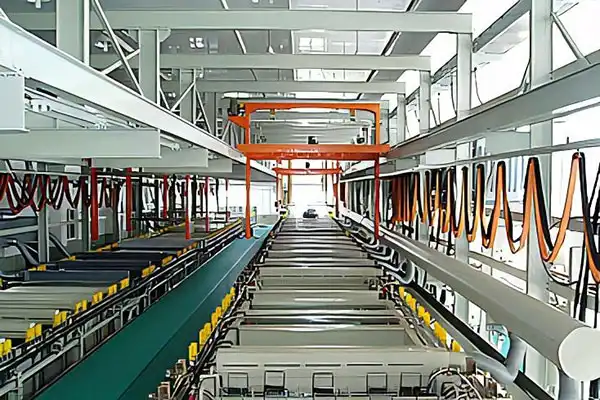
The ShenAo Advantage
18 Years of Manufacturing Excellence
Since 2008, we've specialized in valuable metal coated titanium anodes from our office in Baoji's "China Titanium Valley." Our develop bimetallic hazardous welding innovation and progressed coating forms provide items you can trust.
Customization for Your Correct Needs
Every generation line is diverse. We give custom fitted arrangements coordinating your particular current thickness necessities, electrolyte composition, and operational parameters. Whether you require little bunch testing or full-scale generation amounts, we convey on time.
Cost-Effective Lifecycle Management
When coating exhaustion happens, you do not dispose of the whole anode. Our proficient recoating benefit strips the ancient oxide layer, sandblasts the substrate, and reapplies new MMO coating. This expands resource life and decreases your add up to taken a toll of proprietorship considerably.

Frequently Asked Questions
Q: How do I select the appropriate electrolytic cell specification based on target chlorine output?
A: Available chlorine output is directly related to electrolysis current and anode area. According to Faraday's law, the theoretical chlorine output per ampere-hour is approximately 1.3 grams. You can provide your equipment's target chlorine output, and our engineers will calculate the required total electrode area based on this, and determine the electrode quantity and arrangement for the electrolytic cell in combination with the recommended current density range.
Q: What type of brine is suitable for the electrolytic cell?
A: We recommend using 3%–5% dilute brine prepared from food-grade or refined salt. The brine should be fully dissolved and filtered to remove insoluble impurities. The calcium and magnesium ion content in the brine should be controlled as much as possible, as higher hardness brine tends to form scale on the cathode surface, affecting electrolysis efficiency. We recommend installing a water softening pre-treatment unit at the inlet.
Q: What causes white deposits on the electrode surface after extended operation?
A: White deposits are primarily calcium-magnesium carbonate or hydroxide scale, originating from hardness components in the salt or preparation water that have not been adequately removed. Mild scaling can be removed through periodic polarity reversal operation or dilute acid circulation cleaning. For areas with high water hardness, we recommend enhanced brine softening and pre-treatment measures.
Q: Can the electrolytic cell be customized with non-standard dimensions and special connections?
A: Yes. We can customize the external dimensions, inlet and outlet connection specifications, and electrical connection methods of the electrolytic cell according to your equipment design. Whether it is a micro electrolytic cell integrated into a compact cabinet-type device, or a large electrolytic cell assembly for high-flow industrial-grade generators, all can be designed to your requirements.
Contact Us
You need a partner who not only supplies products but also solves your challenges alongside you. Our team is ready to engage with your inquiries and provide a tailored solution. Share your specific needs or key requirements with us today, and let us help you efficiently transform your breakthroughs into commercial value.
Titanium Anode Manufacturer
Email: zh@baojiti.com.cn
WhatsApp: +86-15877696471 (updated)
Products: Titanium Anodes, MMO Titanium Anodes, DSA Coated Titanium Electrodes, Electrolysis Electrodes, Hydrogen Production Electrodes, Wastewater Treatment Titanium Anodes.