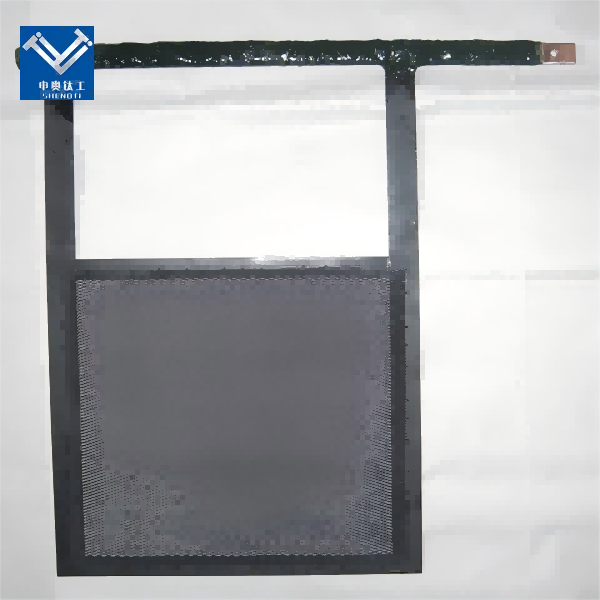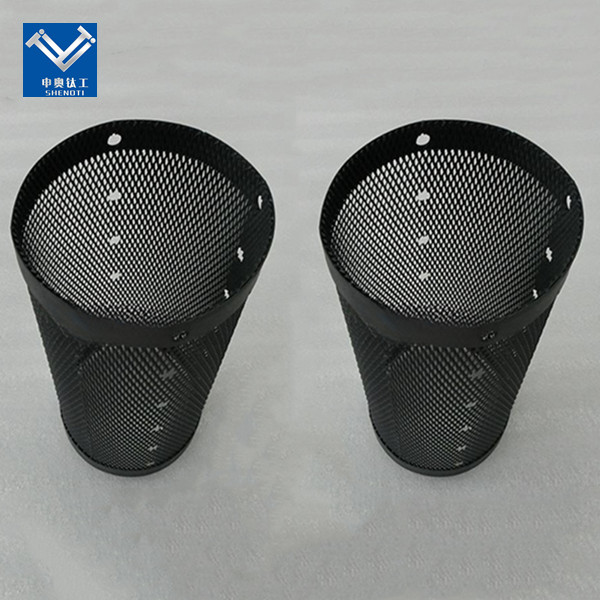
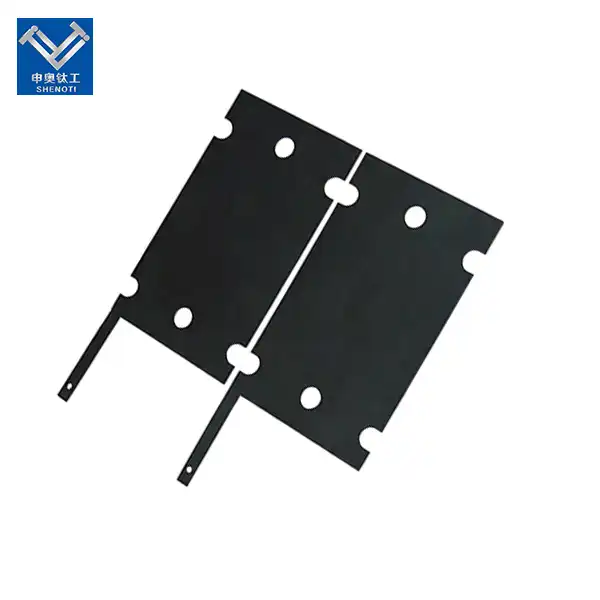
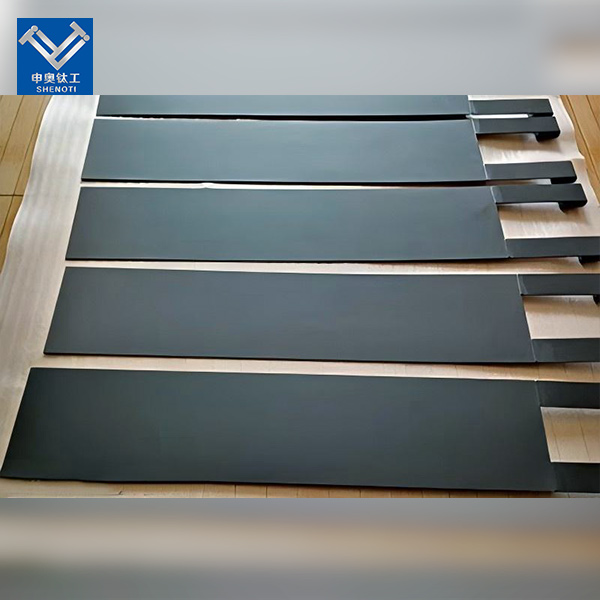
Titanium anode for precious metal electroplating


Coating: Mixed Metal Oxide (MMO)
Coating Structure: Dense and highly conductive catalytic layer
Custom made: Plate, Mesh, Tube, and Customed
Expected Lifespan: Engineered for reliable endurance in continuous service
Advantage:
High electrocatalytic activity
Strong corrosion resistance
Long service life
Dimensionally stable
Titanium Anode for Precious Metal Electroplating
In precious metal electroplating processes, the conductivity uniformity, chemical stability, and impurity control capability of the anode material directly influence coating quality and bath life. Our Titanium Anode for Precious Metal Electroplating at Baoji City ShenAo Metal Materials Co., Ltd. is designed specifically for high-quality electroplating of gold, silver, platinum, rhodium, palladium, and other precious metals and alloy coatings. It uses Grade 1 or Grade 2 pure titanium as the substrate, with an iridium-based or platinum-based noble metal oxide catalytic coating on the surface. The coating maintains a stable oxygen evolution potential in various precious metal plating bath systems, including alkaline, sulfite, and acidic chloride baths, providing uniform current distribution across the plated part surface. The anode maintains a stable chemical state during operation, minimizing the risk of impurity metal ion dissolution and preventing bath contamination and impurity inclusion in the deposit, serving as a reliable electrode solution for ensuring precious metal coating purity and consistency.
This product is for B2B Industrial Use Only. Operators should follow relevant chemical safety protocols and electroplating operation standards. For industrial manufacturing use only, not for direct medical implantation without further regulatory approval.
Technical Specifications
|
Substrate Material |
Grade 1/2 Pure Titanium |
|
Coating Type |
Iridium-based (IrO₂), Iridium-Tantalum (IrO₂-Ta₂O₅), or Platinum-based (Pt), customized per bath system |
|
Coating Thickness |
3–15 μm (adjusted based on current density and bath composition) |
|
Coating Loading |
5–150 g/m² (customized for rated current density) |
|
Current Density Range |
50–1,500 A/m² (adjusted based on plating type and rack design) |
|
Operating Voltage Window |
0.5 V–2.5 V (typical precious metal electroplating potential range) |
|
Anode Shapes |
Plate, Mesh, Rod, Basket, Custom |
|
Applicable Baths |
Alkaline gold/silver plating baths, sulfite gold plating baths, acidic chloride platinum/palladium plating baths, rhodium plating baths |
Why Choose Our Titanium Anodes?
- High-Purity Deposition Environment for Coating Quality
Precious metal electroplating is extremely sensitive to impurity ions in the bath, with trace metal impurities capable of causing color deviation, reduced adhesion, or decreased corrosion resistance in the deposit. Our iridium-based and platinum-based coatings maintain a stable chemical state in various precious metal plating baths, minimizing the risk of impurity metal ions such as iron, copper, and nickel dissolving into the bath, safeguarding deposit purity and consistency of physicochemical properties at the source. - Uniform Current Distribution for Consistent Coating Thickness
Precious metal electroplating often places stringent requirements on coating thickness uniformity, particularly in precision electroplating applications such as electronic connectors and semiconductor packaging, where minor deviations in current distribution may result in localized over-thin or over-thick deposits. Our anode coating features a dense and uniform micro-conductive network, combined with the good conductivity of the titanium substrate, ensuring stable current output across the full anode surface and creating conditions for uniform deposition across all areas of the plated part. - Adaptability Across Multiple Precious Metal Bath Systems
The chemical environments of gold, silver, platinum, palladium, and rhodium plating baths vary significantly, spanning alkaline, neutral sulfite, and strongly acidic chloride systems. Our coating formulations can be customized according to your specific bath type—selecting chemically resistant formulations for alkaline baths, and formulations balancing oxygen evolution activity with chlorine corrosion resistance for acidic chloride baths—ensuring stable service across all process conditions. - Diverse Anode Configurations for Different Plating Lines
We can supply plate, mesh, rod, and basket anodes, compatible with rack plating lines, barrel plating lines, continuous selective plating lines, and reel-to-reel plating lines. Small-sized plate or rod anodes are available for small-batch precision electroplating; custom-sized mesh anode assemblies are available for large-scale continuous production. Based on your tank dimensions and rack arrangement, anode profiles, conductive connection methods, and mounting interfaces can be customized.
|
|
|
|
|
|
|
|
|
|
|
|





Real-World Applications
- Decorative Precious Metal Electroplating Surface Finishing
Used for decorative precious metal electroplating of watches and clocks, jewelry, eyewear frames, and premium sanitary ware fittings, covering gold and rhodium electroplating surface finishing of watch cases and straps, platinum and palladium electroplating whitening treatment of jewelry and silverware, wear-resistant ruthenium and rhodium decorative electroplating of premium eyewear frames and writing instruments, and long-service corrosion-resistant surface treatment with precious metal coatings on bathroom faucets and door handles, providing uniform and stable anode current distribution for batch and barrel electroplating processes. - Functional Precious Metal Electroplating for Electronics and Connectors
Used for functional precious metal electrodeposition on electronic components, printed circuit boards, and connectors, covering conductive and corrosion-resistant gold and palladium electroplating on semiconductor lead frames and connector terminals, hard gold and soft gold surface finishing on printed circuit board gold fingers and pads, low contact resistance silver and palladium electroplating on relay contacts and switch points, and gold electrodeposition for high-frequency connectors and microwave devices. - Integrated Circuit and Semiconductor Packaging Electroplating
Used for precious metal deposition in integrated circuit packaging and wafer-level electroplating processes, covering gold electroplating base coating and palladium surface finishing for ball grid array and chip-scale package solder ball pads, gold electrodeposition on under-bump metallization layers, functional gold structural layer preparation for micro-electromechanical systems devices, and silver electroplating for thermal dissipation and conductive interconnection coatings on semiconductor power devices. - Precious Metal Plating for Aerospace and Medical Devices
Used for high-reliability precious metal electroplating on aerospace precision components and surgical instruments, covering platinum and rhodium electroplating high-temperature oxidation-resistant coatings on aircraft engine turbine blades and combustion chamber components, gold and silver electroplating for environmental corrosion resistance on electrical connectors and microwave waveguides, biocompatible gold and palladium electroplating on surgical instruments and endoscope components, and corrosion-resistant surface finishing with gold and rhodium electroplating on dental implants and orthodontic appliances.



The ShenAo Advantage
18 Years of Fabricating Excellence
Since 2008, we've specialized in valuable metal coated titanium anodes from our office in Baoji's "China Titanium Valley." Our develop bimetallic hazardous welding innovation and progressed coating forms provide items you can trust.
Customization for Your Correct Needs
Every generation line is diverse. We give custom fitted arrangements coordinating your particular current thickness necessities, electrolyte composition, and operational parameters. Whether you require little bunch testing or full-scale generation amounts, we convey on time.
Cost-Effective Lifecycle Management
When coating exhaustion happens, you do not dispose of the whole anode. Our proficient recoating benefit strips the ancient oxide layer, sandblasts the substrate, and reapplies new MMO coating. This expands resource life and decreases your add up to taken a toll of proprietorship considerably.

Frequently Asked Questions
Q: Why are insoluble titanium anodes recommended over soluble precious metal anodes in precious metal electroplating?
A: The main advantages lie in dimensional stability and impurity control. Soluble precious metal anodes may introduce trace impurities during dissolution, and the anode shape changes with dissolution, affecting current distribution uniformity. Titanium anodes are insoluble, maintaining stable dimensions and shape throughout their service life, ensuring consistently uniform current distribution. The precious metal ion concentration in the bath is maintained by replenishing precious metal salts, an approach that allows for more precise control and automated management.
Q: What are the differences in coating selection for different precious metal bath systems?
A: Alkaline gold and silver plating baths typically use iridium-based coatings, balancing oxygen evolution activity with chemical corrosion resistance. Sulfite gold plating baths are neutral to mildly alkaline, also suitable for iridium-based coatings. Acidic chloride platinum and palladium plating baths contain chloride ions and are strongly acidic, using iridium-tantalum coatings to ensure chemical stability in strong acid and chloride-containing environments. Rhodium plating baths are typically strongly acidic sulfate systems, for which iridium-tantalum coatings are recommended. You can provide your bath formulation and process parameters, and our engineers will recommend a matched solution.
Q: What factors affect the service life of titanium anodes?
A: Key factors include bath acidity, operating current density, temperature, and the content of complexing agents, fluoride ions, and organic additives in the bath. Baths containing complexing agents exert relatively strong chemical attack on the coating, and organic additives may form passivating films on the anode surface. We recommend periodically monitoring cell voltage trends and impurity metal ion concentrations in the bath to anticipate coating condition and replacement timing.
Q: How should anodes be handled when the coating reaches the end of its service life?
A: The titanium substrate remains stable in the precious metal plating bath environment. The old coating can be chemically stripped, and once the substrate passes inspection, it can be recoated to restore performance to new-anode levels. We offer a full-service process including incoming inspection of used anodes, coating stripping, substrate treatment, and recoating.
Contact Us
You need a partner who not only supplies products but also solves your challenges alongside you. Our team is ready to engage with your inquiries and provide a tailored solution. Share your specific needs or key requirements with us today, and let us help you efficiently transform your breakthroughs into commercial value.
Titanium Anode Manufacturer
Email: zh@baojiti.com.cn
WhatsApp: +86-15877696471 (updated)
Products: Titanium Anodes, MMO Titanium Anodes, DSA Coated Titanium Electrodes, Electrolysis Electrodes, Hydrogen Production Electrodes, Wastewater Treatment Titanium Anodes.
_1776732179859.jpg "mixed metal oxide coated titanium anodes")