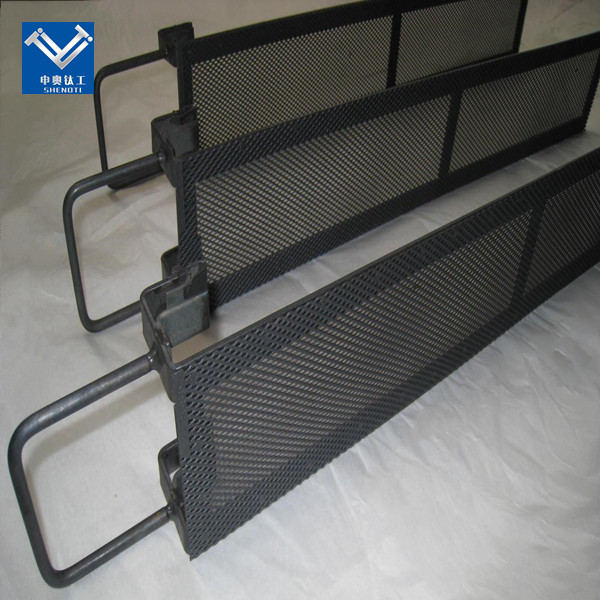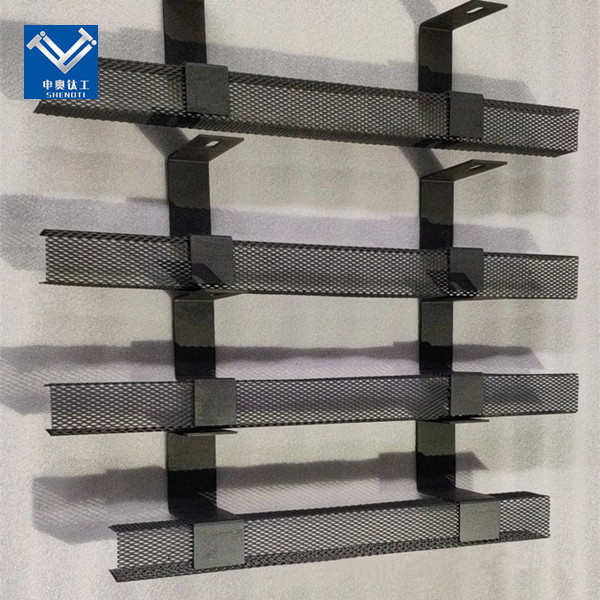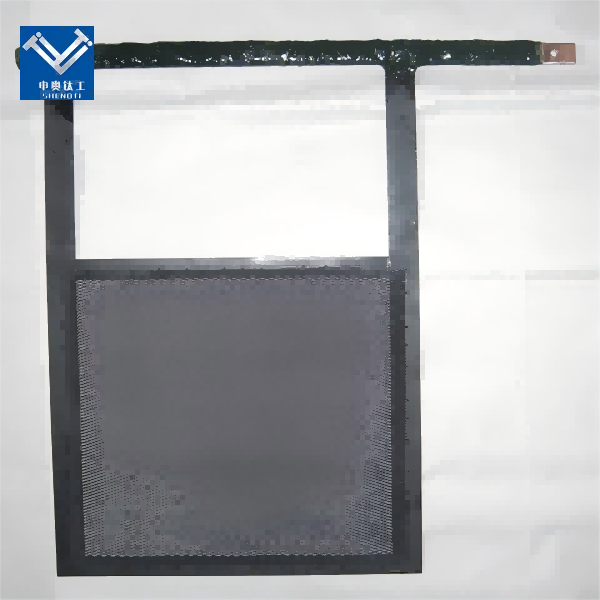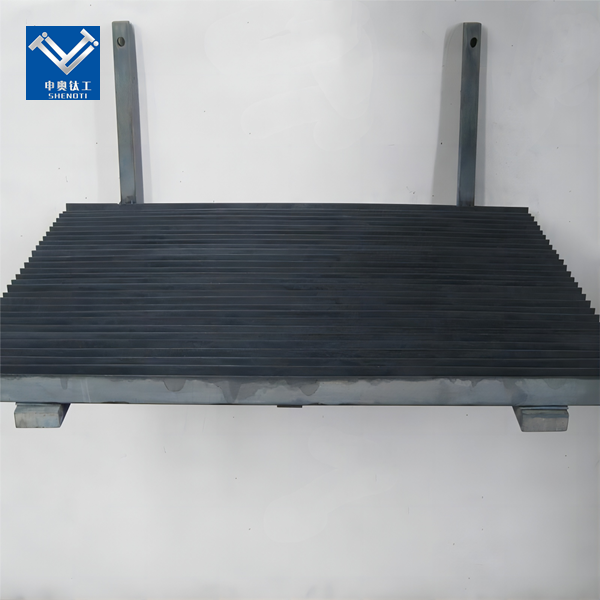
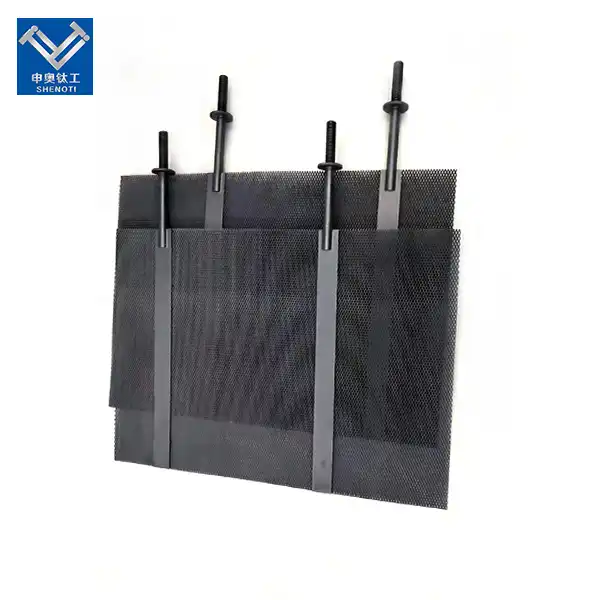
Titanium anode for hydrometallurgy


Coating: Mixed Metal Oxide (MMO)
Coating Structure: Dense and highly conductive catalytic layer
Custom made: Plate, Mesh, Tube, and Customed
Expected Lifespan: Capable of consistent output across long-duration applications
Advantage:
High electrocatalytic activity
Strong corrosion resistance
Long service life
Dimensionally stable
Titanium Anode for Hydrometallurgy
In hydrometallurgical processes, the electrocatalytic activity, chemical stability, and service life of the anode directly determine the current efficiency of metal electrowinning, product purity, and the long-term operating cost of the system. Our Titanium Anode for Hydrometallurgy at Baoji City ShenAo Metal Materials Co., Ltd. is designed specifically for the electrowinning of non-ferrous metals such as copper, nickel, zinc, cobalt, and manganese from acidic or alkaline leach solutions. It uses Grade 1 or Grade 2 pure titanium as the substrate, with a noble metal oxide catalytic coating on the surface. The coating maintains stable oxygen evolution catalytic activity in sulfate, chloride, and mixed acidic electrolyte systems, demonstrating good structural integrity under high current density and in highly corrosive media. Compared to traditional lead alloy anodes, titanium anodes maintain dimensional stability during operation, significantly reduce anode sludge generation, and minimize the risk of contamination to cathode products, making them a reliable electrode solution for achieving efficient and clean metal electrowinning in the hydrometallurgy industry.
This product is for B2B Industrial Use Only. Operators should follow relevant chemical safety protocols and electrolysis operation standards.
Technical Specifications
|
Substrate Material |
Grade 1/2 Pure Titanium |
|
Coating Type |
Iridium-Tantalum (IrO₂-Ta₂O₅) or Iridium-based (IrO₂), customized per electrolyte system |
|
Coating Thickness |
5–20 μm (adjusted based on current density and electrolyte acidity) |
|
Coating Loading |
10–200 g/m² (customized for rated current density) |
|
Current Density Range |
200–3,000 A/m² (adjusted based on target metal type and solution concentration) |
|
Operating Voltage Window |
0.8 V–4.0 V (typical hydrometallurgical electrowinning potential range) |
|
Anode Shapes |
Plate, Mesh, Rod, Custom |
|
Applicable Electrolytes |
Sulfate, chloride, nitrate, and mixed acidic metal salt leach solutions |
Why Choose Our Titanium Anodes?
- Excellent Chemical Stability in Strongly Acidic Leach Solutions
Hydrometallurgical electrolytes are typically high-concentration sulfuric acid, hydrochloric acid, or mixed acid systems with strong acidity and high corrosivity, placing extremely stringent demands on the chemical stability of the anode material. Our iridium-tantalum coatings exhibit a very low corrosion rate under strongly acidic, high-potential conditions, maintaining coating structural integrity during long-term immersion and continuous electrowinning operation, without significant activity decay or substrate exposure caused by sustained attack from the acidic medium, making them suitable for long-cycle uninterrupted operation in hydrometallurgical electrowinning tankhouses. - Significantly Reducing Anode Sludge to Enhance Cathode Product Purity
Traditional lead alloy anodes continuously dissolve during electrowinning and generate lead sulfate or lead oxide sludge, contaminating the electrolyte and forming lead inclusions in the cathode metal product. Our titanium anode operates as an insoluble anode without self-dissolution, significantly reducing anode sludge generation, lowering electrolyte purification frequency and the risk of lead contamination in cathode products, and contributing to the production of high-purity metal products. - Stable Dimensions Ensuring Uniform Electrode Spacing
Lead anodes gradually corrode and deform during electrowinning, causing changes in the anode-cathode gap that subsequently affect current distribution uniformity and cell voltage. Our titanium anode maintains stable dimensions and shape throughout its service life, ensuring consistent spacing for each electrode pair in the cell, providing the foundation for uniform cathode metal deposition and stable cell voltage control. - Coating Customization for Different Metal Electrowinning Systems
Copper, zinc, nickel, and cobalt electrowinning processes each have distinct electrolyte compositions and acidity levels, placing different demands on the catalytic selectivity and chemical stability of the anode coating. We can adjust the coating formulation and loading based on your specific leach solution composition, metal ion concentration, and current density requirements, achieving a balance between oxygen evolution catalytic activity and service life suited to your process.
|
|
|
|
|
|
|
|
|
|
|
|




Real-World Applications
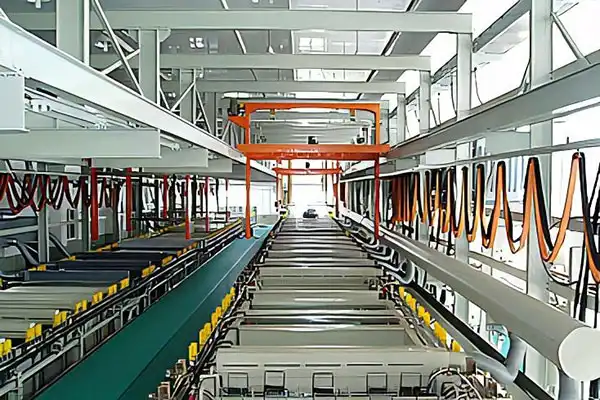
- Copper Electrowinning: Used in the copper electrowinning stage of ore leaching–solvent extraction–electrowinning (SX-EW) processes, covering the electrolytic extraction of copper from low-grade copper ore heap leach solutions, copper concentrate pressure leach solutions, and waste circuit board etching solutions, replacing lead anodes to reduce lead content in cathode copper.
- Zinc Electrowinning: Used in the zinc sulfate solution electrowinning stage of zinc concentrate roasting–leaching–electrowinning processes, covering conventional zinc electrowinning and oxygen pressure leach zinc electrowinning anode applications, providing stable oxygen evolution catalytic activity under high acid and high current density conditions.
- Nickel and Cobalt Electrowinning: Used for the separation and electrowinning of nickel and cobalt from nickel laterite high-pressure acid leach solutions, nickel-cobalt sulfide leach solutions, and spent lithium-ion battery recycling solutions, covering nickel and cobalt metal extraction in sulfate and chloride systems.
- Manganese and Other Non-Ferrous Metal Electrowinning: Used for electrolytic manganese metal production from manganese sulfate solutions, as well as the electrowinning of rare and precious metals such as chromium, indium, and gallium from leach solutions, providing customized coating solutions to meet the diverse process requirements of hydrometallurgy.


The ShenAo Advantage
18 Years of Fabricating Excellence
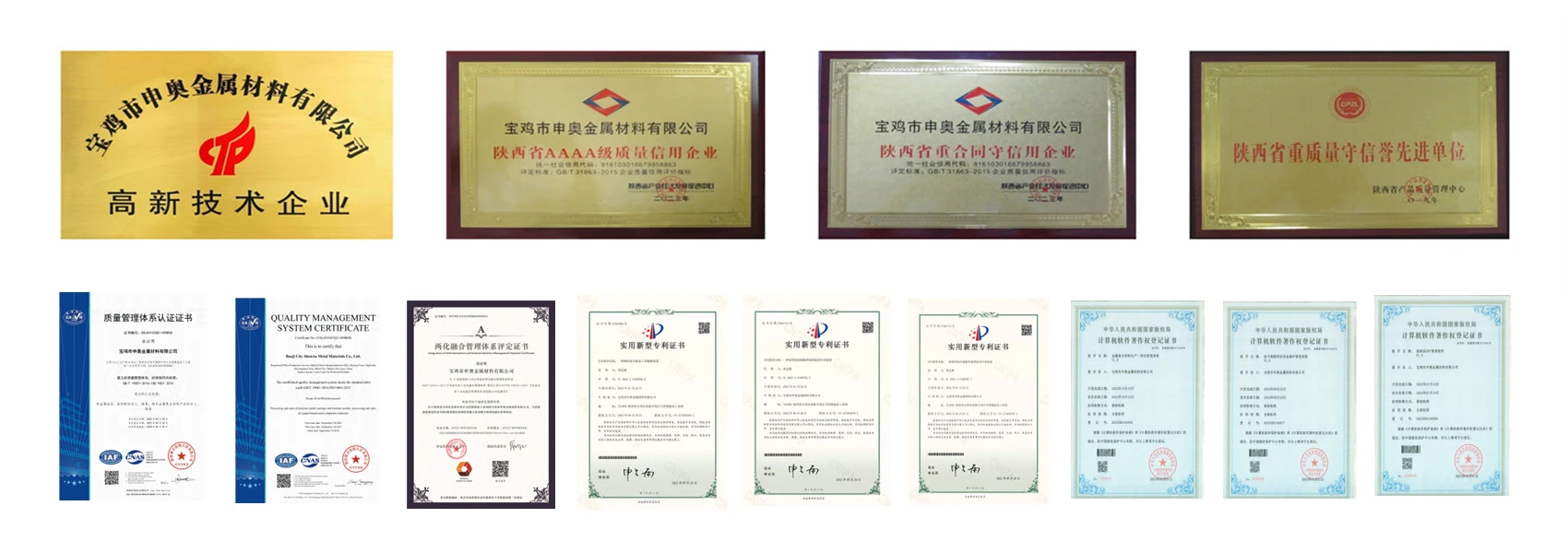
Since 2008, we've specialized in valuable metal coated titanium anodes from our office in Baoji's "China Titanium Valley." Our develop bimetallic hazardous welding innovation and progressed coating forms provide items you can trust.
Customization for Your Correct Needs
Every generation line is diverse. We give custom fitted arrangements coordinating your particular current thickness necessities, electrolyte composition, and operational parameters. Whether you require little bunch testing or full-scale generation amounts, we convey on time.
Cost-Effective Lifecycle Management
When coating exhaustion happens, you do not dispose of the whole anode. Our proficient recoating benefit strips the ancient oxide layer, sandblasts the substrate, and reapplies new MMO coating. This expands resource life and decreases your add up to taken a toll of proprietorship considerably.

Frequently Asked Questions
Q: What impact does replacing lead anodes with titanium anodes have on cathode copper product quality?
A: The most direct impact after replacement is a significant reduction in the lead content of cathode copper. Lead anodes dissolve trace lead ions during electrowinning, which deposit at the cathode, resulting in elevated lead content in the cathode copper. Titanium anodes are insoluble electrodes, avoiding lead dissolution at the source and contributing to the production of low-lead, high-purity cathode copper that meets LME Grade A standards, enhancing product market premium potential.
Q: What are the differences in coating selection for different metal electrowinning systems?
A: It primarily depends on the acidity and anion type of the electrolyte. Copper electrowinning from sulfate systems has relatively high acidity (containing 160–200 g/L sulfuric acid), preferentially using high-iridium-content iridium-tantalum coatings. Zinc electrowinning systems have relatively lower sulfuric acid concentrations but are extremely sensitive to lead contamination, and iridium-tantalum coatings are similarly recommended. Chloride or mixed acid systems can use iridium-based coatings to balance oxygen evolution activity and chlorine corrosion resistance. You can provide your leach solution composition and process parameters, and our engineers will recommend a matched solution.
Q: What factors affect the service life of titanium anodes?
A: Key factors include electrolyte acidity, current density, operating temperature, and impurity ion content (particularly fluoride ions and organic additives). Fluoride ion concentrations exceeding 10 ppm will accelerate corrosion of both the coating and the titanium substrate. Organic additives may form polymer films on the anode surface, leading to increased cell voltage. We recommend regularly monitoring impurity levels in the electrolyte and cell voltage trends to anticipate coating condition and replacement timing.
Q: How should anodes be handled when the coating reaches the end of its service life?
A: The titanium substrate remains stable in the hydrometallurgical electrolyte environment. The old coating can be chemically stripped, and once the substrate passes inspection, it can be recoated to restore performance to new-anode levels. We offer a full-service process including incoming inspection of used anodes, coating stripping, substrate treatment, and recoating, helping you reduce the long-term electrode renewal costs of your electrowinning tankhouse.
Contact Us
You need a partner who not only supplies products but also solves your challenges alongside you. Our team is ready to engage with your inquiries and provide a tailored solution. Share your specific needs or key requirements with us today, and let us help you efficiently transform your breakthroughs into commercial value.
Titanium Anode Manufacturer
Email: zh@baojiti.com.cn
WhatsApp: +86-15877696471 (updated)
Products: Titanium Anodes, MMO Titanium Anodes, DSA Coated Titanium Electrodes, Electrolysis Electrodes, Hydrogen Production Electrodes, Wastewater Treatment Titanium Anodes.