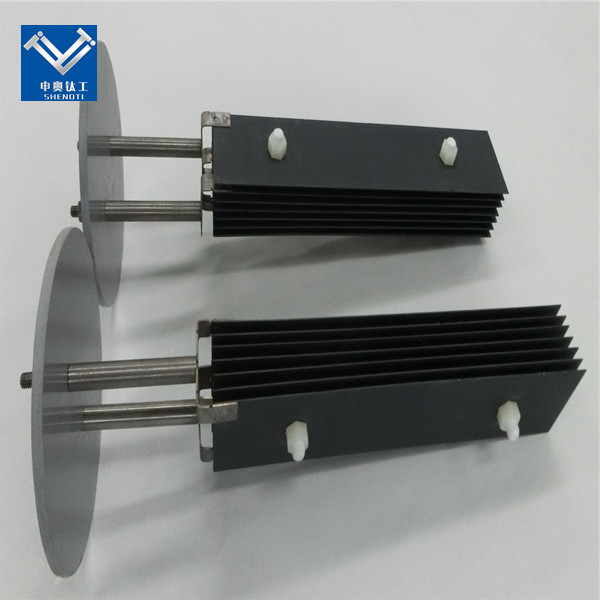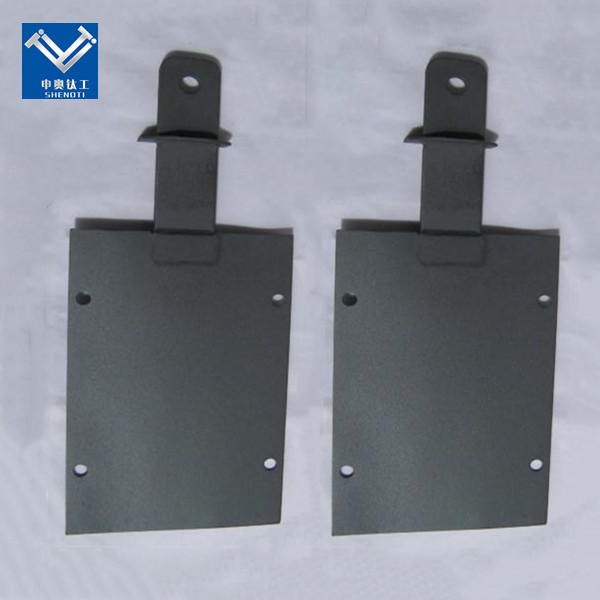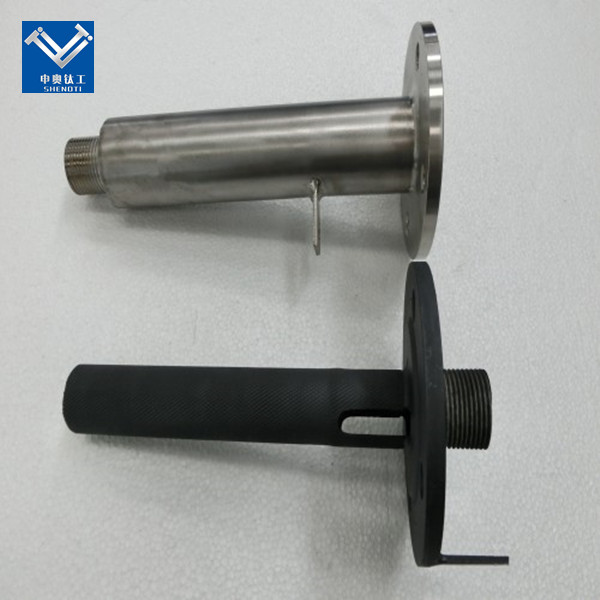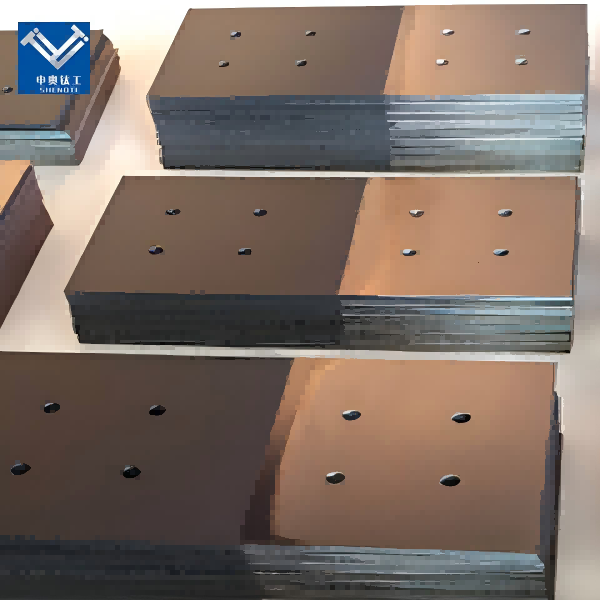
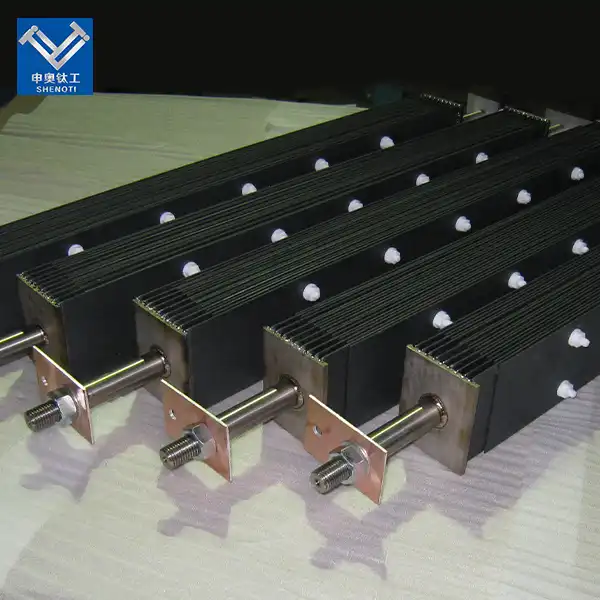
Titanium Anode for Disinfectant Solution Generator


Coating: Mixed Metal Oxide (MMO)
Coating Structure: Dense and highly conductive catalytic layer
Custom made: Plate, Mesh, Tube, and Customed
Expected Lifespan: Built to maintain functional integrity throughout extended deployment
Advantage:
High electrocatalytic activity
Strong corrosion resistance
Long service life
Dimensionally stable
Titanium Anode for Disinfectant Solution Generator
In the on-site generation of disinfectant solutions such as sodium hypochlorite and hypochlorous acid, the electrocatalytic efficiency of the anode directly determines the available chlorine concentration, power consumption cost, and equipment service life. Our Titanium Anode for Disinfectant Solution Generator at Baoji City ShenAo Metal Materials Co., Ltd. is designed specifically for the electrolysis of low-concentration brine or dilute hydrochloric acid. It uses Grade 1 or Grade 2 pure titanium as the substrate, with a ruthenium-iridium or iridium-tantalum mixed metal oxide catalytic coating on the surface. The coating's excellent chlorine evolution activity enables the anode to generate active chlorine efficiently at low cell voltage in dilute brine environments, while the iridium component enhances the coating's tolerance to the oxygen evolution side reaction. Whether for small portable disinfectant water generators or industrial-scale high-flow sodium hypochlorite generation systems, this anode provides your equipment with a stable, efficient, and clean electrode solution.
Technical Specifications
|
Substrate Material |
Grade 1/2 Pure Titanium |
|
Coating Type |
Ruthenium-Iridium (RuO₂-IrO₂) or Iridium-Tantalum (IrO₂-Ta₂O₅), customized per electrolyte type |
|
Coating Thickness |
5–15 μm (adjusted based on current density and brine concentration) |
|
Coating Loading |
10–150 g/m² (customized for rated available chlorine output) |
|
Current Density Range |
100–1,500 A/m² (adjusted based on generator specification and chlorine output) |
|
Operating Voltage Window |
0.5 V–2.0 V (typical dilute brine electrolysis potential range) |
|
Anode Shapes |
Plate, Mesh, Tube, Rod, Custom |
|
Applicable Electrolytes |
Dilute brine (NaCl), dilute hydrochloric acid (HCl), seawater |
Why Choose Our Titanium Anodes?
- High Chlorine Evolution Efficiency for Lower Operating Energy
The ruthenium-iridium coating exhibits a very low chlorine evolution overpotential in chloride-containing electrolytes, enabling efficient active chlorine generation at low cell voltage under dilute brine or dilute hydrochloric acid conditions. For commercial disinfectant solution generators operating continuously over long periods, lower voltage translates to reduced power consumption and heat generation, contributing to extended overall equipment service life and reduced user operating costs. - Optimized Coating Durability
The disinfectant solution electrolysis process is inevitably accompanied by the oxygen evolution side reaction, under which pure ruthenium coatings consume relatively quickly. Our coating incorporates iridium or tantalum components to form a stable composite oxide structure, effectively suppressing selective dissolution of the coating under normal operating conditions and enabling a long service cycle even in dilute chloride solutions and intermittent operation modes. - Clean and Safe Chlorine Generation Environment
The coating and titanium substrate maintain a stable chemical state during electrolysis, with minimal dissolution of heavy metals or other harmful impurities into the generated disinfectant solution. For applications with strict purity requirements—such as food processing, medical hygiene, and drinking water treatment—this material system safeguards the cleanliness of the output solution at its source. - Flexible Electrode Customization and Assembly
We can provide plate-type interdigitated electrode sets, tubular coaxial electrodes, mesh flow-through electrodes, and other assembly configurations based on the electrolytic cell structure of different disinfectant solution generator specifications. Whether for handheld spray-type micro generators or industrial-grade equipment with chlorine output of several hundred grams per hour, matched electrode assembly designs and reliable electrical connection solutions are available.
|
|
|
|
|
|
|
|
|
|
|
|




Real-World Applications
- On-Site Sodium Hypochlorite Disinfectant Preparation: Used in sodium hypochlorite generators for tableware disinfection, food processing equipment cleaning, and public space environmental disinfection, electrolytically producing chlorine from salt and water.
- Slightly Acidic Hypochlorous Acid Water Generation: Used in hypochlorous acid water generators for hand disinfection in medical and healthcare facilities, endoscope cleaning, and wound care, producing highly active hypochlorous acid water through the electrolysis of dilute hydrochloric acid or dilute brine.
- Swimming Pool and Spa Electrolytic Disinfection: Used in online electrolytic chlorination systems for swimming pools, spa facilities, and jacuzzis, replacing manual chlorine dosing.
- Industrial Circulating Water Biocide Treatment: Used in online electrolytic chlorination units for cooling towers and industrial circulating water pipe networks, inhibiting bacterial and algal growth to maintain heat exchange efficiency.
- Rural and Emergency Water Supply Disinfection: Used in integrated electrolytic disinfection modules for small centralized water supply points or emergency water supply equipment, producing disinfectant on-site from common salt.


The ShenAo Advantage
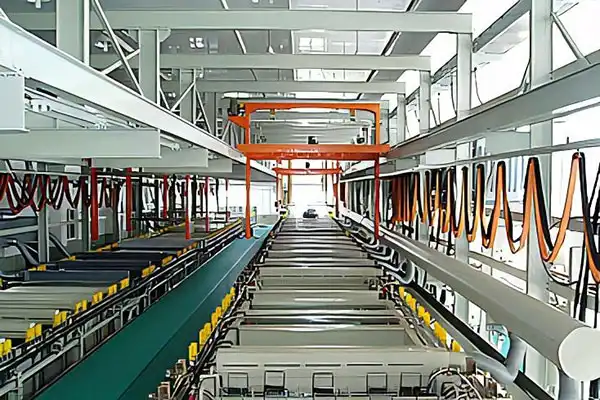
18 Years of Manufacturing Excellence
Since 2008, we've specialized in valuable metal coated titanium anodes from our office in Baoji's "China Titanium Valley." Our develop bimetallic hazardous welding innovation and progressed coating forms provide items you can trust.
Customization for Your Correct Needs
Every generation line is diverse. We give custom fitted arrangements coordinating your particular current thickness necessities, electrolyte composition, and operational parameters. Whether you require little bunch testing or full-scale generation amounts, we convey on time.
Cost-Effective Lifecycle Management
When coating exhaustion happens, you do not dispose of the whole anode. Our proficient recoating benefit strips the ancient oxide layer, sandblasts the substrate, and reapplies new MMO coating. This expands resource life and decreases your add up to taken a toll of proprietorship considerably.

Frequently Asked Questions
Q: What type of coating is typically selected for disinfectant solution generator anodes?
A: It depends on the electrolyte type and chlorine output target. For sodium hypochlorite generators using dilute brine as the raw material, ruthenium-iridium coatings are typically selected for their high chlorine evolution activity and favorable cost-effectiveness. For hypochlorous acid water generators using dilute hydrochloric acid, iridium-tantalum coatings can be selected to maintain better chemical stability in strongly acidic environments. You can provide your equipment's operating mode and electrolyte type, and our engineers will recommend a matched coating solution.
Q: How is the anode's available chlorine output matched?
A: Available chlorine output is directly related to electrolysis current, electrolyte concentration, and anode surface area. Based on your equipment's designed chlorine output (e.g., grams per hour), we can back-calculate the required effective anode area from the selected current density and recommend an appropriate electrode quantity and arrangement.
Q: How does intermittent operation affect anode service life?
A: Anodes in intermittent operation experience alternating solution immersion and drying during shutdown periods, with frequent changes in the electrochemical environment at the coating surface. Our coating formulations are optimized for intermittent operating conditions and are less prone to passivation or spalling from frequent start-stop cycles. We recommend keeping the electrodes immersed in clean water or in a moist state during shutdown to prevent salt crystallization on the coating surface.
Q: What causes white deposits on the anode surface after extended operation?
A: White deposits are typically carbonate or hydroxide scale formed by calcium and magnesium ions, originating from insufficiently softened hardness components in table salt or tap water. Mild scaling can be removed by soaking in dilute acid, which will not damage the coating. We recommend installing a water softening pretreatment unit at the inlet, or performing periodic acid cleaning maintenance on the anodes.
Q: How are finished anodes packaged and shipped?
A: Each anode is individually wrapped in protective packaging to prevent scratching of the coating surface during transit. Bulk orders use custom cushioning boards and sturdy outer cartons to ensure shock and moisture protection during transportation. Export orders can be provided with fumigated wooden crates or air freight-specific packaging upon request.
Safety Notice: This product is intended for integration into disinfectant solution generation equipment. Equipment manufacturers should ensure end-products comply with relevant local regulations governing disinfectant products, electrical safety, and—where applicable—drinking water treatment standards.
Contact Us
You need a partner who not only supplies products but also solves your challenges alongside you. Our team is ready to engage with your inquiries and provide a tailored solution. Share your specific needs or key requirements with us today, and let us help you efficiently transform your breakthroughs into commercial value.
Titanium Anode Manufacturer
Email: zh@baojiti.com.cn
WhatsApp: +86-15877696471 (updated)
Products: Titanium Anodes, MMO Titanium Anodes, DSA Coated Titanium Electrodes, Electrolysis Electrodes, Hydrogen Production Electrodes, Wastewater Treatment Titanium Anodes.