Explosion Bonded Copper Clad Aluminum Plate for Electrical Applications
2026-09-01 17:15:26
In electrical equipment, material selection is not always as simple as choosing copper or aluminum.
Copper has excellent electrical conductivity and good connection performance, but it is relatively heavy and can be expensive when large quantities are required. Aluminum is much lighter and can help reduce material weight, but its electrical conductivity is lower than copper and direct copper-aluminum connections can create additional technical challenges.
This is where Explosion Bonded Copper Clad Aluminum Plate for Electrical Applications can be useful.
By combining copper and aluminum into one bimetallic material, explosion bonding technology makes it possible to use the advantages of both metals in the same component. The copper side can provide a highly conductive surface, while the aluminum side can reduce weight and copper consumption.
For electrical equipment manufacturers, power system suppliers, busbar manufacturers, and industrial component producers, copper clad aluminum plate provides another option for designing lighter and more efficient electrical components.
What Is Explosion Bonded Copper Clad Aluminum Plate?
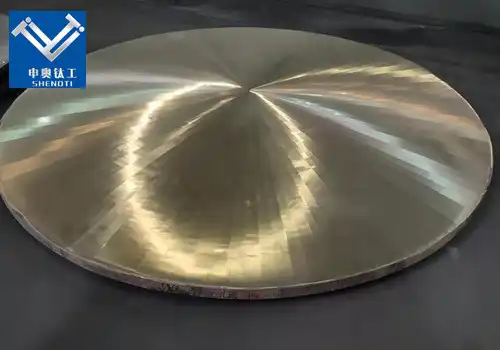
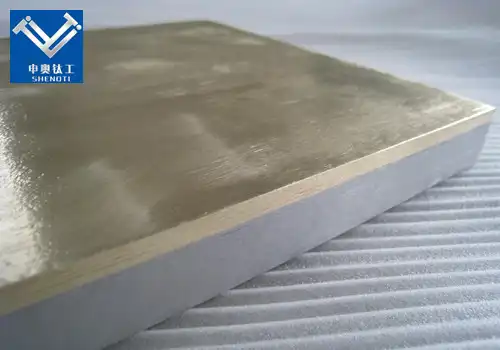
Explosion Bonded Copper Clad Aluminum Plate for Electrical Applications is a composite material made by metallurgically joining a copper plate to an aluminum plate through a controlled explosion bonding process.
The two metals are not simply glued, bolted, or mechanically pressed together.
During explosion bonding, controlled explosive energy creates a high-speed collision between the copper and aluminum surfaces. The resulting pressure and controlled impact conditions allow the two metals to form a strong metallurgical bond.
The finished plate retains the main characteristics of both metals.
The copper layer provides the electrical and thermal properties required for many electrical applications, while the aluminum layer can provide lower density, reduced weight, and efficient use of copper.
Why Combine Copper and Aluminum?
The reason is straightforward.
Different parts of an electrical component may have different requirements. One area may need excellent conductivity and reliable electrical contact, while another area may benefit more from low weight and lower material consumption.
Using solid copper for the entire component may not always be necessary.
With copper-aluminum clad technology, copper can be placed where it provides the most value, while aluminum can be used as the supporting material.
This approach can help engineers balance conductivity, weight, cost, mechanical requirements, and manufacturing needs.
How Does Explosion Bonding Work?
The manufacturing process is an important part of the performance of an Explosion Bonded Copper Clad Aluminum Plate for Electrical Applications.
1. Material Selection
The first step is selecting suitable copper and aluminum grades.
The copper grade is selected according to electrical conductivity, mechanical requirements, corrosion conditions, and fabrication requirements.
The aluminum grade is selected according to strength, conductivity, machinability, weight, and the intended application.
The correct combination depends on the final electrical component.
2. Surface Preparation
The bonding surfaces need to be properly prepared before the plates are assembled.
Surface condition is important because oil, dirt, oxidation, and other contaminants can affect the quality of the bonding interface.
The raw plates are therefore inspected and prepared before the explosion bonding operation.
3. Controlled Explosion Bonding
The copper and aluminum plates are arranged using a carefully designed bonding configuration.
A controlled explosive layer is placed according to the process design.
When the explosive is initiated, the copper plate moves at high speed toward the aluminum plate. The collision generates extremely high pressure at the interface.
Under suitable process conditions, the two metal surfaces form a metallurgical bond.
4. Post-Bonding Processing
After bonding, the composite plate can be processed according to the final requirements.
Possible processes include:
Cutting
Leveling
Heat treatment
Machining
Drilling
Milling
Surface finishing
Dimensional inspection
Ultrasonic testing
The exact process depends on the required plate size, thickness, material combination, and final application.
Benefits of Copper Clad Aluminum Plate in Electrical Applications
There are several reasons why engineers consider Explosion Bonded Copper Clad Aluminum Plate for Electrical Applications.
Reduced Weight
One of the most obvious advantages is weight reduction.
Aluminum is significantly lighter than copper. When a portion of a solid copper component can be replaced with aluminum, the overall weight of the component can be reduced.
This can be particularly useful for large electrical structures, transportation equipment, power equipment, and components that need to be installed or moved manually.
For large-volume electrical systems, reducing component weight can also make transportation and installation easier.
Efficient Use of Copper
Copper is an excellent conductor, but using solid copper throughout a large component can consume a considerable amount of material.
A copper-aluminum clad structure allows engineers to use copper selectively.
The copper layer can be designed according to the required electrical contact or conductivity requirements, while aluminum provides the remaining thickness where appropriate.
This can make the material structure more efficient.
Strong Metallurgical Bond
The key feature of explosion bonding is the metallurgical bond between copper and aluminum.
Unlike a simple mechanical connection, the interface is created during the bonding process itself.
A properly manufactured clad plate can therefore be further processed into electrical components while maintaining the bonded copper-aluminum structure.
Flexible Thickness Design
Different electrical applications require different material thicknesses.
The copper layer may need to be relatively thin for a surface-contact application, while other applications may require a thicker copper layer.
The aluminum layer can also be adjusted according to mechanical and dimensional requirements.
This makes custom Explosion Bonded Copper Clad Aluminum Plate for Electrical Applications possible for different electrical equipment designs.
Applications in Electrical Equipment
The application of copper-aluminum clad plate depends on the design and electrical requirements of the component.
Electrical Transition Components
One important application is copper-aluminum transition components.
Electrical systems sometimes need to connect copper equipment with aluminum equipment. Directly connecting the two metals can introduce issues related to their different material properties and interface behavior.
A copper-aluminum transition component can provide a controlled connection between the two materials.
Explosion bonding creates the copper-aluminum interface before the component is installed, allowing the manufacturer to machine or fabricate the composite material into the required transition part.
Busbars and Conductive Components
Busbars are widely used in power distribution systems and electrical cabinets.
Copper is commonly used because of its high electrical conductivity. However, large copper busbars can become heavy.
In suitable designs, copper clad aluminum material can be considered when the application requires a combination of electrical conductivity and reduced weight.
The final design should take current capacity, cross-sectional area, temperature rise, connection method, mechanical strength, and installation conditions into account.
Power Distribution Equipment
Power distribution equipment often contains a large number of conductive components and connection structures.
An Explosion Bonded Copper Clad Aluminum Plate for Electrical Applications can be processed into custom conductive plates, transition parts, connection components, and other bimetallic structures.
The appropriate material combination should be selected according to the actual voltage, current, temperature, mechanical load, and environmental conditions.
Transformer and Electrical Connection Components
Transformers and other power equipment can contain copper and aluminum conductors or connection components.
Where copper and aluminum need to be joined, a bimetallic transition material can simplify the material interface.
Depending on the equipment design, copper-aluminum clad material may be processed into plates, connection pieces, transition components, or other custom shapes.
Switchgear and Electrical Cabinets
Switchgear and electrical cabinets contain conductive components that need reliable electrical connections.
Weight, conductivity, space, mechanical strength, and installation requirements all affect material selection.
Copper clad aluminum can be considered for selected components where a copper contact surface is required but the complete component does not need to be made from solid copper.
Copper Clad Aluminum vs. Solid Copper
Solid copper remains an excellent material for many electrical applications.
However, it may not always be the most efficient option.
The difference is mainly related to the design objective.
Solid copper provides uniform copper properties throughout the entire component. Copper-aluminum clad plate provides different material properties in different layers.
For applications where the copper surface or copper layer is critical but the entire component does not need to be solid copper, a clad structure may provide a more balanced solution.
Important factors to compare include:
|
Factor |
Solid Copper |
Copper-Aluminum Clad |
|
Electrical conductivity |
Excellent |
Depends on design |
|
Weight |
Higher |
Lower potential |
|
Copper consumption |
Higher |
Reduced potential |
|
Material structure |
Single metal |
Bimetallic |
|
Transition application |
Limited |
Suitable for selected designs |
|
Custom thickness ratio |
Limited |
Flexible |
|
Machining |
Good |
Depends on material combination |
The best material depends on the actual application rather than simply comparing the price per kilogram.
What Should Engineers Consider Before Ordering?
When selecting Explosion Bonded Copper Clad Aluminum Plate for Electrical Applications, several technical specifications should be confirmed.
Copper Grade
The copper grade affects conductivity, mechanical properties, and fabrication performance.
The required grade should be selected according to the electrical and mechanical requirements of the component.
Aluminum Grade
The aluminum grade affects strength, conductivity, machinability, corrosion resistance, and weight.
The correct aluminum grade should be selected according to the working environment and final manufacturing process.
Copper Thickness
Copper thickness is particularly important when the copper layer is responsible for electrical contact or current conduction.
The required thickness should be calculated based on the electrical design rather than selected only according to material availability.
Aluminum Thickness
The aluminum layer can be designed according to the required overall thickness, mechanical structure, and weight target.
Plate Size
Customers should specify the required length, width, total thickness, and layer thickness.
Large-size plates may require different production planning and inspection methods.
Electrical Requirements
For electrical applications, the manufacturer should understand the operating current, voltage, temperature, connection method, and expected service environment.
These details help determine whether a particular copper-aluminum configuration is appropriate.
Quality Control and Testing
For industrial electrical applications, bonding quality is critical.
A professional manufacturer should control the process from raw material inspection through final testing.
Depending on the project, testing may include:
Chemical composition inspection
Dimensional inspection
Surface inspection
Ultrasonic testing
Bonding interface inspection
Shear strength testing
Tensile testing
Metallographic examination
Flatness inspection
The required tests should be agreed upon before production.
For critical electrical components, customers may also specify their own technical standards, inspection requirements, or acceptance criteria.
Custom Explosion Bonded Copper Clad Aluminum Plate
Electrical equipment is rarely identical from one project to another.
This is why custom manufacturing is important.
A supplier can develop Explosion Bonded Copper Clad Aluminum Plate for Electrical Applications according to the customer's requirements for:
Copper material
Aluminum material
Copper thickness
Aluminum thickness
Overall thickness
Plate dimensions
Bonding strength
Surface condition
Machining
Testing
Packaging
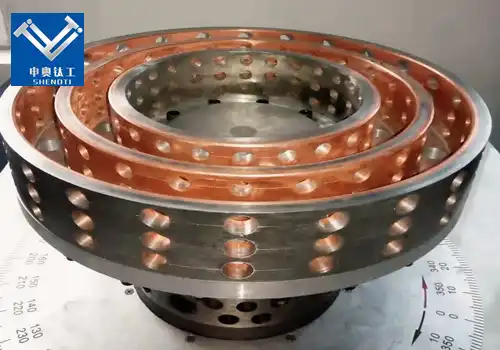
For example, a customer may need a large copper-aluminum plate for further machining. Another customer may need a finished transition component with drilled holes and specific dimensions.
The manufacturing solution should be based on the final application.
How to Choose a Copper Clad Aluminum Plate Manufacturer
Choosing a supplier is not only about finding a manufacturer that can bond copper and aluminum.
For electrical applications, it is important to understand the supplier's experience with bimetallic materials, explosion bonding technology, inspection, machining, and customized production.
A qualified manufacturer should be able to discuss:
Material selection
Bonding process
Layer thickness
Product dimensions
Electrical requirements
Inspection methods
Machining requirements
Packaging and delivery
Clear communication before production can reduce problems during later fabrication and installation.
Conclusion
Explosion Bonded Copper Clad Aluminum Plate for Electrical Applications provides a practical way to combine the properties of copper and aluminum in one engineered material.
The copper layer can provide excellent electrical conductivity and a reliable conductive surface, while the aluminum layer can help reduce weight and copper consumption.
Through controlled explosion bonding, the two dissimilar metals can be joined through a metallurgical interface and then processed according to the requirements of the final electrical component.
The material can be considered for electrical transition components, busbars, power distribution equipment, transformer-related components, switchgear, electrical cabinets, and other customized industrial applications.
The right solution depends on the actual electrical and mechanical requirements. Copper grade, aluminum grade, layer thickness, plate dimensions, operating temperature, current capacity, connection method, and inspection requirements should all be considered before production.
For projects requiring customized Explosion Bonded Copper Clad Aluminum Plate for Electrical Applications, providing detailed technical specifications and application conditions allows the manufacturer to evaluate the material combination and develop a suitable production solution.
Email: zh@baojiti.com.cn
Products: copper clad aluminum plate、copper aluminum composite plate、explosion bonding、copper aluminum transition joint、bimetallic plate、electrical applications